











IMG_20240402_080108 (1)

Uruguay – ferry, bus from Buenos Aires!

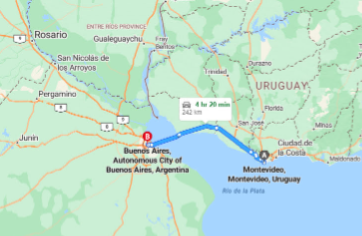
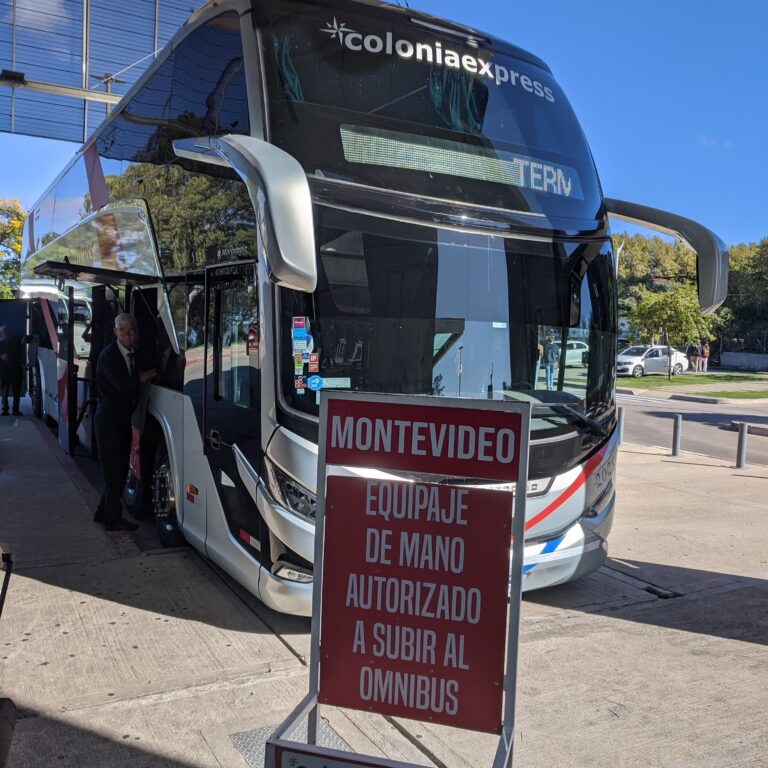
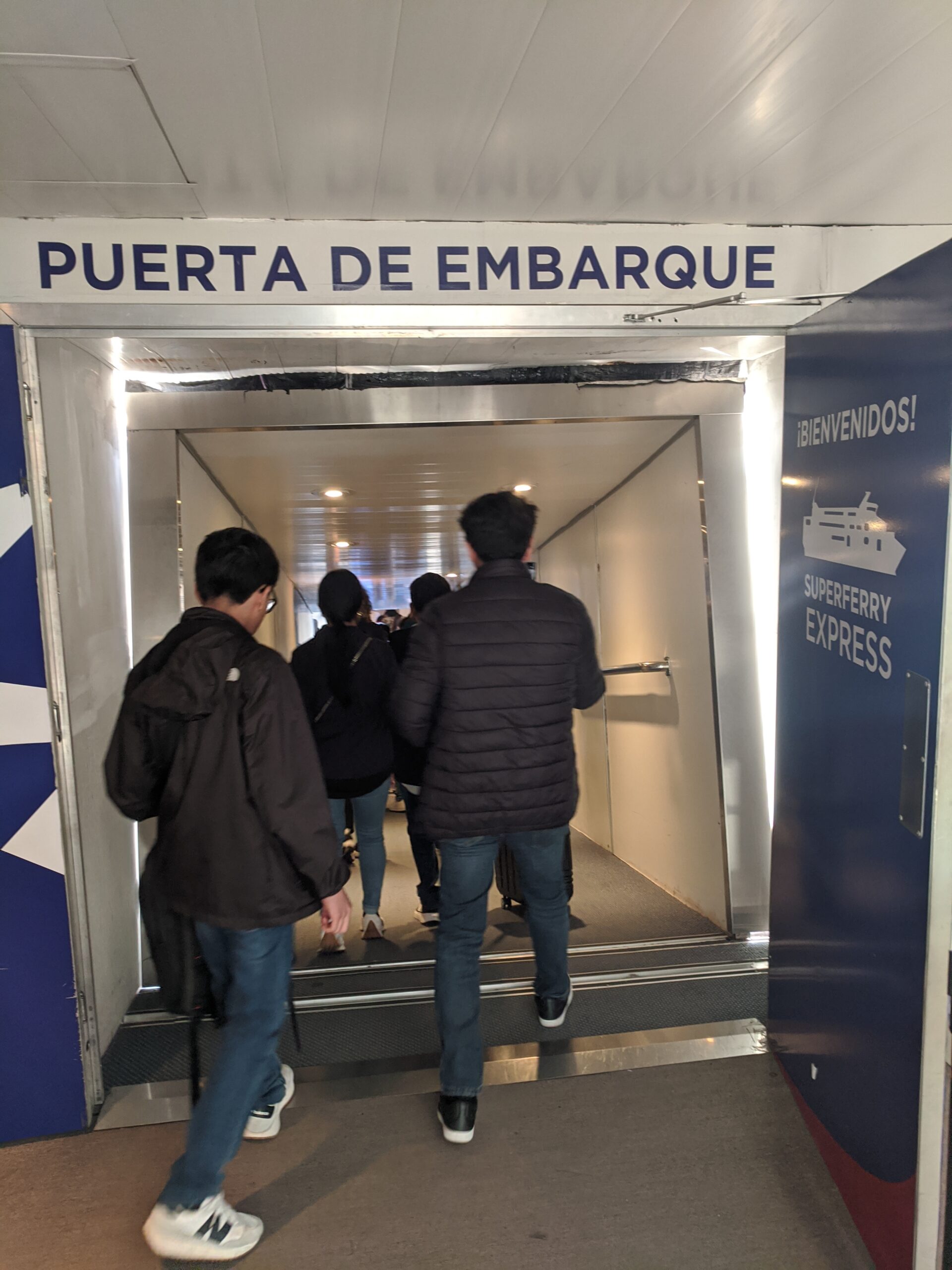
As part of my 2024 trip—which took me through Central America and into South America—I made a stop in Uruguay. Getting there was easy and inexpensive thanks to a short ferry ride from Buenos Aires across the Río de la Plata.

It was one of those classic travel decisions: cheap ferry, new country, zero downside. So… why not?

That’s one of the underrated perks of slow travel—when borders are close, transport is affordable, and curiosity wins.

I did not know what to expect as I had not read much about Uruguay. It was just the fact that I was so close to getting to experience it, and I took advantage of dropping another pin on the map. 📍🌏

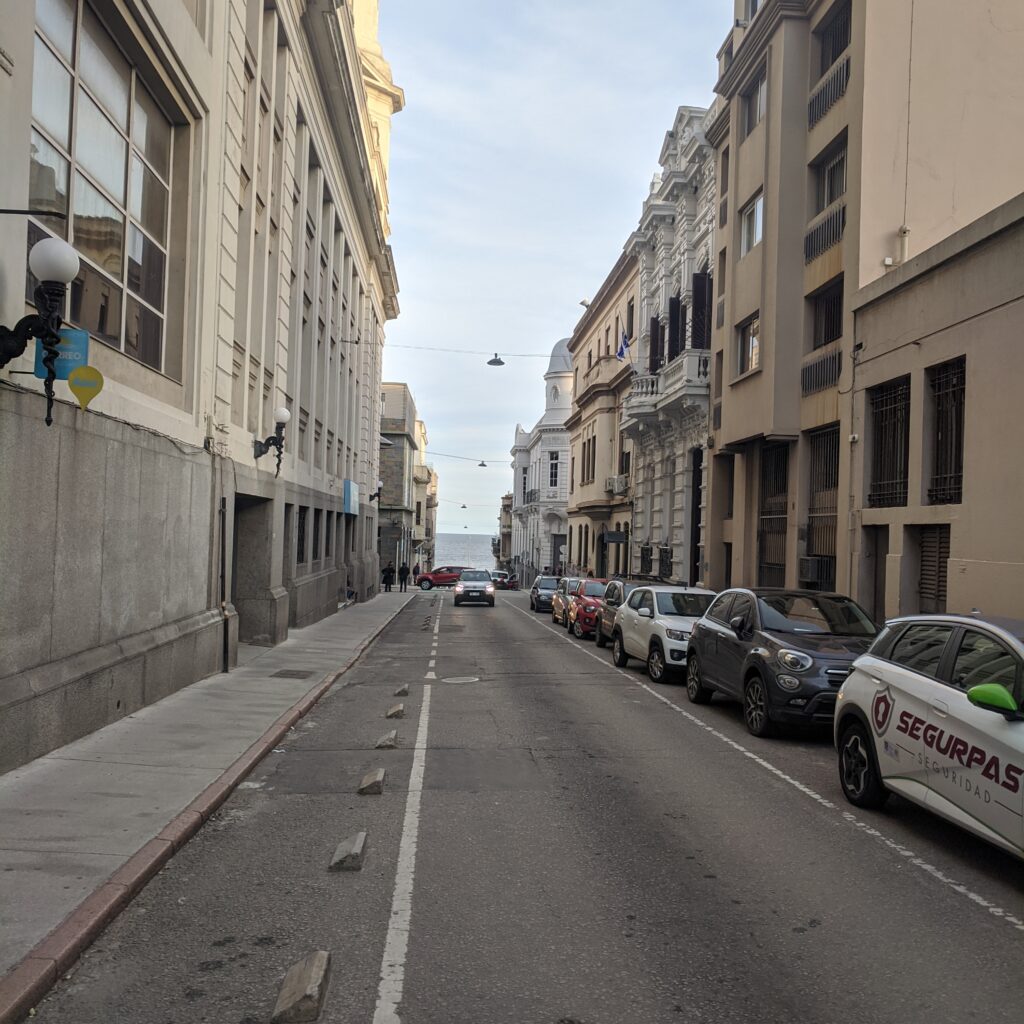
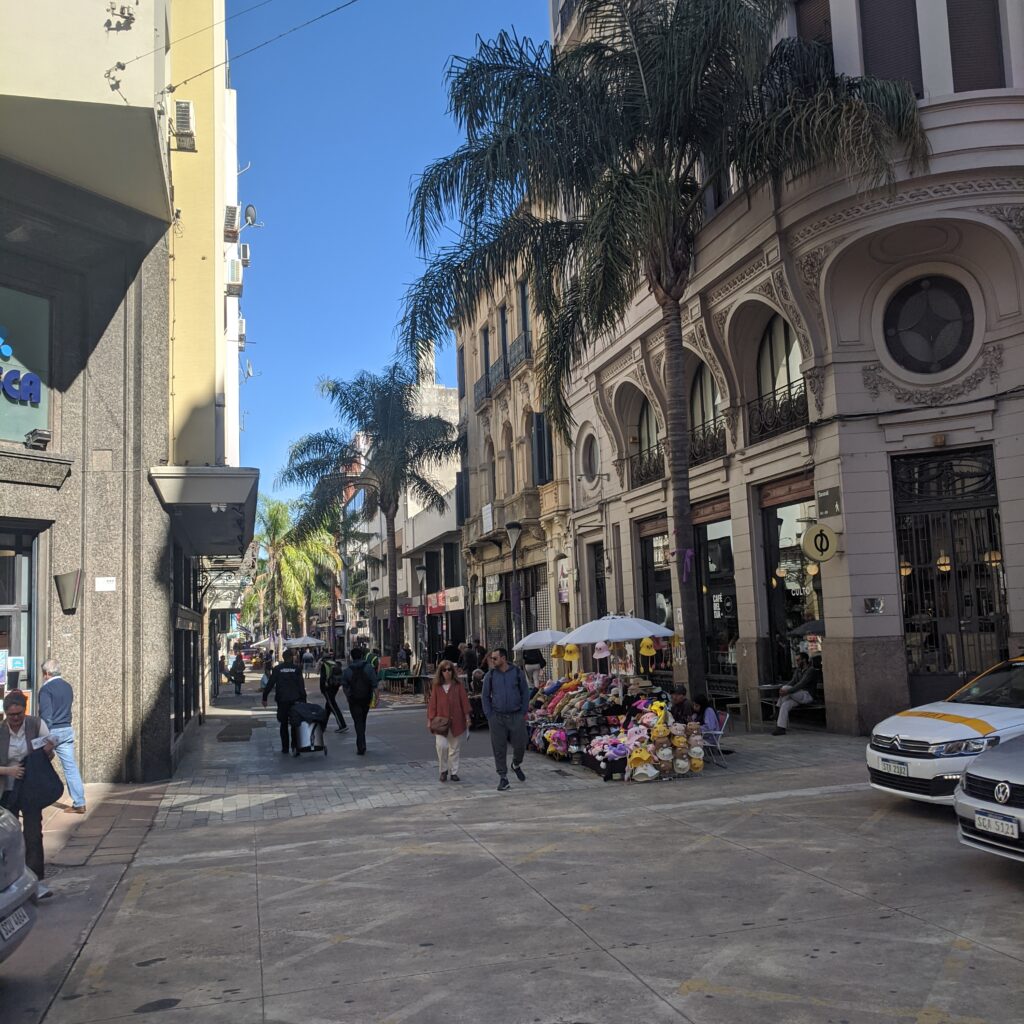
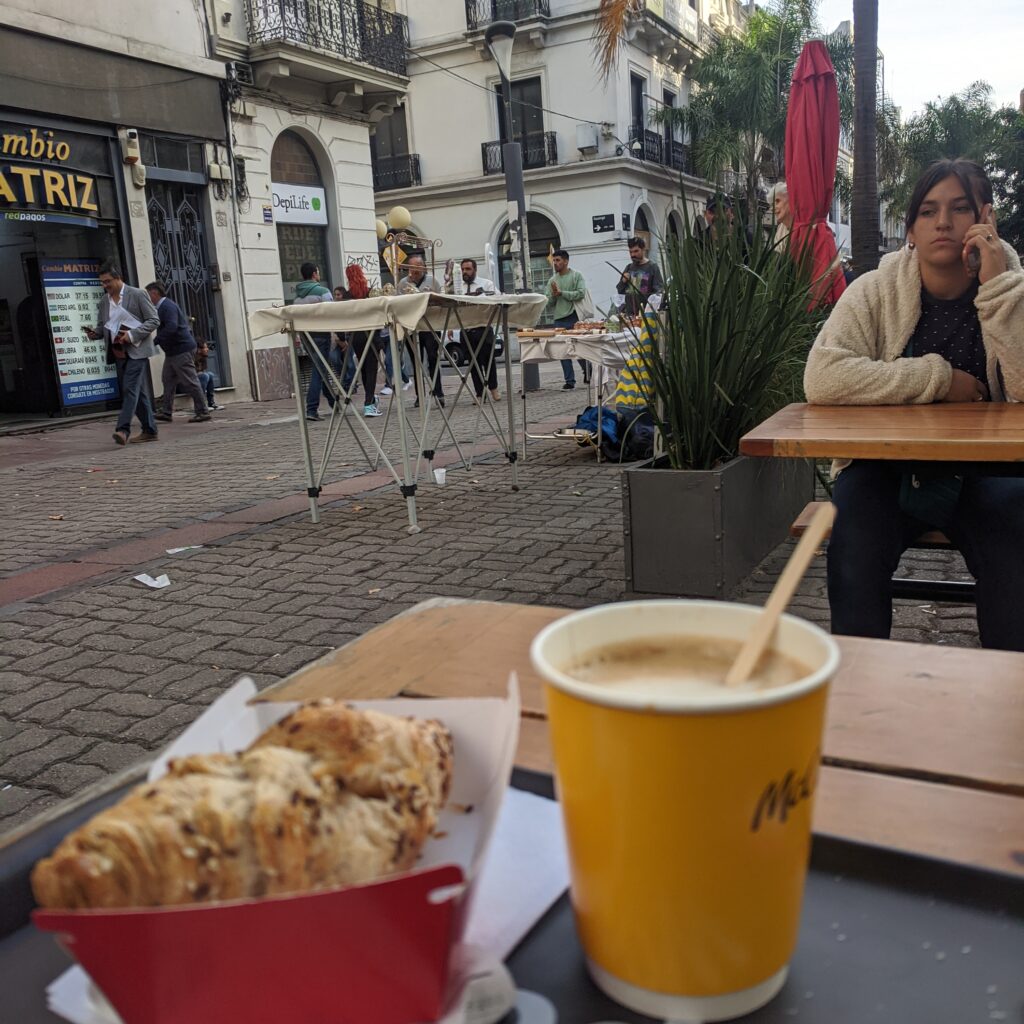
Montevideo has a great beach walk, very nice cobblestone downtown, and friendly people, but I do not need to go back.  There was nothing that stood out like most Countries other than my Airbnb. 

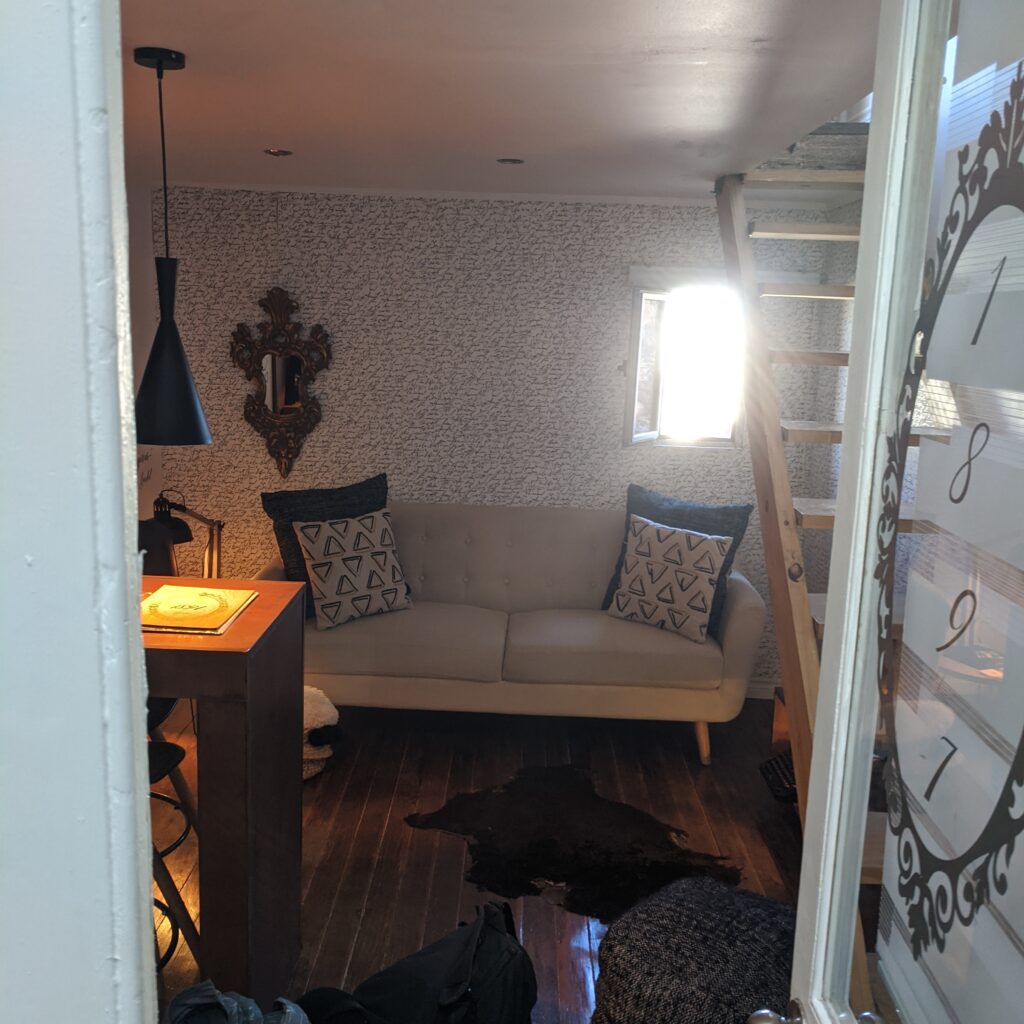
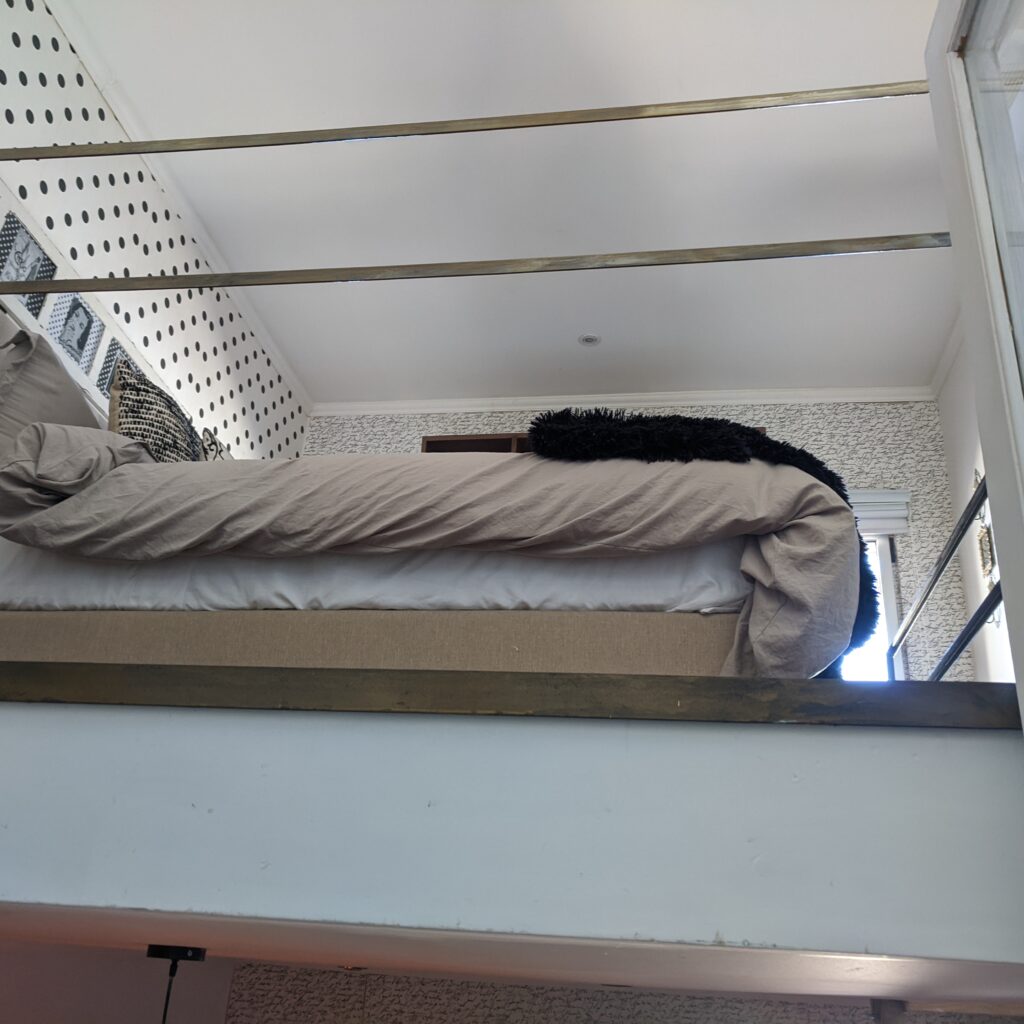
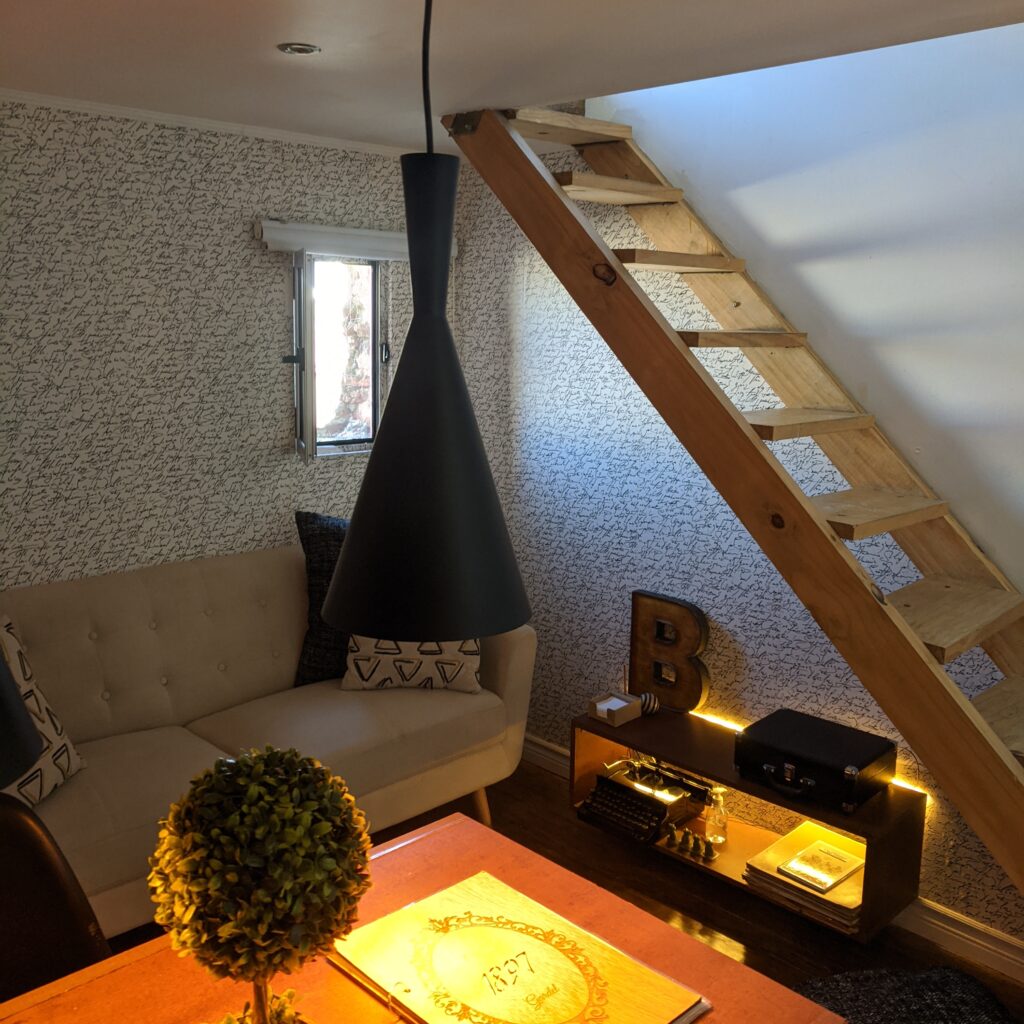
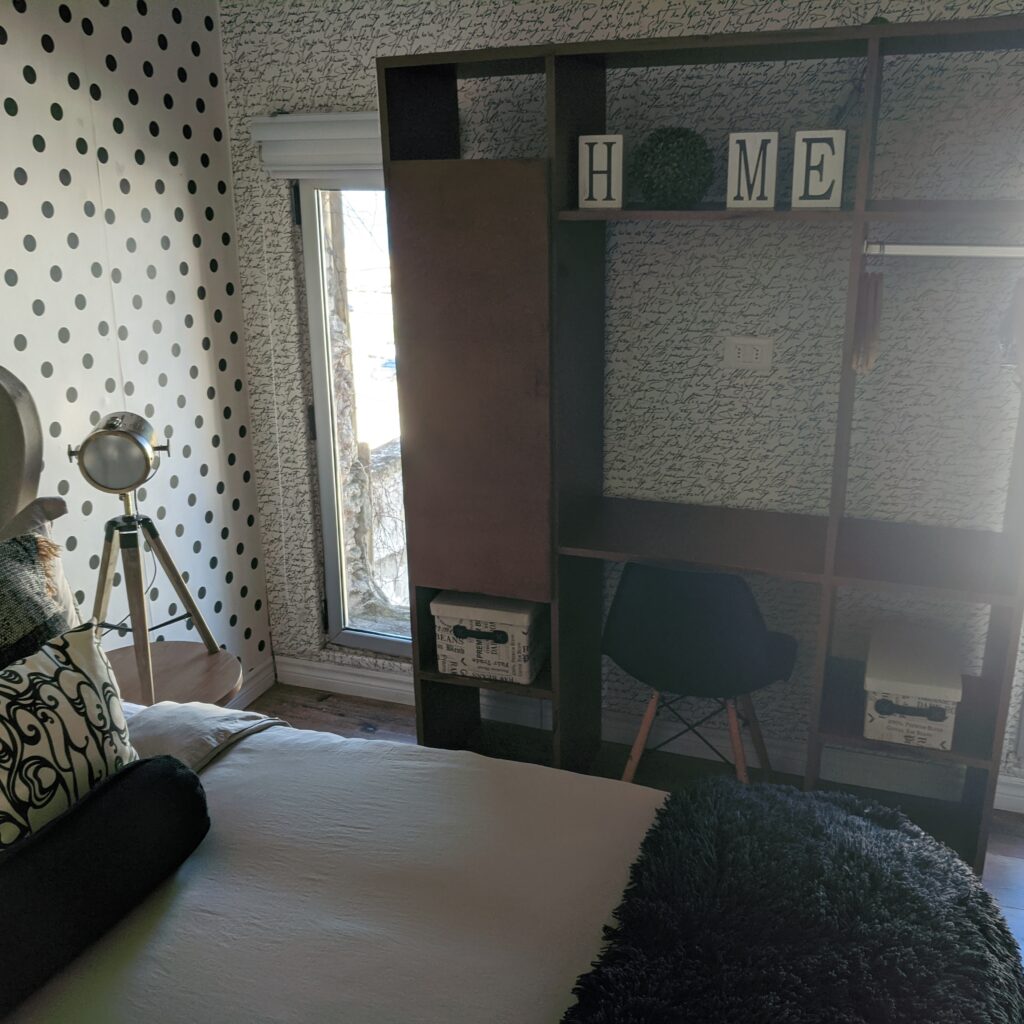
I have never experienced so much pride in the presentation of this place.  Every little nook and cranny had something awesome displayed and check out the view from the bedroom!

The couple who ran the Airbnb were architecture lawyers from Argentina, and their background showed in every detail. Their shared love of music and antiques turned the place into an absolute gem—not flashy, just deeply thoughtful.

The lobby alone set the tone. A full wall of antiques, each piece clearly chosen with care, paired with calming music that made you slow down the moment you walked in. It didn’t feel like a rental—it felt like someone’s personal sanctuary that they happened to share.

It was one of those stays where the space itself becomes part of the travel experience. Honestly, that Airbnb left more of an impression on me than the city itself—and that says a lot.

There were hundreds and hundreds of trinkets throughout the property—every room, every corner, every shelf had something interesting to notice. During the day, jazz music played softly in the lobby, setting a calm, timeless mood. In my room, there was even a record player with a small collection of old jazz records. Sitting there, listening to vinyl and staring at the bookcase, felt almost meditative.

The Airbnb itself was about $25 a night, perfectly located between the main street and the ocean in Montevideo. You really couldn’t ask for a better setup.

It was hands down the best Airbnb experience I’ve ever had. Not because it was luxurious, but because it was thoughtful. Every detail felt intentional, personal, and cared for—and I’m genuinely glad I got to experience it. Some places stick with you because of what you see outside. This one stayed with me because of what was inside.

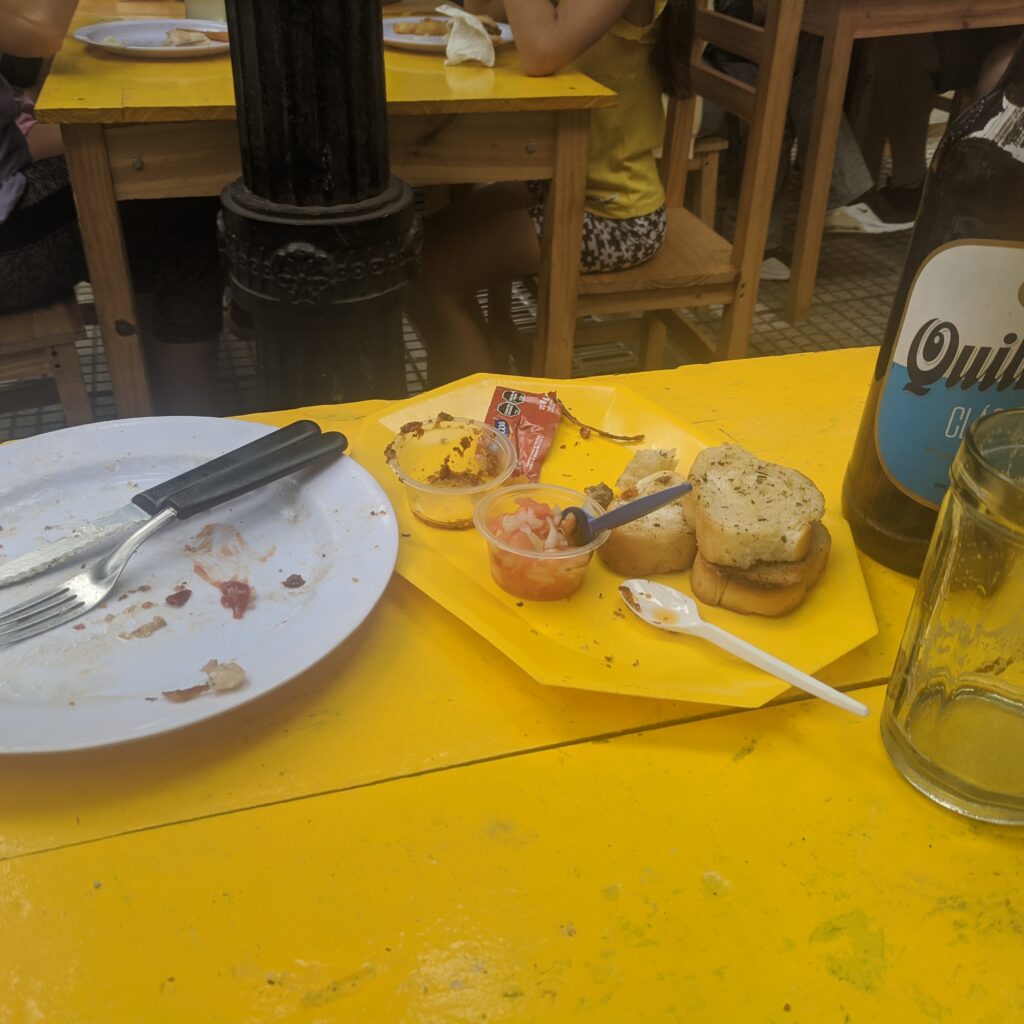
After spending the previous week in Argentina, the food scene in Montevideo was a bit of a shock—in the wrong direction.

Coming off Argentina’s absolute paradise of steaks, flavor, and value, these two meals were both underwhelming and overpriced. Not terrible in a dramatic sense, just disappointing enough that you immediately stop ordering food with any enthusiasm.

To be fair, I didn’t go to Montevideo for the cuisine—and after Argentina, that became very clear. Sometimes travel is about incredible meals. Other times, it’s about the place, the stay, and the experience around it.

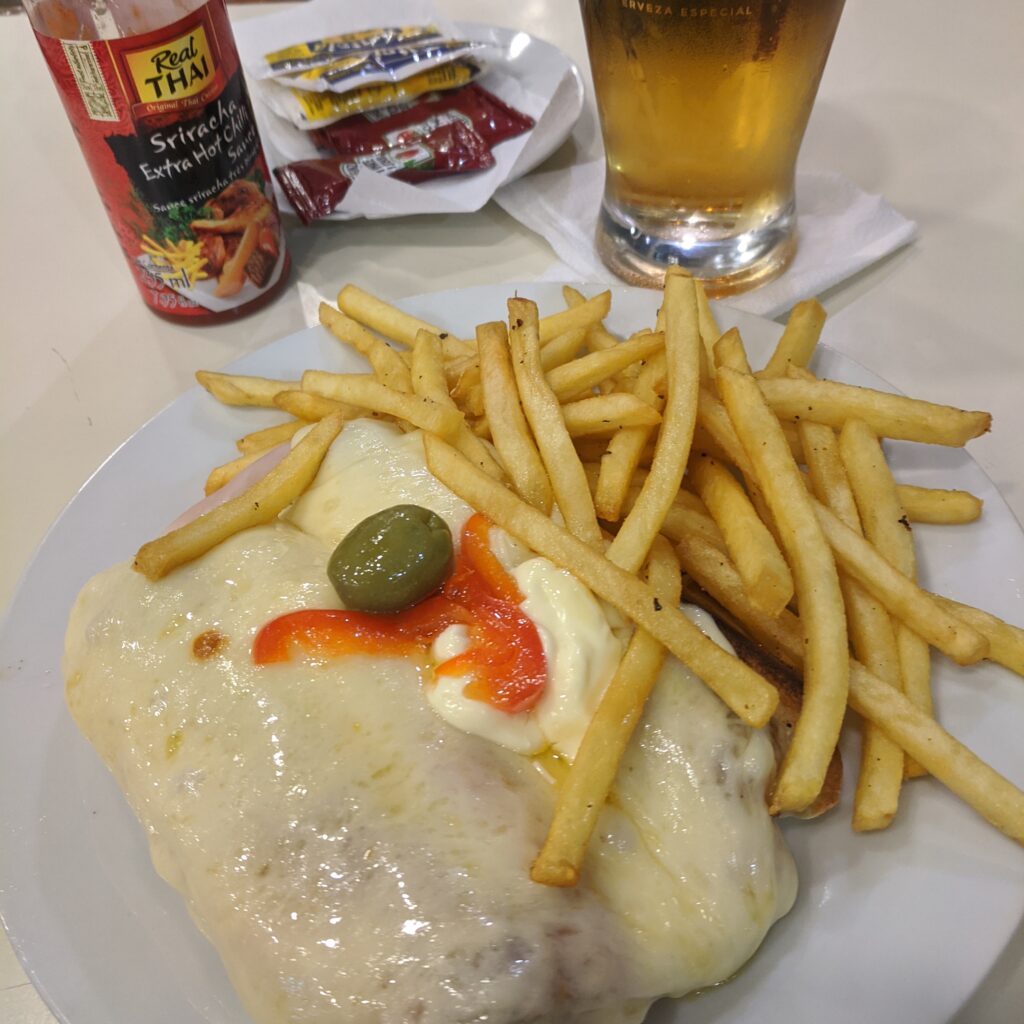
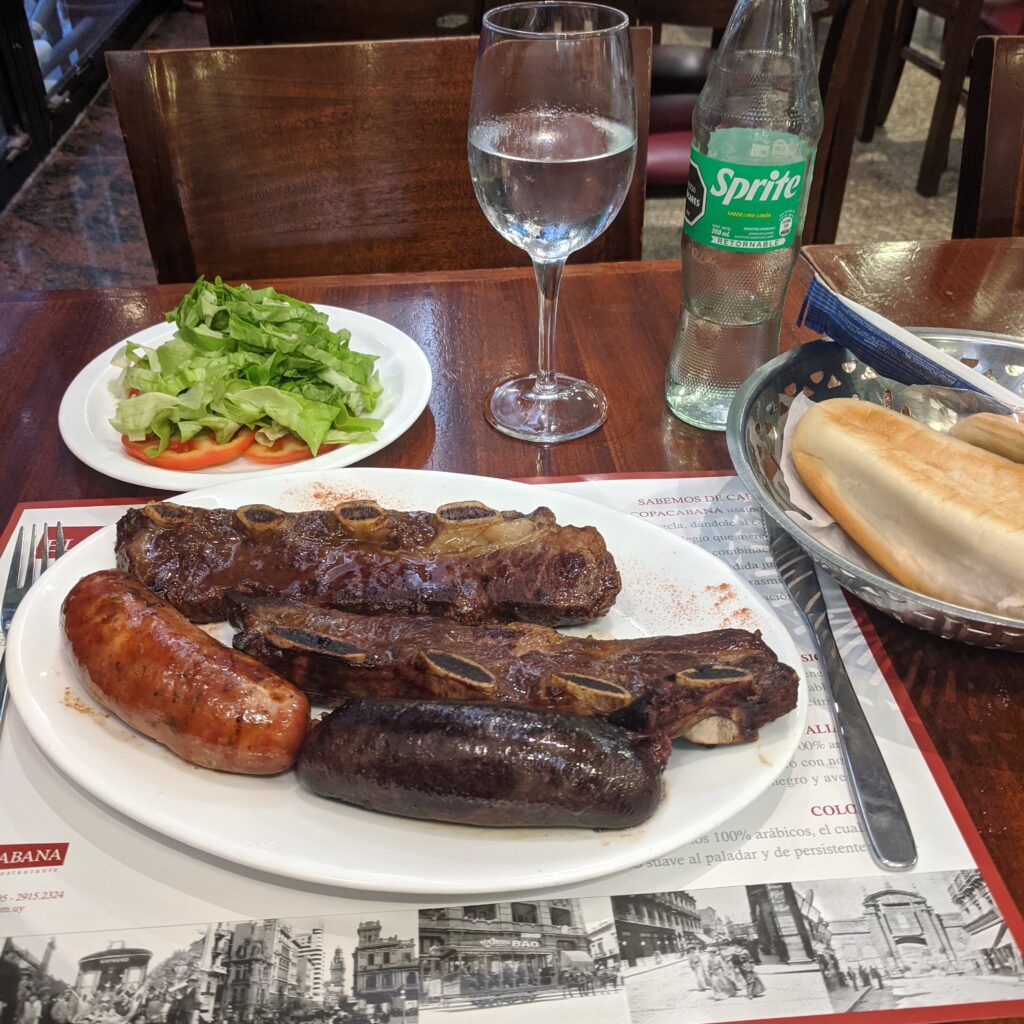
I played it safe both times and ordered the house special, mostly because I honestly didn’t know what else to order.

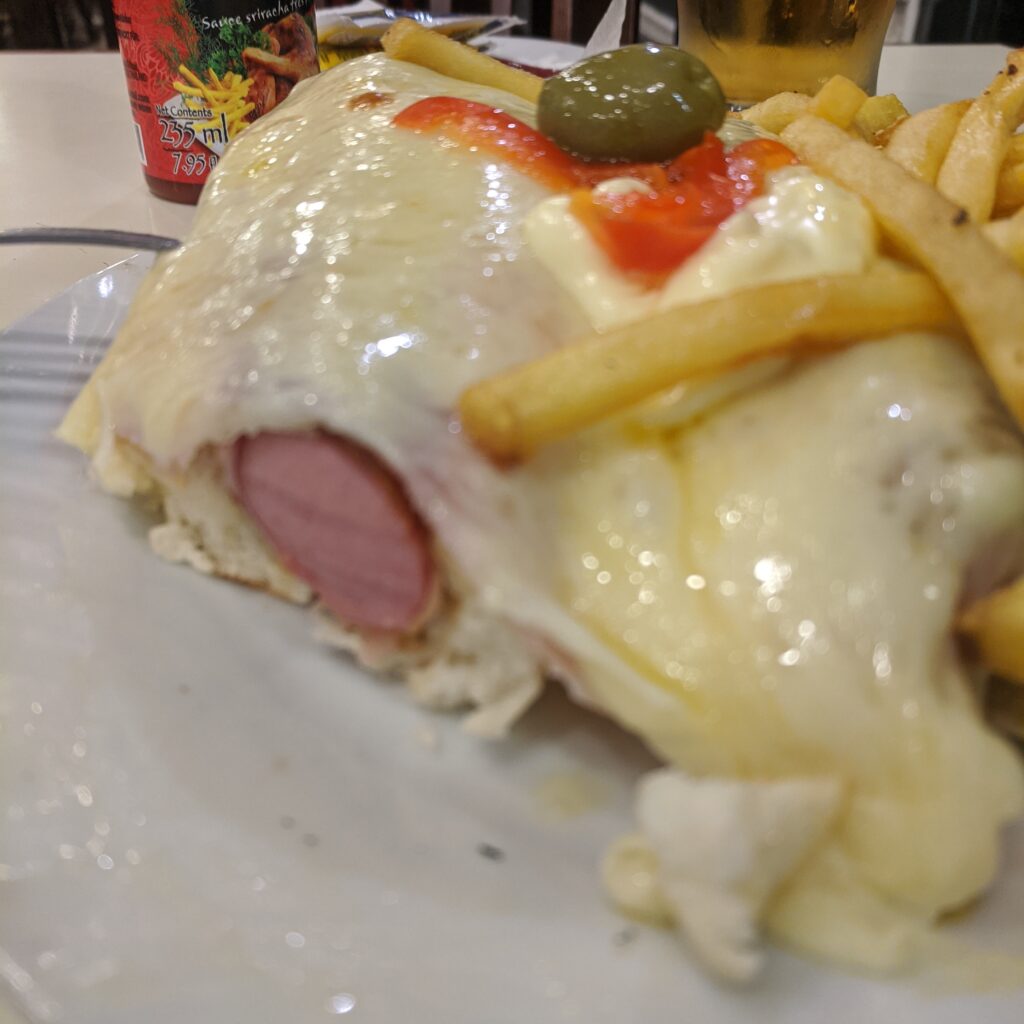
On the left: two hot dogs buried under what felt like five pounds of cheese. Just… not good. At all.
On the right: a meat plate that ran about $50, and when I cut into it, it was practically raw.

After a week of steak perfection in Argentina, this was a rough landing. I wasn’t expecting miracles, but I also wasn’t expecting hot dogs drowned in cheese or an expensive plate of meat that never met a grill properly.

It honestly may have just been bad luck both times. That said, after paying $50 for food that was raw and borderline inedible, I was beyond annoyed. I ended up calling my credit card company—and they refunded the charge without hesitation. It was the first time in my life I’d ever done that, which tells you how bad it was.

Thankfully, Montevideo redeemed itself in other ways. The city itself is relaxed and walkable, the coastline is beautiful, and that Airbnb more than made up for the food disappointment.

Between the thoughtful design, the music, the ocean proximity, and the price point, it was an incredible stay—especially considering how inexpensive it was. Sometimes travel works out that way: the meals miss, but the place, the vibe, and where you rest your head absolutely deliver.

A Brief History of Uruguay

Uruguay’s history is shaped by its position between two giantsArgentina and Brazil—and by centuries of struggle over who would control it.

Indigenous Roots

Before Europeans arrived, the region was inhabited primarily by the Charrúa people. They were semi-nomadic hunters and resisted colonization fiercely. Tragically, most of the Charrúa population was wiped out during the 19th century, making Uruguay one of the few South American countries with a very small remaining Indigenous population today.

Spanish vs. Portuguese Tug-of-War

Unlike much of South America, Uruguay wasn’t immediately colonized. Spain and Portugal both wanted it, largely because of its strategic location along the Río de la Plata.

  • Colonia del Sacramento was founded by the Portuguese in 1680

  • Spain countered by establishing Montevideo in 1726

For over a century, control of the region shifted back and forth between the two empires.

Independence & Artigas

Uruguay’s path to independence was complicated. The country’s national hero, José Gervasio Artigas, led resistance movements in the early 1800s, advocating federalism and local autonomy.

After periods of occupation by both Argentina and Brazil, Uruguay finally became an independent nation in 1828, largely as a buffer state to prevent conflict between its neighbors.

20th Century: Stability & Reform

In the early 1900s, Uruguay earned a reputation as one of the most progressive countries in the world:

Early adoption of free public education

Separation of church and state

Strong labor protections and social welfare programs

This era gave Uruguay the nickname “the Switzerland of South America.”

Dictatorship & Recovery

Like many Latin American countries, Uruguay experienced a military dictatorship from 1973 to 1985. Democracy was restored peacefully, and since then, Uruguay has been one of the most stable, democratic, and transparent nations in the region.

Modern Uruguay

Today, Uruguay is known for:

Strong democratic institutions

High quality of life

Liberal policies (early legalization of same-sex marriage and cannabis)

A calm, understated culture compared to its neighbors

It’s not flashy. It’s not chaotic. And for many people, that’s exactly the appeal.

IMG_20240406_142756

Buenos Aires, Argentina! ⚽🏟️🤤🥩

When I was laid off in February 2024, the very first thing I did was start planning a trip through Central America and South America. I’d been there before, but seeing South America again felt different this time—less rushed, more intentional, and exactly what I needed.

The journey started in Phoenix and unfolded like this:

Phoenix → Los Angeles 🚌

Los Angeles → Guatemala → Costa Rica → Peru ✈️✈️✈️✈️

Lima → Chile → Argentina → Uruguay → Guatemala → Los Angeles → Phoenix ✈️✈️✈️✈️✈️✈️✈️

Along the way, I visited multiple cities in each country, took my time, and let the trip evolve as it went. Every stop had its own rhythm and personality.

That said, one place stood out enough that it deserved its own post: Buenos Aires.

There’s something about Buenos Aires—the food, the architecture, the pace of life—that makes it linger in your head long after you leave. So instead of trying to cover everything at once, I wanted to slow it down and give that city the space it deserves.

Buenos Aires, Argentina—It was absolutely unforgettable!


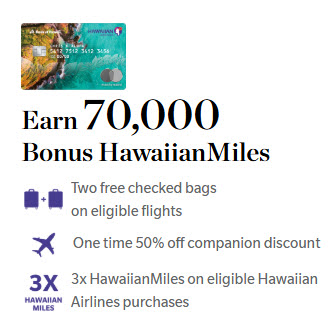
I took the bus to Los Angeles, then used my Volaris all-you-can-fly pass to work my way through Guatemala, San José, and on to Lima.

The pass costs about $200 per year and runs on availability. In real life, I’ve rarely had issues—if you’re flexible with timing and routing, there are almost always seats open.

It’s a perfect example of how cheap flights can unlock big trips. With a little patience, that single pass turns Los Angeles into a gateway to Central and South America.

Once you’ve paid the $200, the prices get kind of ridiculous. I could fly from Los Angeles to Guatemala for about $80. The same plane continues on to San José for another $30. I’d done both routes before, so I knew I could push as far south as Lima and then switch airlines.

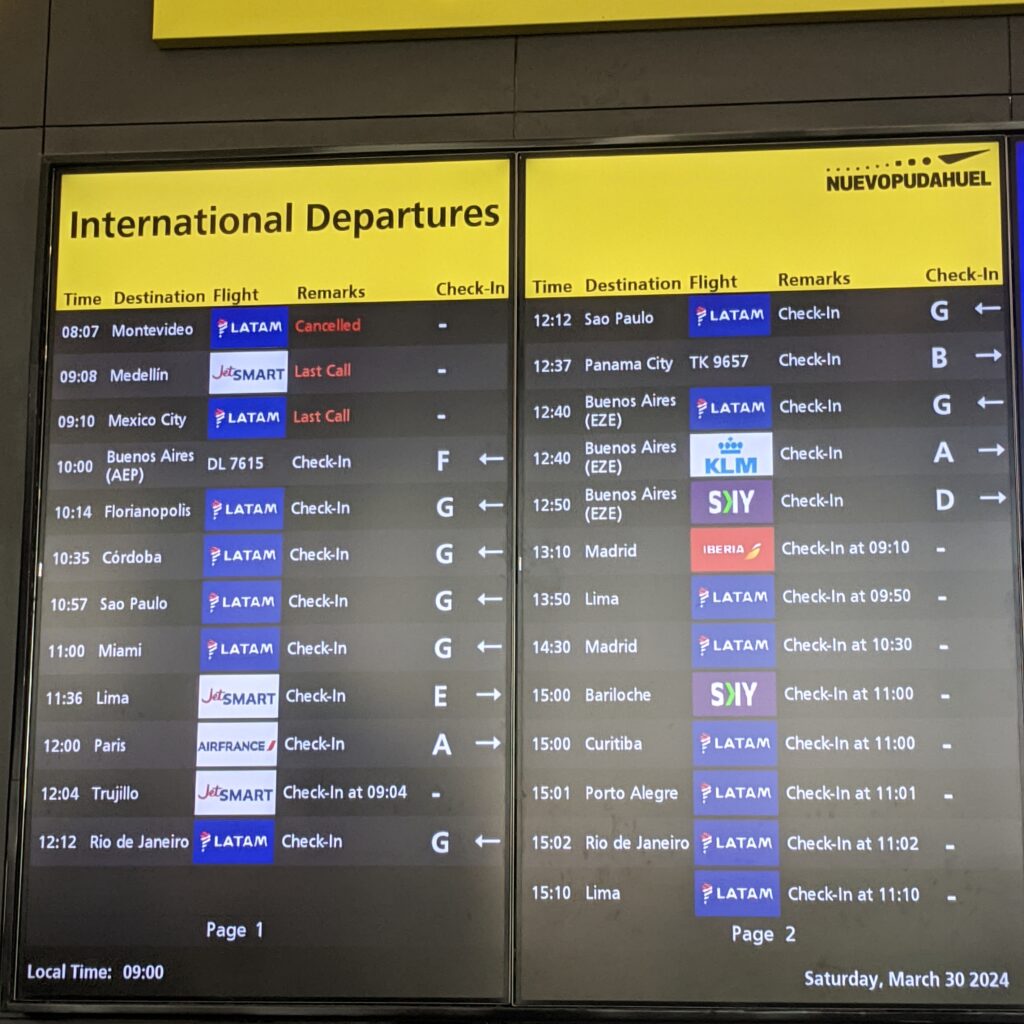
From there, SKY Airline took me from Lima to Santiago, and then on to Buenos Aires—which was fantastic.

I hopped a ferry over to Uruguay for a few days, then back to Argentina, back to Lima, and finally used my Volaris pass to get the rest of the way home. The result: a surprisingly long, surprisingly affordable trip.

Now—let’s focus on Buenos Aires (BA), since the intro mirrors my Santiago, Chile post.

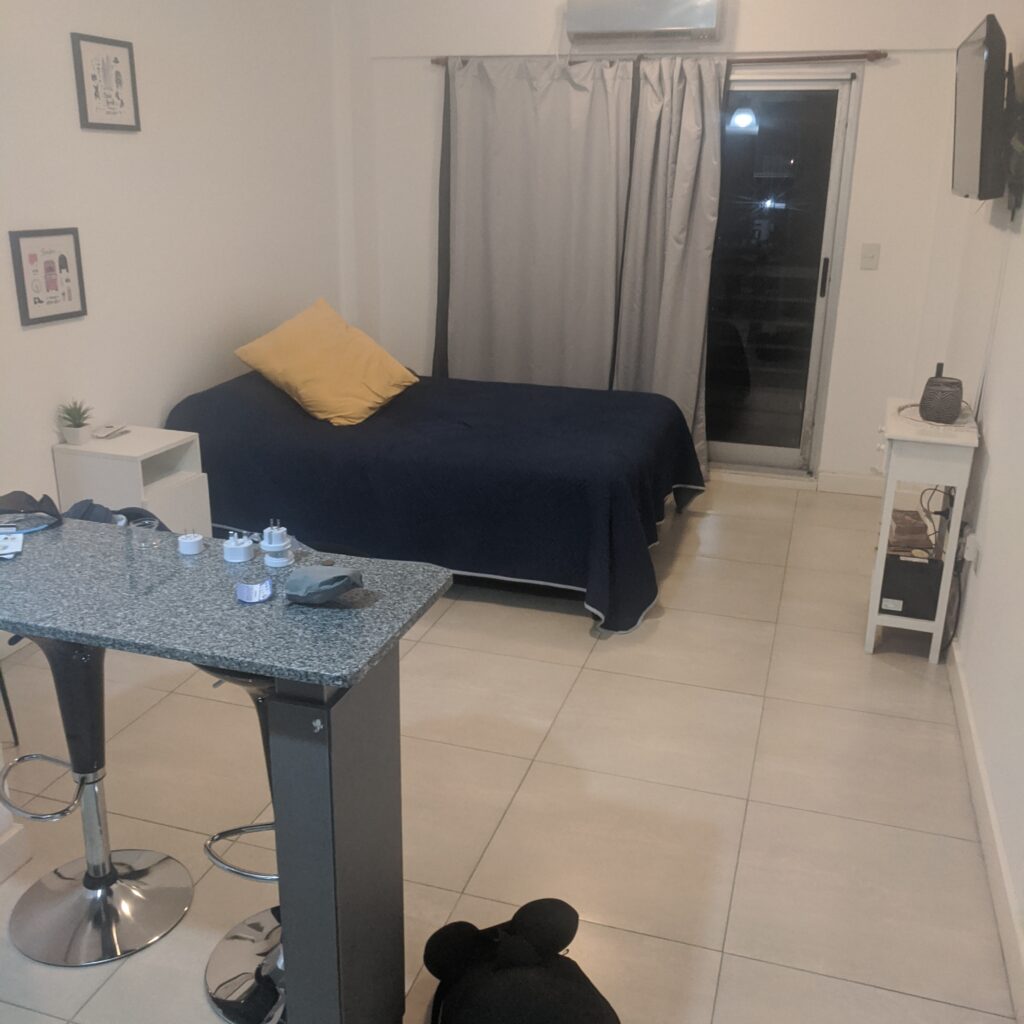
This was my $20-a-night studio in a high-rise near downtown Buenos Aires. The accommodations were cheap, the food was even cheaper, and the value was off the charts.

To get oriented, I jumped on the double-decker bus and knocked out all the tourist traps in one go—easy, efficient, and worth every peso.

When people think of legendary sports figures from Argentina, two names usually come to mind almost immediately:

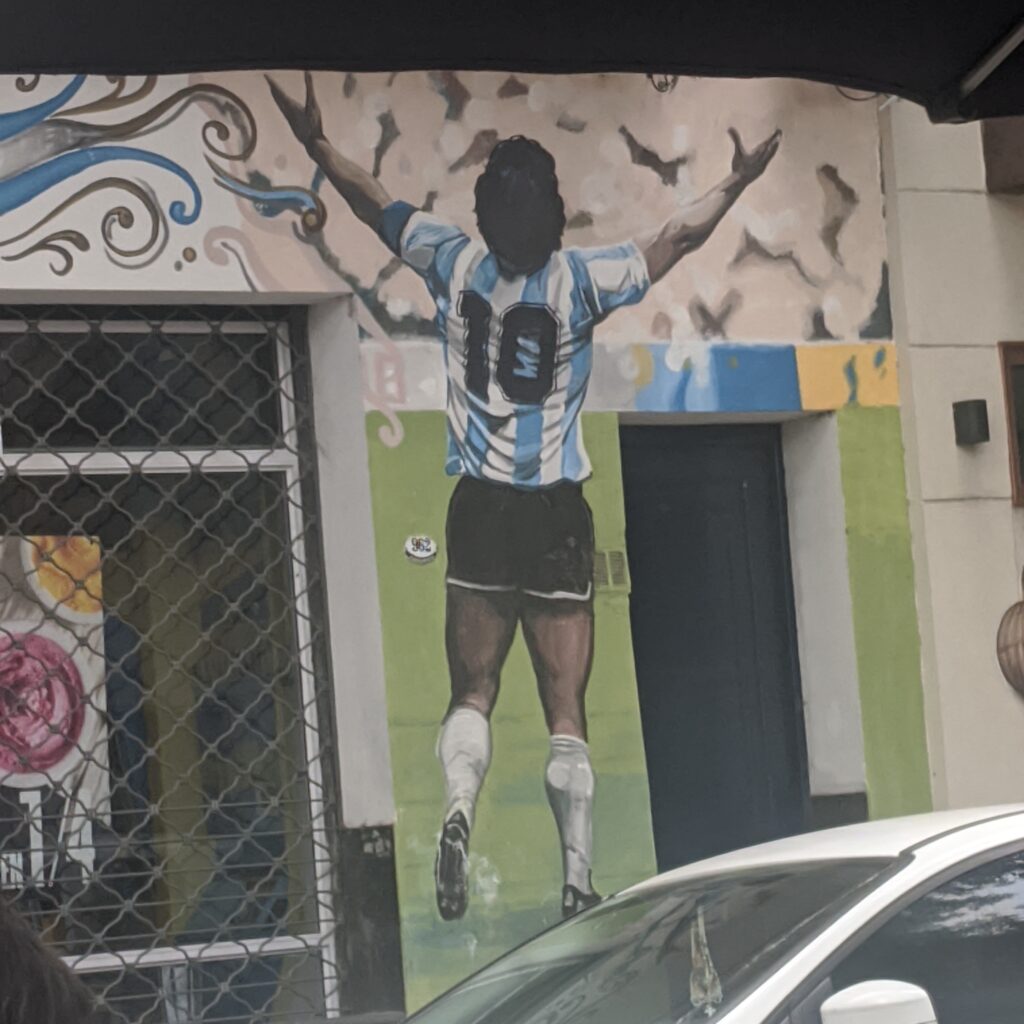
Diego Maradona
and…
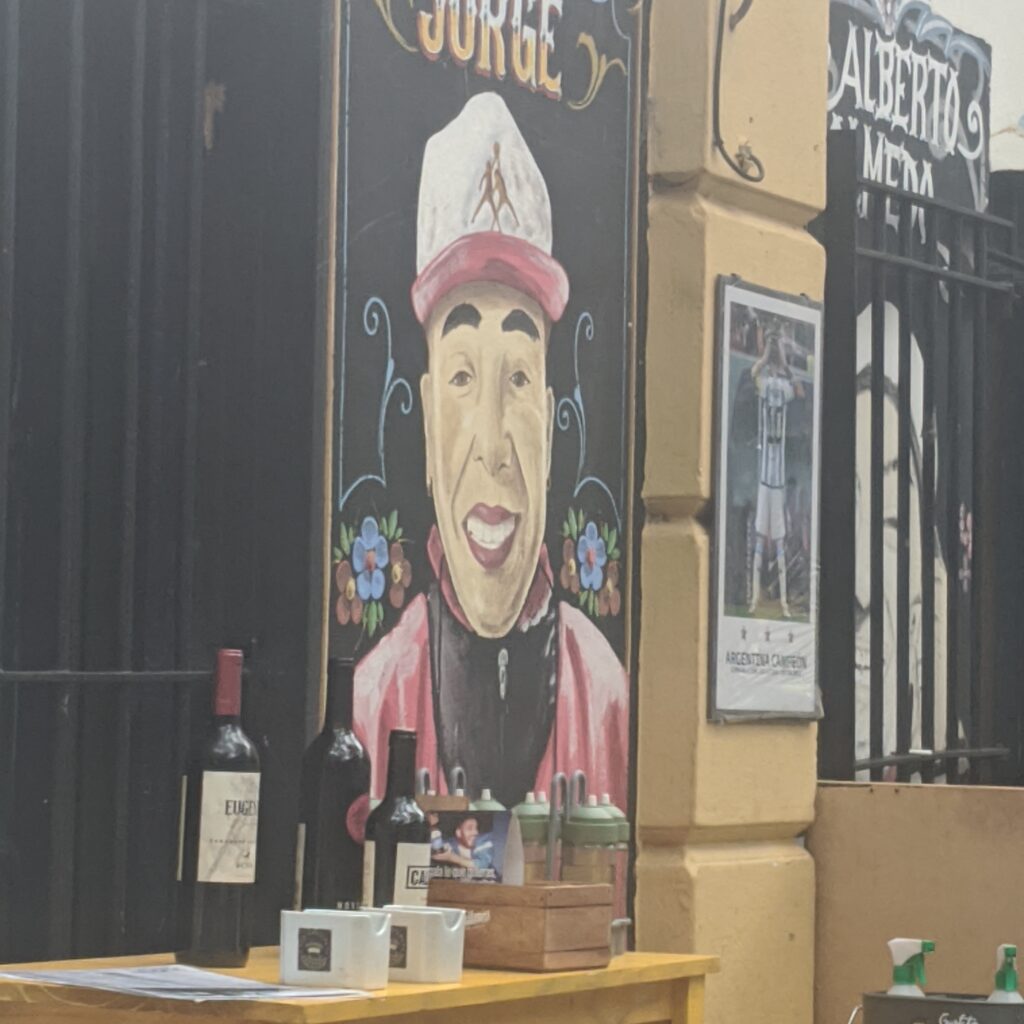
Jorge.

Yes—Jorge.

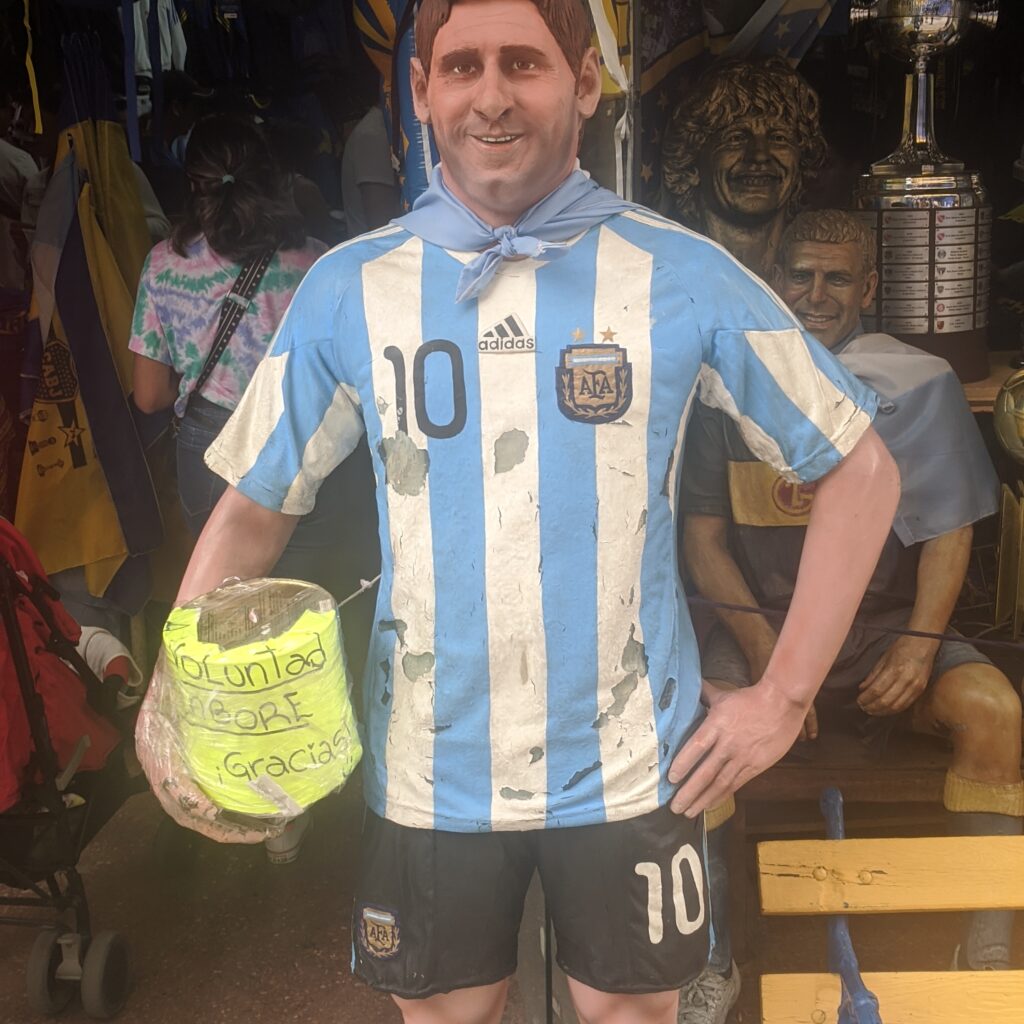
More formally known as Lionel Messi, whose full name is Jorge Lionel Messi. In Argentina, he’s earned the rare privilege of first-name-only status—right alongside Maradona.

Maradona represents the raw, rebellious, almost mythological side of Argentine football. Chaos, genius, controversy, and magic all wrapped into one flawed human.
Messi represents precision, consistency, and quiet brilliance. A machine built for beauty. Different eras, different personalities—but both are stitched deep into the country’s identity.

You don’t need to follow football closely to feel it here.

Murals.
Jerseys.
Taxi conversations.
Corner cafés with TVs permanently tuned to replays.

These men aren’t just athletes in Argentina—they’re cultural landmarks.

Maradona’s legacy is shouted.
Messi is spoken of with reverence.

For context, Maradona earned 91 international caps, scored 34 goals, and played in four FIFA World Cups. His crowning moment came in 1986, when he captained Argentina to victory in Mexico—delivering both the infamous “Hand of God” goal and the “Goal of the Century” against England in the same match.

Messi’s story is different—longer, quieter, more surgical—but no less historic. His arc completed itself when he finally lifted the World Cup in 2022, cementing what many already believed.

Both were revolutionary in their own ways.

But as you walk the streets of Argentina, past walls covered in paint and memory, it’s easy to tell who the original folk hero was.

One name lives in legend.
The other lives in legacy.

Maradona…
and Jorge

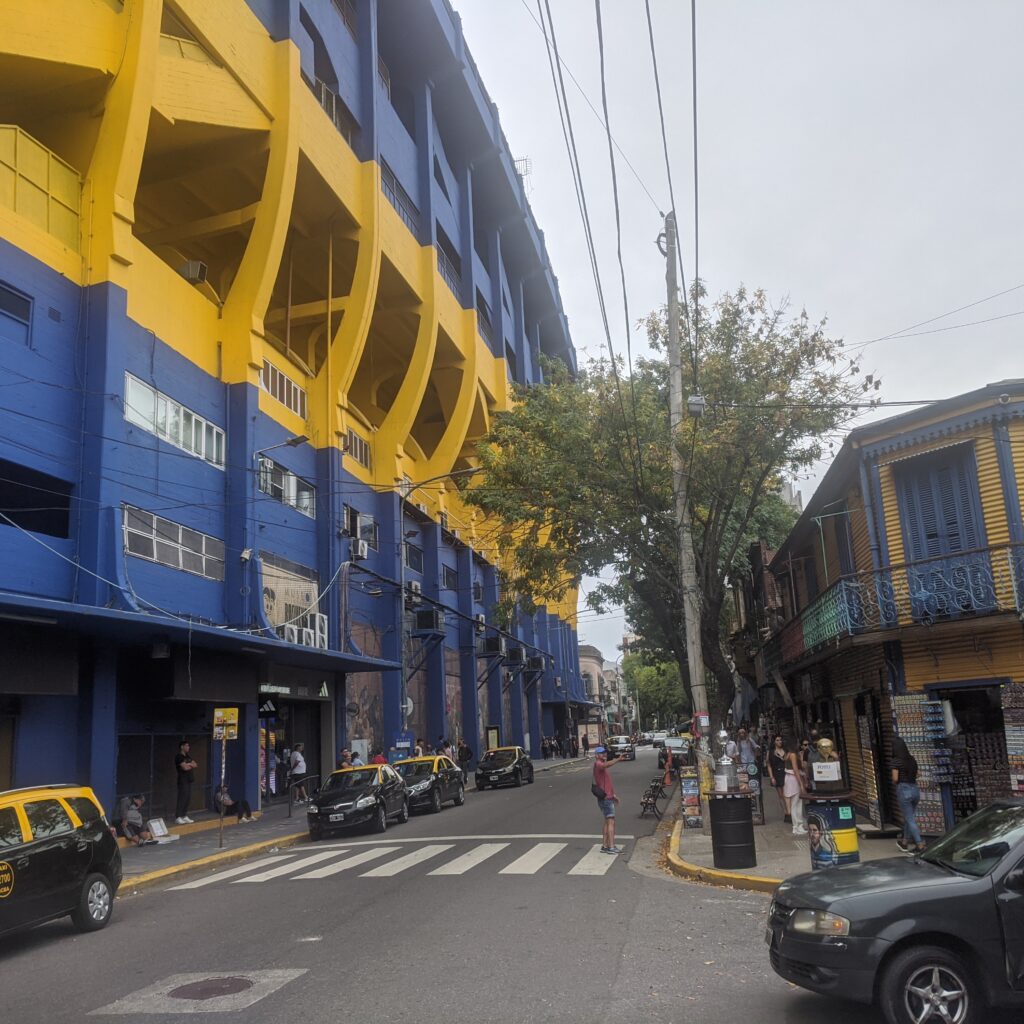
I also visited Boca Juniors, the club that Diego Maradona helped turn into a legend.

Their home stadium, La Bombonera, is considered one of the most famous—and intimidating—stadiums in the world.

Even empty, it has a pulse.

The impossibly steep stands, the tight neighborhood pressing in around it, and the history baked into the concrete make it feel less like a stadium and more like a shrine. It doesn’t whisper; it hums.

You don’t need a match day to understand why Boca—and Maradona—mean so much here.
You just have to stand still and listen and watch the fans interact.

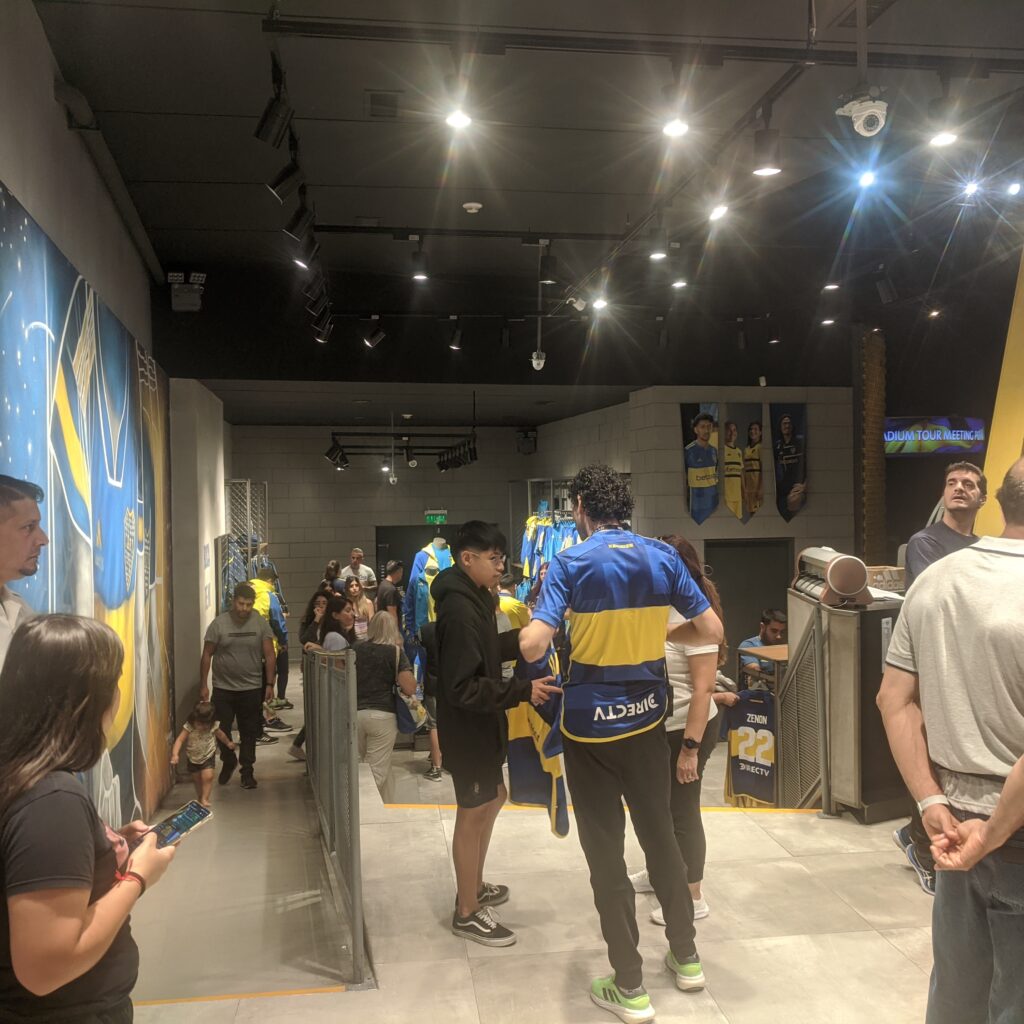
I toured the neighborhood and the La Boca football museum!

Club Atlético Boca Juniors is a professional sports club based in La Boca, one of the most iconic—and unapologetically colorful—areas of Buenos Aires. The club is best known for its men’s football team, which, since earning promotion in 1913, has never left the Argentine Primera División.

Boca Juniors is the most successful club in Argentina, with 74 official titles, including:

35 Primera División championships

17 domestic cup titles

Plus an honorary title awarded by the Argentine Football Association for Boca’s influential 1925 European tour, which helped put Argentine football on the global map.

Simply put, Boca Juniors isn’t just a club—it’s an institution.

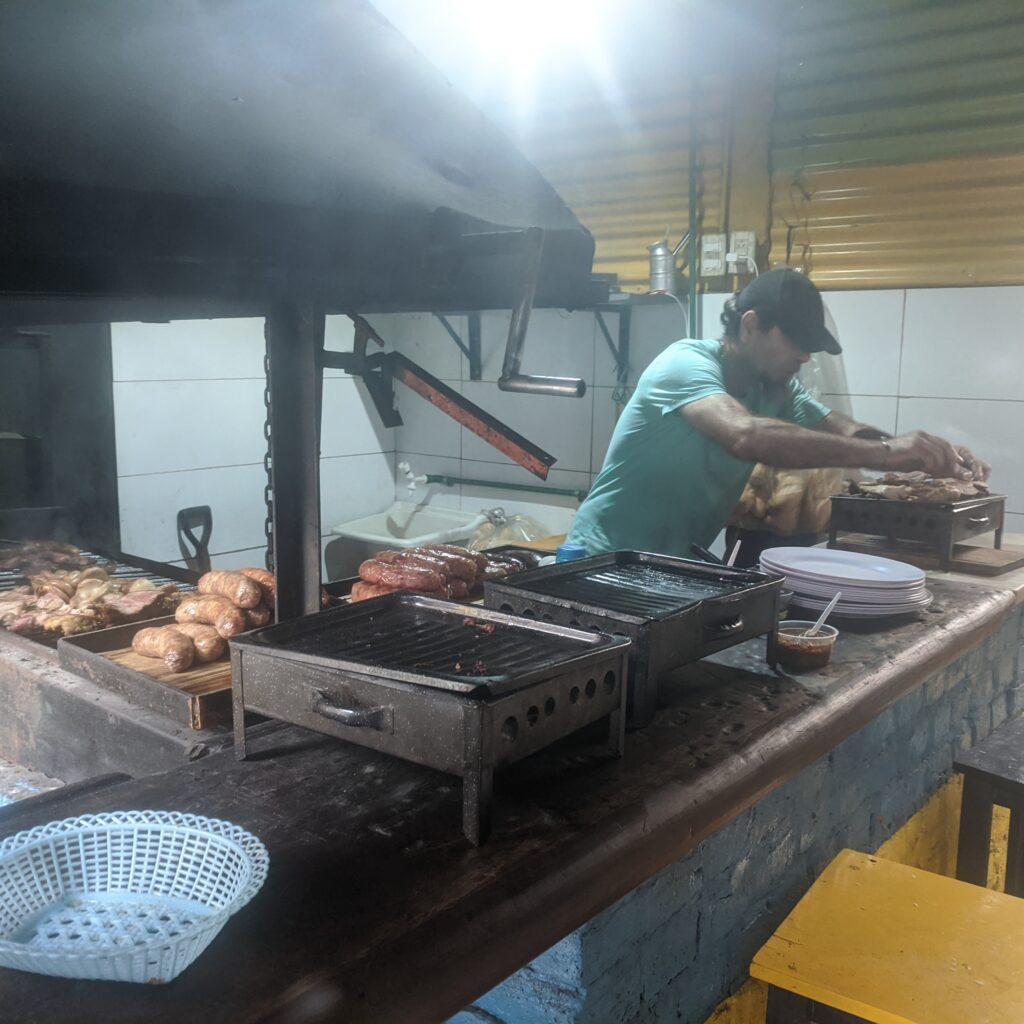
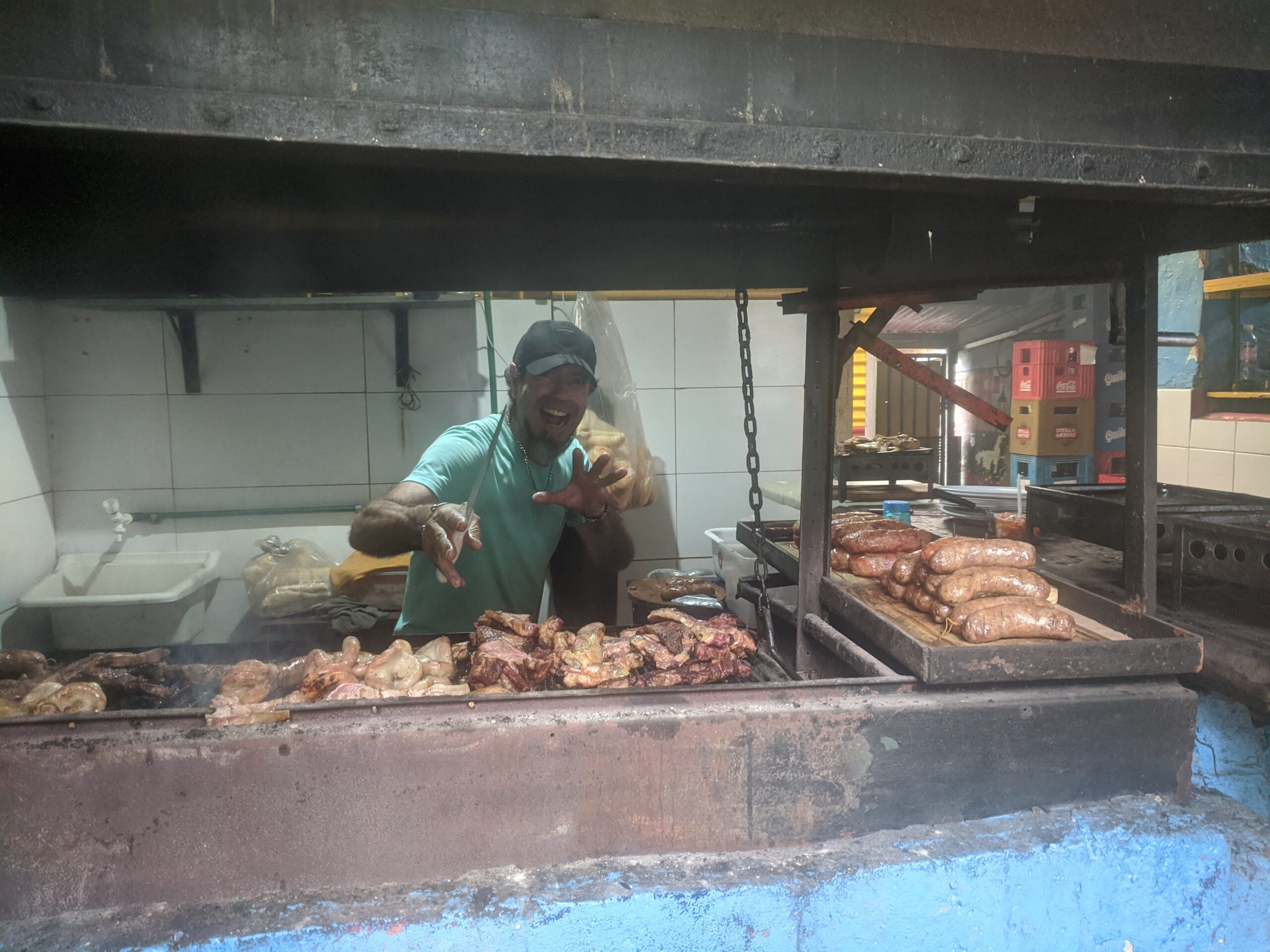
Argentina is also famous for its steak and meat—very much in the same league as Brazil. And after touring La Bombonera, I had one of the best meals of my life.

I told the cook I wanted to try all the meats. He understood the assignment.

Sausage links.
Multiple cuts of steak.
A plate that arrived full… and disappeared even faster.

It was gone before I even thought to take a picture—which, honestly, might be the highest compliment of all. 🥩

I ate steak almost every evening in Buenos Aires, and the portions were massive. A proper steak dinner would run about $12 USD, and more often than not, I’d be eating the leftovers for breakfast the next morning.

What really stood out was how the steaks were served. They weren’t just slabs of meat dropped on a plate—they were layered with extras like eggs, tomatoes, and other simple additions that somehow made the meal even better. No fancy sauces, no nonsense. Just quality beef, cooked properly, and paired in a way that made every plate feel both affordable and unforgettable.

I know I took pictures of just about every meal, but somehow I can’t find them as of this post—which honestly might be a blessing. Some things are better remembered than documented.

Below are a few representative shots, along with an article that dives into why Argentine steak is often considered the best in the world. It comes down to the cattle, the grass, the simplicity, and the culture around cooking meat. After eating my way through Buenos Aires, I get it.

Some cities impress you.
Others feed you so well that they ruin steaks everywhere else.

Argentina is also known as a true mecca for meat lovers, and many people argue it produces the best steak in the world. After eating my way through the country, it’s hard to disagree.

From grass-fed cattle to unique cuts of beef and time-honored cooking methods, Argentine steak is a craft—from start to finish.

You can’t talk about Argentine steak without talking about the cows.

While Argentina is home to several cattle breeds, the best beef comes from cows that graze freely on the legendary Las Pampas.

So what exactly are Las Pampas?

They span roughly 750,000 square kilometers of vast, mostly flat grasslands, famous for a temperate climate that produces exceptionally nutritious grass. Cows here spend their lives roaming and grazing naturally, rather than being grain-fed in confined spaces. The result is beef that’s leaner, more flavorful, and widely considered healthier than many alternatives.

Then there’s the cooking.

Argentina’s signature Asado technique is simple, deliberate, and deeply respectful of the meat. No heavy marinades. No distractions. Just fire, salt, time, and experience. The goal is always the same: let the quality of the beef speak for itself.

From pasture to plate, Argentine steak isn’t just food—it’s culture.

If you want to go deeper into why Argentina is considered the global capital of steak, you can read the full article HERE, which breaks down the land, the cattle, the cuts, and the traditions that make Argentine beef so unforgettable.

After experiencing it firsthand, I get the hype.

Argentina doesn’t just serve steak—
it sets the standard. 🥩🇦🇷

IMG_20240327_150237

Santiago, Chili – there was no chill here!

When I was laid off in February 2024, the very first thing I did was start planning a trip through Central America and South America. It felt like the right response—movement, perspective, and a chance to reconnect with places that had stuck with me before. Seeing South America again was just as incredible as I remembered.

The trip started in Phoenix and unfolded like this:

  • Phoenix → Los Angeles 🚌

  • Los Angeles → GuatemalaCosta RicaPeru ✈️✈️✈️

  • LimaChileArgentinaUruguayGuatemala → Los Angeles → Phoenix ✈️✈️✈️✈️✈️✈️

I visited several cities in each country along the way, letting the trip evolve naturally instead of rushing through it. Every stop had its own rhythm, but one city stood out enough that it deserved its own post:

Santiago.

Set against the Andes, Santiago surprised me—in good ways and a few unexpected ones. So rather than trying to cover everything at once, I wanted to slow it down and give the city its own space.

Santiago, Chile—that story comes next.

I took the bus to Los Angeles, then used my Volaris all-you-can-fly pass to work my way south:
Los Angeles → GuatemalaCosta RicaLima.

The Volaris pass costs about $200 per year and is based on availability. In reality, I rarely have any issues using it—there are usually seats open if you’re flexible.

Once you’ve invested the $200, the pricing becomes almost ridiculous. I could fly from Los Angeles to Guatemala for about $80, and that same plane continued on to San José for another $30. I’d already done both of those routes before, so I knew Volaris could reliably get me as far south as Lima.

From there, I switched airlines.

I used SKY Airline to fly from Lima to Santiago, and then on to Buenos Aires—which was an excellent leg of the trip.

After Buenos Aires, I took a ferry over to Uruguay for a few days, then headed back to Argentina and returned to Lima. From there, my Volaris pass kicked back in and carried me the rest of the way home.

By mixing an all-you-can-fly pass with low-cost regional airlines, I was able to move through Central and South America efficiently—and incredibly cheaply. It’s a perfect example of how flexible routing and inexpensive flights can turn a big trip into a very affordable one.

$57,950 Chilean Peso = $61.02 US Dollar

Santiago is a massive city, and one of the things that stood out to me immediately was the level of visible poverty. In some ways, it reminded me of my first experiences in Brazil—that sharp contrast between modern city life and deep, systemic hardship existing side by side.

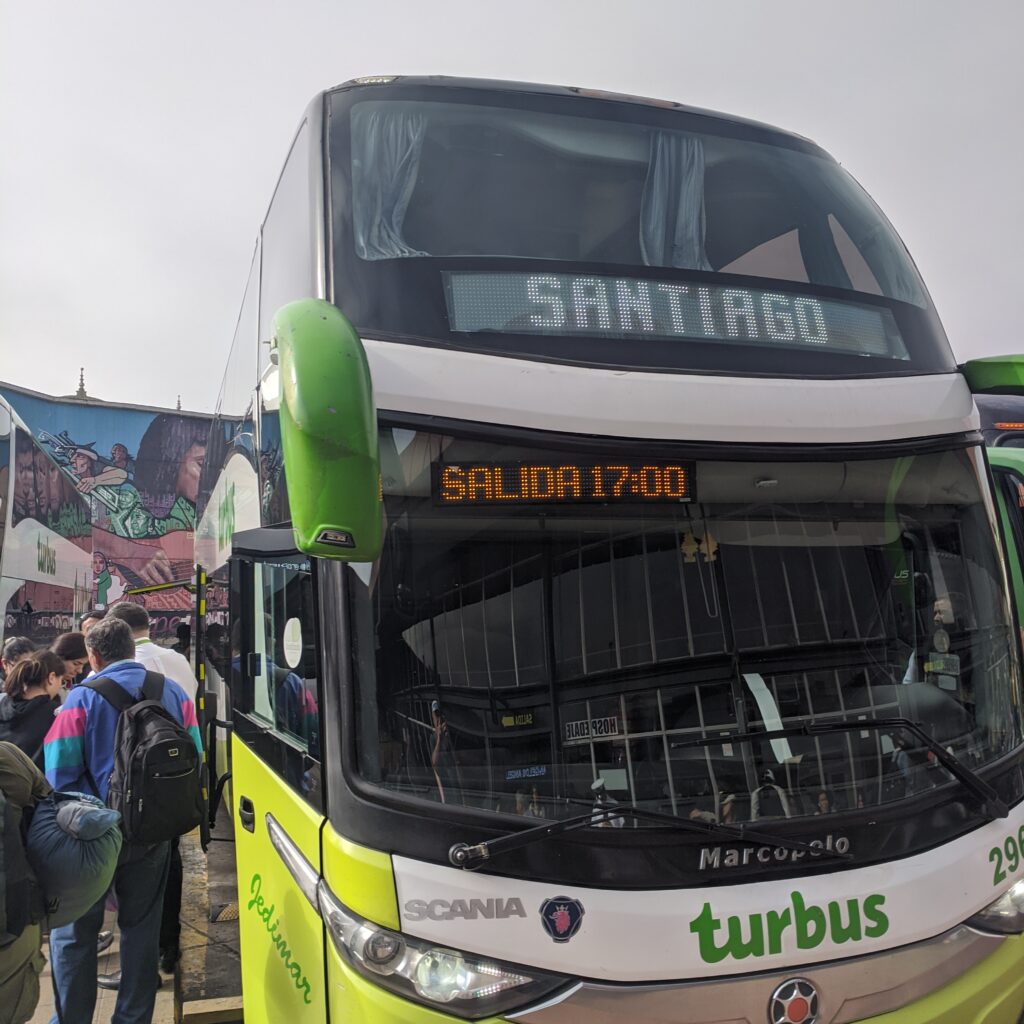
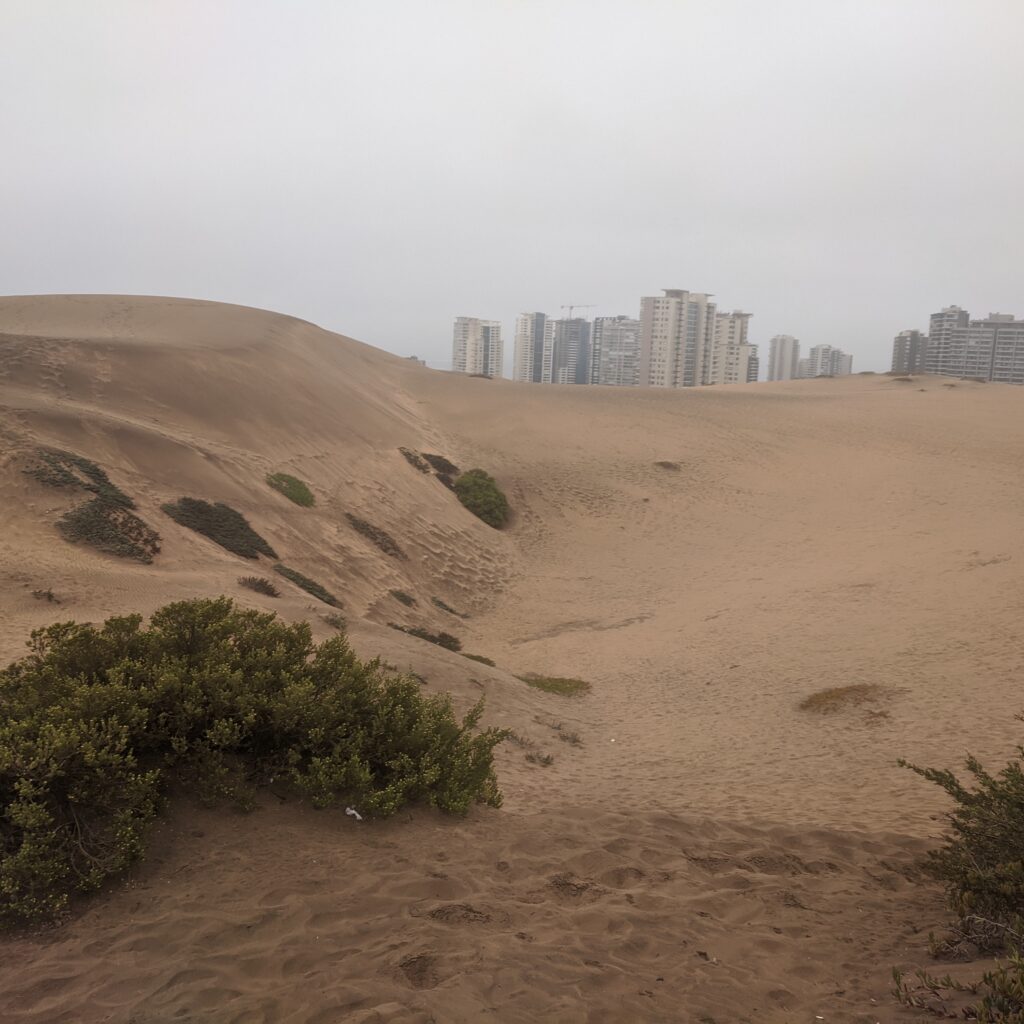
I took a day trip to Concón, a popular resort town known for its dunes, beaches, boardwalk, and nightlife. The destination itself was polished and relaxed, but the bus ride there told a different story.

We passed through several small towns along the way. Kids were playing soccer in open spaces surrounded by trash—laughing, running, fully present in the moment. It was striking and uncomfortable at the same time.

I’d seen this before in Brazil, and seeing it again was a reminder of how widespread poverty can be across parts of South America. Informal housing climbing hillsides, communities built wherever space allows, and families making the best of what they have—it’s impossible not to notice when you’re moving through the region by ground instead of flying over it.

Travel like this has a way of pulling you out of abstractions. The inequality isn’t theoretical—it’s right outside the bus window. And while places like Santiago and Concón have their beauty and energy, those moments in between are often what stay with you the longest.

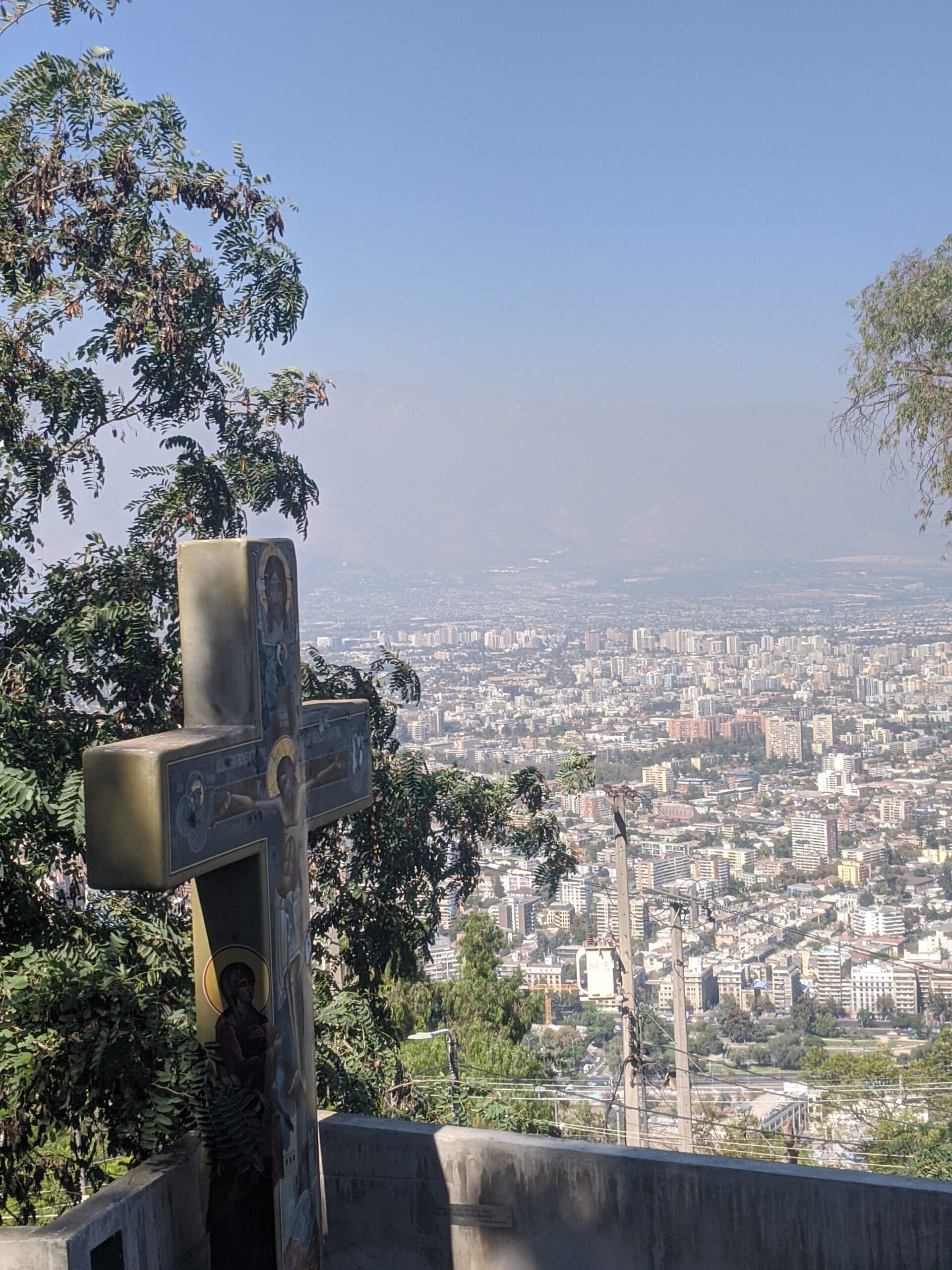
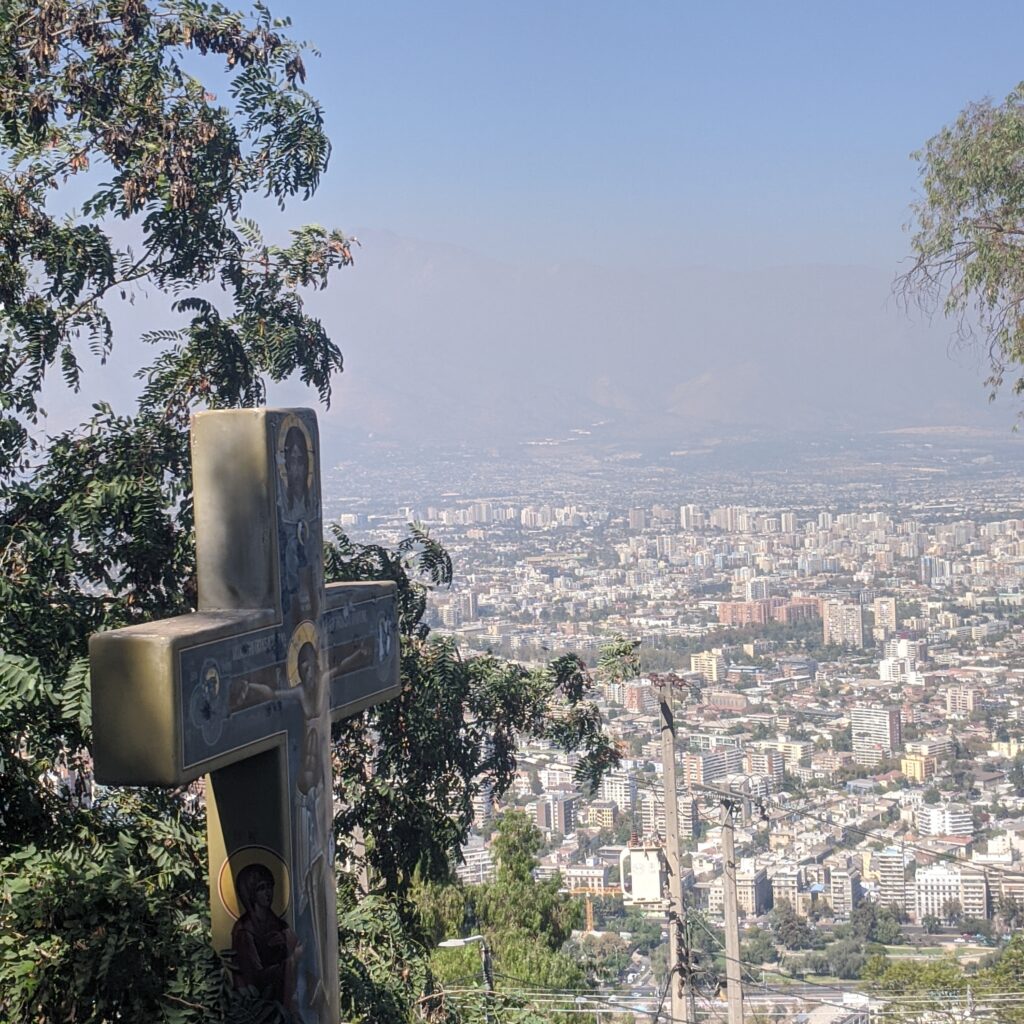
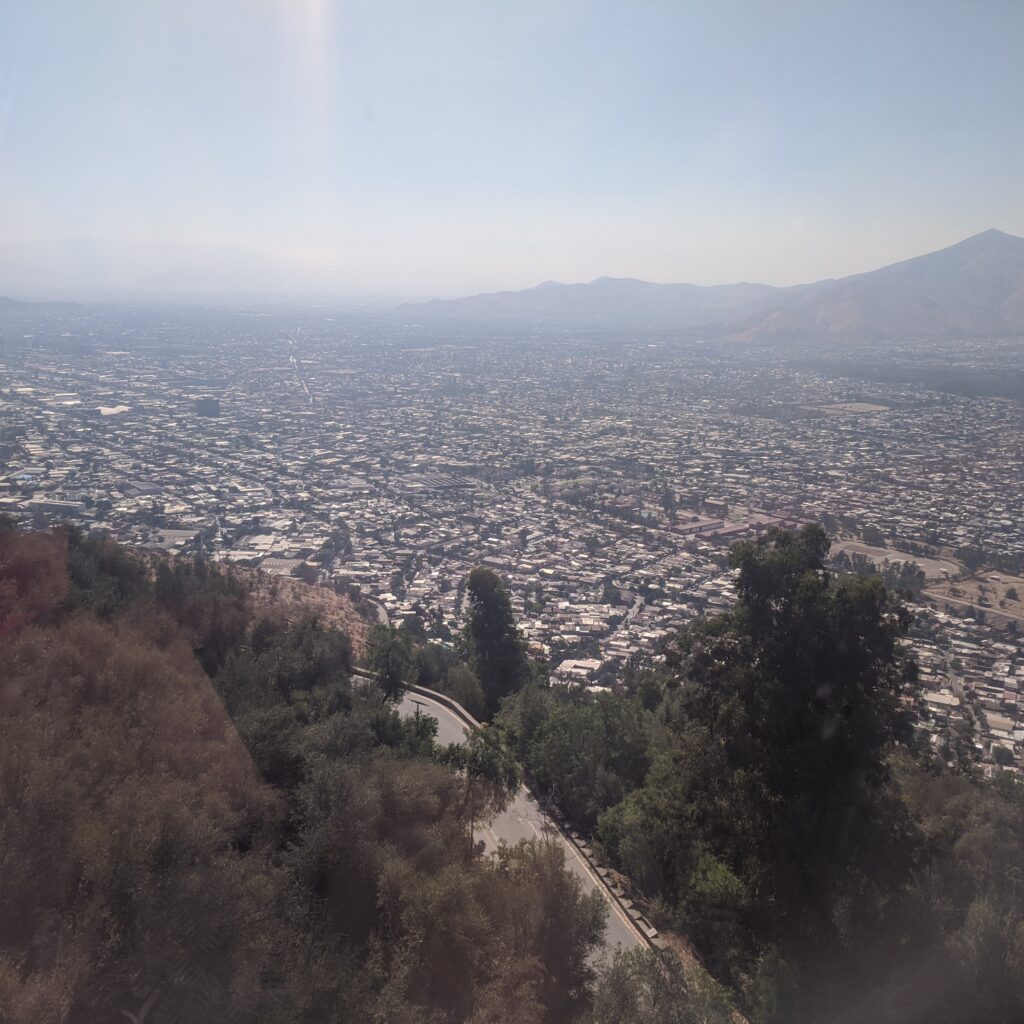
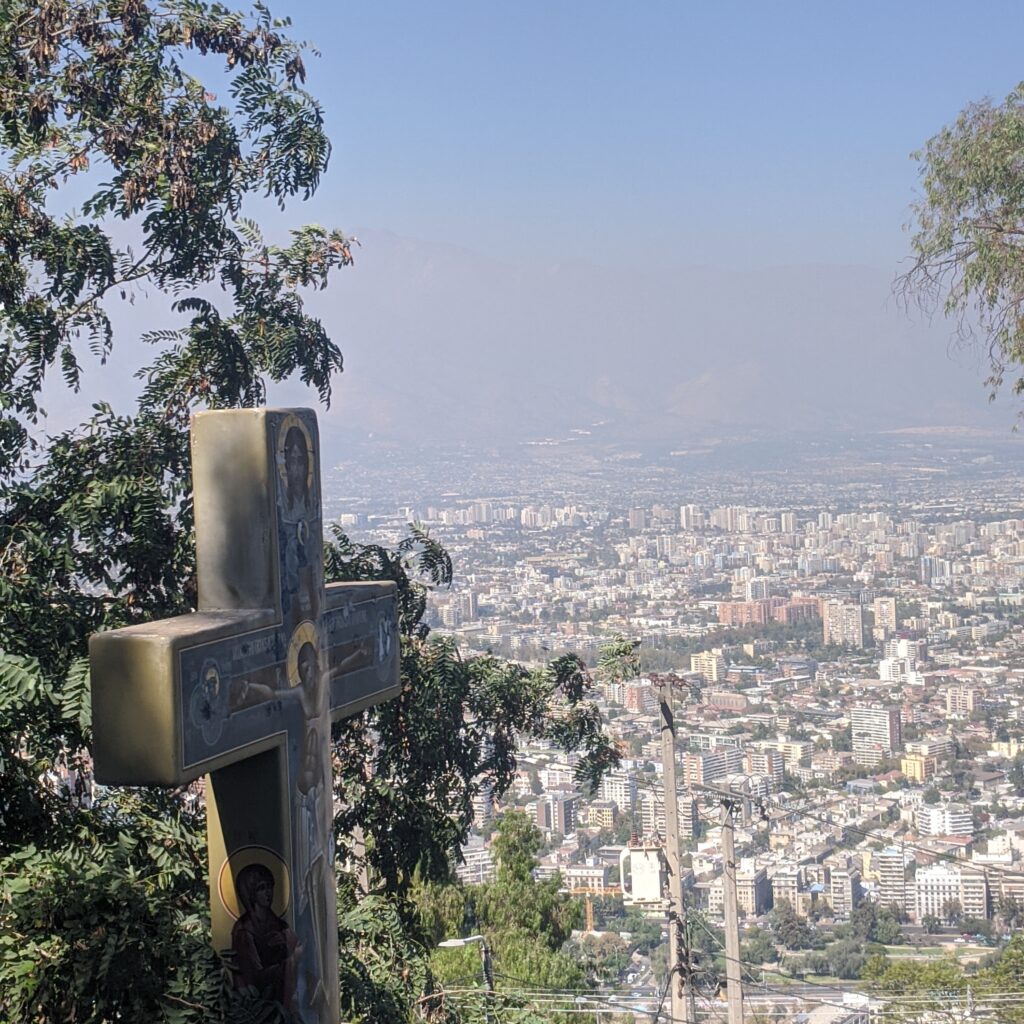
The biggest highlight of my time in Santiago was visiting Metropolitan Park of San Cristóbal Hill. Getting up high above the city completely changed my perspective and made it crystal clear just how massive Santiago really is.

From the top of San Cristóbal Hill, the city stretches endlessly in every direction, with the Andes looming in the background and neighborhoods blending into one another as far as the eye can see. It’s one of those viewpoints where everything clicks—the scale, the density, and the complexity of the city all at once.

Pictures never fully capture it, but they come close. I’ve included a few photos (and a video) here, and I hope they do it justice. Standing up there, looking out over Santiago, was one of those quiet travel moments where you just stop and take it all in.

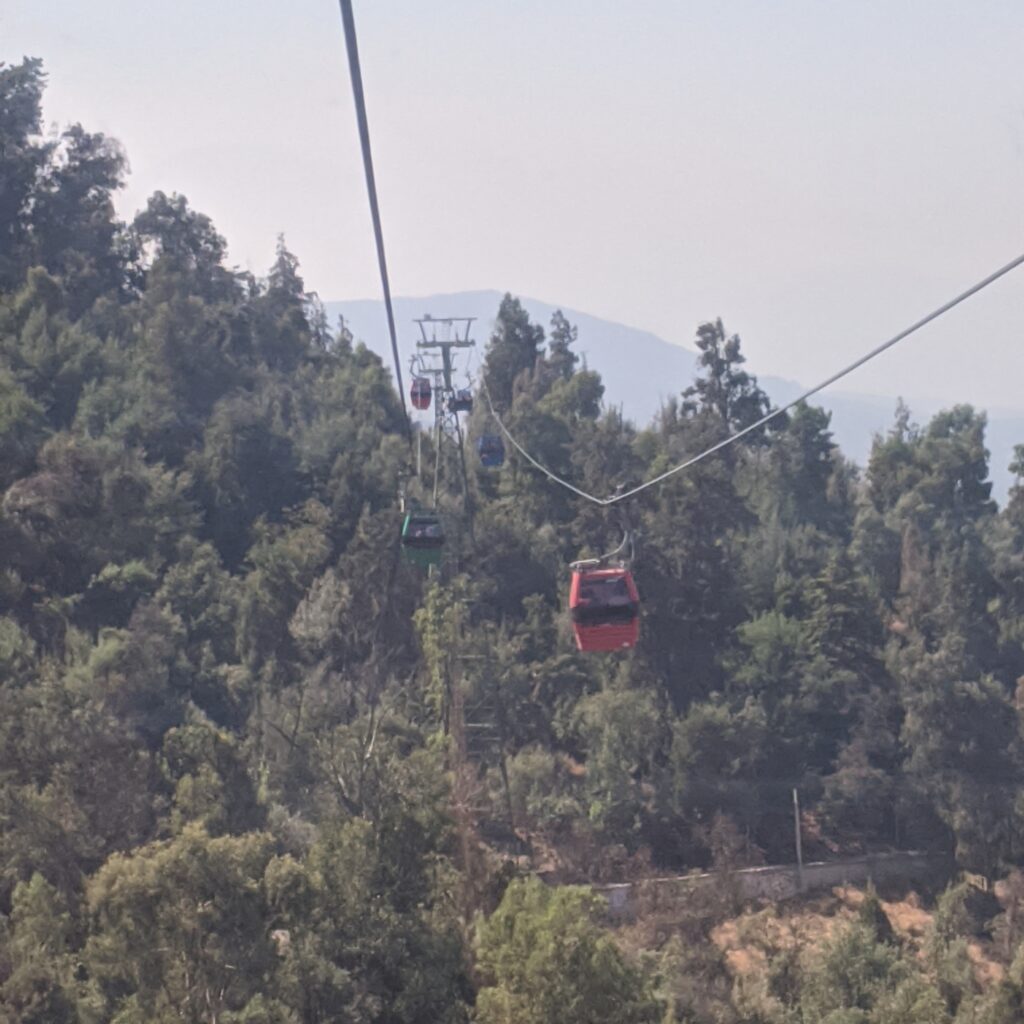
After a fun ride up, we finally reached the top—and somehow, the view was even better than what we’d seen on the way up. Standing there above Santiago, with the city spread out in every direction, really put its scale into perspective.

It was one of those moments where you stop taking pictures, stop moving, and just take it in.

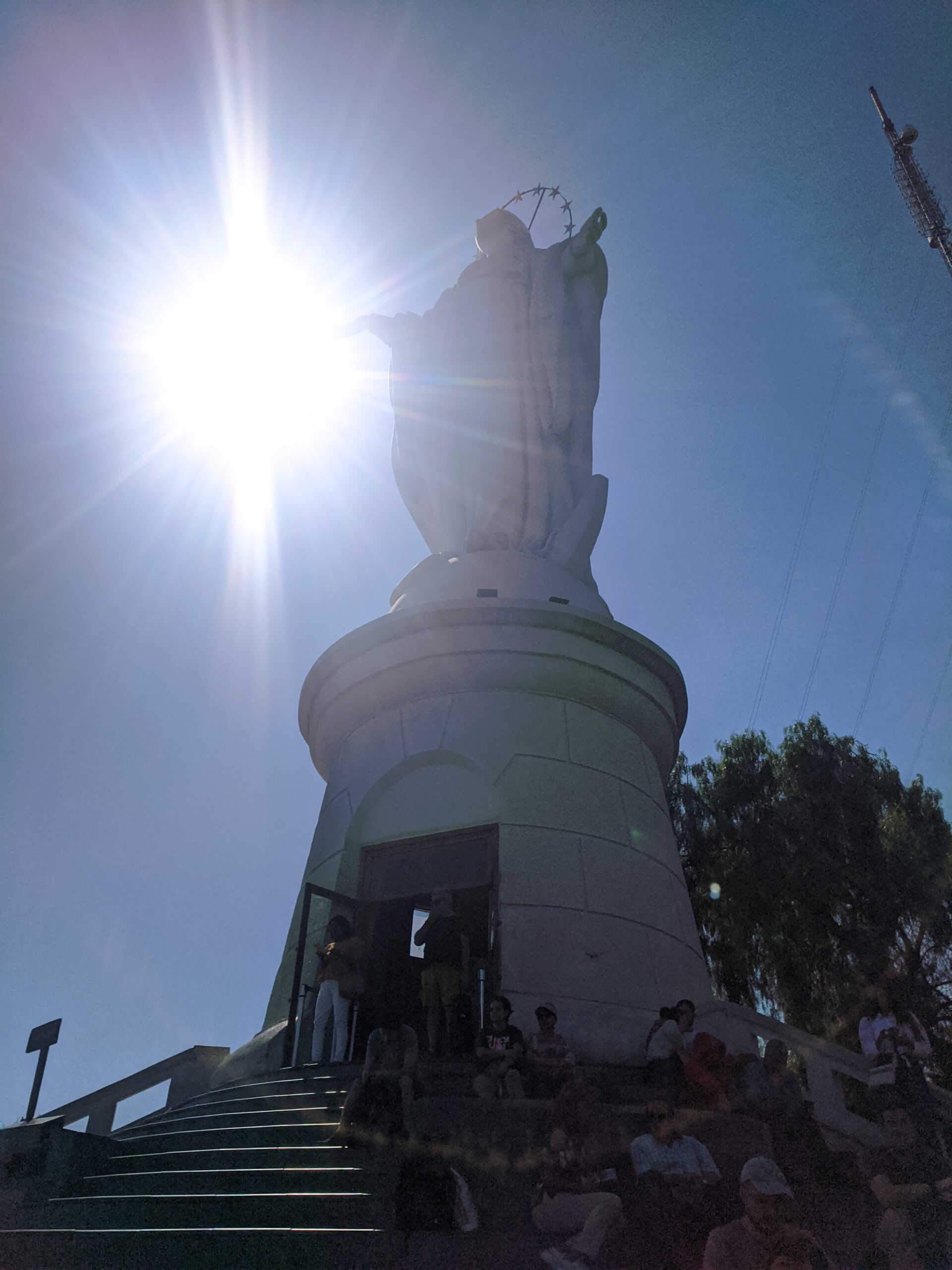
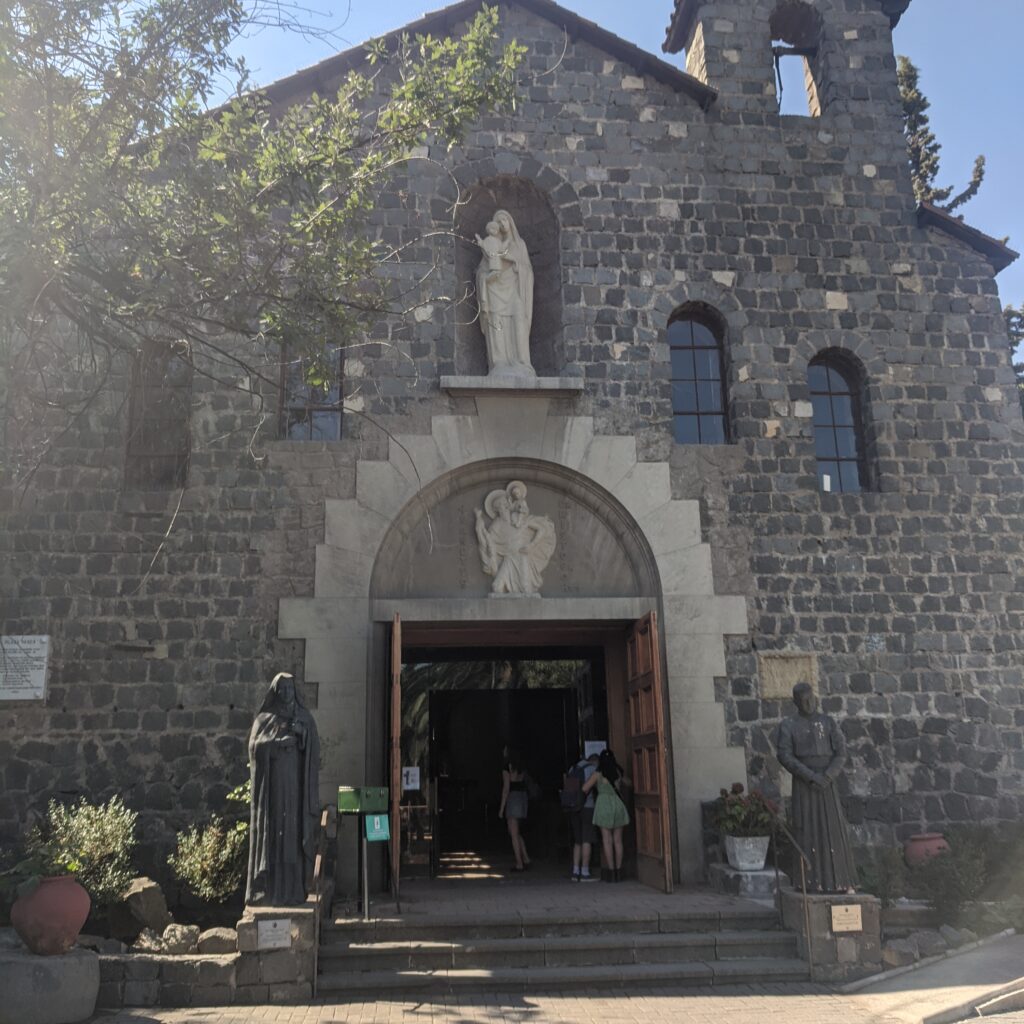
At the top of Cerro San Cristóbal, there’s a beautiful little church that feels quiet and understated compared to what comes next. Just beyond it stands the massive Virgen de la Inmaculada Concepción, watching over the entire city from above.

Seeing it immediately reminded me of Christ the Redeemer in Rio de Janeiro. Different scale and style, but the same feeling—these monuments aren’t just landmarks, they’re symbols. You feel their presence long before you understand their significance.

Standing up there, with Santiago spread out below, it was one of those moments where travel connects places in your memory. Chile and Brazil, different cultures and landscapes, but tied together by perspective, altitude, and awe.

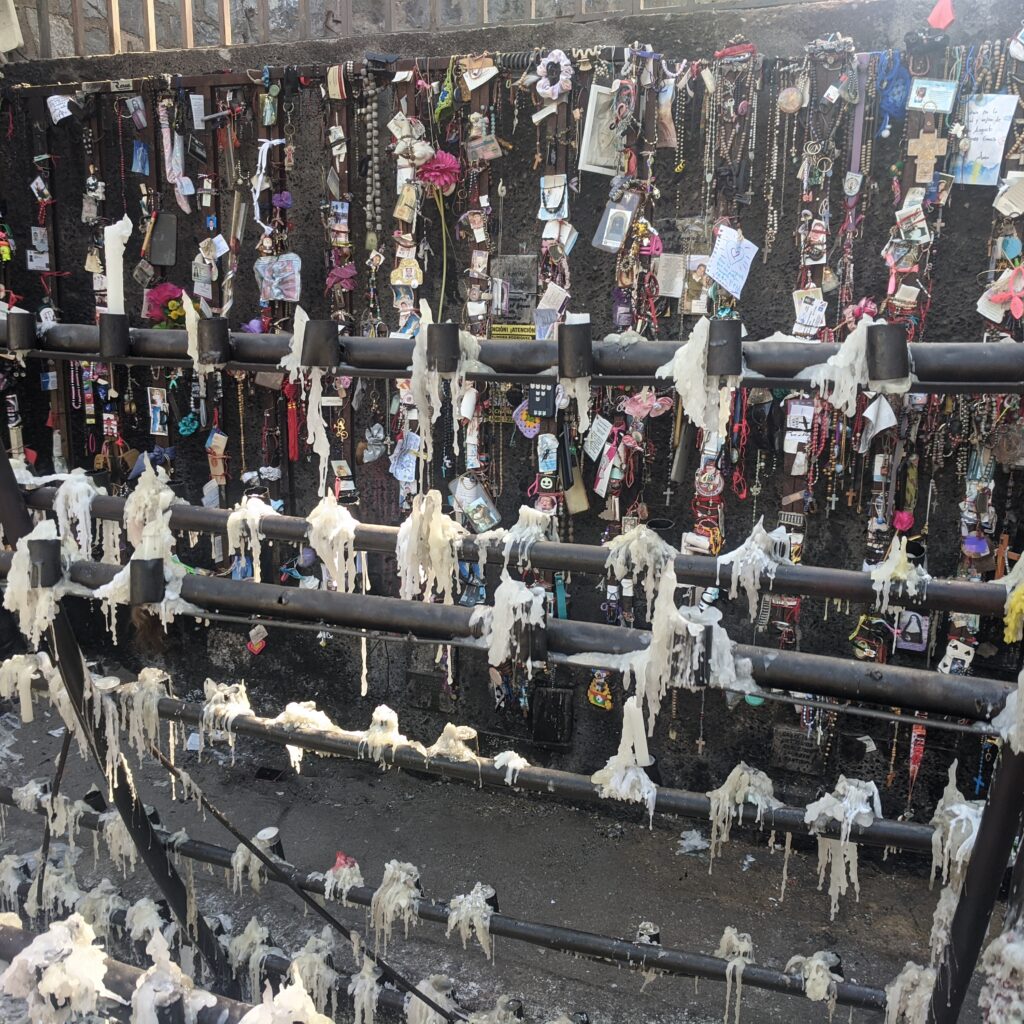
Every time I visit a church somewhere in the world, there’s that familiar ritual—lighting a candle for someone you want to pray for, and leaving a small donation. It’s simple, quiet, and grounding, no matter where you are.

My mom used to do this all the time, later in her life. Every church visit meant a candle lit, a pause, and a moment of intention.

And I know—without a doubt—that a lot of those candles were a prayer for me. 🙏🏻

Check out my YouTube channel for 1,500+ travel videos from around the world, focused on geoarbitrage, slow travel, and living well without overspending. Real cities, real costs, real movement—nothing rushed, nothing staged.

NorthAmericanDarrell – YouTube

Smash that subscribe button like it’s the last beer in the fridge on a Saturday night.

Screenshot_20250705-170142

No-alchohol beer – He likes it!🥳

Disclaimer: This is NOT the final answer, but it has become a clear option for IPA consumption for me!  IPAs are my favorite and can have up to 8% alcohol, which can put me in the shitter, quickly!

One of my favorite things to do when traveling is trying the local beer. There are microbreweries in every city, so I can try them during my visits and have done so over the years.  Honestly, I never really considered NA beer until trying them and realizing how good they are and better yet, how they don’t make me feel.  

I get the same feeling of drinking a beer while watching the game, with no hangovers or questionable decisions.  Talk about a win-win-win!

I have tried quite a few NA IPAs, and I will share my thoughts in this post in hopes that you give them a chance.  One of the first IPAs on my market that I remember is Lagunitas.  

These have put me under the table more times than I would like to admit, and I quit drinking them years ago.

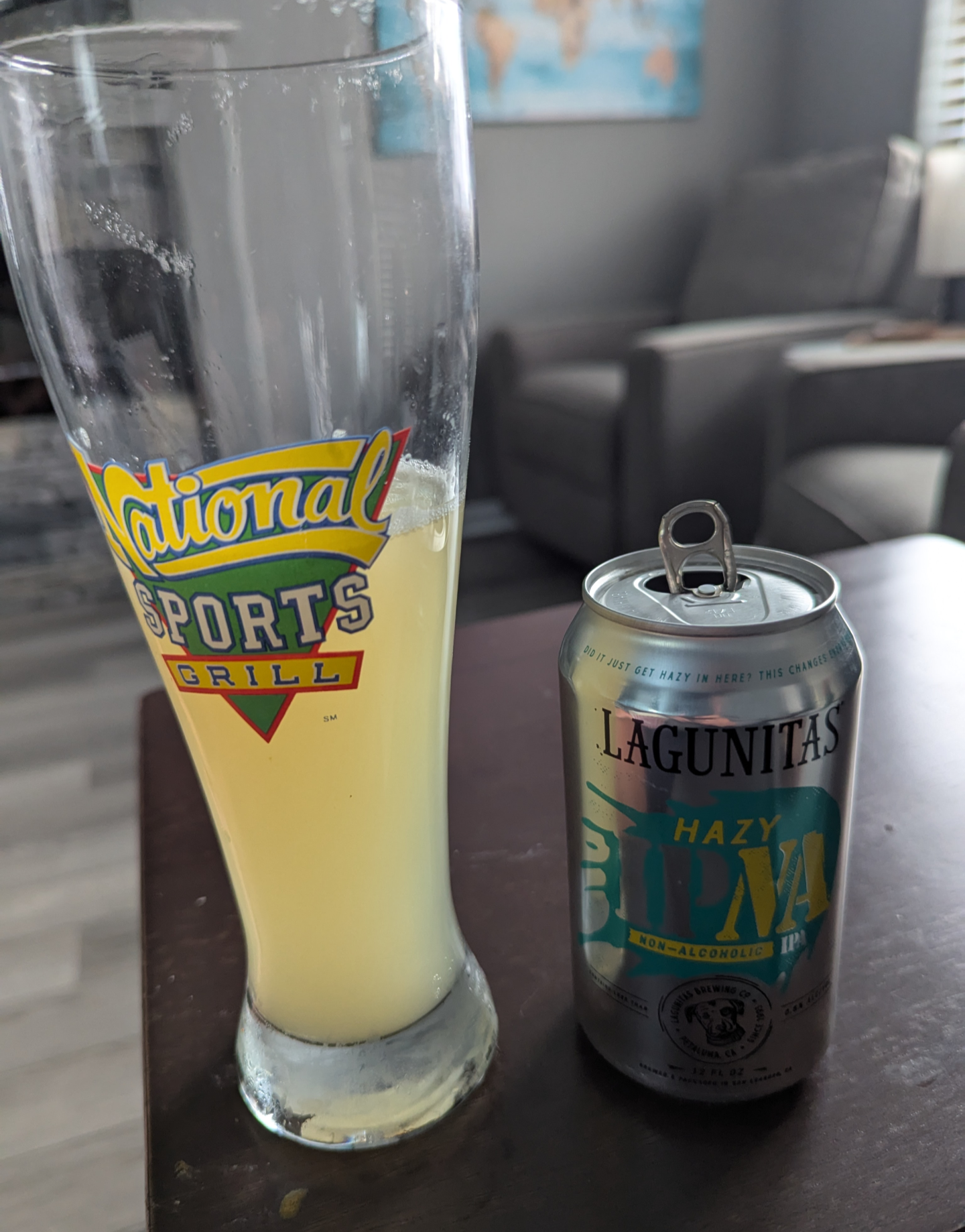
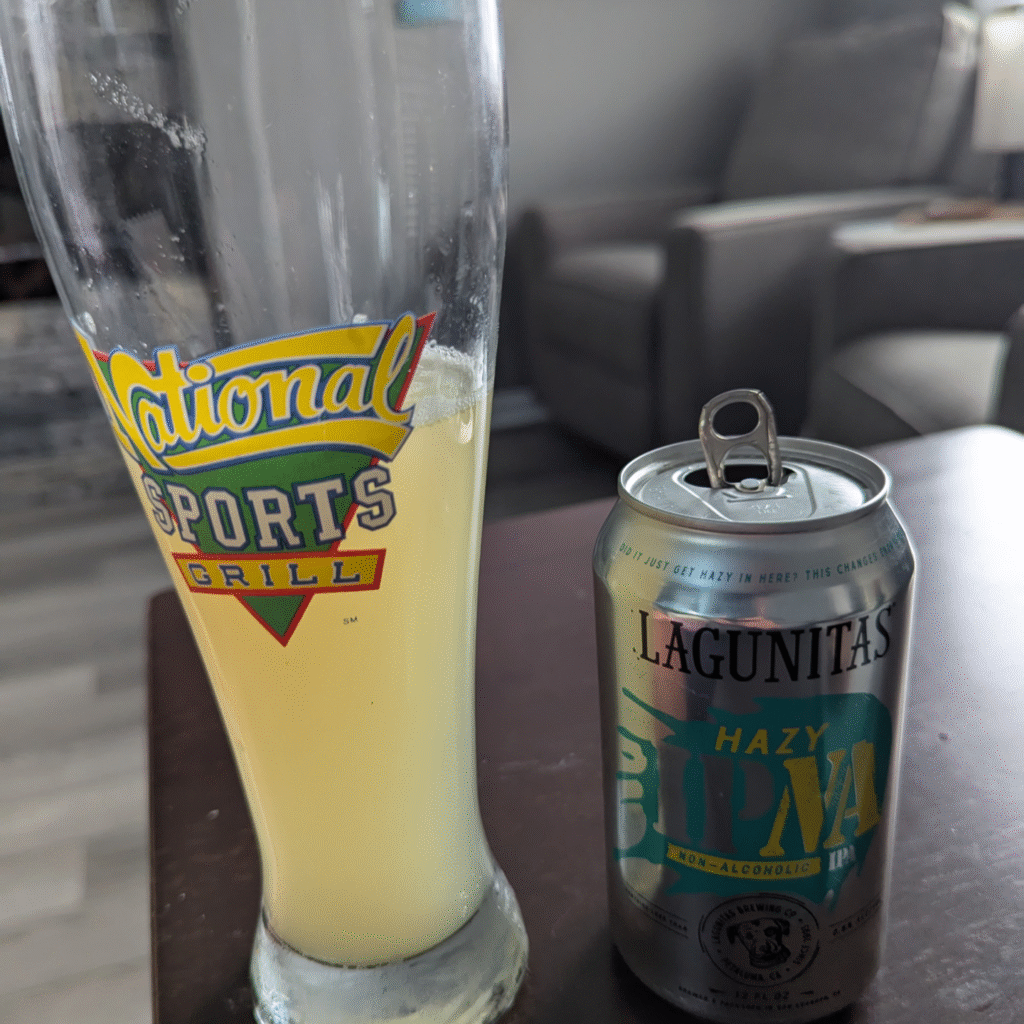
It wasn’t hard to dig up an old Lagunitas picture, I did ding all, including my liver (LOL). The Lagunitas India Pale Ale (6.2% alc): 190 calories per 12 fl oz 🤪

The next picture was the first time I tried a similar NA version, and what an amazing surprise.  Here is the description from their website, and you can find more information by clicking here:

“With the rising need for more near-beer, and with Hazys taking over beer fridges, our clever brewers did the math and put the two and two together and gave you .05% and 60 calories. Enter Hazy IPNA, a flavorfully juicy non-alc option that’s packed with passionfruit flavor. It’s bright and hoppy like our IPNA, only this time we went crazy hazy and tropically hoppy. It’s everything you want in a refreshingly satisfying IPA…It has all of the juicy flavor, all of the haze, and none of the compromise.”

 I have tried other brands and find myself at Total Wine package store looking for new onesGoogle and here is a “Top 10” and “Top 12” I found to during my research to try to keep this momentum.

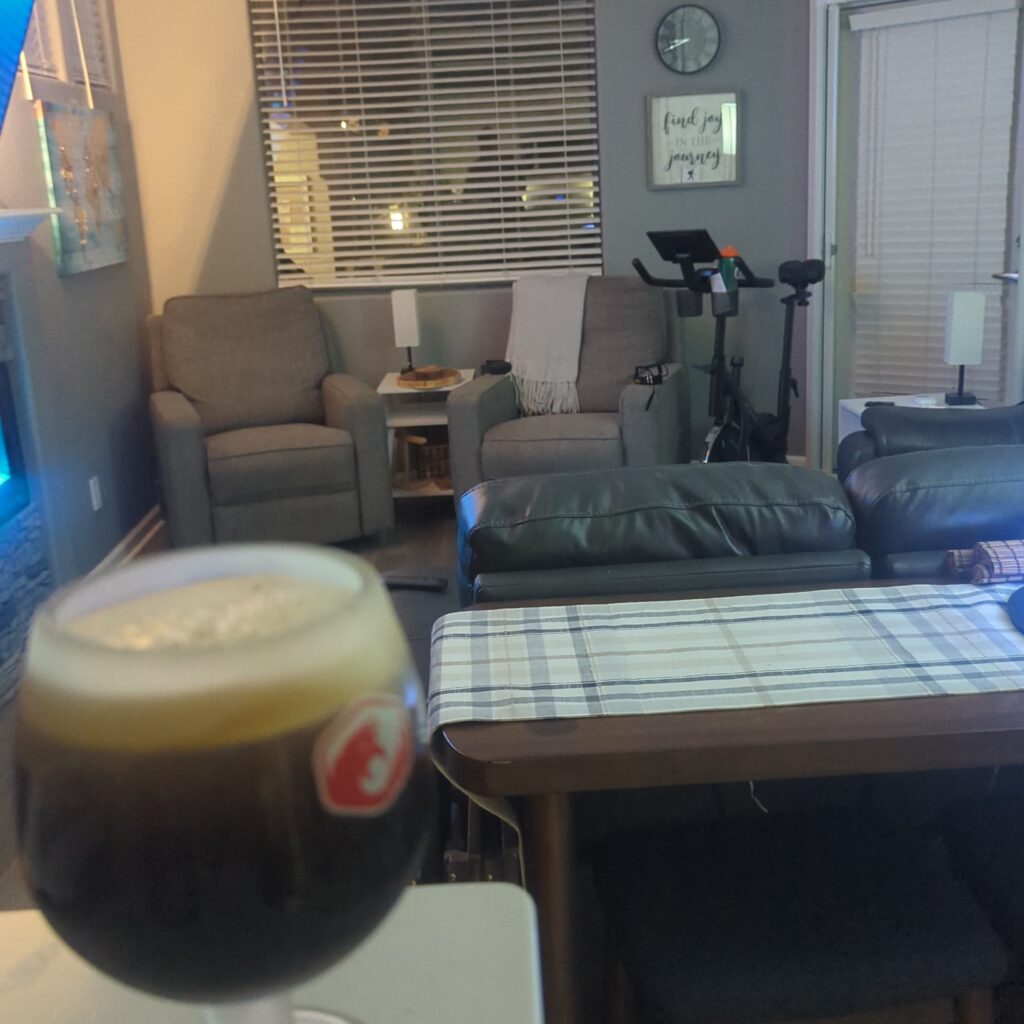
The next on my list of favorites is Guinness NA.  I have also had a few of the original, including tasting them right from the Brewery in Dublin, Ireland, where I acquired the unique taste.  This NA tastes almost the same, and it was a staple for me during the Edmonton Oilers’ run during the hockey playoffs in 2025.

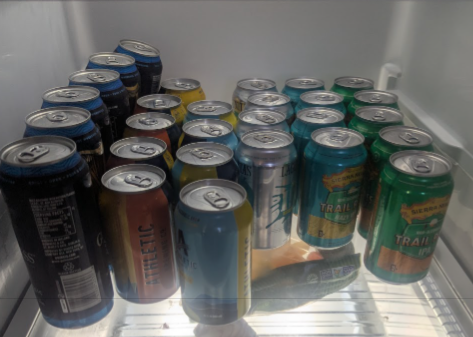
The secret to keeping this trend going is finding different flavors in the fridge to avoid a beer run. 

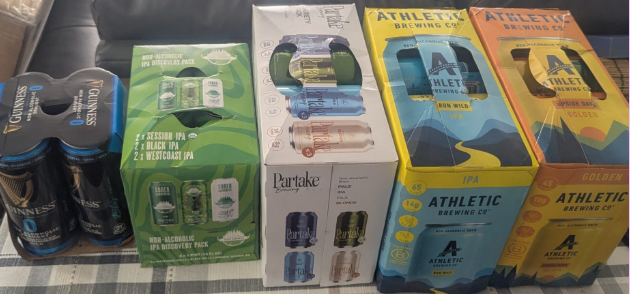
My first serious attempt was spending ~$80, which is basically the same price as regular beer. 😐

The winners in this order were Guinness, which I already mentioned, Partake IPA, Sober Carpenter IPA, Athletic IPA, and then the far right Athletic, which was ok with a lime but watered down version of beer.  It did taste great with Clamato, which was a win to keep around.

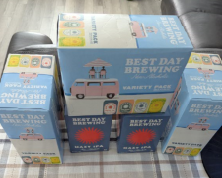
This is when I knew I was onto something awesome!  I then started researching the best IPAs and found Go Brewing, and they delivered right to my front door for FREE.  Below is $96 in NA beer with 20% off promo, which worked out to under $2 a beer. They had the best rating on IPAs, but unfortunately, they were not as good as Lagunitas, but glad I ordered them as I now have a legitimate favorite.

I have had some people congratulate me on switching to NA beer, while others ask, “What’s the Point?”.

Well, after taking a break from real beer, here is how it helped me so far:

1. I have been to the gym/spa almost every day for the last two months.

(Steam, sauna, cold plunge, hot tub on repeat for 2-3 hours)

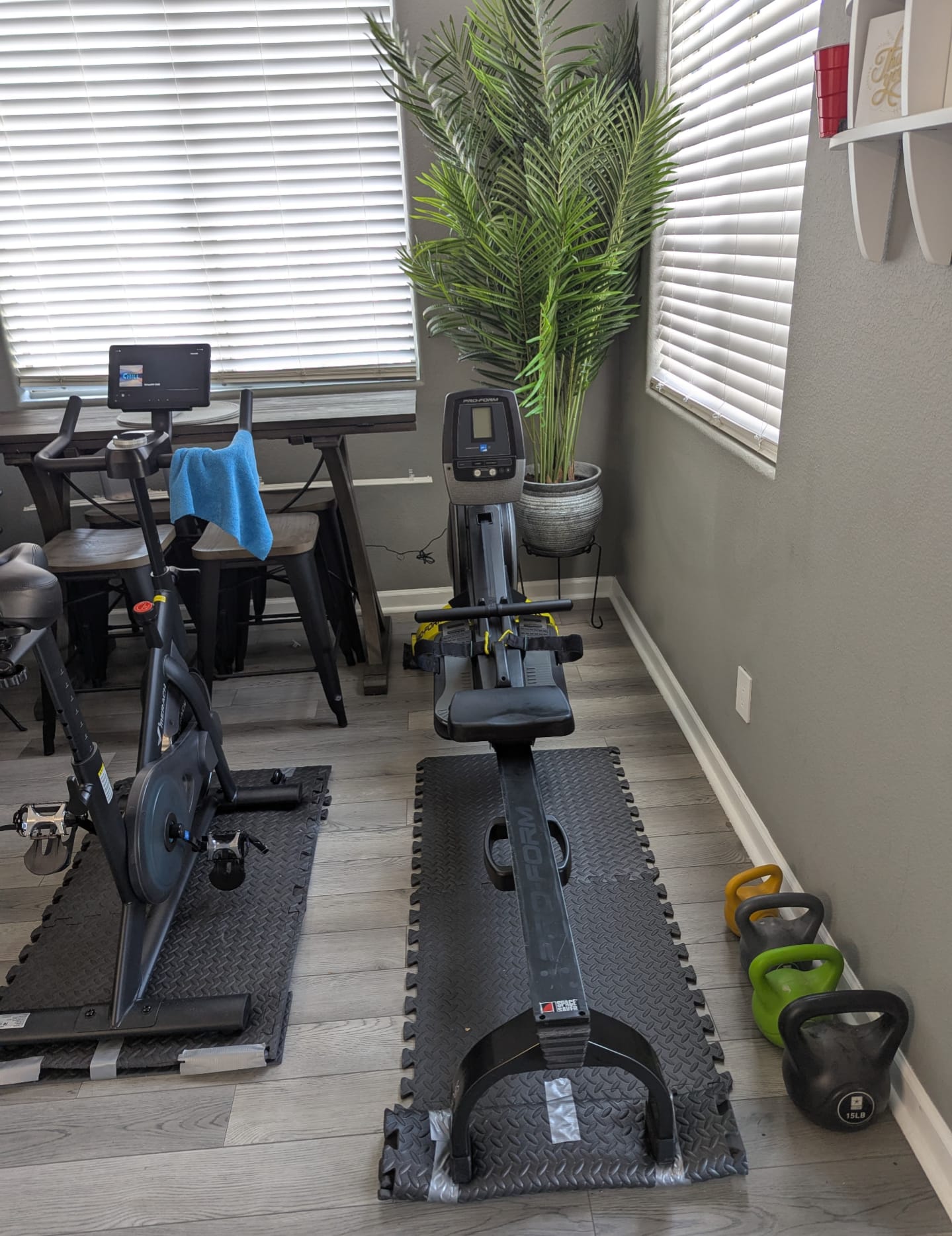
2. I set up my cardio at home and work out every morning before the gym.

3. I have not had a hangover for the last two months.

(I haven’t been back to Mexico since, but I have already packed a NA cooler). 😐

4. The best of all, I feel fantastic, and people are starting to notice my weight loss.

Admittedly, I have always been a fad person my whole life, and this may be no different.

I have lost/gained many times over the years, which is something that does not stick long term.  It has to be a lifestyle change, and a routine takes a lot longer than two months to show 100% commitment. The first thing I mentioned in this blog is that it is not a replacement but an alternative that has been working for me.  

Another good reason is to let you know that I am headed to Mexico soon and Oktoberfest in two months, which will be a good test of this fad.  A German friend told me that they do sell NA beer in Munich and there is a NA tequila that I will take to Mexico in my cooler of hope, but I will have real beer there in moderation.

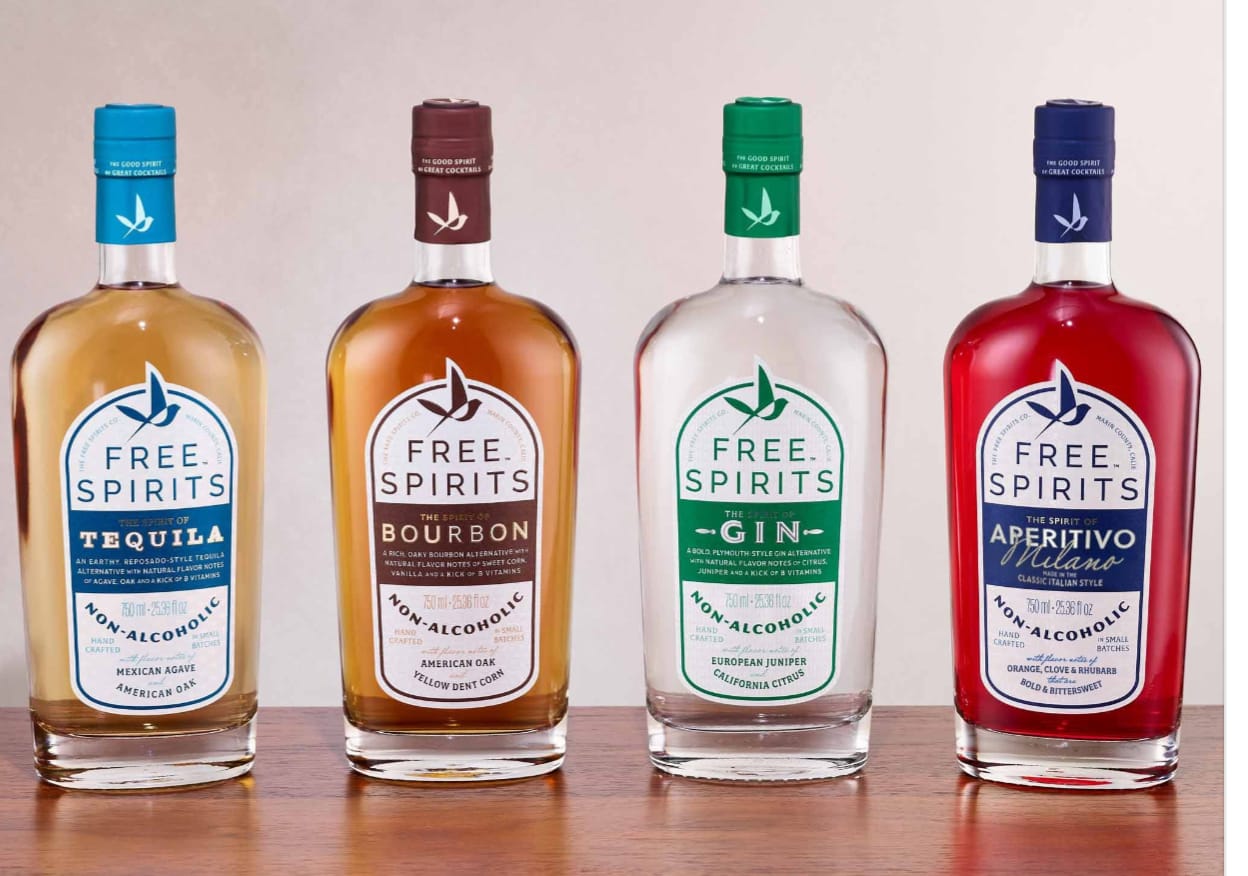
 Other than Margaritas and the odd Bloody Mary/Caesar, I do not drink alcohol, but you can see that there are NA options, including Ritual and Free Spirits brands.  Ritual is the number 1 seller of “Mocktail” replacements, as they use it in bars, from my understanding. Here is a YouTube video I found, and making a mocktail margarita:

If this is something that has piqued your interest, I found another company that creates fancy Mocktails.  Some are even premade as testers and their website can be found here:

I will update my blog after Mexico and Oktoberfest, as I often do with my blogs.

Here are the NA beers I have tried with links, and I will also continue to update.

Athletic Brewing 

Lagunitas Hazy IPA

Sober Carpenter

Guinness 0.0

Go Brewing

Partake Brewing

Sierra Nevada Brewing

Bero 

Penn’s best (Less than half price compared to others – $3.99 six pack – most others $10+)

Heinieken 0.0 

Tecate 0.0 Mexican cerveza

What is your favorite NA feel-good beer so I can add it to my list?

H19

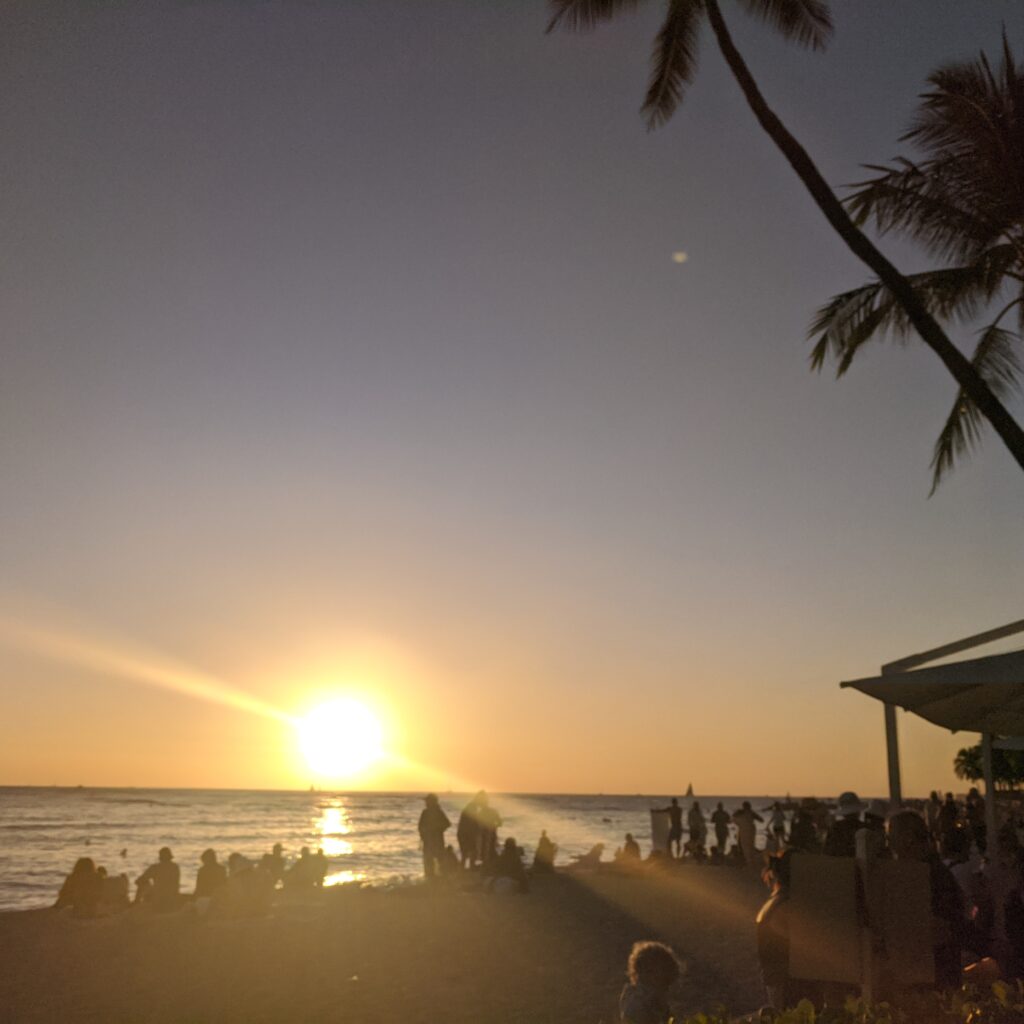
Hawaii – miss you, see you soon!! 🤙🏻

I have been fortunate enough to go to Hawaii several times and lived there for four months at the end of 2022 into 2023. I was at the end of my rope with my job and took my show on the road incognito.

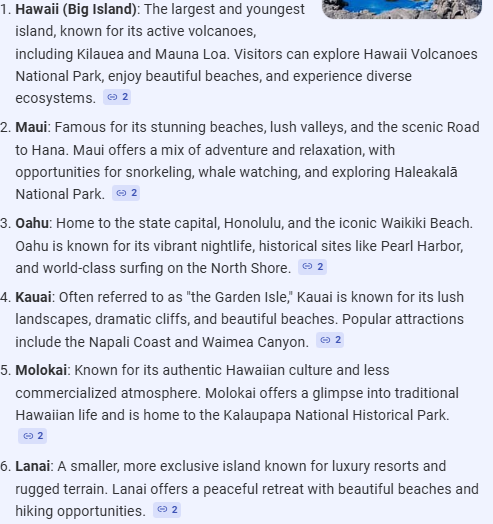
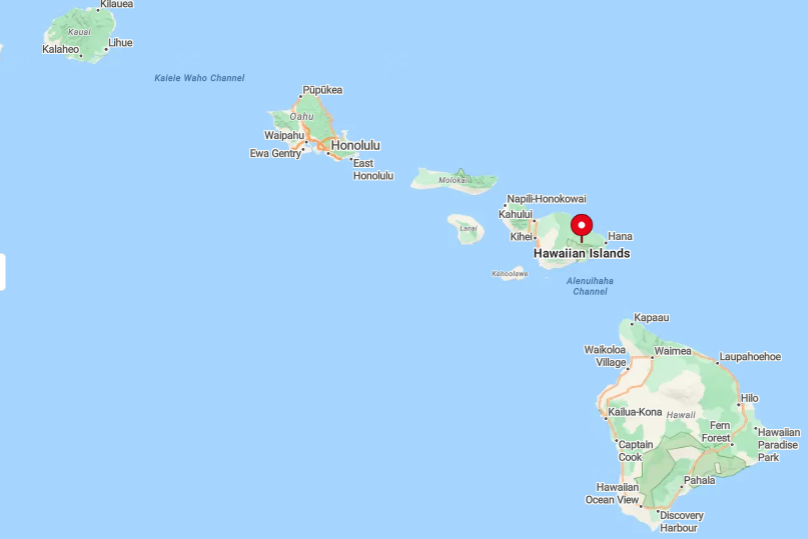
I have visited almost every island except Kauai and Molokai.

Each Island had its vibe for me.  Expensive, touristy, inexpensive, better food, and of course, fishing.  I do not need to go back to Maui or Lanai, as there was not much there for me.  Maui is super expensive, and Lanai is a dot on the map that is extinct since they took the Dole factory and moved it to Oahu near the North Shore.

My choices come down to two: Oahu, as it is the least expensive, and the local transportation, and Kona for the fishing and friends.  These are the two I spent the most time on, including my incongnito work trips.

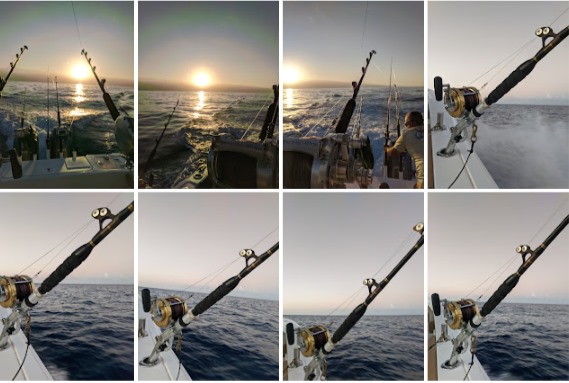
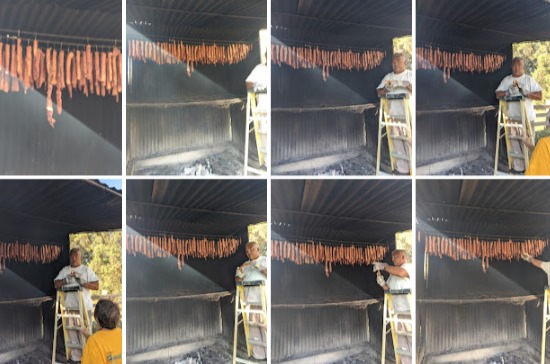
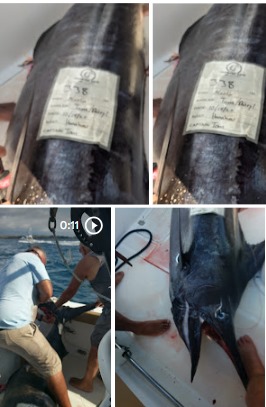
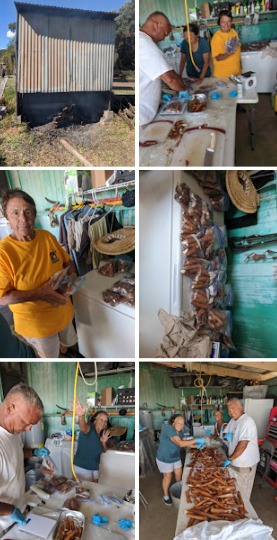
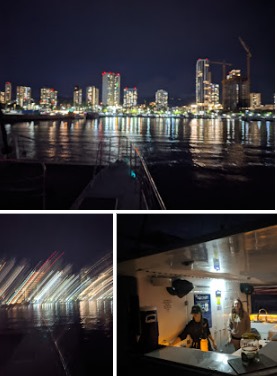
Let’s start with my favorite, hands down, Kona!  I was lucky enough to meet first mate Sue in my first week there, who introduced me to her fishing crew, and I never looked back.  They were some of the most fun traveling days of my life to date out on that boat catching my dream fish, a 338 Marlin!  The weight changes with each story, as it was such an EPIC day, and the official weight was 334 lbs, and we smoked it at Captain Tom’s.  

It tasted like fishy, spicy jerky, and it was unforgettable, as you can see from my smile while reeling it in that day.

This is an absolute dream crew (makes me dream of going deep-sea fishing again)!

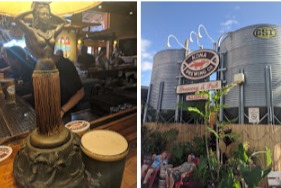
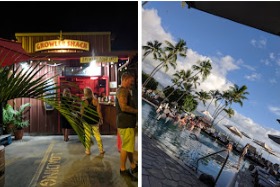
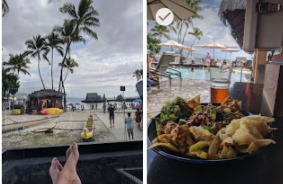
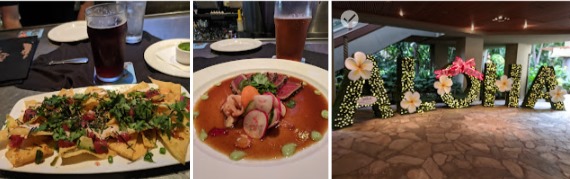
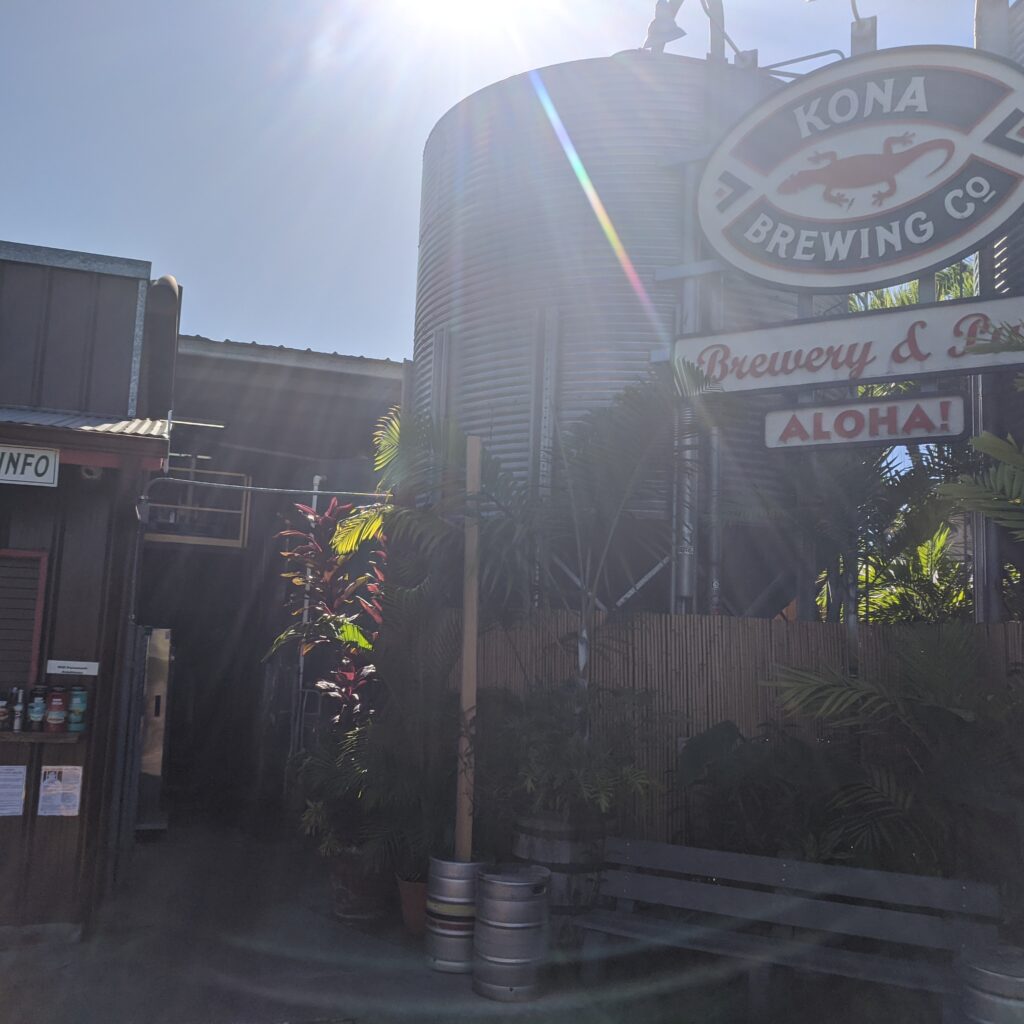
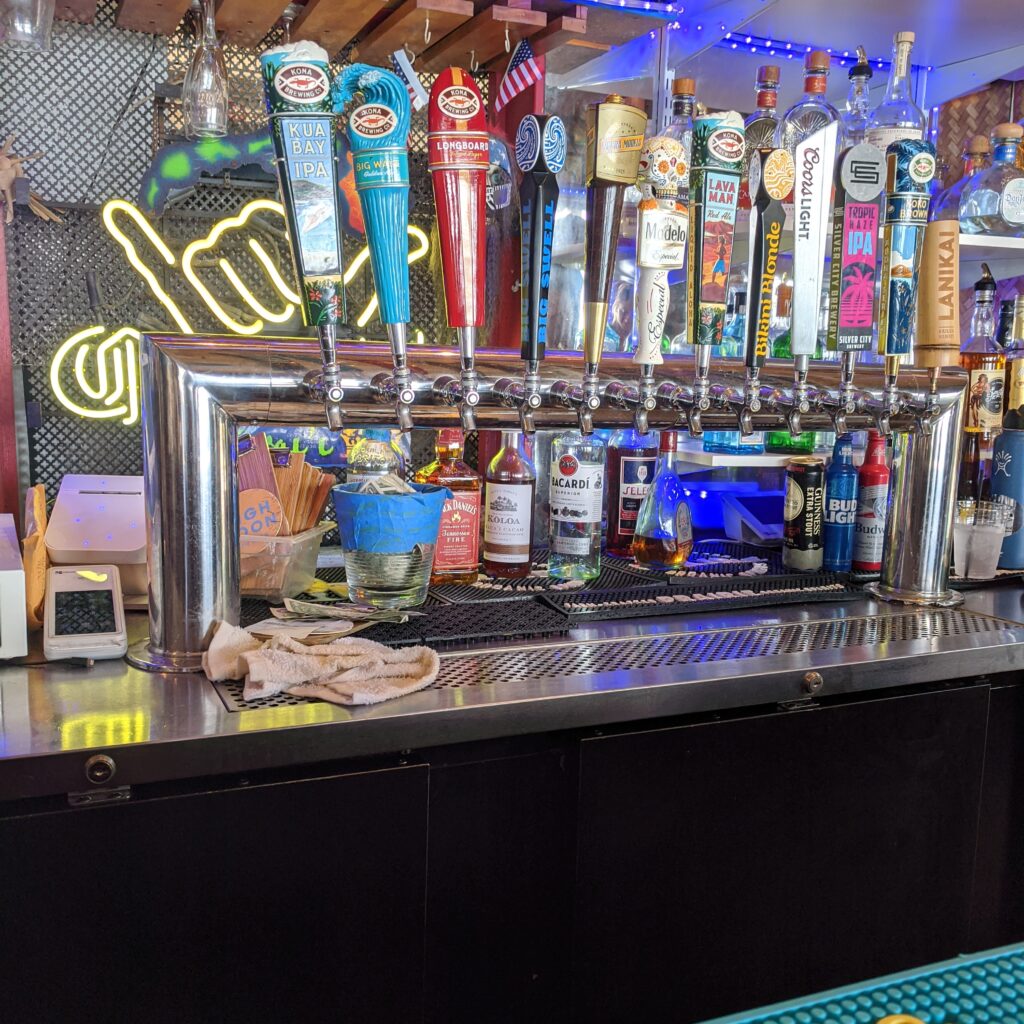
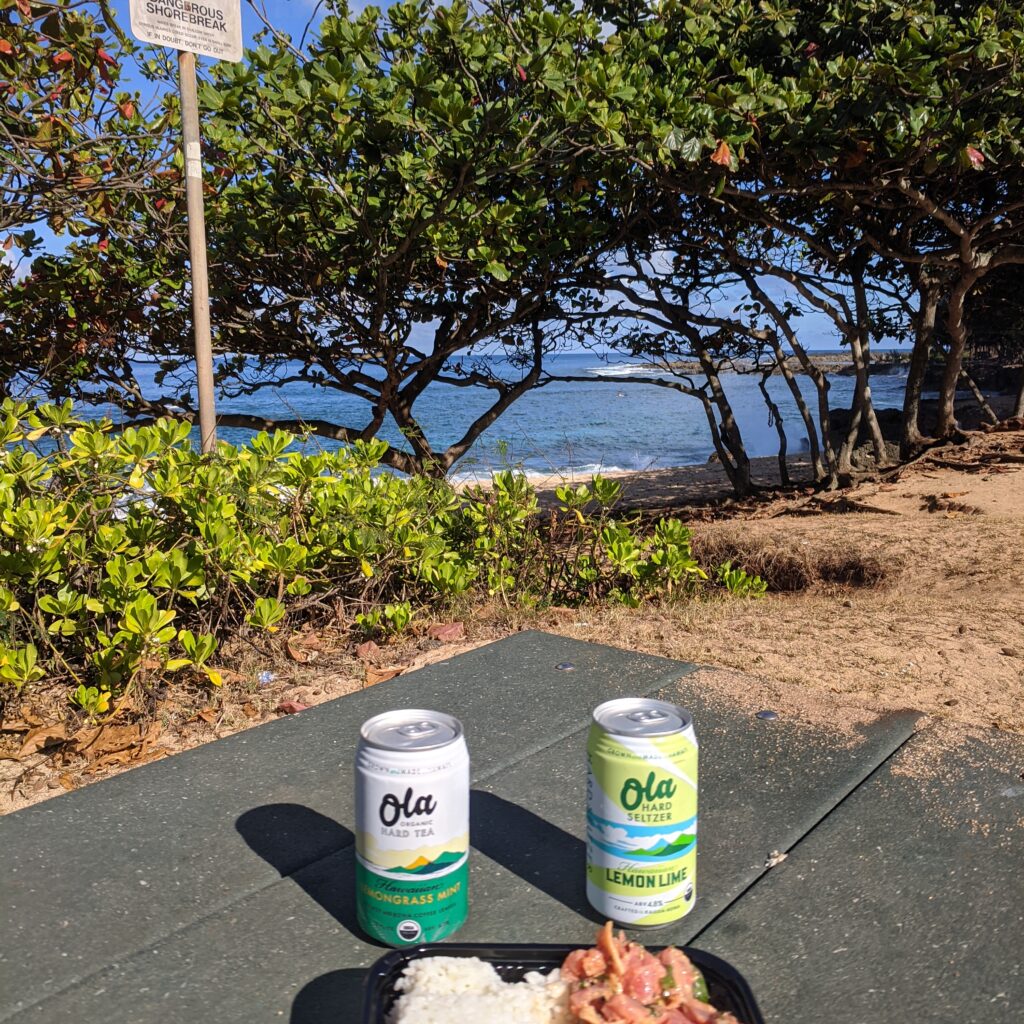
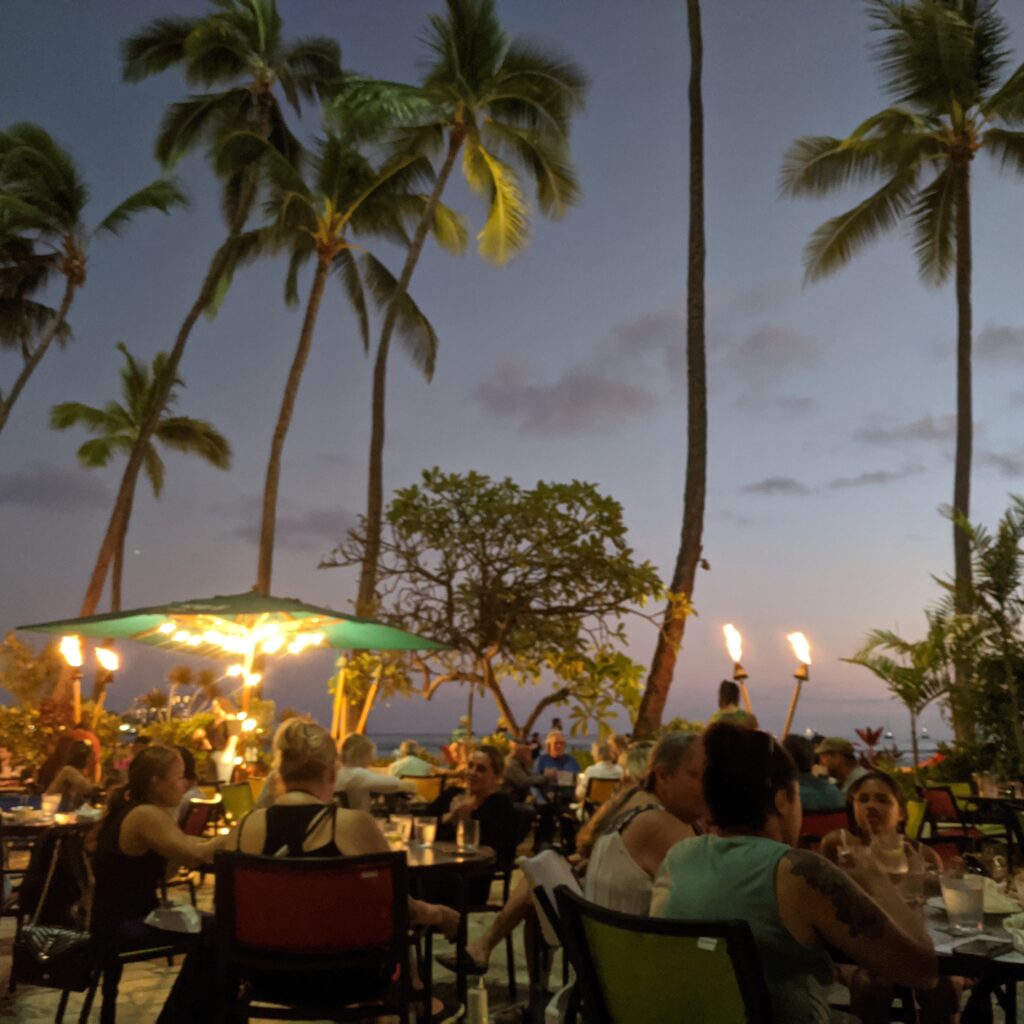
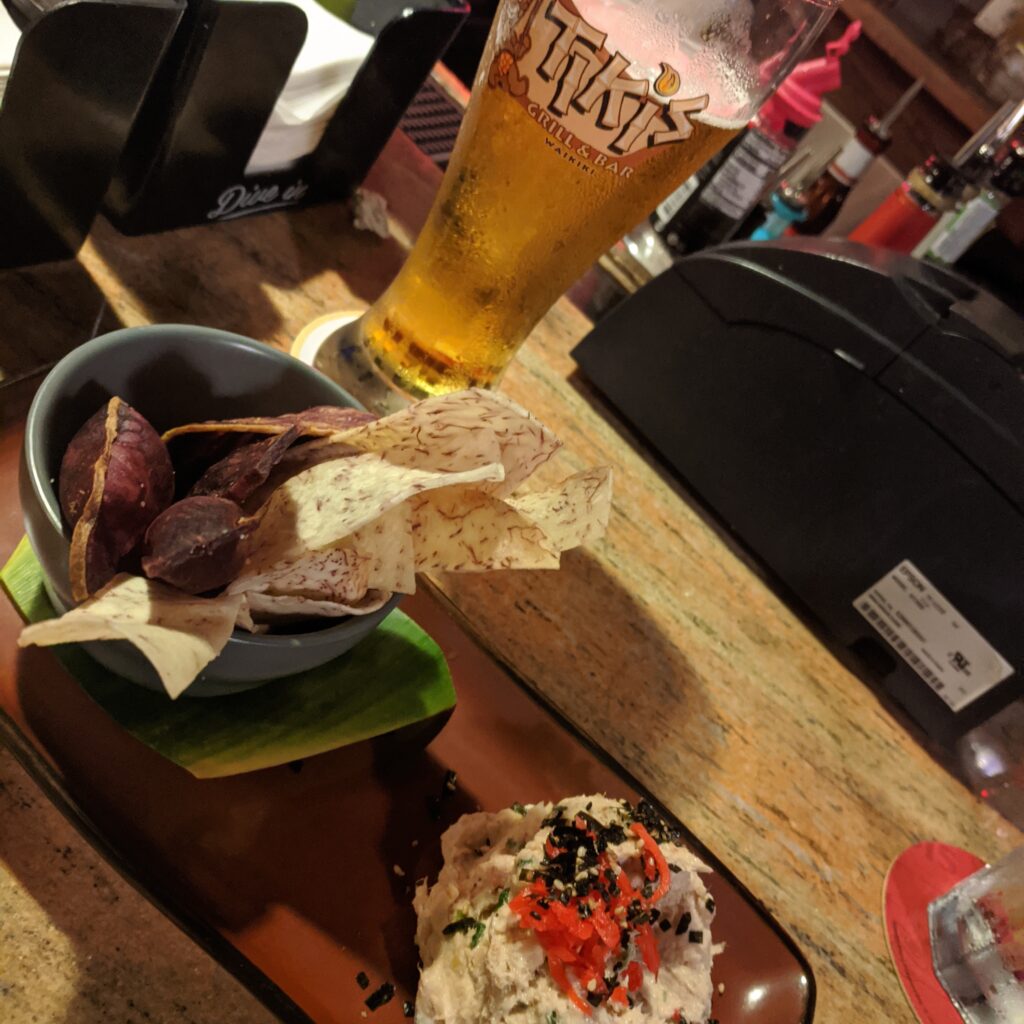
I was also able to find great, inexpensive food and happy hours.  There was the big hotel on Ali Drive where I would crush local IPAs and Kona ahi tuna nachos by the pool overlooking the ocean.  The Kona Brewery, where I could try all of their beers on tap and take a growler home. O’la Seltzer Brewery, where they made the best seltzers, including Lemongrass, which was my favorite drink while eating Ahi tuna.  Willie’s Chicken serves the best chicken tenders (my favorite), and Da Shark Shack is a local dive bar where they’d show Oilers games for me and serve my favorite fish, Ono.  

I would take the free trolley around town, which would drop me off at all my favorites.

Other than fishing and friends, here are just some of my favorites mentioned that keep me coming back to Kona.

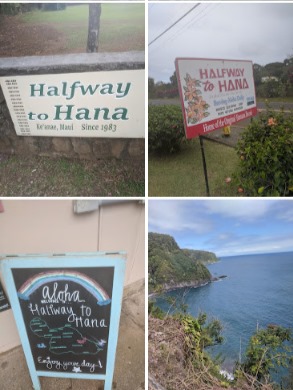
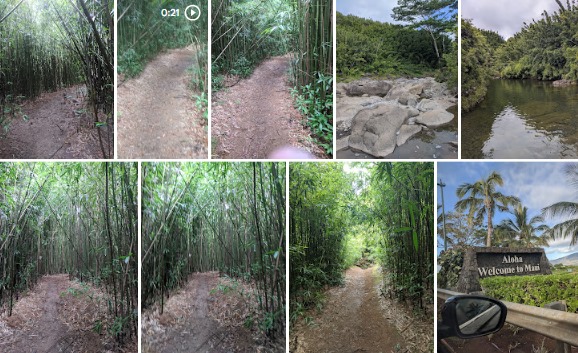
No mistakes can be made visiting any of the Hawaiian Islands except saving a few bucks here and there. It all comes down to choice.  I know people who love Maui, too.  The road to Hana is stunning, but it was one and done for me, especially after Lahaina burned down and the politics and conspiracy theories that followed.

The historic town of Lahaina, the former capital of the Kingdom of Hawaii, was damaged beyond recognition in the weeklong series of fires. A community plagued by a housing crisis and power struggles with the tourism industry was among the issues tested in the aftermath of the wildfire.  Oddly enough, Oprah’s and the properties were untouched by the fires while they begged for donations to rebuild the Island. 🙄

Honolulu, Oahu, fits me best for many reasons.  I have an Airbnb that I have stayed at several times for $35 a night or $1000 a month.  I am able to catch the bus to Waikiki or the North Shore for $2 and find all of the GEMs.

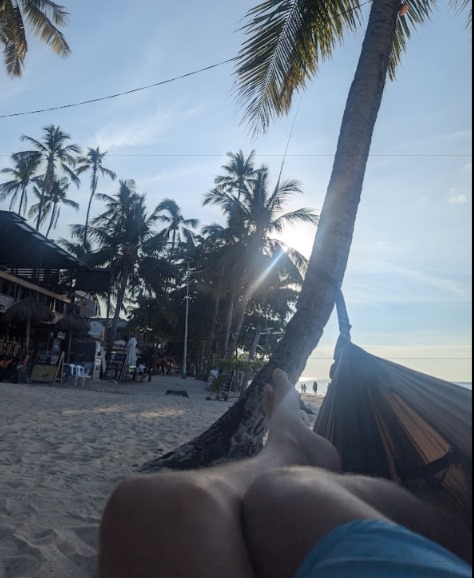
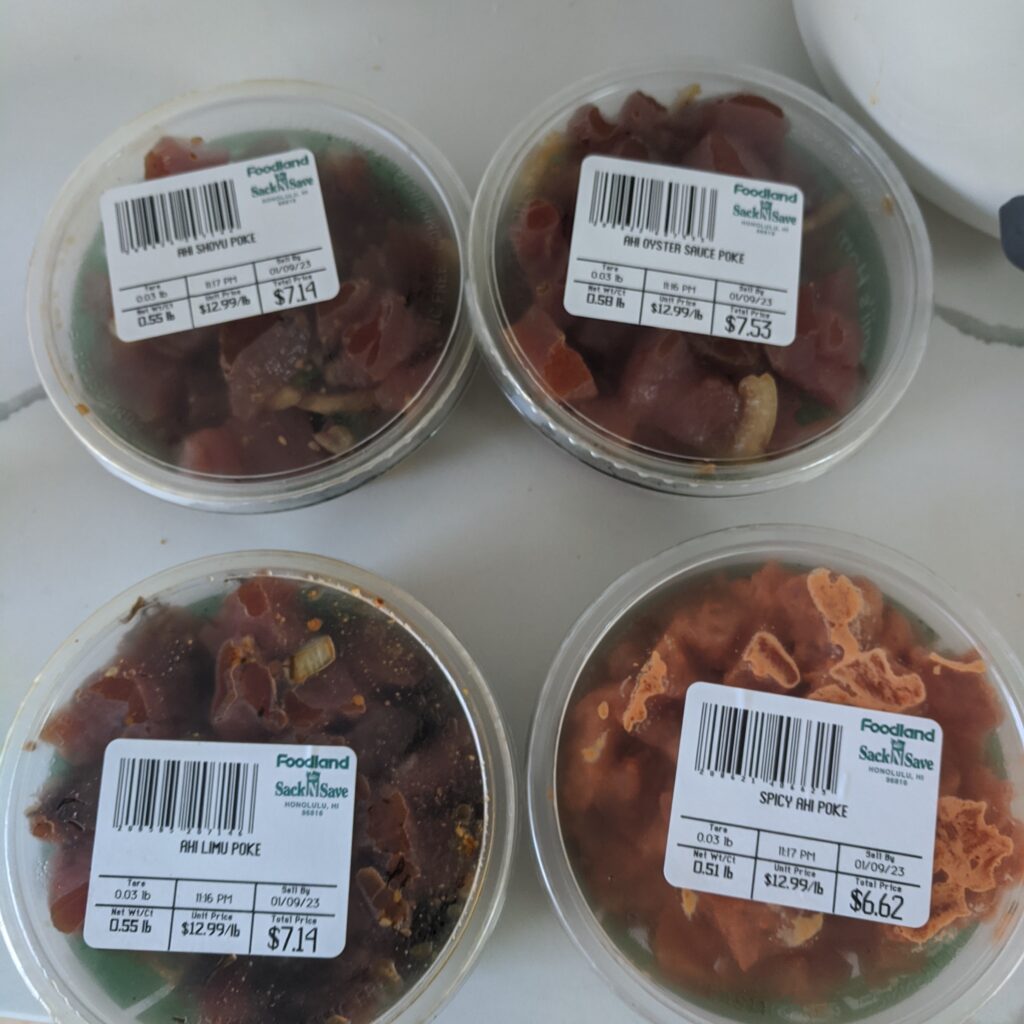
My favorite ways to kill a day are to pack my hammock, beach chair, and beers, and take the bus to Waikiki or the North shore.  I would wing it from there, hitting my favorites: Foodland poke from the deli, Yard house happy hour, and stopping in at the ABC store on the way to the beach with my hammock.  

Cost-wise, this plan cannot be beat as a solo traveler, and I plan to keep it in my routine.

I would not be able to keep returning to paradise without cutting a few corners along the way.  

Let me know if you need help saving a buck or two!!

default

Solo travel – don’t knock it, until you try it!

rarely had great experiences traveling with other people—and yes, I fully understand that I’m the common denominator here. I’ve done the math.

That said, I genuinely don’t know how some people manage to travel together at all. Maybe they’re just comfortable arguing as a lifestyle choice. I’ve seen it. I still see it. Loudly. In public. Over nothing.

I was told more than once that I needed to change, adapt, or compromise… otherwise I’d end up traveling alone forever.

Well… look at me now.
It’s working out just fine.

Meanwhile, you’re still arguing about:

whose turn it was to plan

where to park

And why that restaurant you absolutely had to try is suddenly a disaster

🫡 Godspeed.

Some of my worst vacations were spent with other people.
Some of the best times of my life have been solo.

Watching grown adults bicker nonstop doesn’t look relaxing to me. I’ve been there. I’ve lived it. I’ve watched it unfold too many times to pretend it’s “part of the experience.”

Getting yelled at like a puppy in public while supposedly on vacation?

Yeah… HELL NO.

Solo travel isn’t for everyone.
But neither is forced compromise pretending to be a “great trip.”

Pick your chaos wisely.

So many people can’t even go out to dinner by themselves—let alone visit another country solo.

I honestly think solo travel (and yes, solo dining) is a skill. And like any skill, it has to be learned. This didn’t come naturally to me either.

It came from years of traveling for work. If you didn’t force yourself out of the hotel or apartment, you’d just stare at the same four walls every night. That gets depressing real fast. So I started going out alone—restaurants, cafés, even the movies.

Turns out, it’s kind of amazing.

No negotiating where to eat.
No waiting on someone who “isn’t hungry but might order something.”
No small talk when you just want to enjoy the moment.

And let’s be honest…

Not having to share popcorn is elite behavior.
Everyone wants the last handful. I’m just brave enough to admit it. 😁

Solo travel isn’t lonely—it’s efficient.
Solo dining isn’t sad—it’s peaceful.

Once you learn the skill, it’s hard to give it up.


I recently came across an article on Hostelworld that inspired me to write more about my solo travel and hostel experiences. Their content does a great job digging into why hostels are such a natural fit for people traveling alone.

As of this blog, I’ve stayed in hostels in:

Thailand

Philippines

Vietnam

Cambodia

London

Austria

Bulgaria

Greece

Hungary

United Arab Emirates

United States

And my favorite Hawaiian island, Kona, multiple times

(I know I’m forgetting a few—so I’ll keep updating the list as I remember them.)

Hostelworld’s articles go much deeper into the why behind solo travel and hostel culture. If this topic resonates with you, their blog is well worth a read:

Solo Traveller Hostel Blog – Hostelworld Travel Blog

At the end of the day, being comfortable on your own isn’t lonely—it’s freedom. And once you get good at it, the world opens up in ways group travel never quite allows.
I’m just going to borrow a bunch of their fancy data and stack it up against my own travels—because honestly, it lines up way better than I expected.

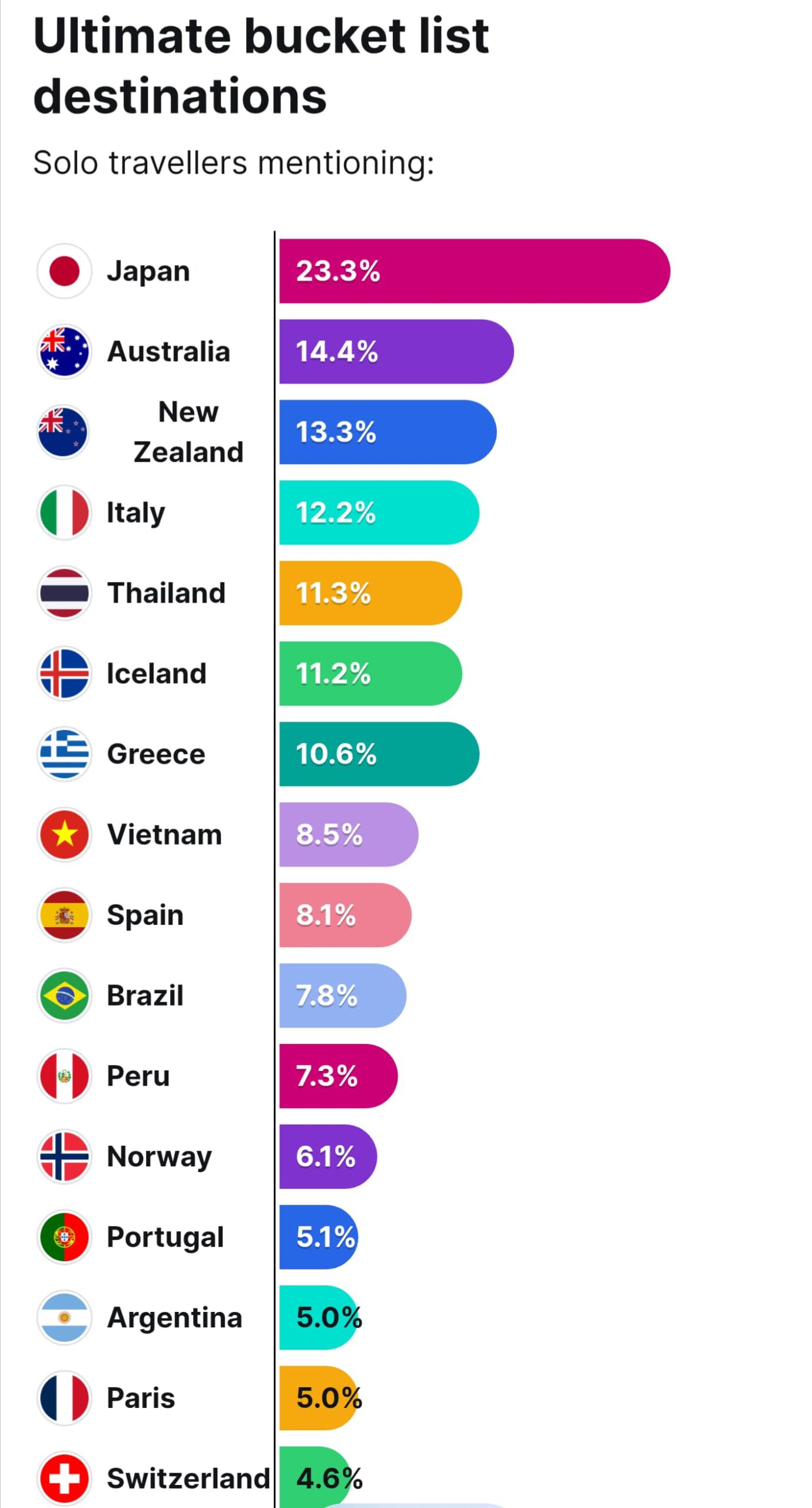
First of all… how great is it that Japan ranks as the #1 solo-travel country?
I already booked a full month in Japan for February 2026, followed immediately by another month in South Korea. Complete coincidence, obviously. Totally not validating every life choice I’ve made. 😄

While I was bouncing around Southeast Asia, I had no idea how popular Japan was for solo travelers. Then I fell down the YouTube rabbit hole (as one does), and now I’m fully committed. The planning alone has me fired up—and that’s before I even land.


And here’s the kicker…

I’ve already been to 10 of the 16 countries on their solo-travel bucket list. I’ll knock out four more on my next two trips, which leaves just New Zealand and Iceland sitting at the top of the list—according to the “experts,” anyway. 😎

Not bad for someone who was once told they’d end up traveling alone forever.

Turns out, that wasn’t a warning.
It was a recommendation.

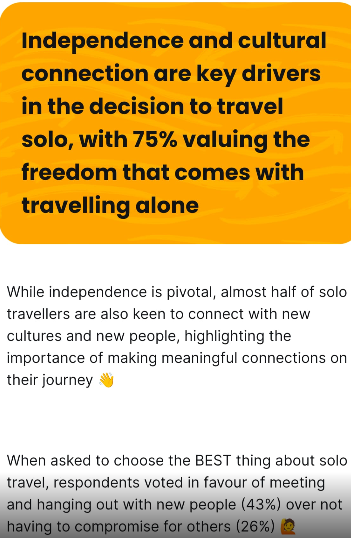
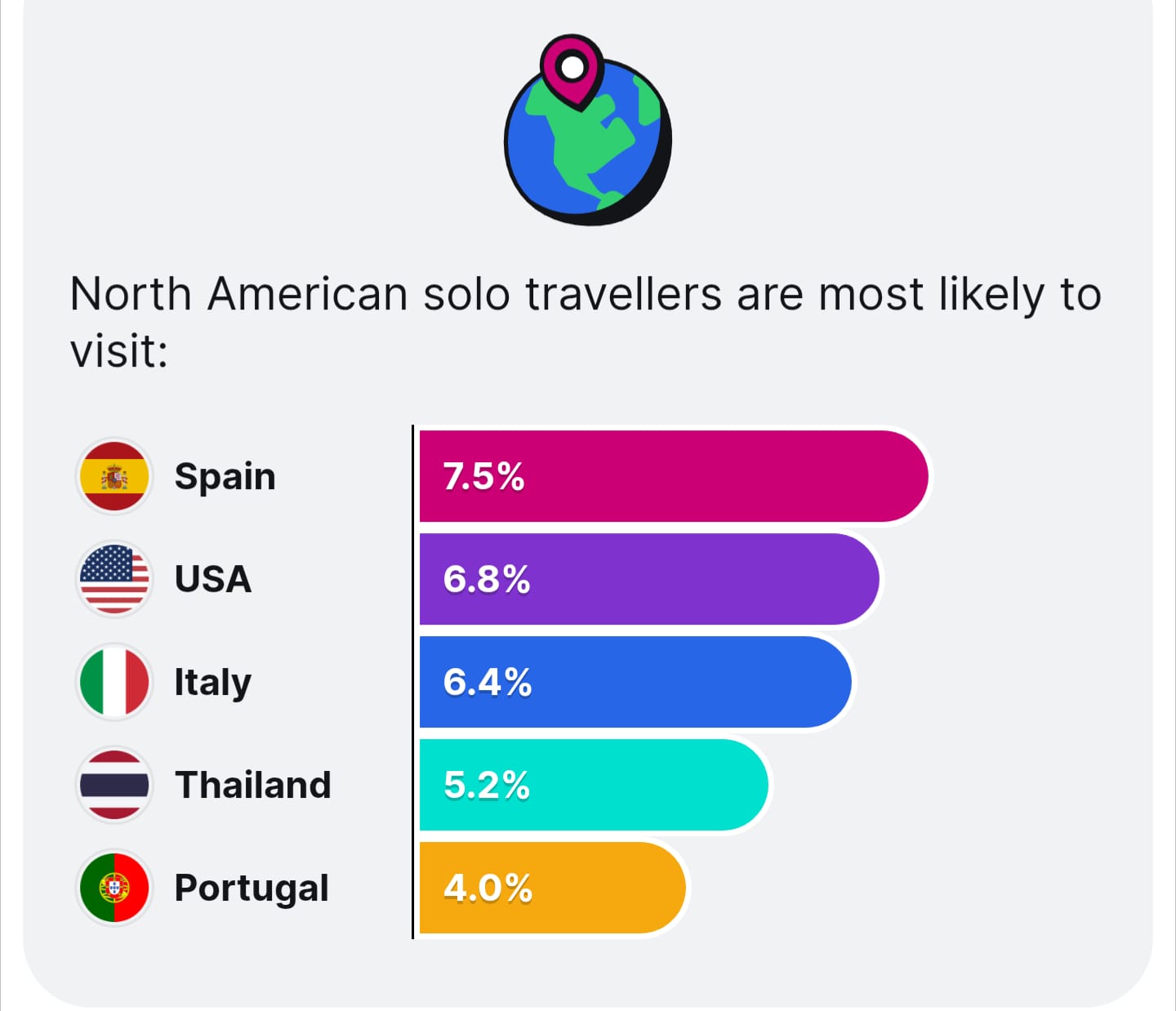
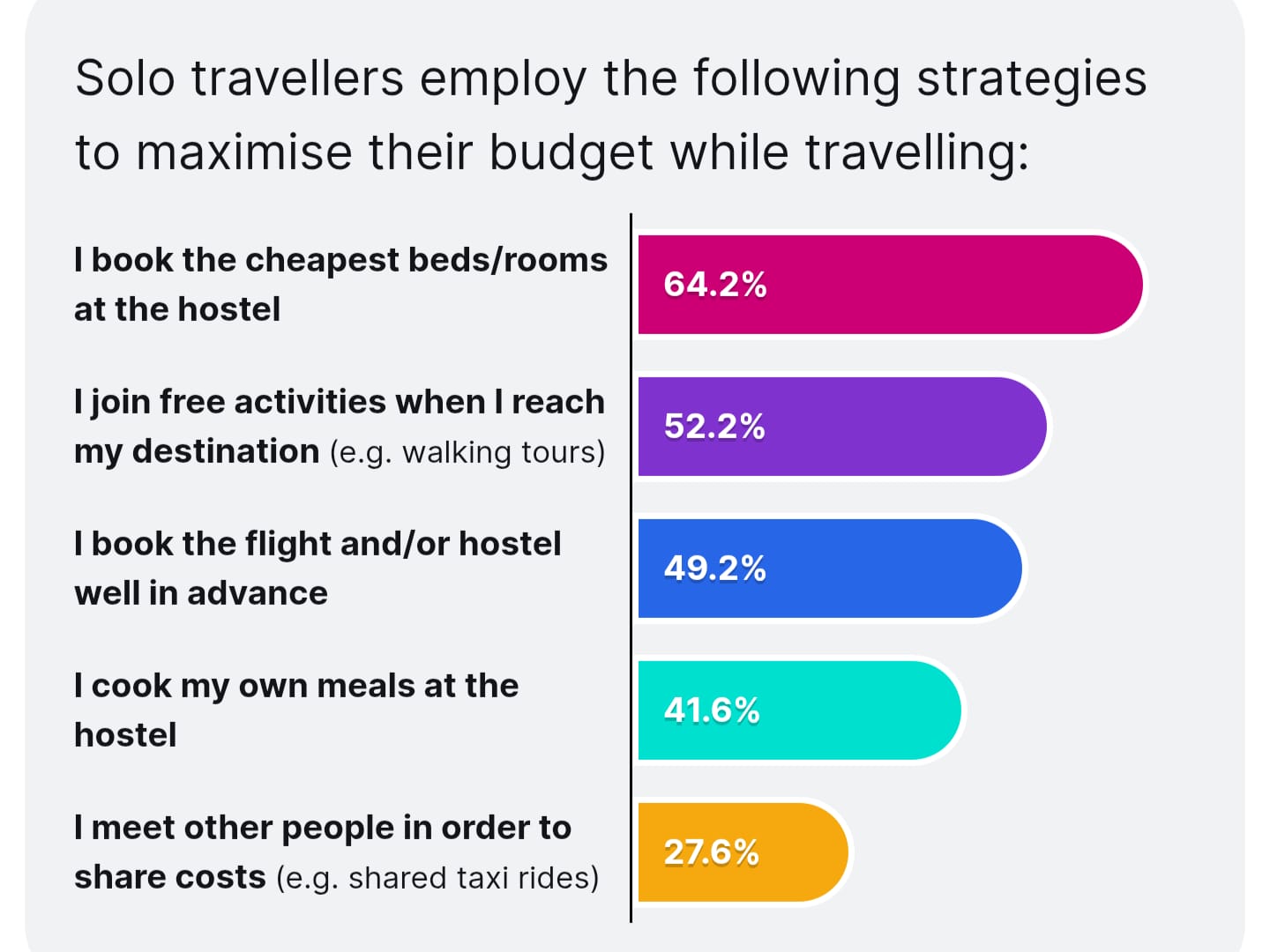
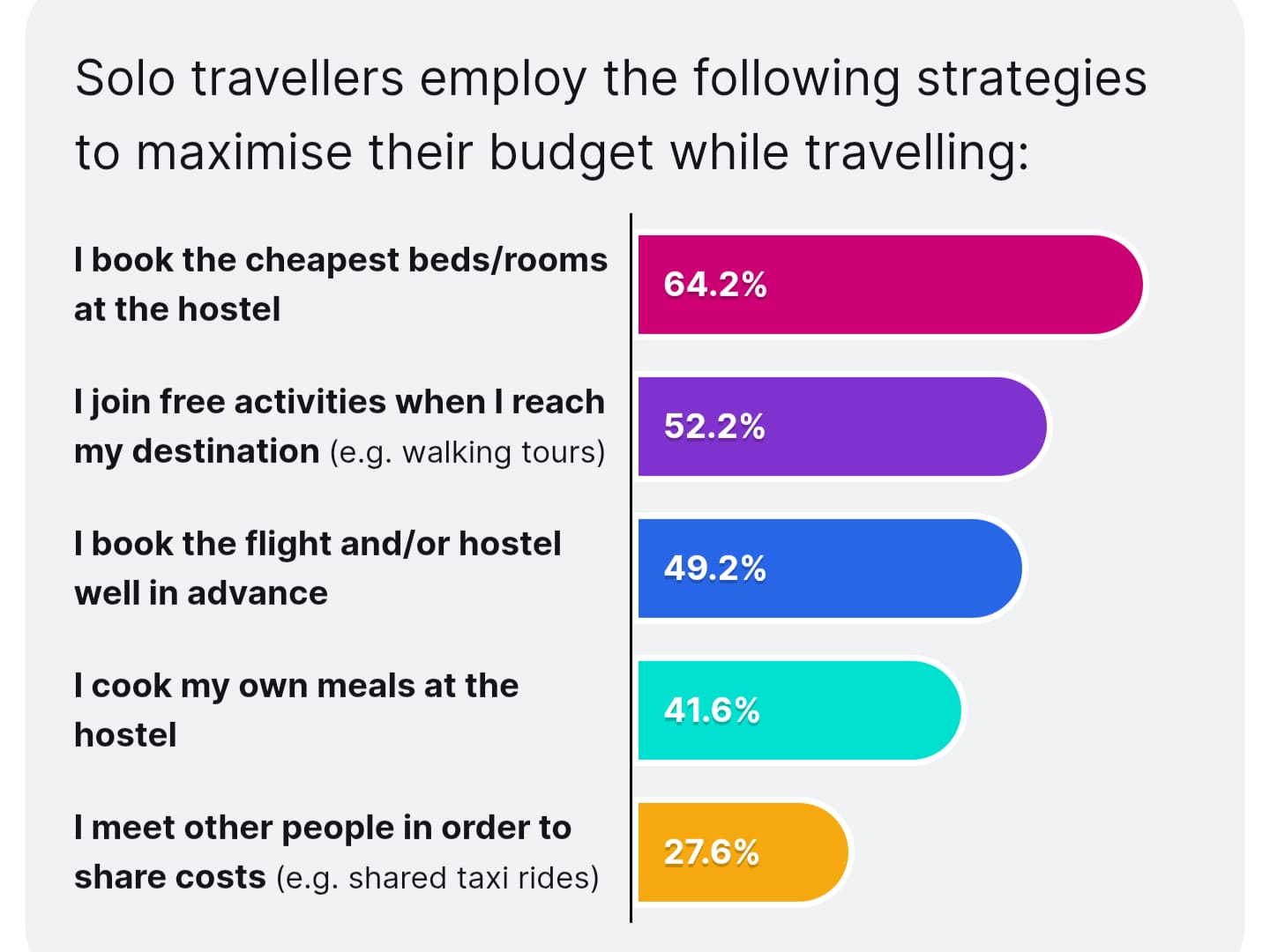
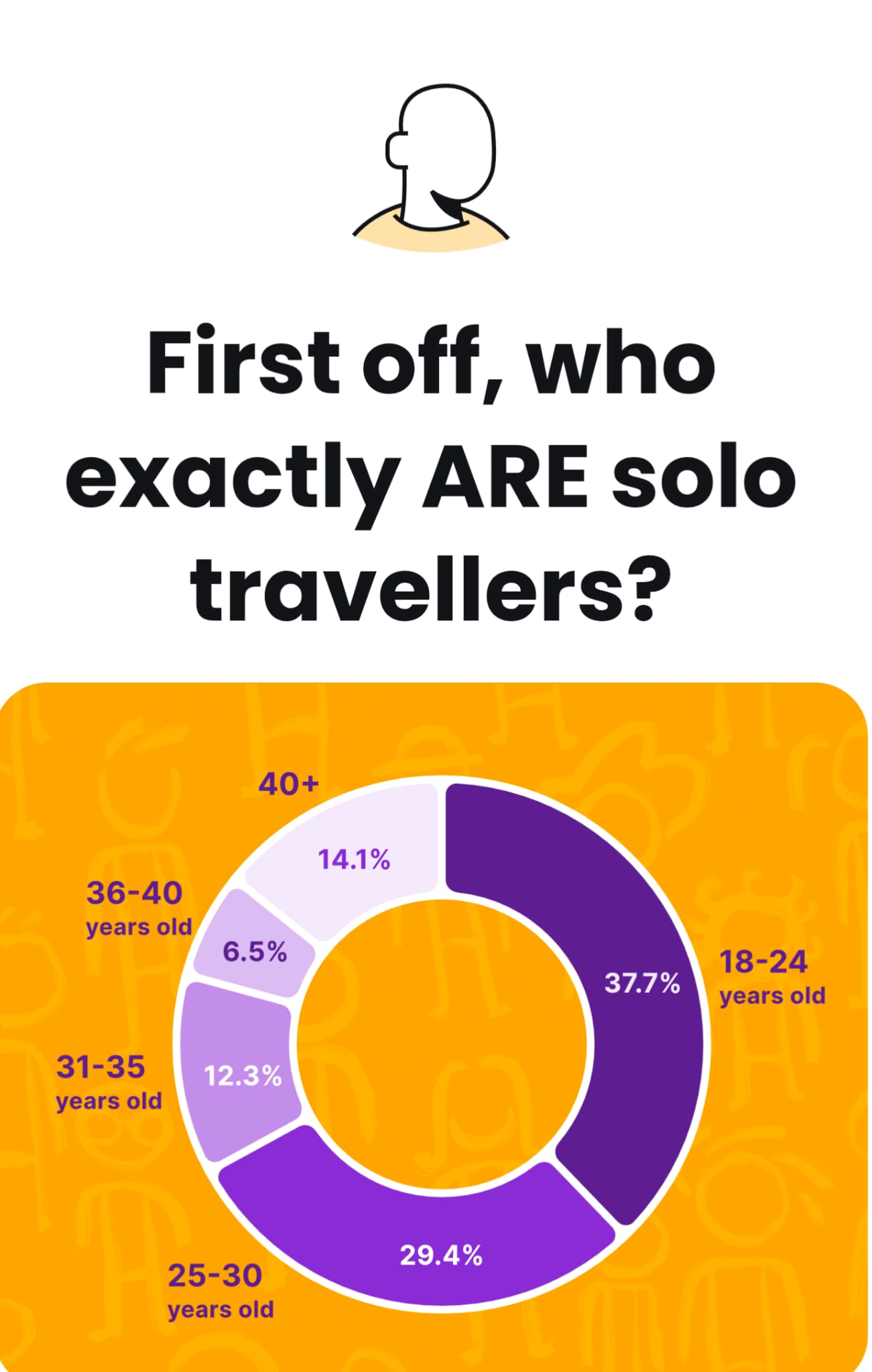
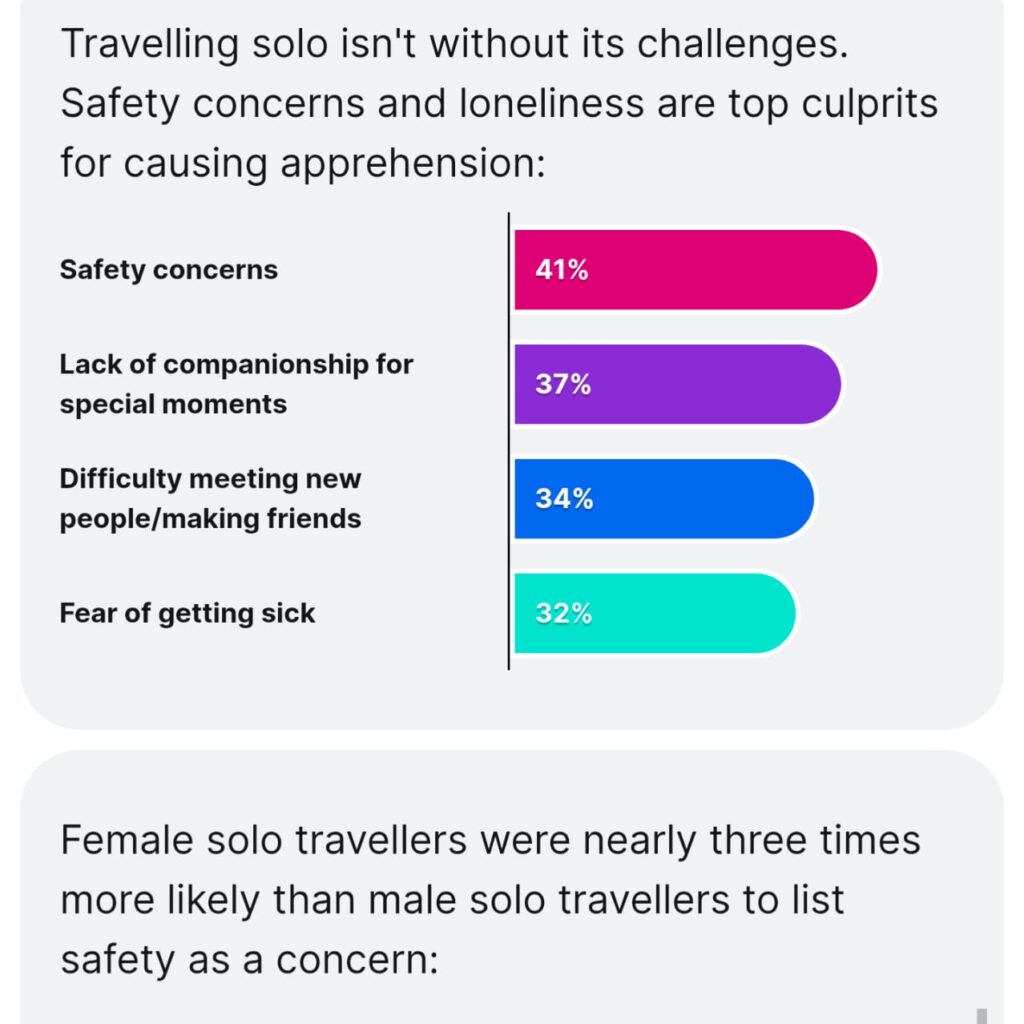
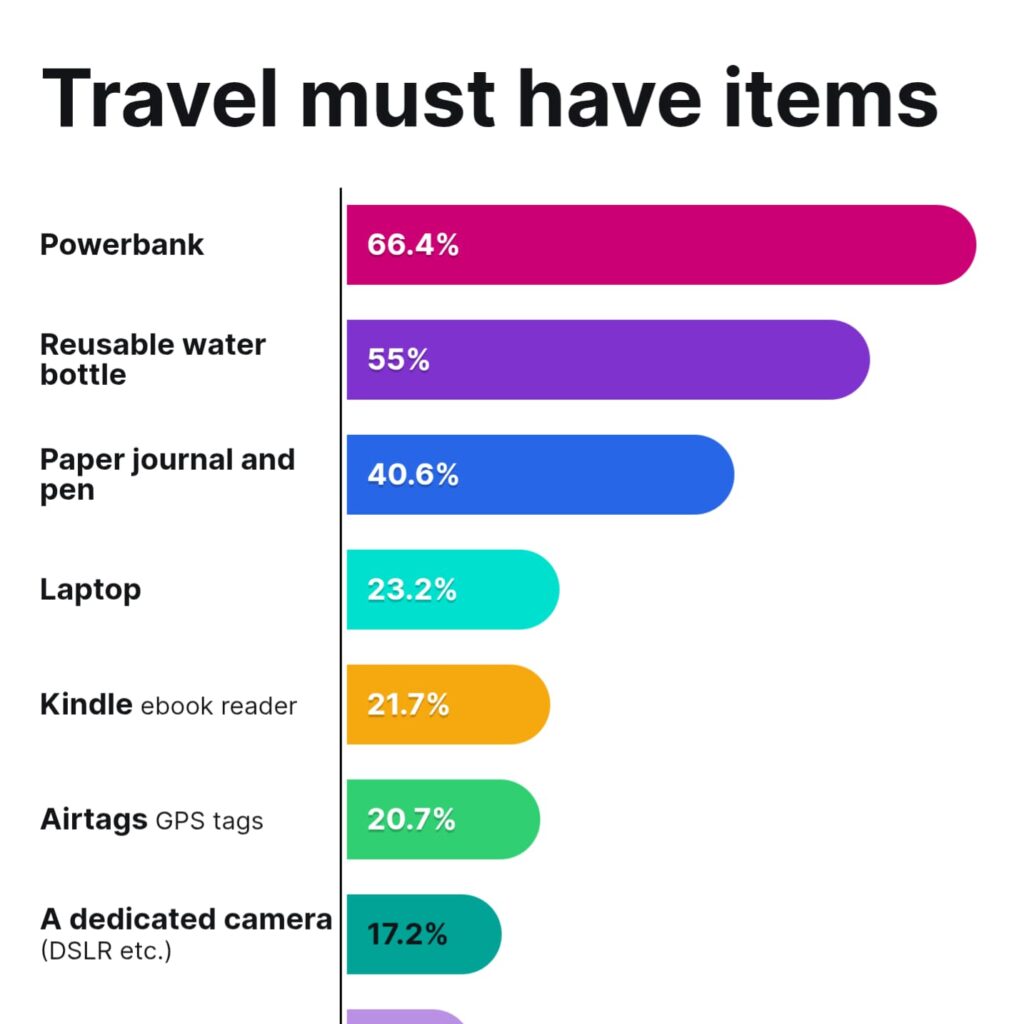
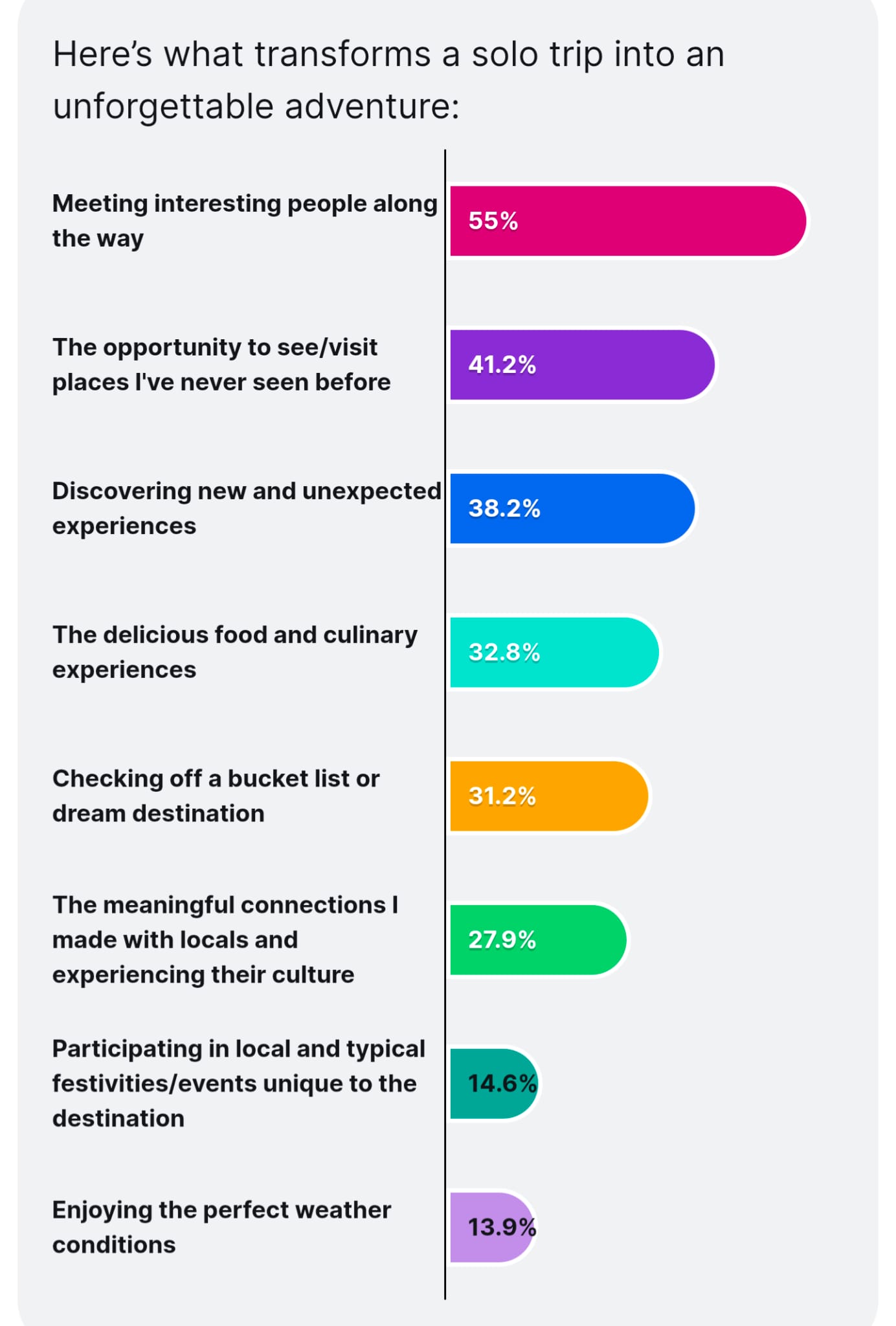
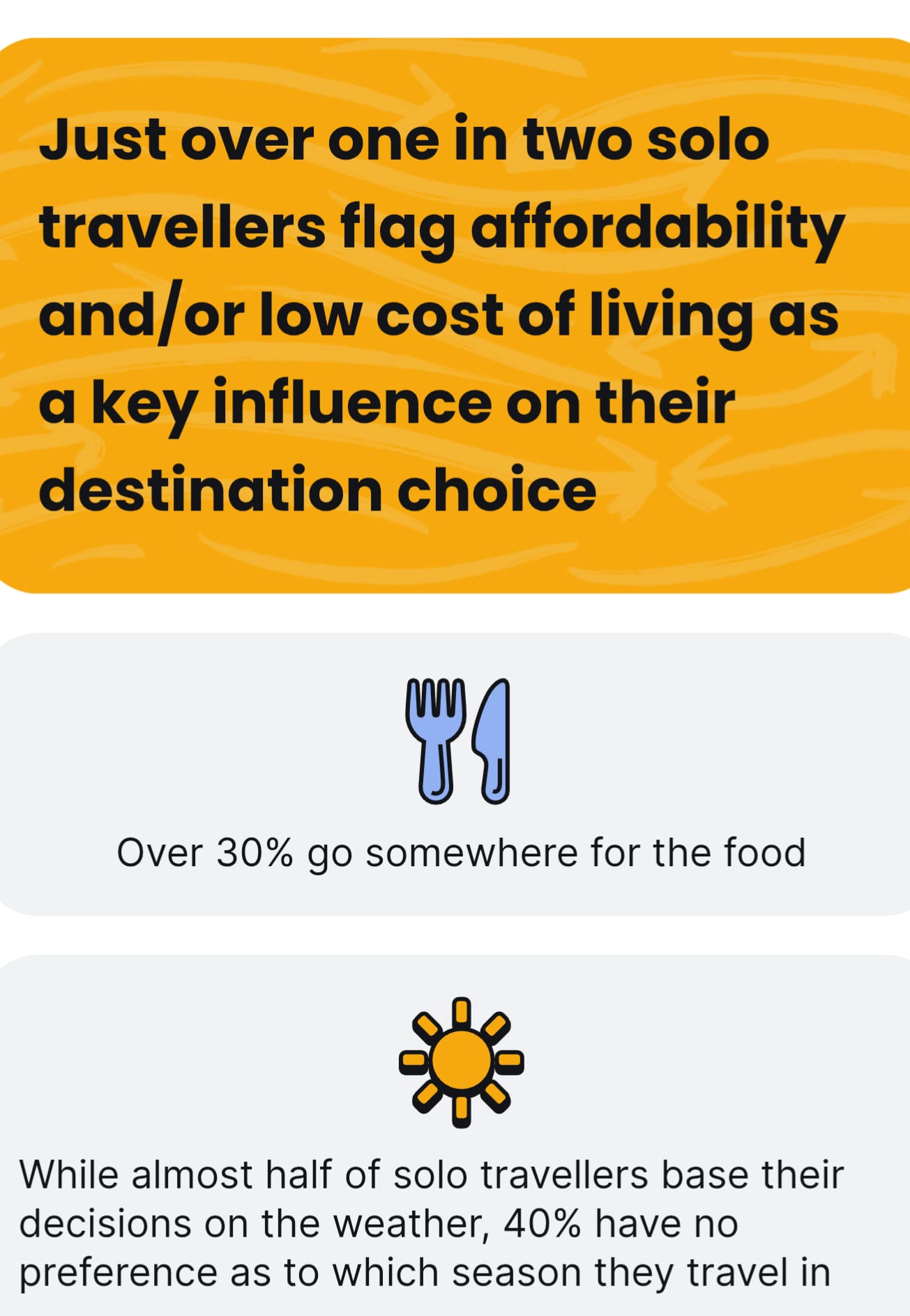
Let’s look at some of the stats on solo travelers from the Hostel World blog. These numbers help show just how big—and how legit—solo travel has become.

Whether you’re curious about who’s doing it, where they go, or why they love it, the data lines up with my own experience out on the road.

Below are the key takeaways from the blog, followed by how my travels stack up against those trends:

I know what you’ve probably been thinking since you started reading this—and trust me, I’ve been told the same thing more than once:

Aren’t you a bit old to be staying in hostels?

Maybe 🫡
But you’d be surprised by some of the experiences I’ve had.

Hostels aren’t just for 20-year-olds on gap years anymore. They’re full of solo travelers, digital nomads, long-term wanderers, and people who simply value connection over room service. Some nights it’s quiet, some nights it’s social, and some nights you end up in conversations you never would’ve had behind a hotel door.

Age matters a lot less when everyone’s there for the same reason: to see the world without overcomplicating it.

I 100% agree—the last thing I want is to make anyone uncomfortable during their travels. Because of that, I’ve developed a few personal rules when it comes to booking hostels.

First, I’ll always book a studio or private room if one is available. Having my own space matters to me now, especially after years of being on the road.

Second, I’ll only book a dorm room if a private option isn’t available or the price difference is completely out of line. In some countries, a single bunk bed can run $50+ per night—that’s $1,550+ per month—so you can imagine what studios or hotels cost in those same places.

I’ve also realized I’m far from alone in this approach. Especially in Europe, it’s common to see older travelers and even couples staying in hostels. Sometimes it’s a bunk, sometimes a private room, and occasionally a one-bedroom if the property offers it. The idea that hostels are only for twenty-somethings on gap years just doesn’t hold up anymore.

Another lingering stigma around hostels—and travel in general—is safety and comfort. In reality, modern hostels have come a long way: lockers, key-card access, privacy curtains, solid Wi-Fi, and thoughtful layouts are more common than not.

Like everything in travel, it comes down to choosing what works for you. Hostels aren’t about suffering through discomfort—they’re about flexibility, affordability, and meeting people on your own terms.

I’ve only had one truly bad hostel experience, and it happened in Orange County, California. It was bad enough that I left—and yes, I was refunded. That experience was enough for me to decide I’ll never stay in a hostel in California again. Lesson learned.

That said, let’s be real—how many people can honestly say they’ve also had a brutal stay at an expensive hotel? It happens. Price doesn’t guarantee a great experience, just like budget travel doesn’t guarantee a bad one.

If you’re a solo traveler, I genuinely hope some of this helps you feel comfortable trying it at least once. Start smart. Choose what fits you. Adjust as you go.

And if you need advice or have questions, I’d love to hear from you through the homepage contact.

Make it unforgettable—and affordable. 🤙🏻

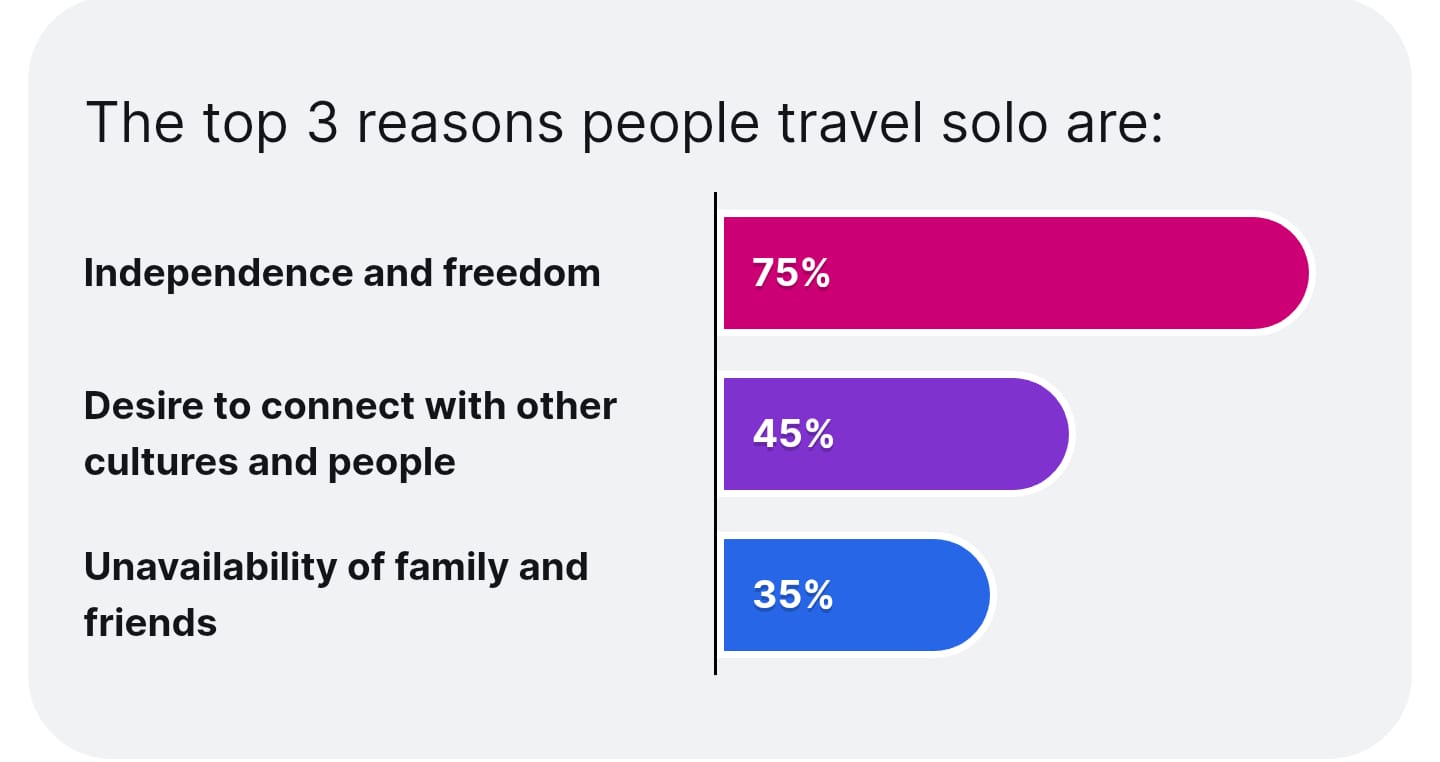
There are a lot of reasons people choose to travel solo, but these are the top three that line up with mine:

Freedom of Choice

Every decision is yours—when to wake up, where to eat, how long to stay, and when to move on. No compromises, no negotiations, no group chats arguing about dinner plans. If something feels right, you go. If it doesn’t, you pivot.

Peace Over Compromise

Solo travel eliminates unnecessary friction. No bickering over directions, budgets, or schedules. No managing other people’s moods. What you gain instead is calm, clarity, and the ability to actually enjoy where you are without tension tagging along.

Growth Through Discomfort

Traveling alone forces you to engage—with places, people, and yourself. You learn how to solve problems, sit with silence, and be comfortable on your own. That confidence carries back into everyday life in ways most people don’t expect.

Solo travel isn’t about being antisocial or avoiding people—it’s about choosing intentional experiences over forced ones. It’s not for everyone, but for the right person, it changes everything.

Affordability + Built-In Community

Hostel travel makes everything more affordable—and it’s one of the easiest ways to meet like-minded people along the way.

You’ll save significantly on accommodations, and food and drinks are often cheaper too—especially if there’s a shared kitchen or an on-site bar with hostel pricing. Even better, you’re surrounded by other budget-savvy travelers who are constantly exchanging real-time intel: what’s worth seeing, what’s overrated, how to get around cheaply, and where not to get ripped off.

Many hostels also offer discounted excursions, walking tours, and group activities that are both cheaper and more social than booking solo.

It’s not just about saving money—it’s about instantly plugging into a travel brain trust the moment you check in.

If you want, I can now:

write #2 and #3 to match your philosophy

make this funnier or punchier

or tailor it specifically to older solo travelers

You too can become a cheap travel nerd and travel the world solo!