newest

02/01/2024 – Mandatory meeting!đŸ‘‹đŸ»

Today, February 1st, 2026, marks two years that I have been “taking a run at retirement”.  I refer to it that way, as I am not sure how it will all work out. 

So far, so good, as I blog from Cebu, Philippines.

Three weeks after completing my 7th year with PayPal, I got a “mandatory meeting invite” on February 1st, 2024.

This was the second time; my career was also abruptly cut short after 18-years with Northern Telecom/Nortel/Ericsson.  

Hindsight is always 20/20; both situations worked out for the best long term. 25 years was enough for me, and it was time to take a run at retirement!  

All those years of hard work, strategizing, overthinking, and so many mistakes!

The travel dream was finally coming to fruition.

Aside from finances, which I blogged about HERE, health insurance is one of the biggest drivers for early retirement. 

I found a great setup through trial and error for insurance, as I also blogged about HERE.

Again, so far so good! đŸ€žđŸ»

Soon after getting laid off, I started planning NorthAmericanDarrell.com, and my YouTube channel, which you can check out by clicking HERE.  Please consider following my channel!

I had always wanted to share my past, present, and future travel experiences. 

A solo traveler, vlogger, YouTuber, Geoarbitrage with a dry sense of humor.

“Freedom 50” turned into a “Freedom 55” after the COVID market correction, and ultimately “Freedom 52” traveling lifestyle.

Just another example, life cannot always be planned.

“Freedom 54” is just around the corner!

Cheers to another year living the dream! đŸ™ŒđŸ»

616187481_1628104638609592_6126359453357289084_n

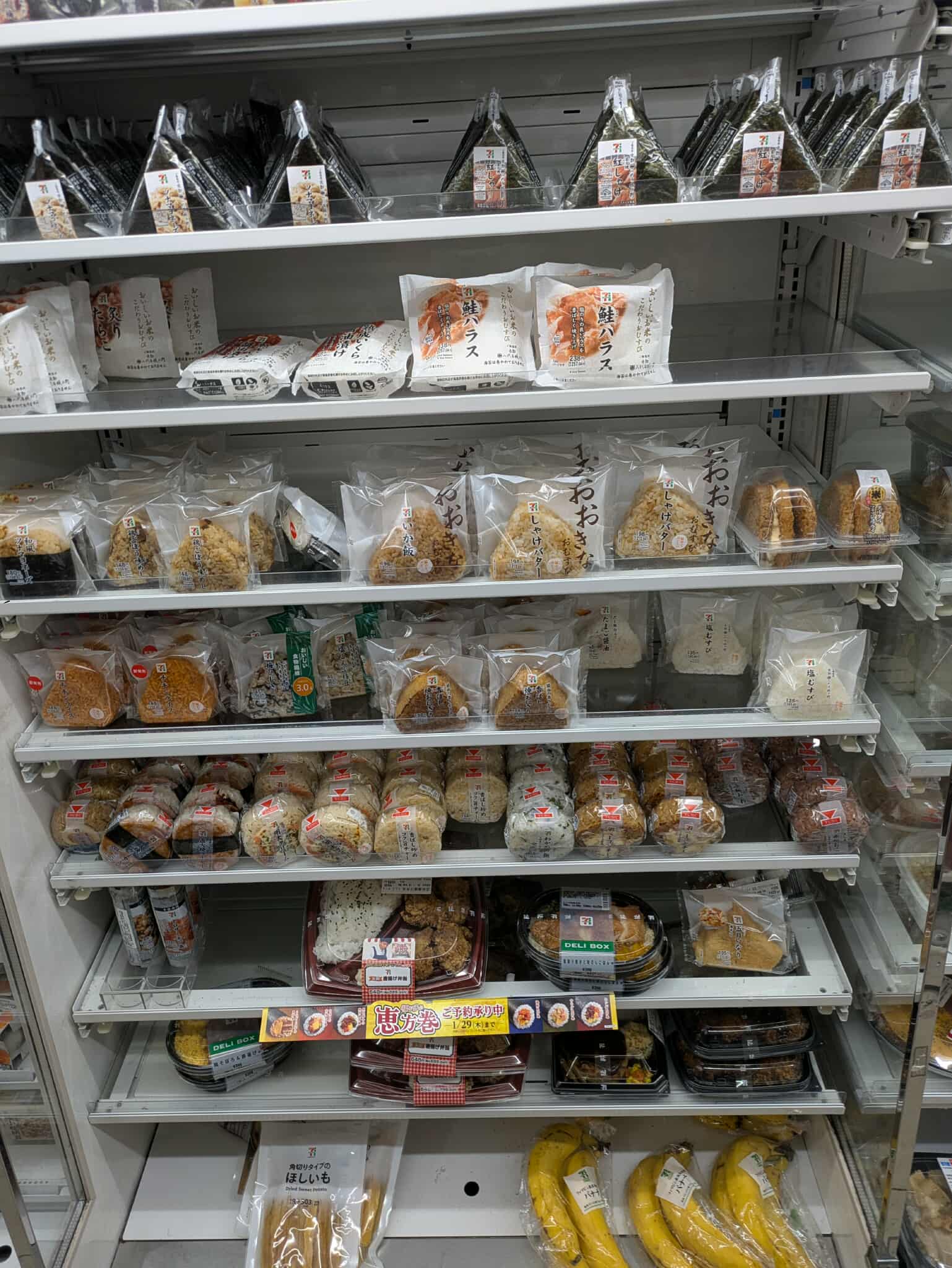
7-11 An Asian legend! Tokyo version!!đŸ„đŸ™

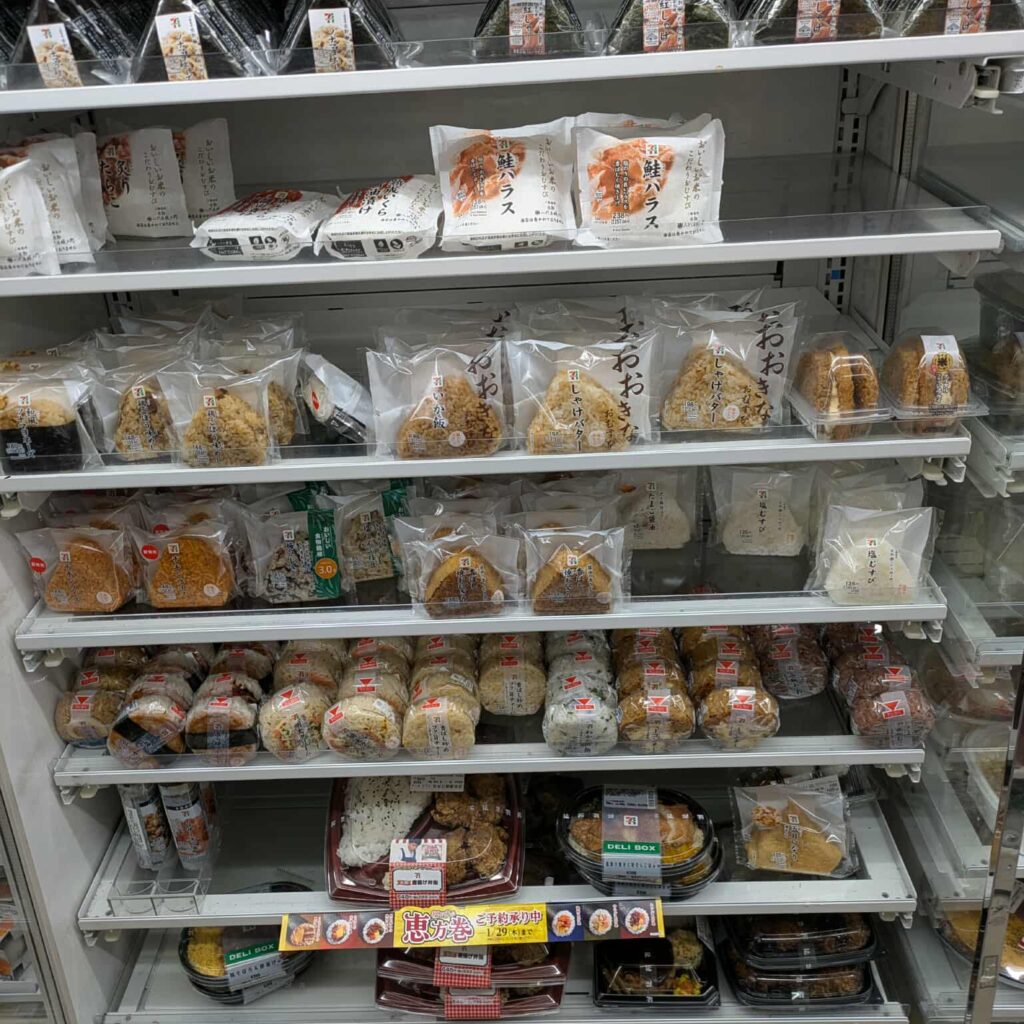
I was first introduced to 7-Eleven in Thailand, and ever since, it’s been a legendary five-star dining experience in my book.

People back home think of 7-11 as a place to buy gas, bad coffee, and regret. đŸšœ

In Asia? It’s a gourmet convenience store run by wizards. đŸȘ„

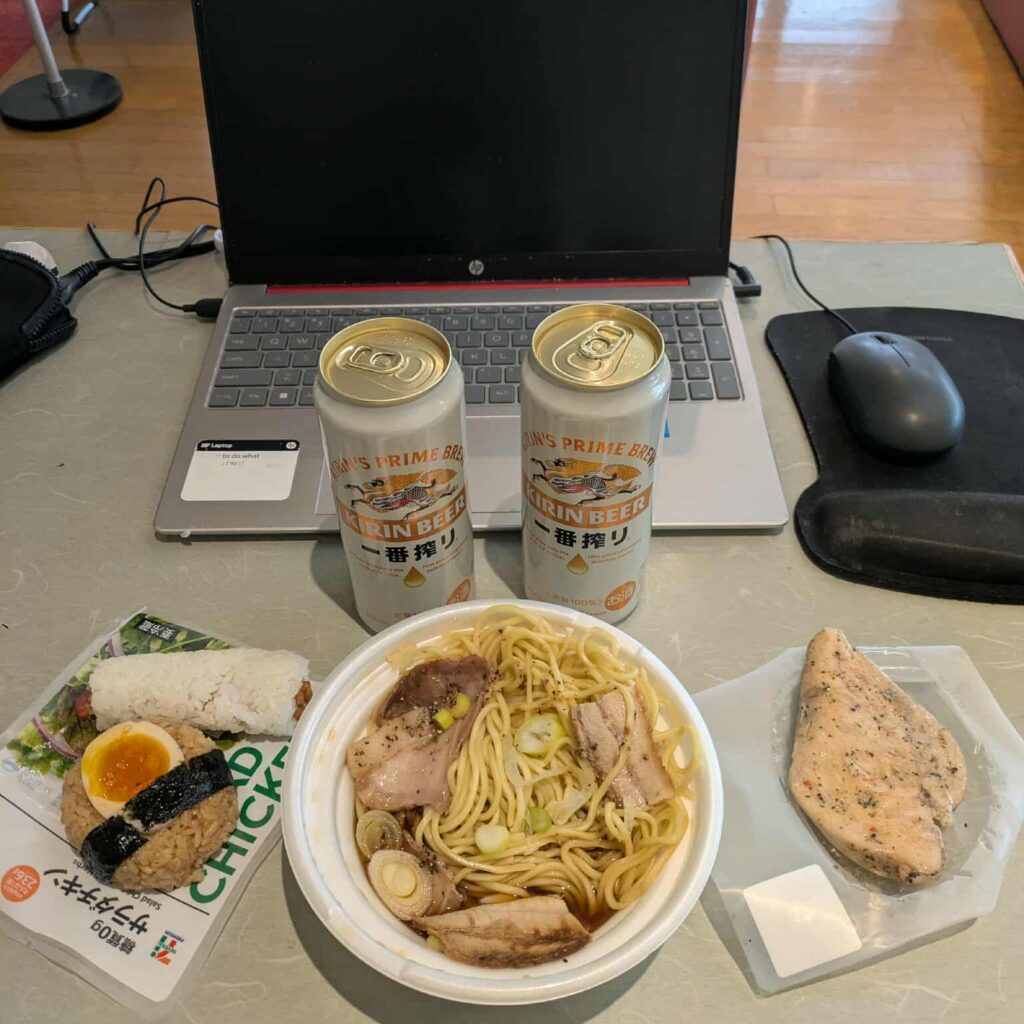
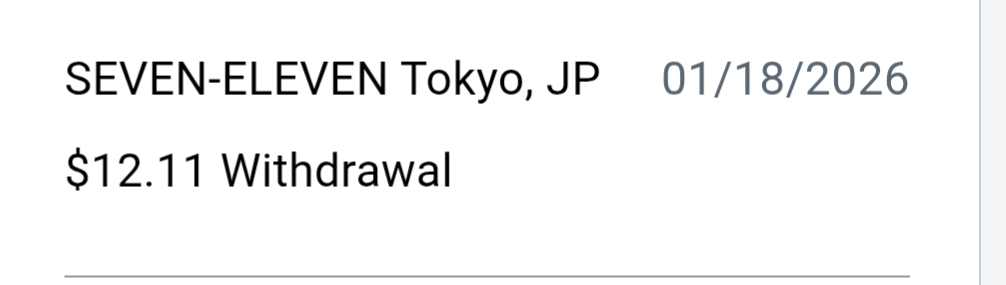
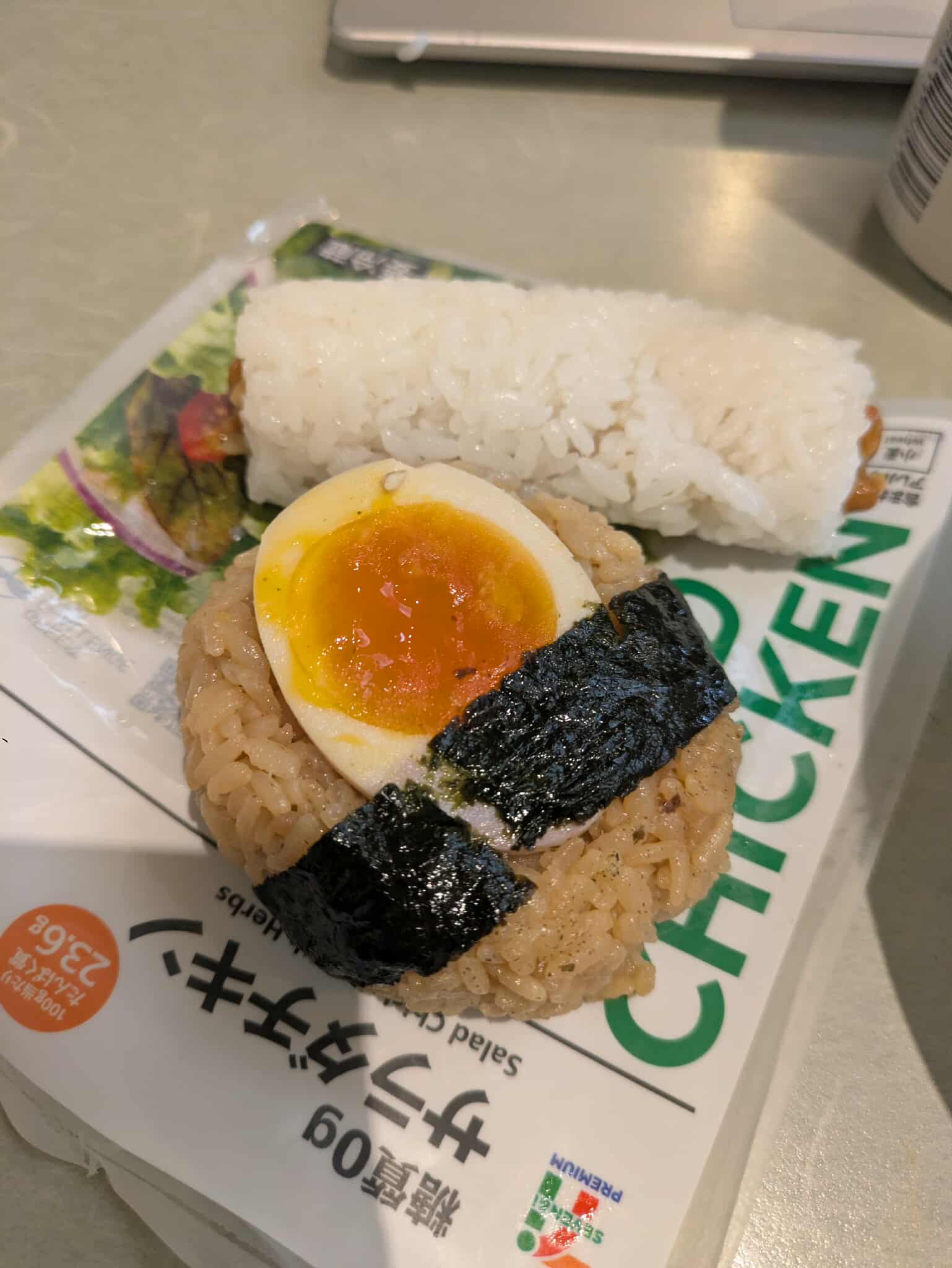
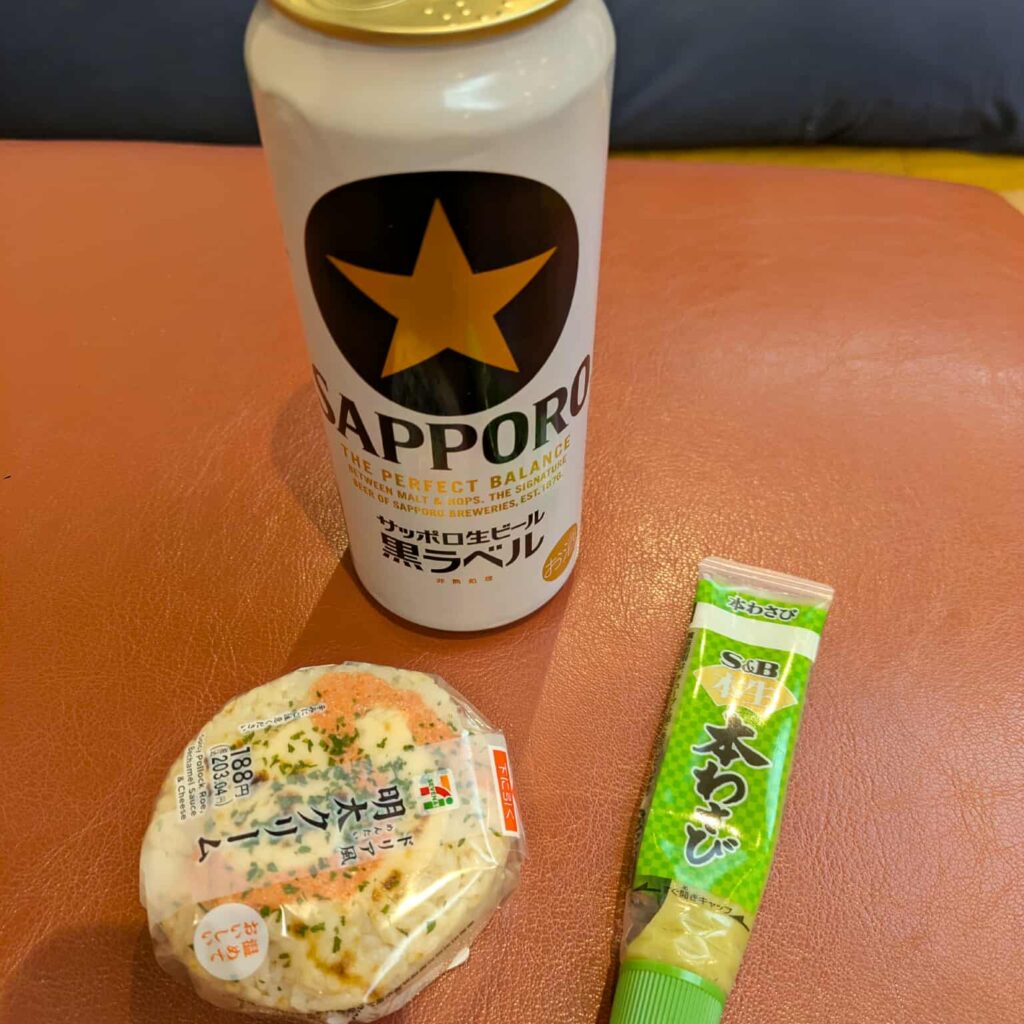
Below is today’s lunch while listening to the Oilers game in Tokyo, Japan—$12.11 USD total, hot, fresh, and legitimately amazing. Just fresh local food, handed to you with a smile, and no tip required.

Where else can you eat well, watch hockey, and feel like you’re winning at life
 from a convenience store?

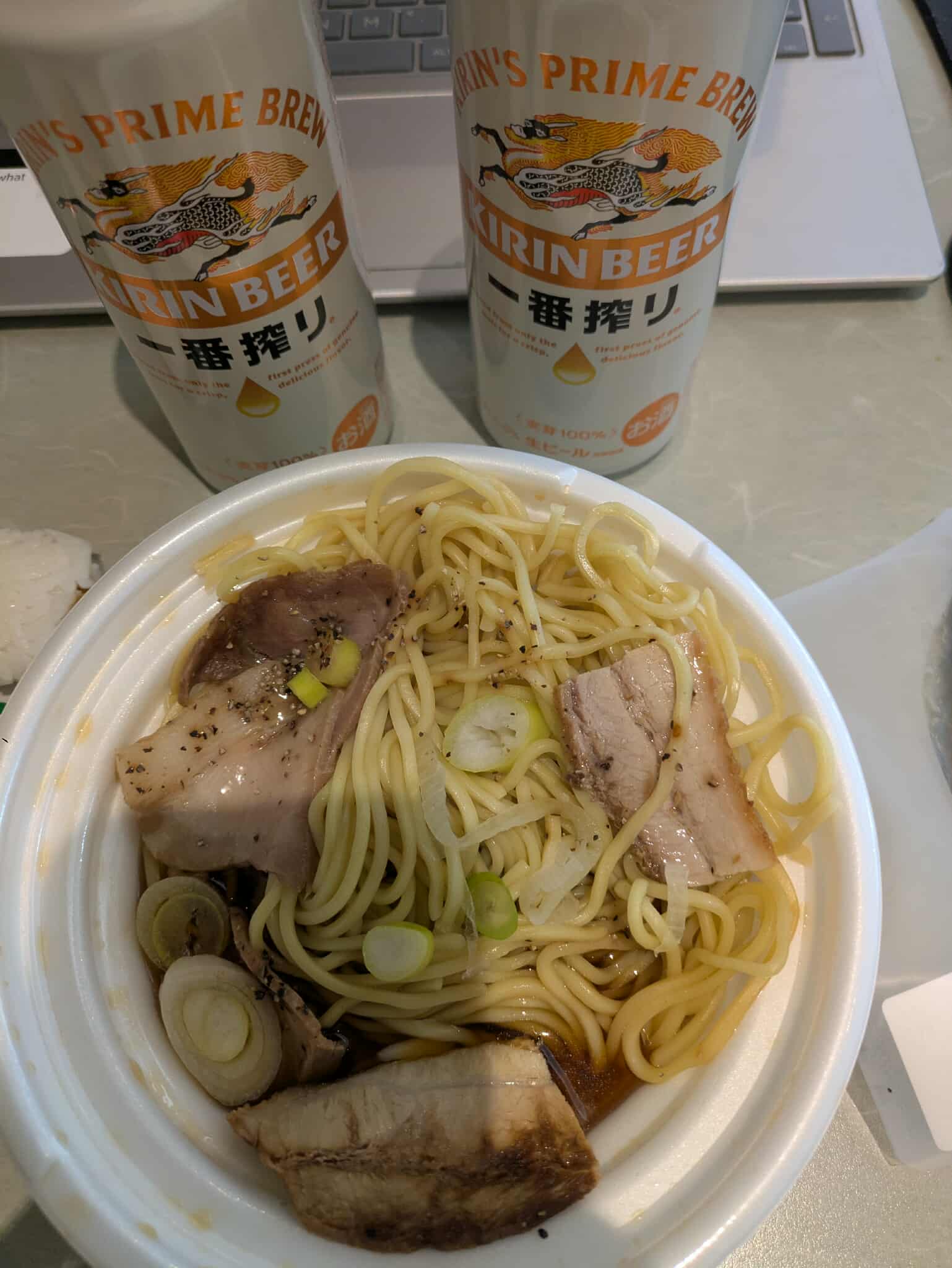
Living life to the fullest—one sushi, ramen meal with a cold beer at a time. đŸ’đŸ„ą

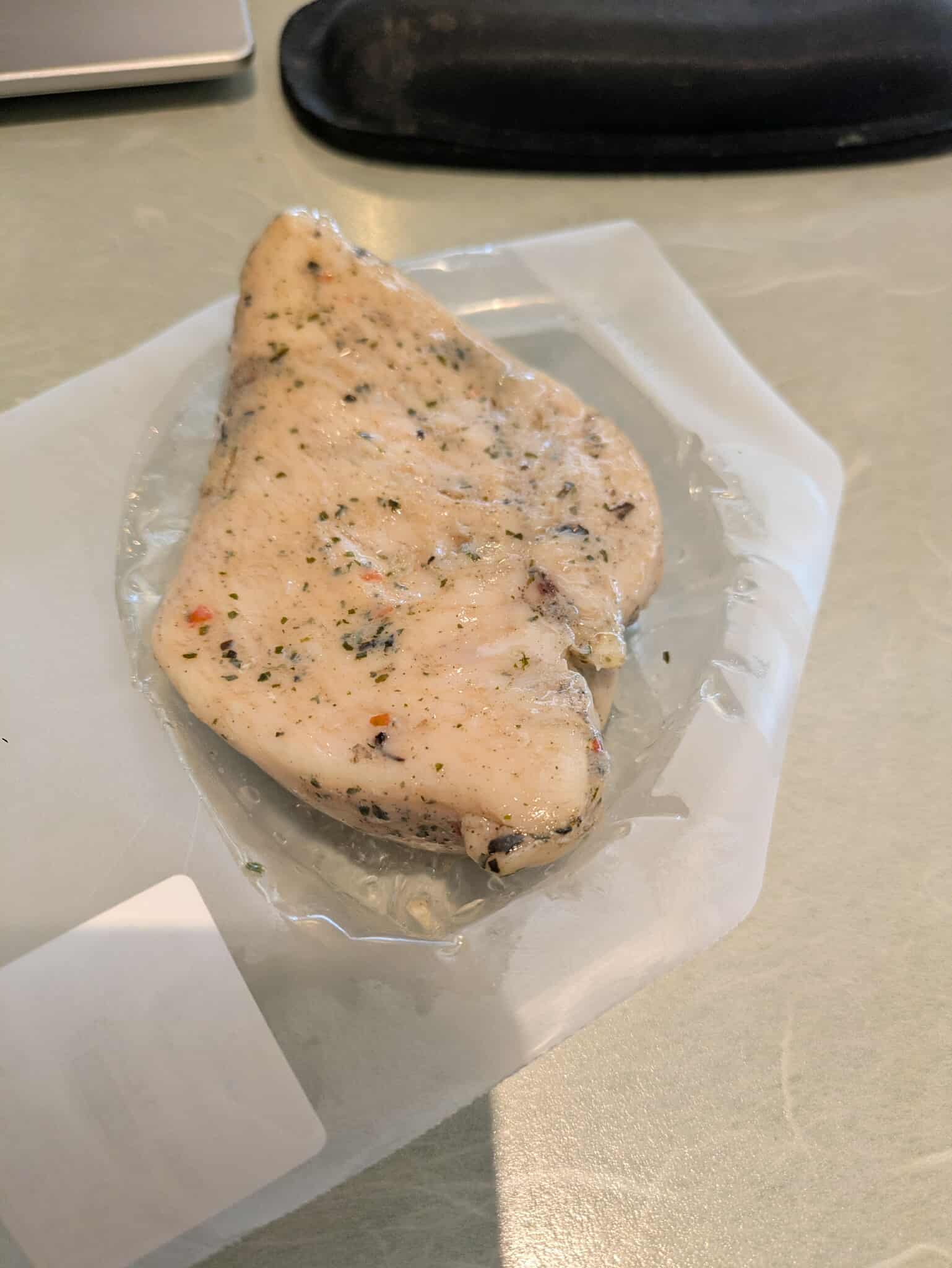
Two Kirin brewskis, ramen, sushi and chicken breast for the win!

They always say, “Don’t eat gas-station sushi.”
That advice was clearly written by someone who has never set foot in an Asian 7-11.

This stuff is better than most sit-down restaurants back home—and at about 25% of the price. Fresh rice, real fish, legit flavors. No price gouging. No regret. đŸšœ

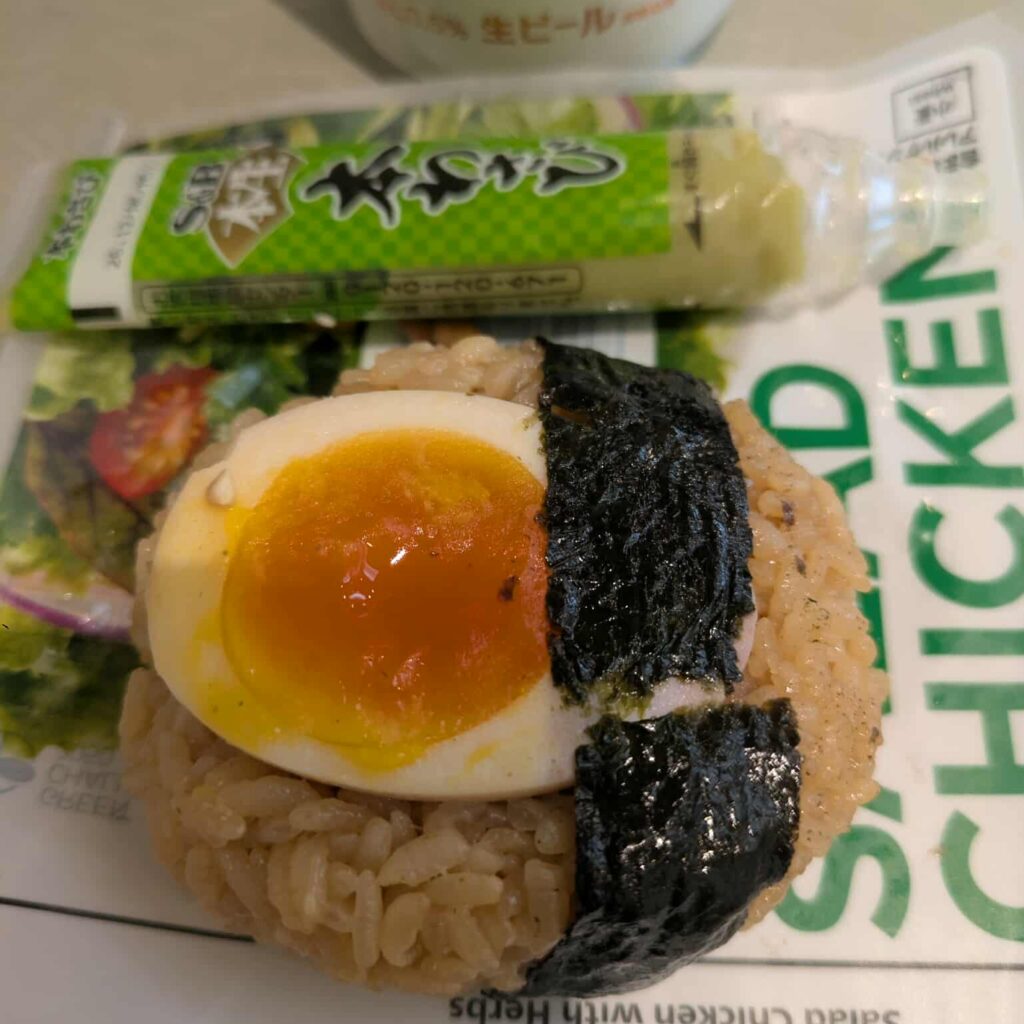
I may or may not also carry a tube of wasabi in my pocket at all times.
Don’t judge me—you’re the one with tater tots in your cargo pants.

I might be wrong, but if you never tried it, I am guessing it might be you!

Milk and cookies before bed are for Santa.

North American Darrell finishes the night with 7-11 sushi, a cold beer, and the satisfaction of knowing that I absolutely won another travel day for pennies on the dollar.  

Life is good, and 7-11 sushi makes it even better! 😎

hotdog

Tokyo – Uber vs trains!🚘🚆

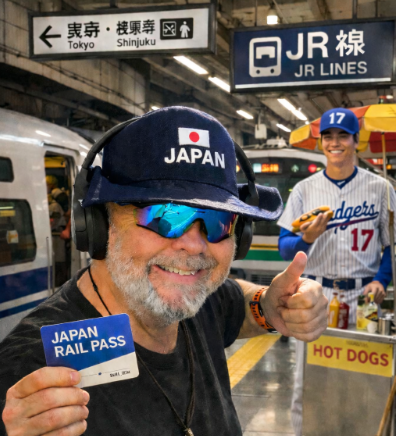
Ohtani selling hot dogs in the subway station.

I’m three days into traversing Tokyo, and it’s already become painfully obvious that Japan loves the Dodgers and that Uber and I are not in a long-term financial relationship.  Both are pretty annoying, to be honest!

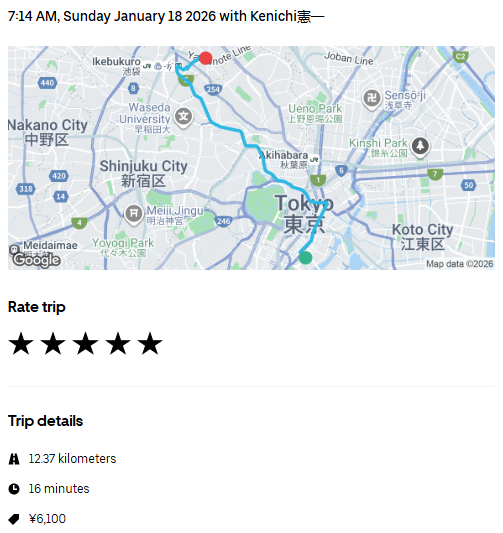
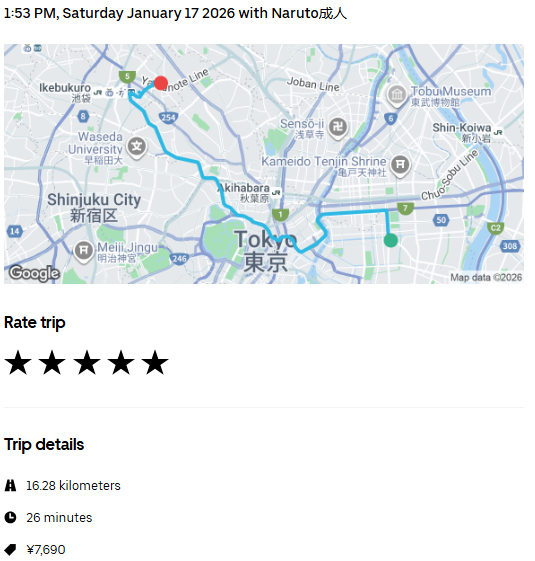
In general, Tokyo isn’t expensive—it’s just allergic to lazy logistics. Every Uber/taxi ride feels like a polite, impeccably clean mugging. 

The city is basically daring me to learn its transit system, and after a few receipts, you realize it’s not a suggestion. It’s a survival strategy.

This place doesn’t financially reward Uber convenience. 

It rewards commuter train competence.

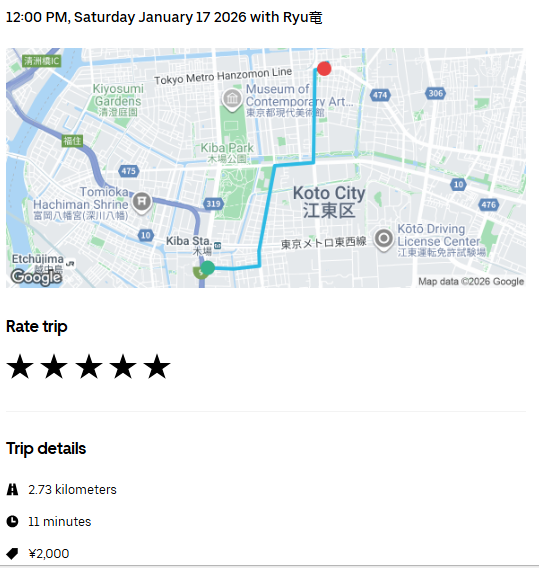
12.4 KM, 16 minutes for $39 USD
16.3 KM, 26 minutes for $48 USD
2.73 KM, 11 minutes $12.65 USD

The Uber system worldwide is so efficient that it’s borderline daring you to be lazy. You tap, ride, arrive—no drama, no chaos, just silent competence moving millions of people like it’s nothing. Every time I used it in the past, it felt good as the prices are low, but Tokyo is the total opposite.

I’ve taken the train a few times already, and it costs just a few dollars each trip. đŸ€‘Â 

Suddenly, traveling the city feels infinite instead of expensive.

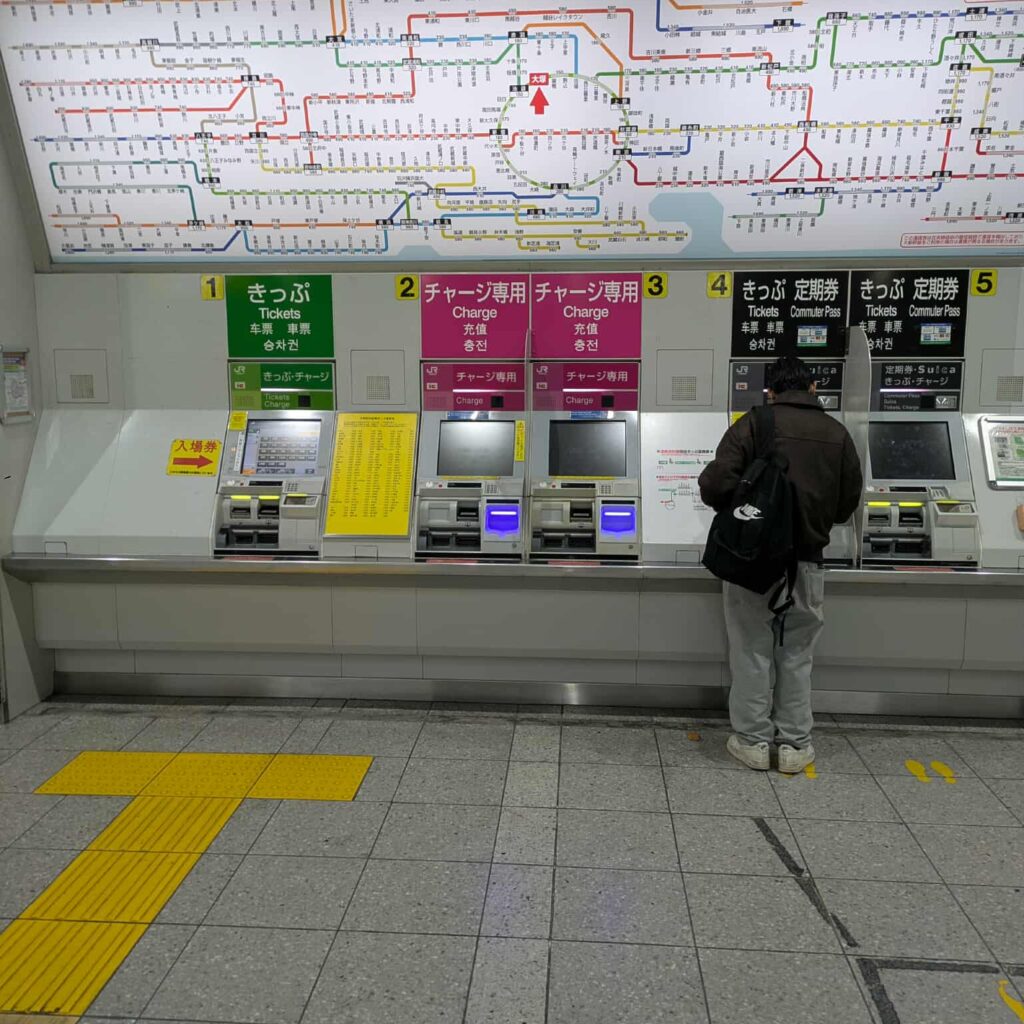
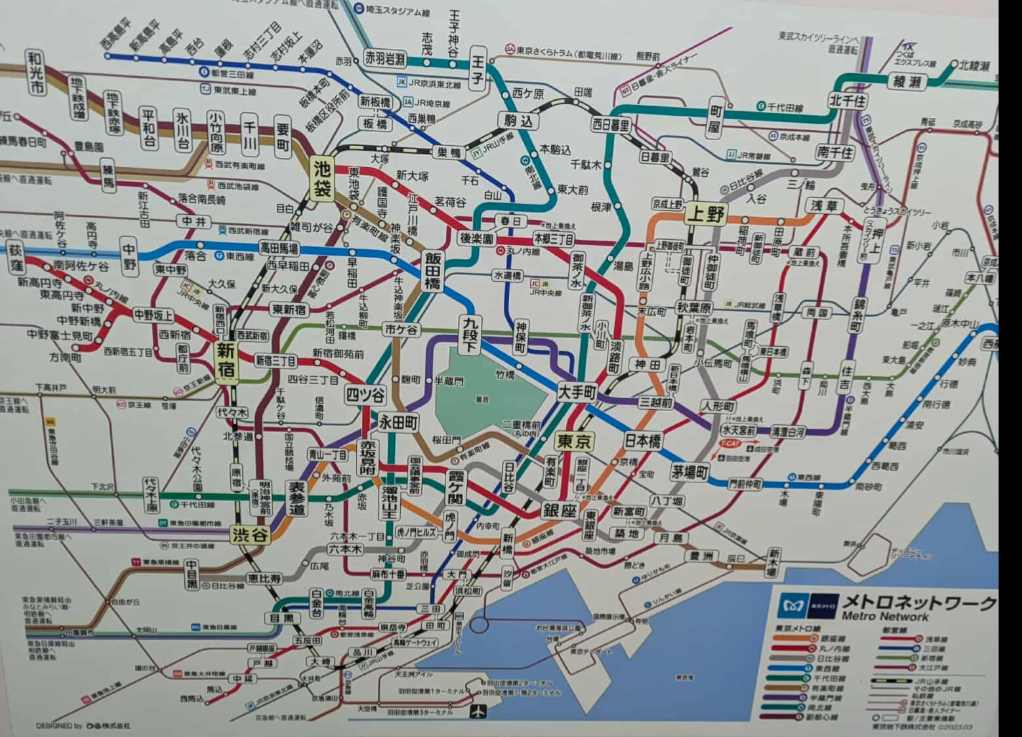
And then there’s me below in the station, standing in front of the map with a full deer in the headlights stare, trying to decode a web of lines that looks like a beautifully designed stress test. 

Equal parts awe, confusion, and 

“I absolutely need to learn the local transportation system.”

It’s humbling to look lost AF. 

It’s hilarious walking in circles.

But it’s way cheaper pretending I’m good at public transit.

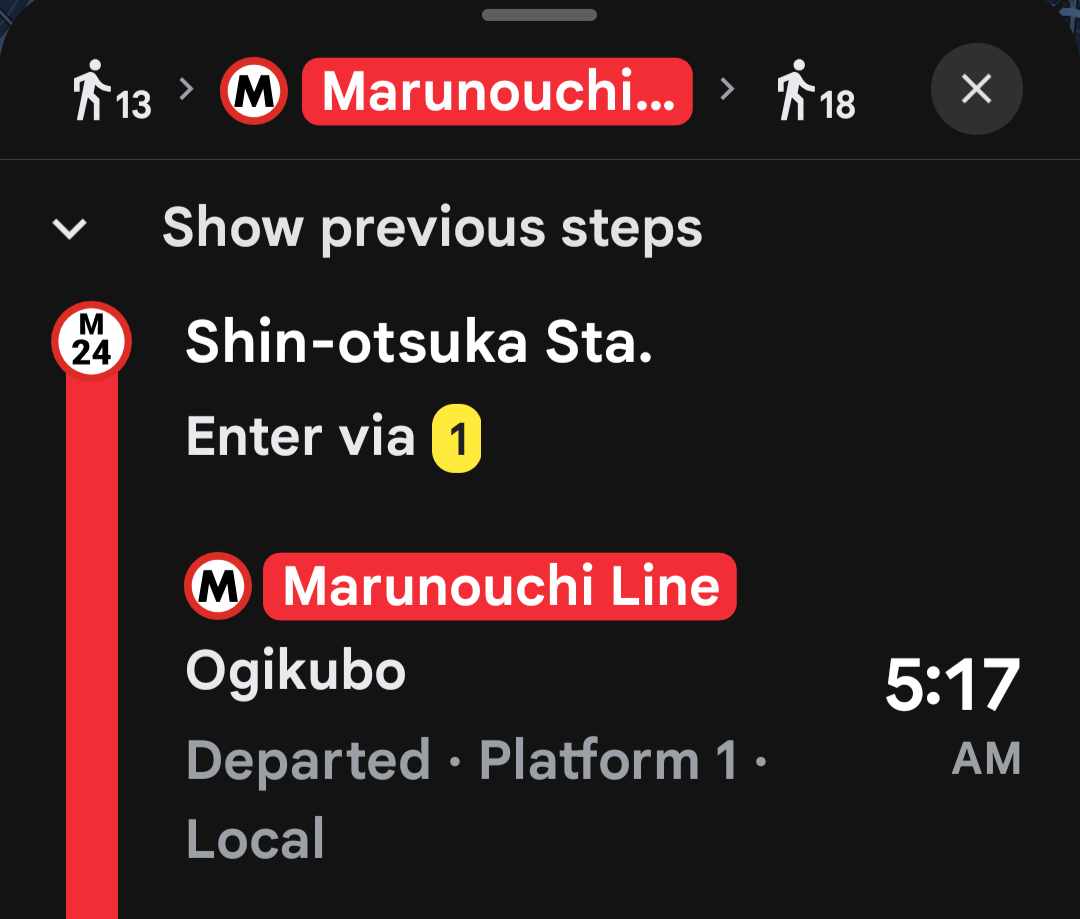
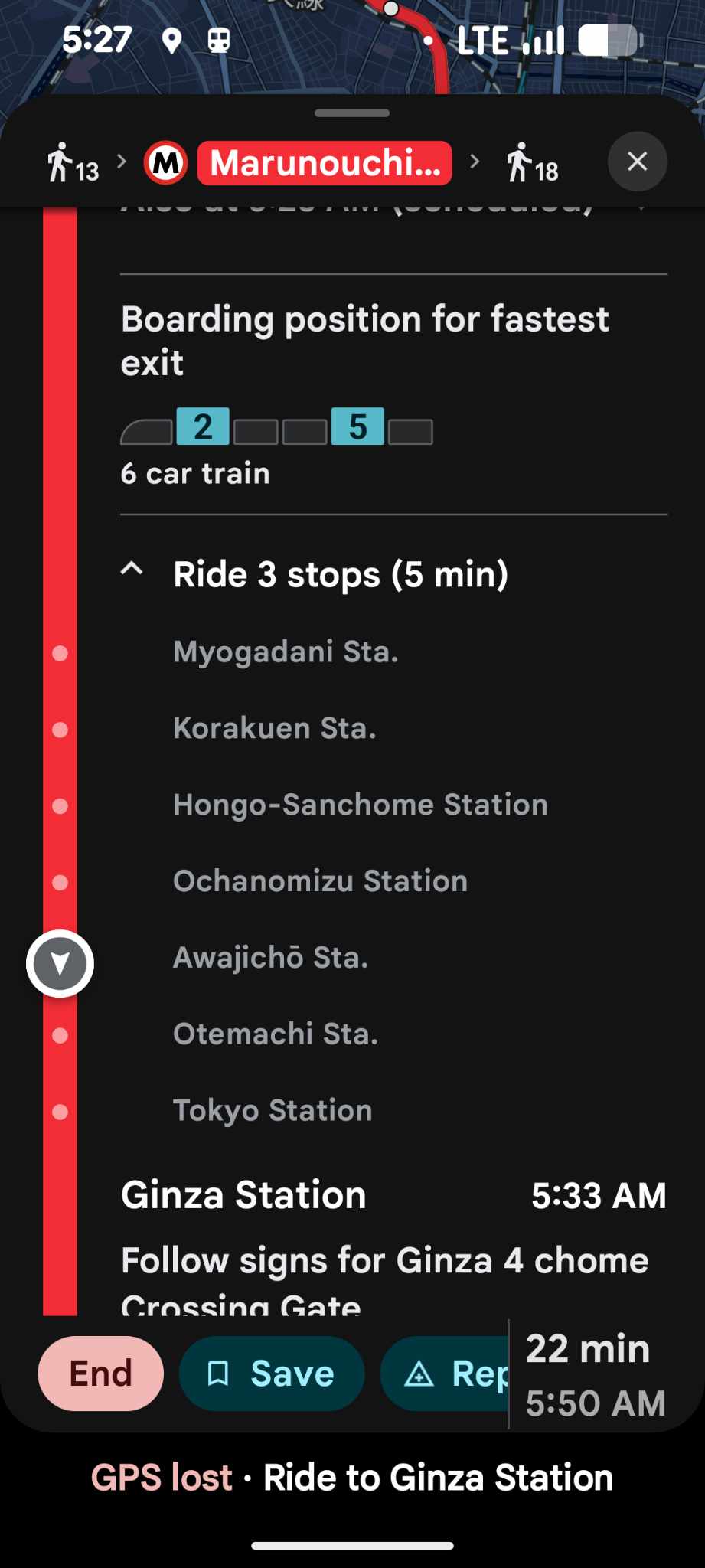
Google Maps is doing the heavy lifting out here. Walking, driving, trains—it doesn’t matter how you move, it just makes you look relatively competent, which is a game-changer for me.

The train feature is the real hero here in Tokyo!

It tracks you in real-time, updates at every stop, and tells you exactly how close you are to your destination. No guessing. No panic. Just a calm little voice saying, “Not yet. Not yet. Okay, now.”

It turns a subway system that looks like abstract art into something you can actually use. 

All of these local rides are basically training wheels—once I grab my Japan Rail Pass, these short hauls getting to the bullet train become “free” as they are included in the $50 a day pass.

That’s when the country really opens up. Tokyo today, Kyoto tomorrow, Hiroshima the next at high speed—no Uber surge pricing, no second-guessing getting ripped off, just show up at the train station and go.

You can read my full breakdown of how I’m planning on using the Japan Rail Pass blog.

đŸ‘‰đŸ» Click HERE to see the potential plan

It’s not just transportation. 

It’s financial leverage keeping me in the Tokyo Grand Theft transportation game!

Another problem, I suck at games too! 😐

japan1

Japan – February 2026! 🏯

Travel planning is such a fine line with me.  Financially, I know I need to slow travel, BUT there is always so much to see and do everywhere I go do my best to balance it out.  

I had already booked my flights and accommodations for the first month of my trip and planned to leave on January 30th.

Well, that changed as I left two weeks early! 😎


January 15/16, 2026

Rocky Point to Phoenix to change over luggage.  

Phoenix to Seattle 

Seattle to Tokyo


January 16th – XX Tokyo ✈

Northern Japan daytrips by bullet train.

Disneyland Japan


February 8th-22nd Kyoto/Osaka 🚄

Central Japan daytrips by bullet train.

Universal Japan


February 22nd-January 30th Okinawa ✈

Living the Japanese island life!


March 1st – XX âœˆïžđŸšą

Visit other islands in the Japanese Archipelago. 


March XX – April 15th

Travel to Korea and finish the adventure in the Philippines.

The struggle is real when you’re trying to go with the flow and plan an itinerary. I’ve learned the hard way that you still need some outline—at least flights in and out—if you want things to make financial sense.

The problem? When travel days roll around, I’m always conflicted. I’m either ready to go, or I want to stay longer
 and somehow, I’m ambivalent, either way and every time. 

That’s the price of insanity; I guess, as there is never a middle ground with me. 😁

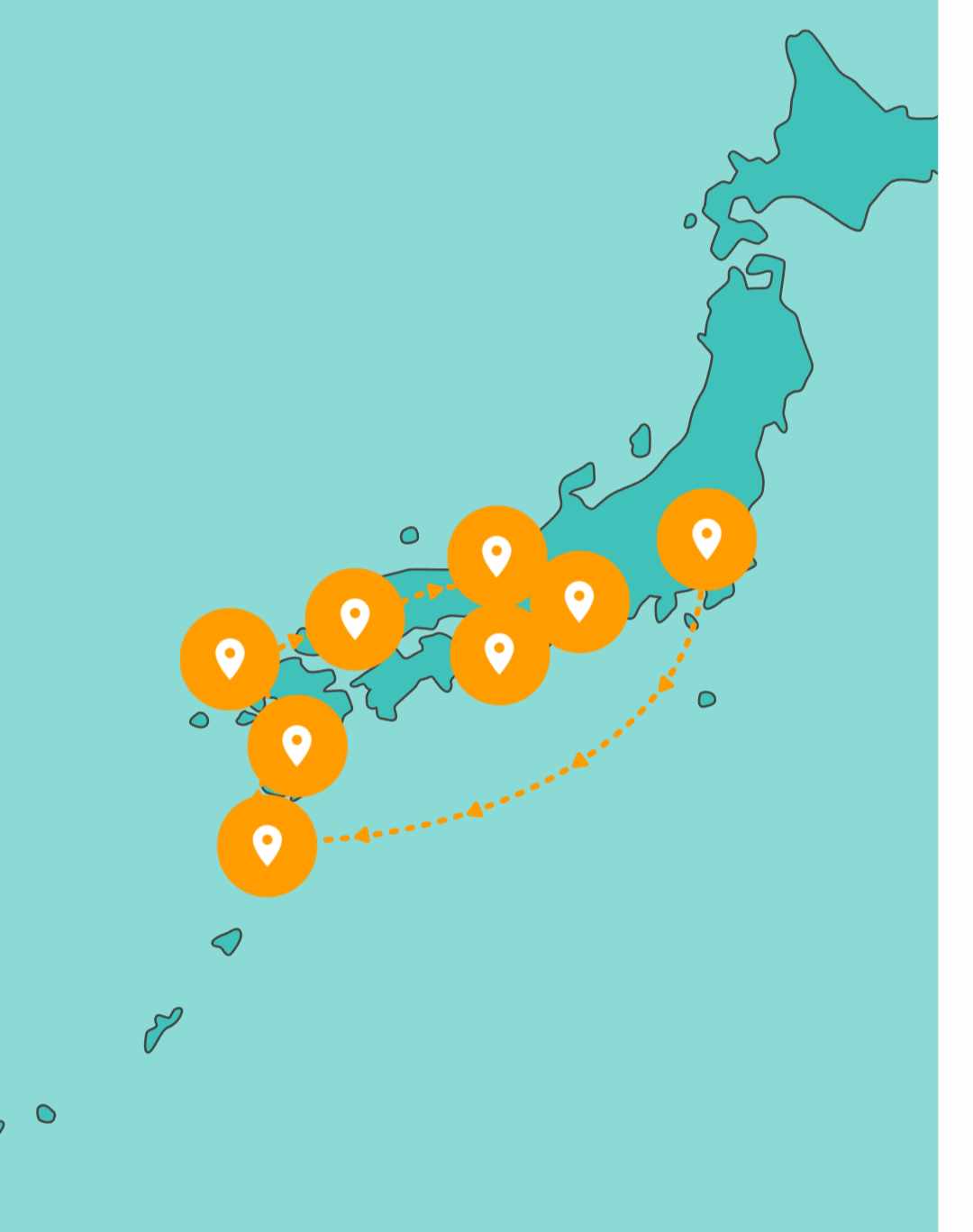
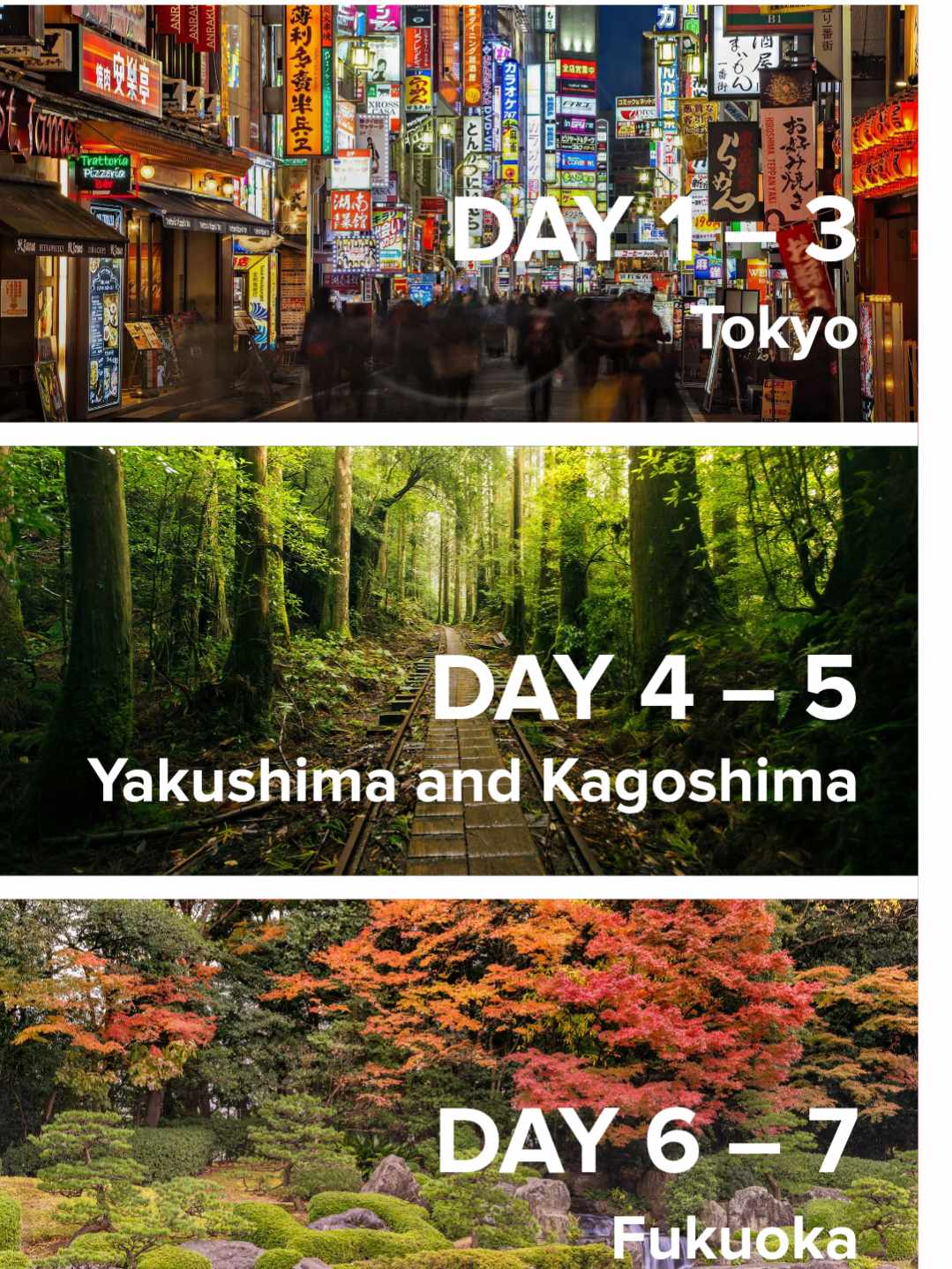
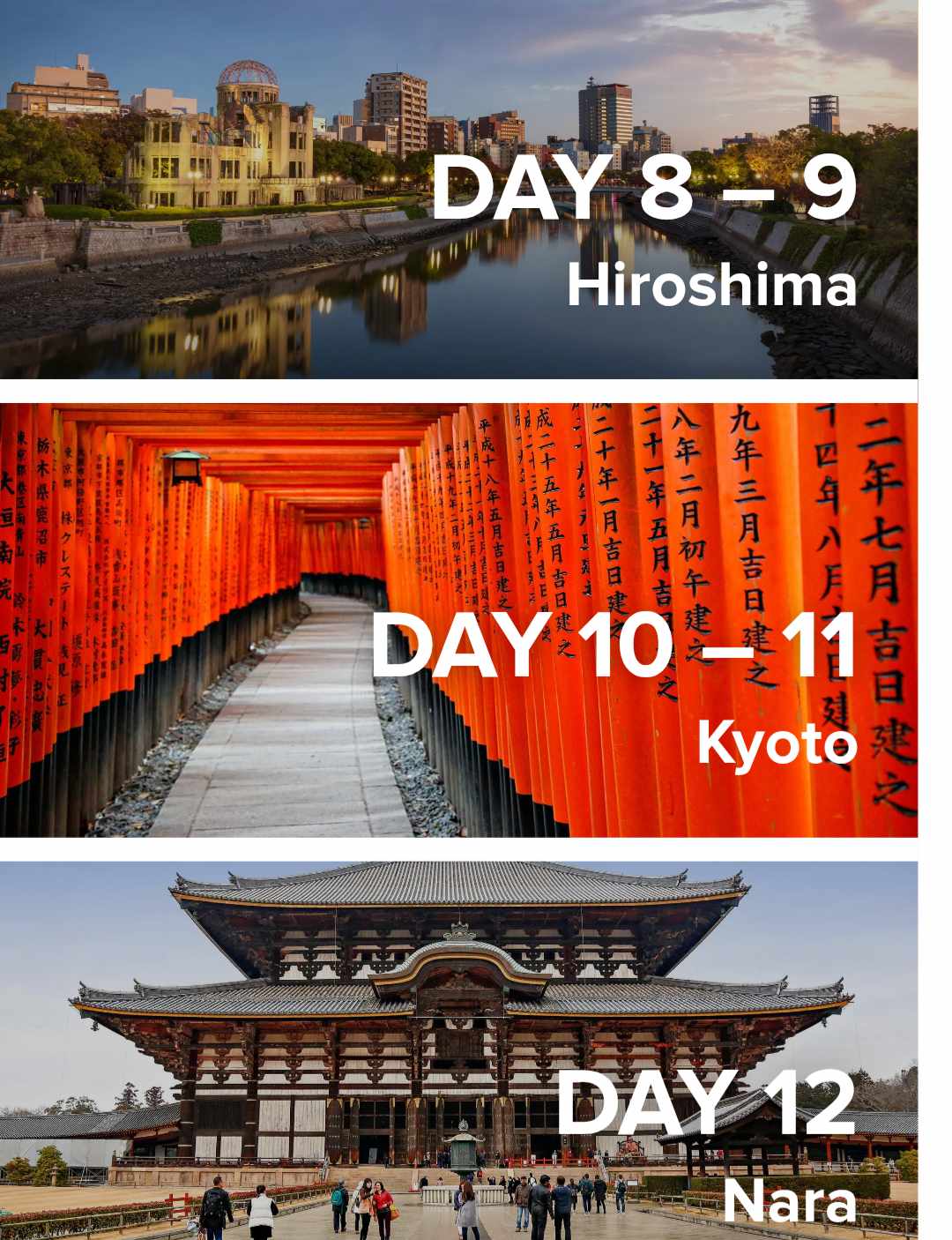
Here is a 14-day itinerary that I will use as a guideline for my bullet train day trips.

WANT BIGGER FONT ON TRAIN TRAVEL IN JAPAN?

CLICK THE LINK BELOW LINK:

Â âžĄïžÂ MORE BOOKING DETAILSÂ âŹ…ïž

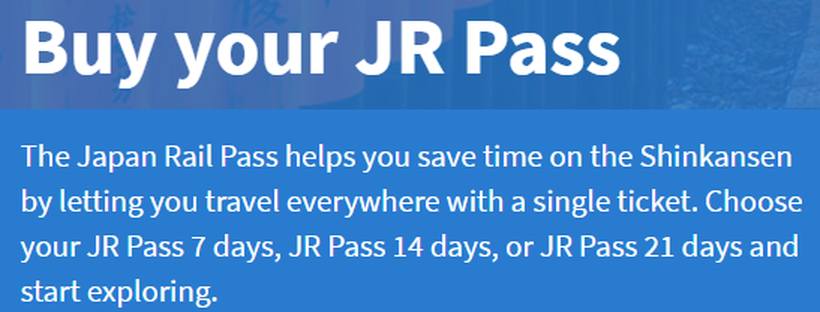
Here are the USD prices plans, leaning towards the 7-day pass:

7-day trip:  $322

14-day $513

21 days $642

Click HERE to read my blog on Japan train travel.


Japan offers a wide variety of experiences for me to see:

Cultural 

Natural wonders

Culinary

Seasonal.

There is a lot to see, but I can plan “train days” to see some and below is a breakdown:

Cultural Experiences

Visit Historic Temples and Shrines: Explore iconic sites like Fushimi Inari-taisha Shrine in Kyoto, known for its thousands of vermilion torii gates, and Senso-ji Temple in Tokyo, the city’s oldest temple.

Participate in a Tea Ceremony: Experience the traditional Japanese tea ceremony, which emphasizes harmony, respect, purity, and tranquility.

Attend a Sumo Wrestling Match: Witness the unique sport of sumo, which is deeply rooted in Japanese culture, at one of the tournaments held throughout the year.

Natural Wonders
Cherry Blossom Viewing: Visit during spring to enjoy the breathtaking cherry blossoms (sakura) in parks and gardens, a quintessential Japanese experience.

Hike in National Parks: Explore Japan’s stunning landscapes, such as the Japanese Alps or the trails around Mount Fuji, which offer breathtaking views and a chance to connect with nature.

Culinary Adventures
Savor Authentic Japanese Cuisine: Indulge in local dishes like sushi, ramen, and okonomiyaki. Cities like Osaka and Fukuoka are famous for their street food.

Visit Nishiki Market: Experience the vibrant atmosphere of this traditional market in Kyoto, where you can sample various local delicacies and shop for unique souvenirs.

Unique Attractions
Ghibli Museum: Immerse yourself in the world of Studio Ghibli at this enchanting museum in Mitaka, Tokyo, dedicated to the beloved animated films.

Universal Studios Japan: Enjoy thrilling rides and attractions based on popular movies and franchises, making it a fun destination for families.

Seasonal Activities
Winter Sports: Experience world-class skiing in Hokkaido or Nagano during the winter months, along with relaxing in hot springs (onsen).

Summer Festivals: Participate in lively summer festivals featuring fireworks, traditional dances, and food stalls, showcasing Japan’s vibrant culture.

Japan is a destination that caters to a wide range of interests, ensuring that every traveler can find something memorable to experience. Whether you’re drawn to its rich history, stunning nature, or delicious food, Japan promises an unforgettable adventure.

Powered by cheap flights, poor decisions, and absolute freedom.

DO YOUR HAPPY DANCE!

japan6

Japan bullet train – CANCELLED!

There were definitely some zigs and zags in this plan …

I planned to leave for my Japan adventure on January 30th, 2026. ❌

(I left on January 15th, pulling in the trip two weeks) 

January 15th-23rd, Tokyo ✅

(I left for Cebu, Philippines January 23rd as I blogged about HERE)

January 8th-22nd, Kyoto ❌

January 22-January 30th, Okinawa ❌

I plan to visit islands within the Japanese archipelago after that, but it’s still up in the air. ❌

Since train travel in Japan is known to be the best in the world, I also plan to buy a pass. ❌

(After Tokyo, the next destinations and train passes were posted indefinitely.)

A single train ride in Japan can easily run $100+ USD, which is exactly why the rail pass just makes sense. One long hop can cost as much as several days of unlimited travel.

A 7-day Japan Rail Pass is a power tool, not a casual purchase. Because the days have to be consecutive, it only really shines when you cluster your long-distance moves into a tight window.

The sweet spot looks something like this:

Base yourself in one city first (Tokyo, Osaka, Kyoto). Do your slow exploring on local transit

Then, “turn on” the pass and go into movement mode

For example, a 7-day run could cover something like:

Tokyo → Kyoto
Kyoto → Hiroshima
Hiroshima → Osaka
Osaka → Kanazawa
Kanazawa → Tokyo

Those individual legs can each be $80–$120+ on their own. Stack four or five of them inside one week, and the pass pays for itself fast.

I just need a solid plan before I pull the trigger.

Not a minute-by-minute itinerary—just a clear idea of:

where I’ll start

where I want to end

and which long hops you’ll make in between

Once that’s sketched out, choosing between a 7-day, 14-day, or no pass at all becomes pure math instead of guesswork.

Click HERE for more information on the pass options from the website:

In the meantime, below is a great summary:

Shinkansen: The Japanese bullet trains

Shinkansen bullet trains are the fastest way to discover Japan. Discover more about the high-speed trains and the 9 rail lines they cover.

Shinkansen bullet trains are the fastest and most convenient way of discovering Japan. The Japan Rail (JR) network is extensive, and the trains reach a top speed of 320 km/h (199 mph). This allows you to get to wherever you need in little time.

The nine Shinkansen lines take you in different directions around Japan. From Tokyo to the south runs the Tokaido Shinkansen line, connecting the capital with Osaka. The Sanyo Shinkansen line connects Osaka with Fukuoka and, from there, the Kyushu Shinkansen line runs through the island of Kyushu from north to south.

The other six lines either take you north or inland from Tokyo. These are the Akita, Hokkaido, Hokuriku, Joetsu, Tokoku, and Yamagata Shinkansen lines. The Hokkaido line takes you the furthest north, all the way to Hokkaido Island.

The Japan Rail Pass gives you unlimited access to all Shinkansen high-speed trains.

The JR Pass also allows you to make seat reservations free of charge. You can make seat reservations at any JR Ticket Office or ticketing machine in any JR station.

A supplement is required for travel on the Nozomi and Mizuho express trains on the Tokaido, Sanyo, and Kyushu Shinkansen lines. This special complementary ticket can be bought at ticket machines or station counters in Japan, and it’s cheaper than riding a Nozomi or Mizuho train without the JR Pass.

The Hikari and Sakura bullet trains are the fastest trains you can board using the Japan Rail Pass without a supplement. They make just a few more stops than the Nozomi and Mizuho trains.

It’s worth noting that several of the JR Regional Passes also cover certain trips on Shinkansen bullet trains.

On each of the Shinkansen lines,s there are fast trains, semi-fast trains, and local trains:

The fast trains only stop at the main stations

Semi-fast trains make a few more stops

Local trains stop at every station

For instance, on the Tokaido Shinkansen line (which links Tokyo to Osaka), the fast train makes 6 stops, the semi-fast train makes between 7 and 12 stops, and local trains stop at all 17.

The Shinkansen railway network includes several lines that cover most of Japan and connect all the main cities.

Thanks to this great railway system, you can travel quickly and comfortably throughout the country without too much of a second thought.


Absolutely. No matter which pass I choose, Japan is one of those places where moving is part of the magic.

Whipping through the country on trains that feel like they’re gliding through the air, watching cities blur into mountains and coastlines, stepping off in places that feel completely different every few hours—that’s travel in its purest form.

Fast or slow, planned or improvised, Japan rewards curiosity.
And every stop is going to feel like a new world.

However, I plan it
 It’s going to be awesome.

All aboard!

PXL_20251203_102531922.MP

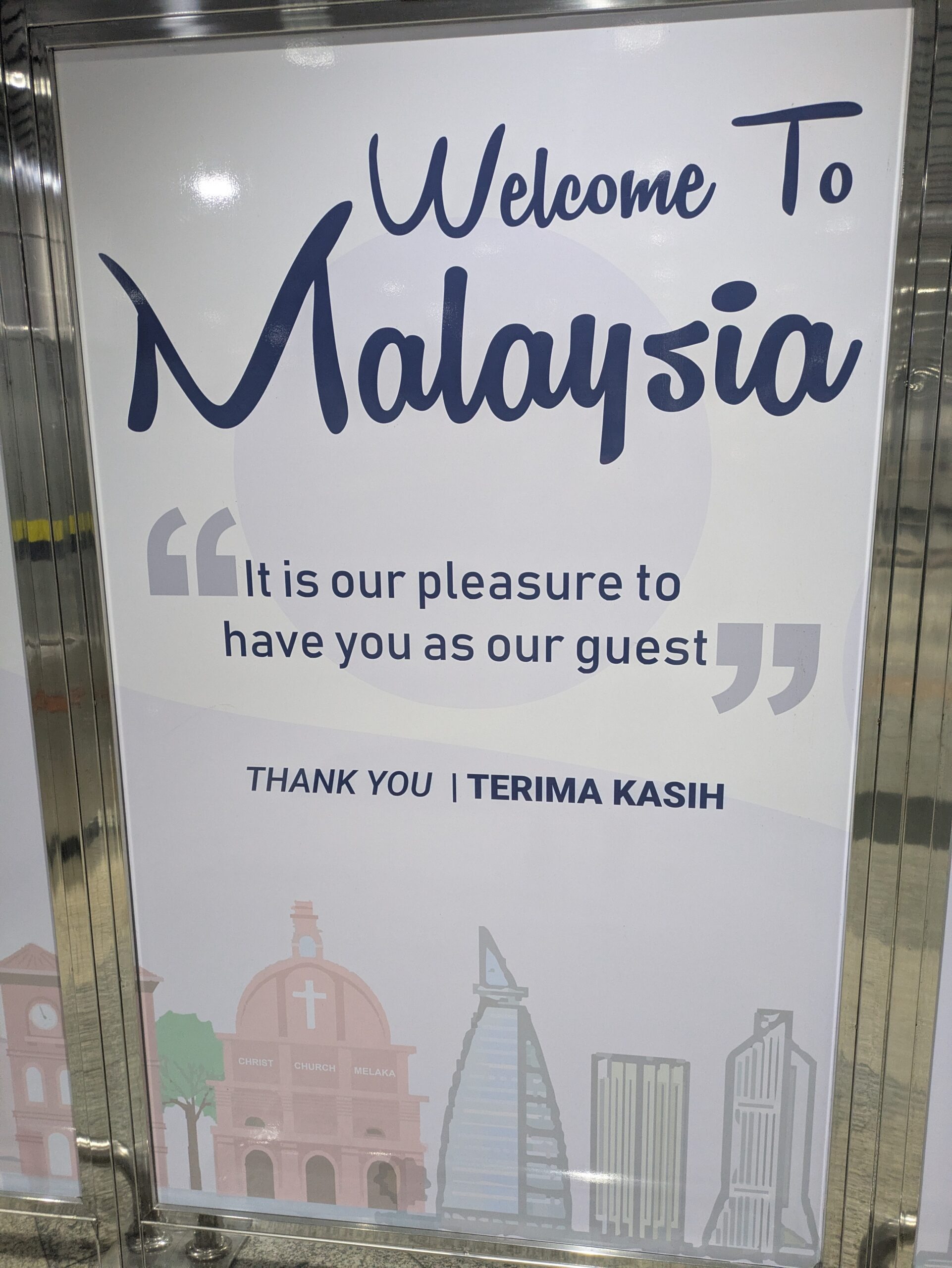
Malaysia – short but sweet visit! 🏭

I was fortunate enough to have visited Kuala Lumpur for a few days in December 2025. It was a pretty big bucket list to check off, as I have always wanted to visit.  I spend three days whipping around on the double-checker tour bus, making stops along the way.

I’ve wanted to visit for years, and it absolutely lived up to the hype.

I spent three days ripping around the city on the double-decker hop-on, hop-off tour bus, jumping off whenever something caught my eye. Skyscrapers, temples, markets, street food, neighborhoods I couldn’t pronounce—full-on tourist mode, unapologetically activated.

And yes
 pubs were involved.
Because cultural immersion is about balance. đŸ»

From my home base in Hanoi, the Asia road trip continued to Bali—and the craziest part? Three flights for $190 USD total.

Asia travel math just hits different.

One thing that really stood out while taking public transportation from the airport was the presence of women-only train cars. It was the first time I’d encountered that setup since visiting the UAE in 2024.

I actually learned this lesson the hard way—I boarded a women-only car by mistake. Totally unintentional, despite the signs being very clear once you actually slow down and look. Someone kindly pointed it out, and I stepped a few feet into the next car. No drama, just a reminder that different cultures operate with different norms.

Moments like that are part of why I travel. They force awareness. You don’t have to fully understand or agree with every custom to respect that it exists and learn from it.

Malaysia was fascinating from a cultural and architectural standpoint, and I’m genuinely glad I went. The city is impressive, the infrastructure is solid, and the experience checked a long-standing bucket list item for me.

That said, it’s probably a one-and-done destination for me—and that’s okay. Not every place has to be a repeat visit to be worth experiencing. 

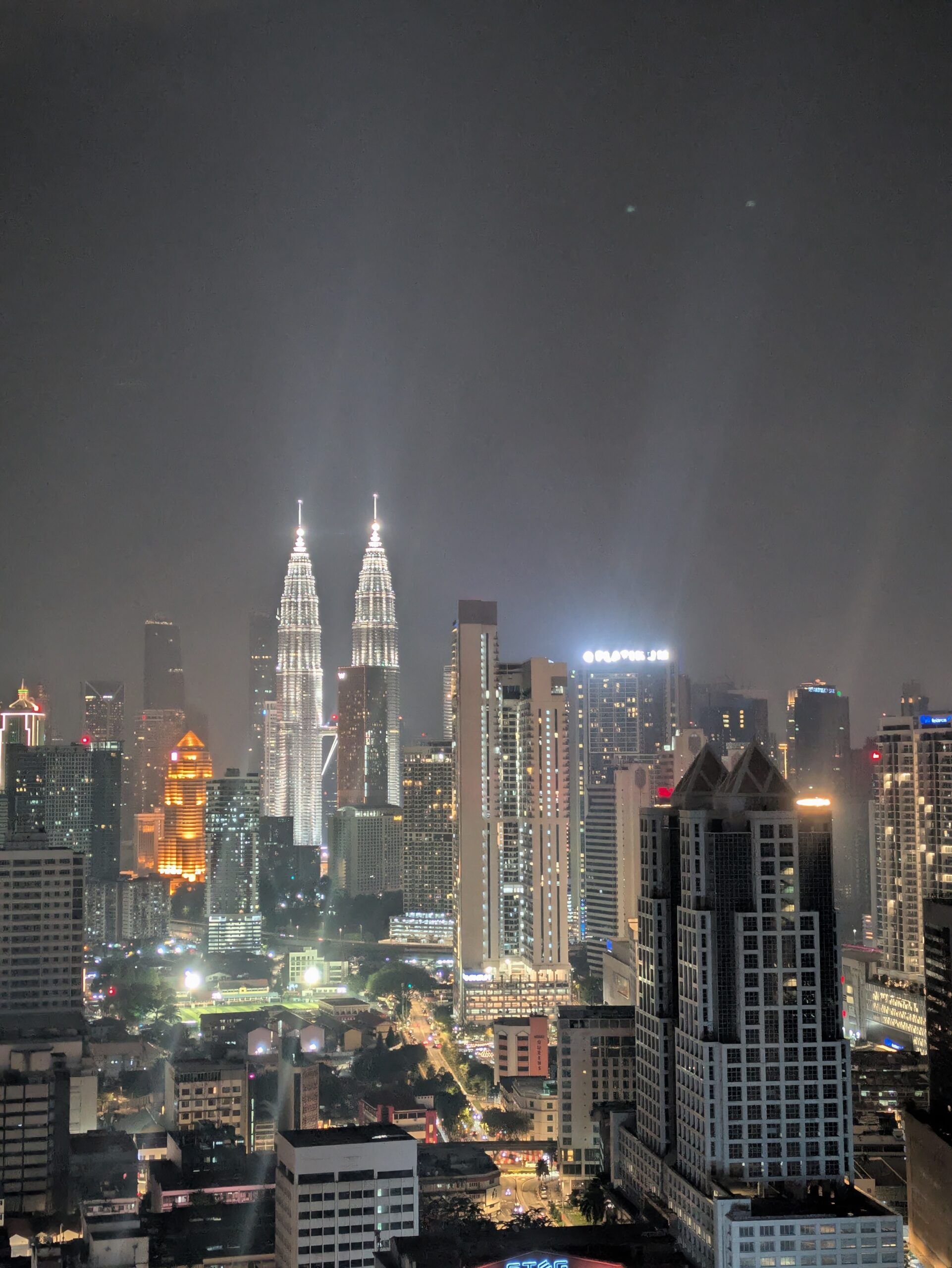
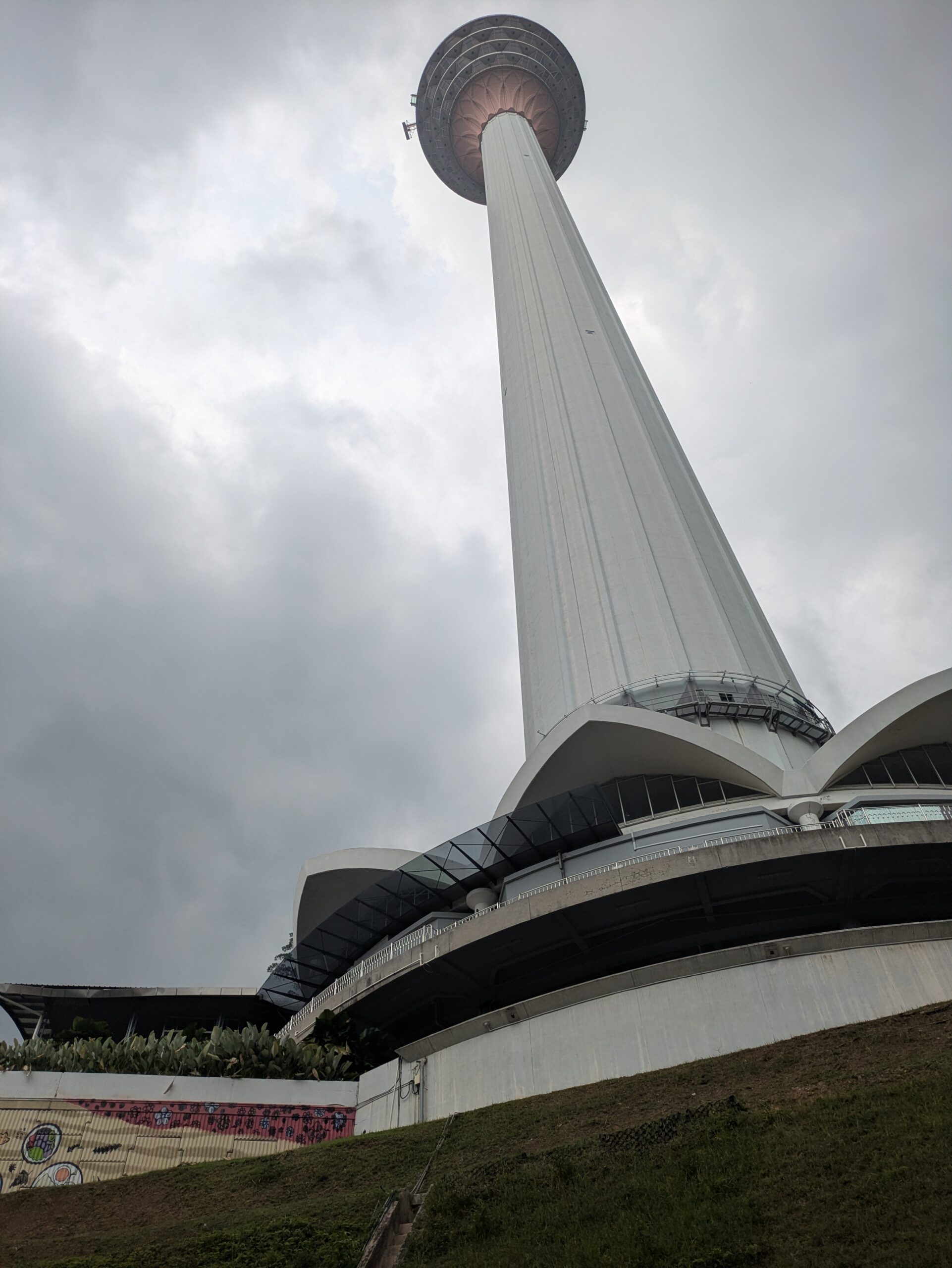
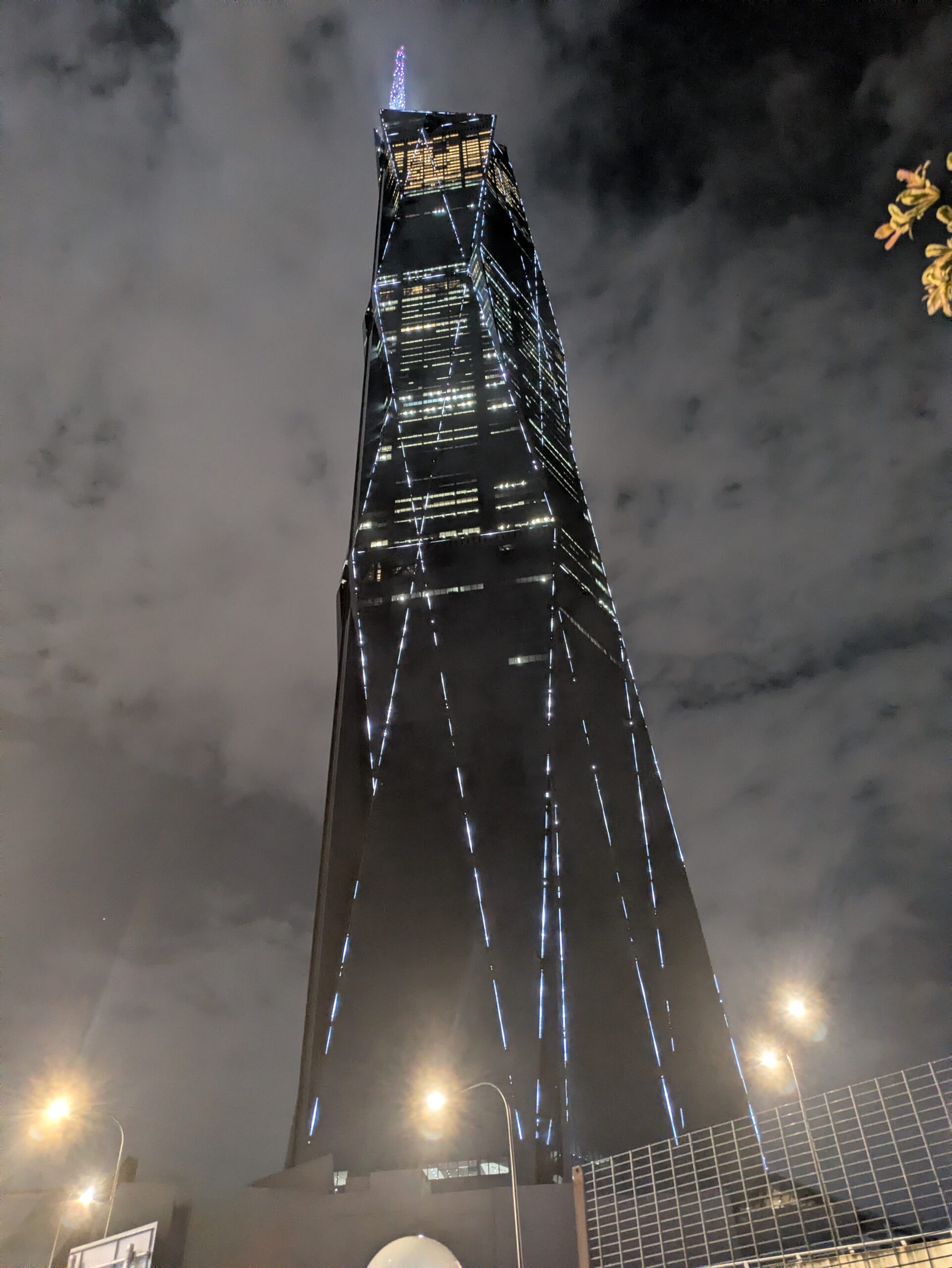
Here are some more pictures of the architecture, which was the reason I visited. Malaysia. Malaysia is home to one of the largest congregations of skyscrapers in the world. The country ranks fourth in the global list 

Petronas Tower 1 and 2 are two of the nicest buildins in the world coming at 1483 feet.
Kuala Lumpur Tower is 1131 feet tall and is similiar to the towers in Toronto, Seattle and Calgary.
Merdeka 118 comes in at 2227 and is the second largets tower in the workd.

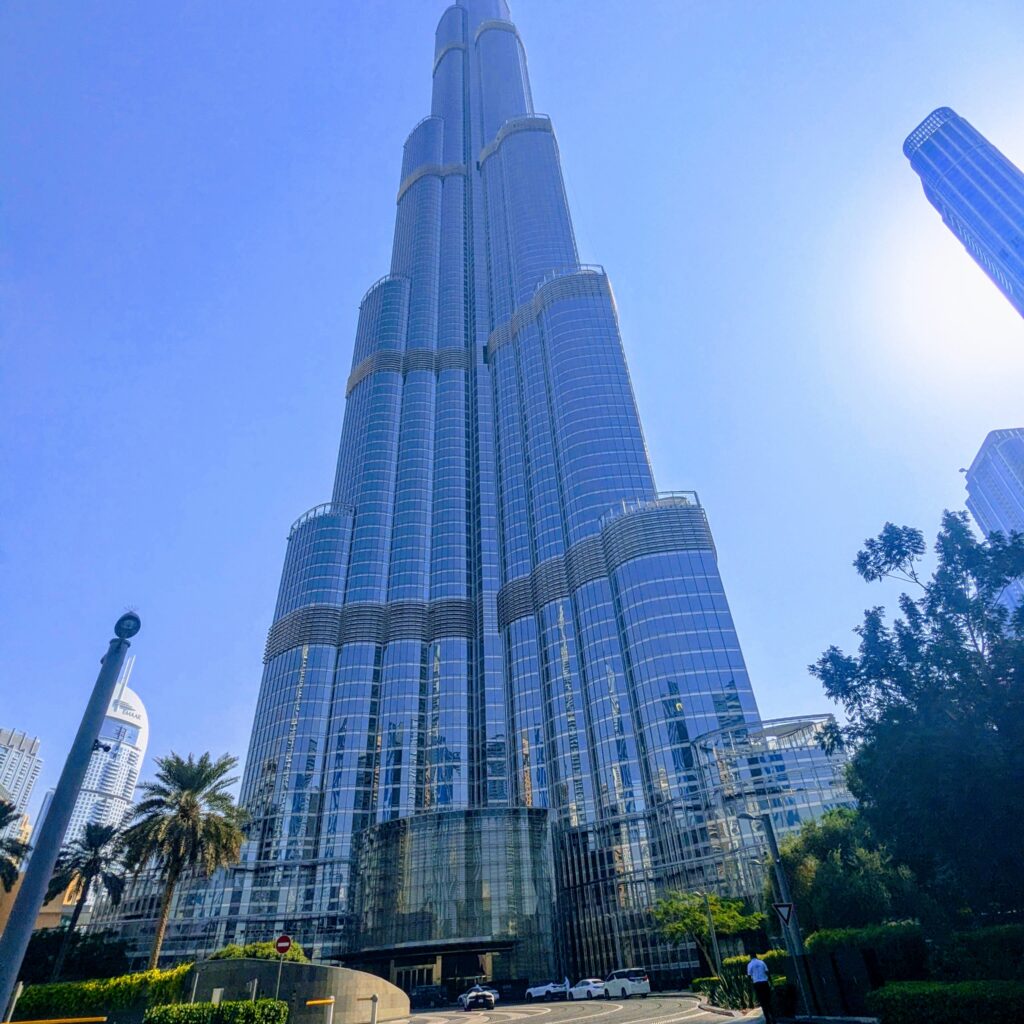
The Burj Khalifa[a] (known as the Burj Dubai before its inauguration) is a megatall skyscraper in Dubai, United Arab Emirates. Designed by Skidmore, Owings & Merrill, it is the world’s tallest structure, with a total height of 829.8 m (2,722 ft, or just over half a mile) and a roof height (excluding the antenna, but including a 242.6 m spire)[2] of 828 m (2,717 ft). It has also been the tallest building in the world since its topping out in 2009, 

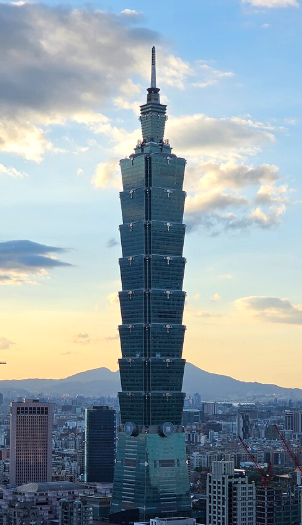
That surpassed Taipei 101, which had held the record for a half-decade.

Another cool admission is that I visited Taipei, Taiwan, with work in the early 2000s. It was my first trip to Asia, and I did not go back for over 20 years.  They were still building Taipei 101, but I clearly remember going there.  There was a mall, movie theater, and restaurants that were completed.

Before Dubai rewrote the record books, Taipei 101 was the building everyone talked about. Formerly known as the Taipei World Financial Center, it stands 508 meters (1,667 feet) tall and held the title of the world’s tallest building for several years.

One of its standout features was its high-speed elevators, built by Toshiba. At the time of completion, they were the fastest in the world—rocketing passengers from the 5th to the 89th floor in just 37 seconds, hitting speeds of 60.6 km/h (37.7 mph). You don’t ride those elevators—you launch.

😎

Bali, Indonesia – It’s worth the hype!

Traveling in Asia hits differently for me. I get bored easily—dangerously easily—and staying in one place too long starts to feel like a personal failure. Asia fixes that, which is a way that is hard to explain other than the fact that you can road trip within Vietnam, Thailand, the Philippines, Malaysia, Indonesia … for well under a $100 one way.

I currently have a condo in Mesa, AZ, a studio in Rocky Point, Mexico, and three all-you-can-fly passes with three different airlines. I am always on the go, which is somewhere between amazing and loneliness.

I’m not saying I have commitment issues
 but if movement were a sport, I’d be on a performance-enhancing medication watch list.

You get the idea. I’m fine. Totally fine. Probably. 

That was my December 2025 Asia road trip, operating out of my month-long home base in Hanoi and bouncing over to Kuala Lumpur, then finishing strong in Bali.

Three flights.
Three countries.
$190 USD total.

Read that again—slowly.

This is exactly why Asia hits differently. Flights are cheap, distances are short, and changing plans doesn’t require a spreadsheet or a minor panic attack. One minute you’re eating street food in Hanoi, the next you’re city-hopping in Malaysia, and before you know it, you’re barefoot in Bali, wondering how this all costs less than a mediocre dinner back home.

This isn’t luxury travel—it’s smart movement, maximum flexibility, and letting geography work in your favor.

And yes
 this is how the spiral continues. đŸ˜Žâœˆïž

These road trips definitely weren’t kind to the slow-travel budget—but that’s the trade. When your home base costs under $300 USD a month, you earn the right to occasionally blow the spreadsheet. The cheap, stable housing absorbs the volatility, which makes splurging on experiences feel intentional instead of reckless.

In my case, this trip was less about optimization and more about momentum—I was actively checking off bucket-list items. And when you’re in that mode, strict budget purity matters less than actually doing the thing while you’re there.

The key is that the foundation was solid. Low rent created room to say yes.

I don’t optimize for luxury. I optimize for optionality.
Build the base cheaply, then spend the difference on travel experiences.

grinch

Christmas 2025 – You’re a mean one …

Christmas time is for kids, since I do not have any minions, it is not my favorite holiday.

We all have regrets, but again, we all have to play the cards we dealt ourselves!

It’s not meant as pity, pride, or judgment—just a sincere look at my life, told with a level of honesty most people rarely allow.

Thinking about having a family—and then creating a fake one on ChatGPT—hits a special kind of loneliness during the holidays, with just enough imaginary alimony and child support to keep it extremely real.

That’s part of why, most days, I am grateful for my life, as this is how it was supposed to work out.

Not because family is bad or wrong—but because forcing a life that didn’t fit would cost me more than it gave back. Freedom mattered more to me than appearances. Movement mattered more than checking boxes that society forces you to check whether you want them or not. 

I didn’t have a good father, and the fear of becoming anything like him was always front and center. He bailed on my mom and me in the worst possible way, and that kind of exit leaves a mark whether you want it to or not.

For a long time, that experience quietly shaped my decisions.

That awareness didn’t fix everything, but it ultimately changed my thought process. And sometimes, that’s enough to start choosing differently—on purpose.

Chasing a different dream became my outlet, my structure, and, honestly, my mission. I have lived life in many different cities, having a lot of conversations and many life experiences with people who saw life differently. It became pretty obvious that the way most people lived life was not the only option. 

It was not the same generational life, over and over. 

Go to College

Get married

Buy a house and have kids

Work until you’re 67+ 

Enjoy maybe five to ten years of retirement while your body starts to fail you.

I didn’t opt out of life—I opted into my version of it.

Less scripted.
Less predictable.
More honest with who I am

I’m learning to be good with that, and people who judge my alternative lifestyle should, too.đŸ‘đŸ»

The Grinch that hated winter in Canada!

The cold. 

The snow. 

The shoveling. 

Driving on a skating rink.

The heating bills should feel normal.

Extreme taxes at every angle. 

(carbon taxes?!) đŸ«Ą

The lies people told themselves, “It was normal not to feel your face going outside.

While Family and friends in Canada scraped windshields, living a great Family life!

The Grinch did the math.

Sunshine was cheaper elsewhere.

A lot of money could also be made elsewhere.

So, while others layered sweaters, he booked a one-way ticket south. 

He turned in his snow boots for flip-flops.

He drank iced coffee in December.

They said he “You missed the reason for the season,” and called him a sellout!

The Grinch said, “I optimized my life,” in my own way!

He didn’t steal Christmas.
He *Geoarbitraged it!

*Geoarbitrage is the practice of living in a location with a lower cost of living while maintaining the same income, allowing individuals to save and invest more effectively. This concept is often associated with the FIRE (Financial Independence, Retire Early) movement, where individuals leverage geographic differences to maximize their financial resources.

âŹ‡ïžClick to read more on my Geoarbitrage goalsâŹ‡ïž
Geoarbitrage – retire sooner 

PXL_20251126_104359829.MP

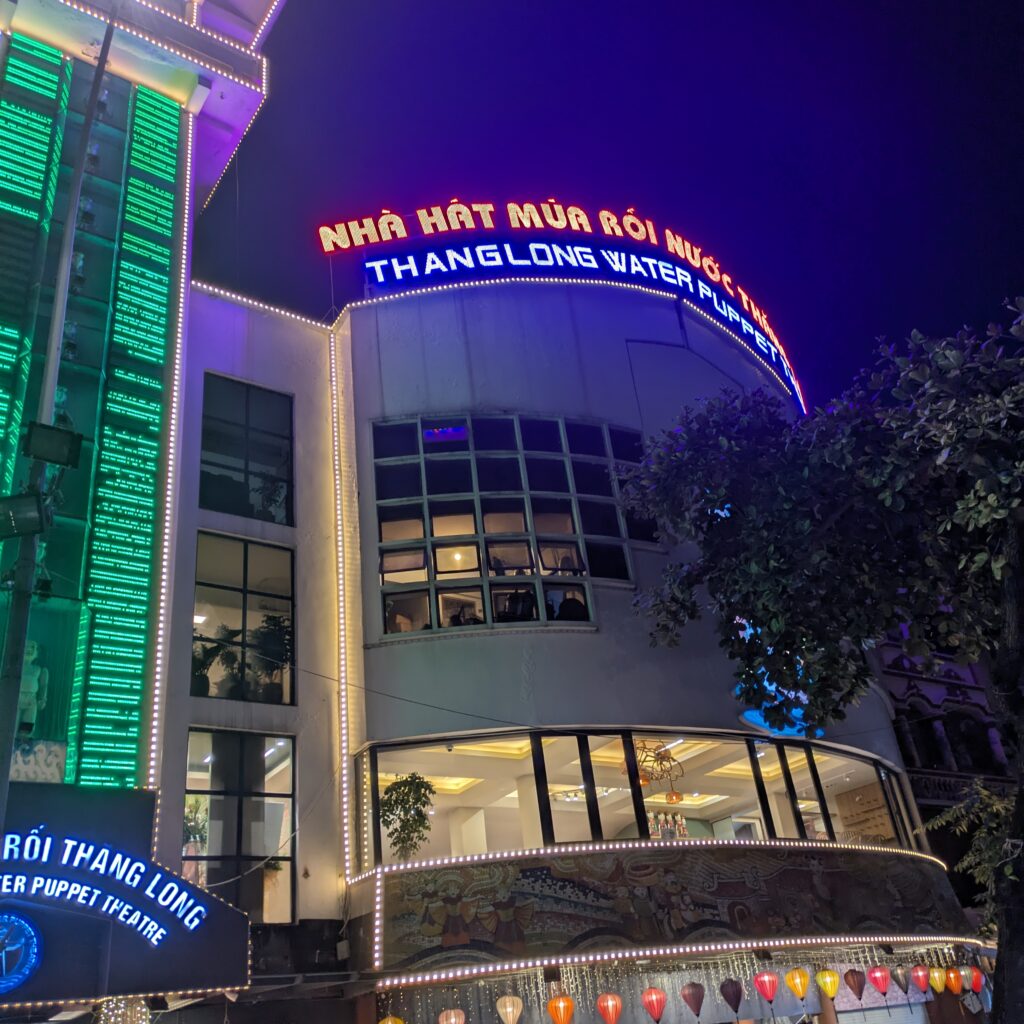
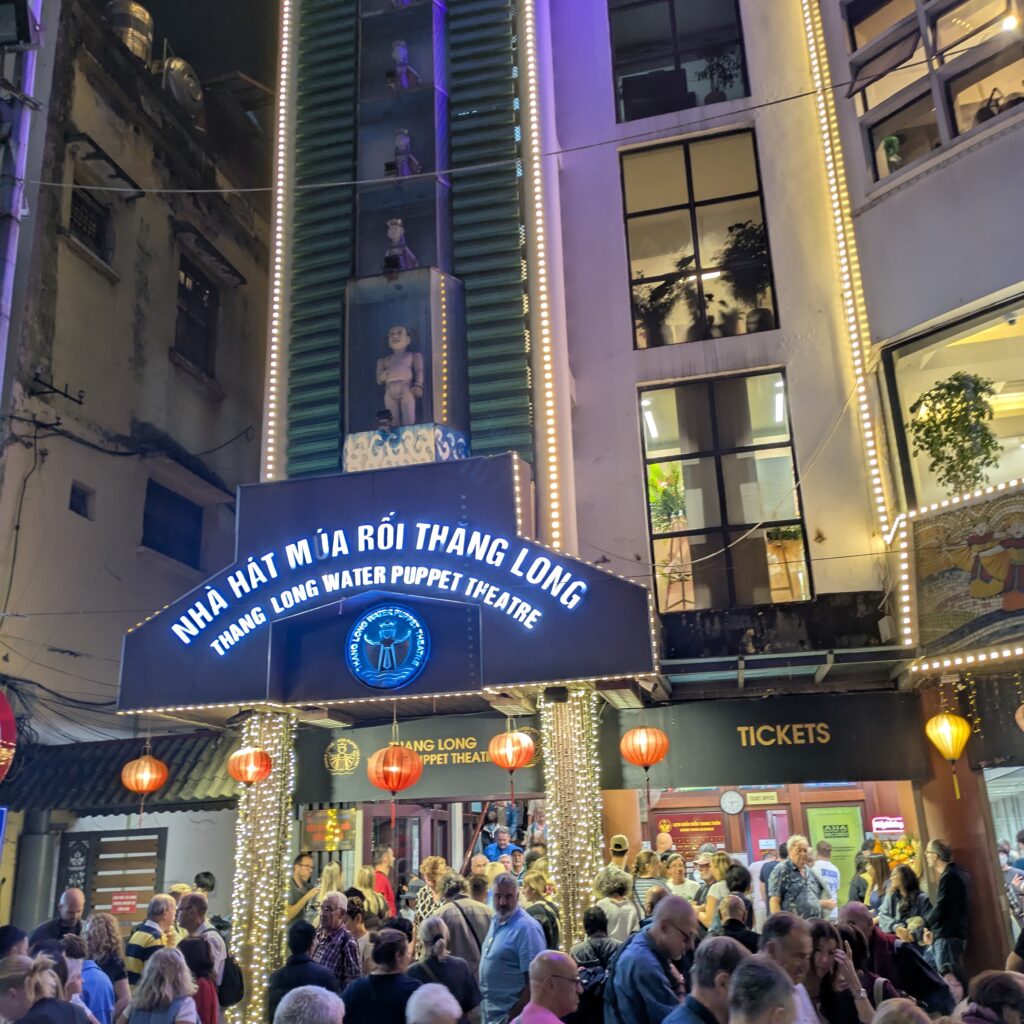
Hanoi, Vietnam – water puppet show!

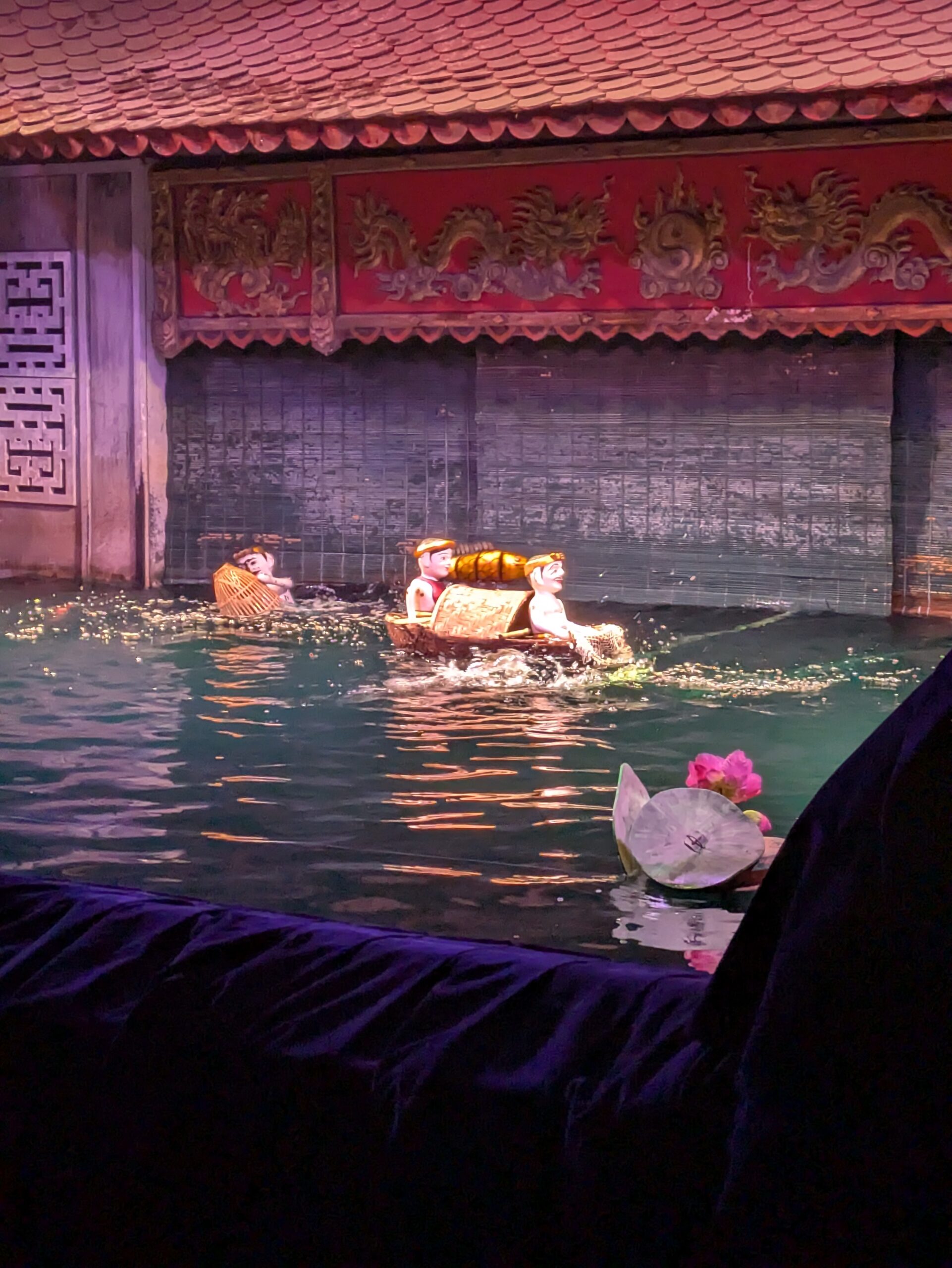
One of the coolest tourist traps in Hanoi is the traditional water puppet show—and I snagged front-row seats for about $12 USD. Absolute steal, especially since I could see all the behind-the-scenes chaos too. Turns out it’s mostly smoke, mirrors, and very committed puppeteers. 😆

The traditional water puppet show in Hanoi—especially at the famous Thang Long Water Puppet Theatre—has been running continuously every single day since it opened in 1969, making it one of the rare shows in Asia to perform water puppetry 365 days a year without a break.

The traditional water puppet show in Hanoi has been running every single day since 1969.

That’s over 55 years of zero sick days, no holidays, and puppeteers and other artists who absolutely do not mess around.

PXL_20251216_115235116

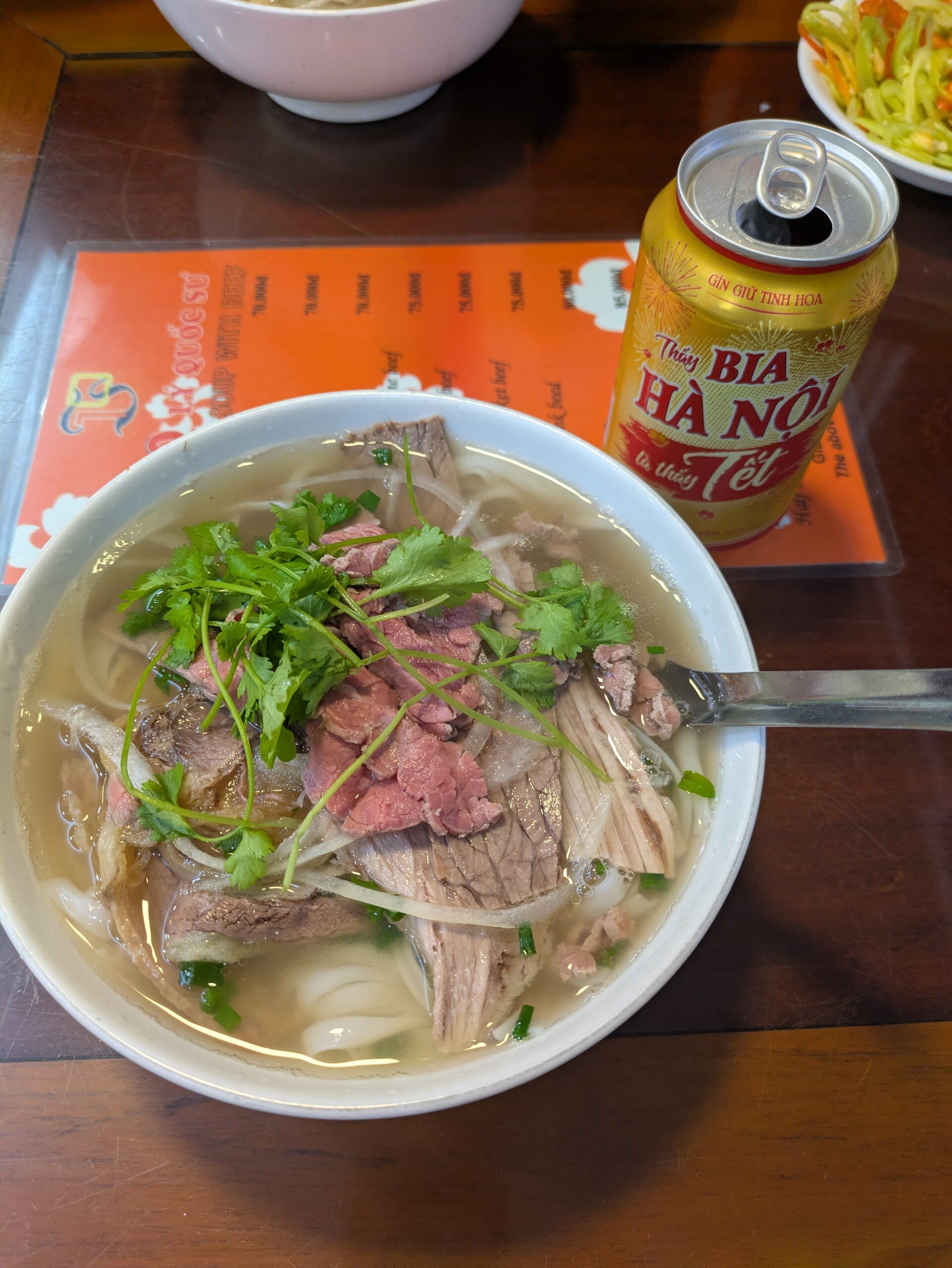
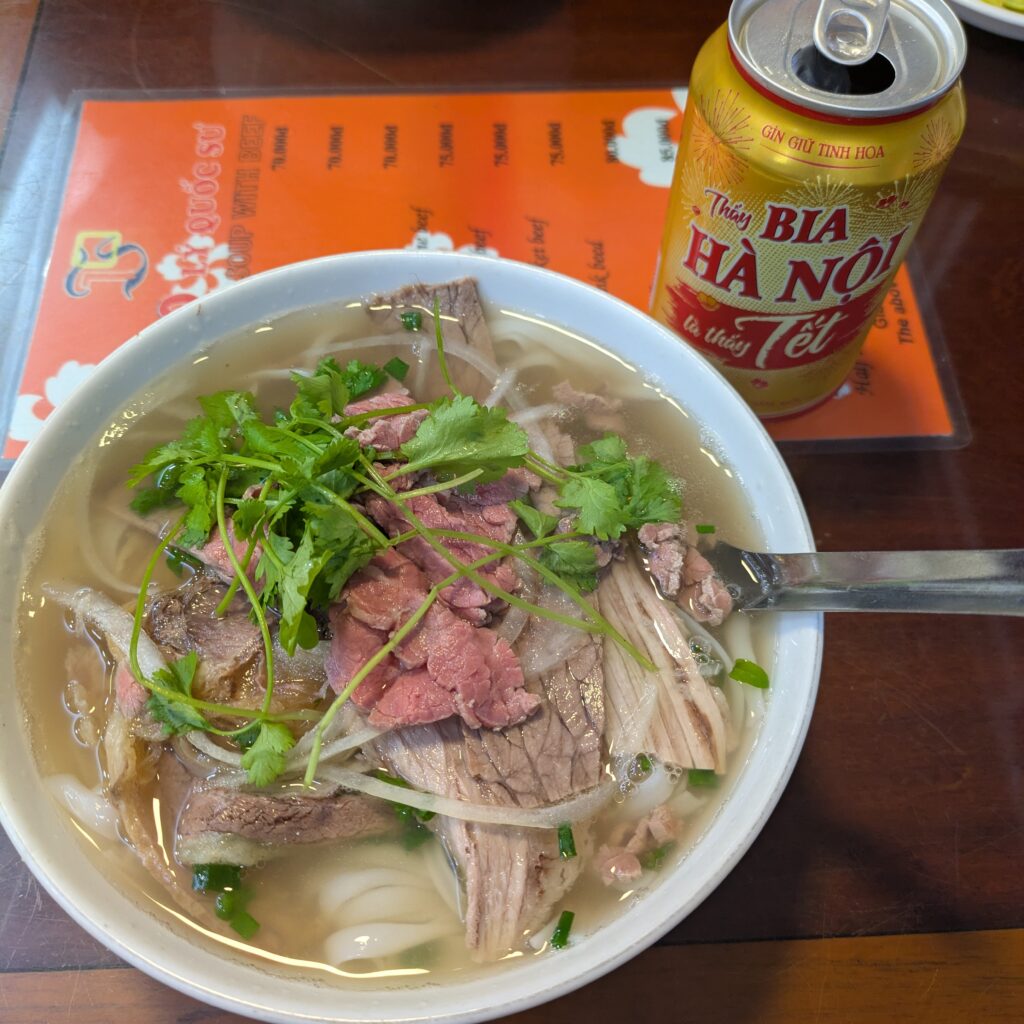
The quest for the best Pho … đŸ˜‹đŸœđŸ€€

I do sometimes wonder how I’m not at least moderately famous with gems like this. Then I immediately remember (and genuinely don’t care anymore) that these blogs may never get read. And honestly? That realization was freeing.

Once I got past feeling like a total failure and a loser, everything else went downhill—in the best possible way. No pressure. No audience chasing. Just writing because I actually enjoy it. Even if this all ends up being an autobiography for myself, I’m good with that.

Phew.
That one came straight from the therapist’s chair.😆

Anyway
 back to Pho

I remember when people used to pretend to like sushi, pho, dim sum, and whatever else was trendy at the time. They’d make sure you knew they were going, had gone, or had just returned from eating “the best ever,” while clearly forcing enthusiasm.

Well
 look at me now.

That’s me.
I love pho.
I love sushi.

Turns out trying things for yourself beats talking about them from the sidelines. Funny how that works.

FOFO, indeed

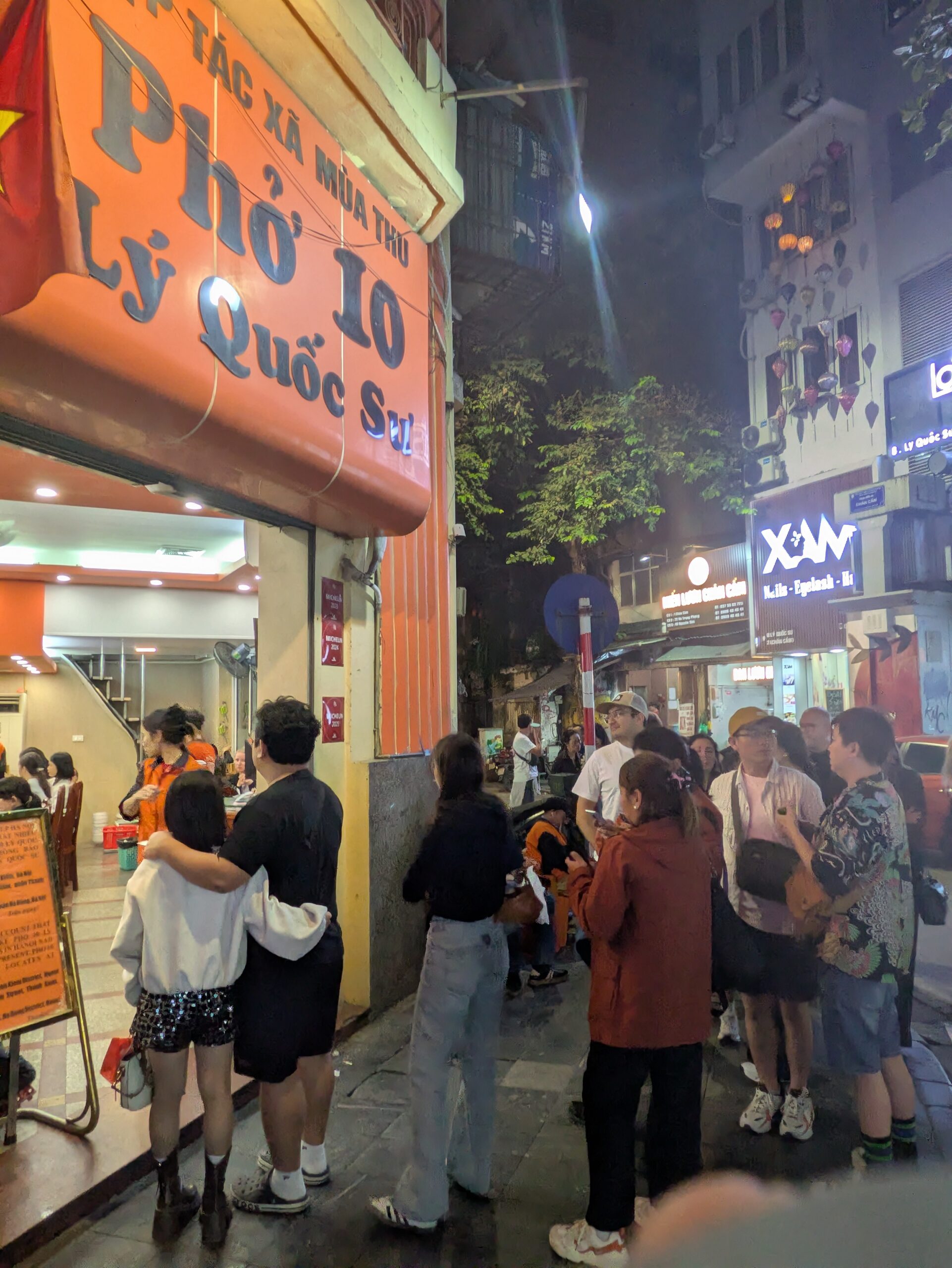
Other than Google, there’s a foolproof way to spot a great place to eat: look at the line—and more importantly, who’s in it.

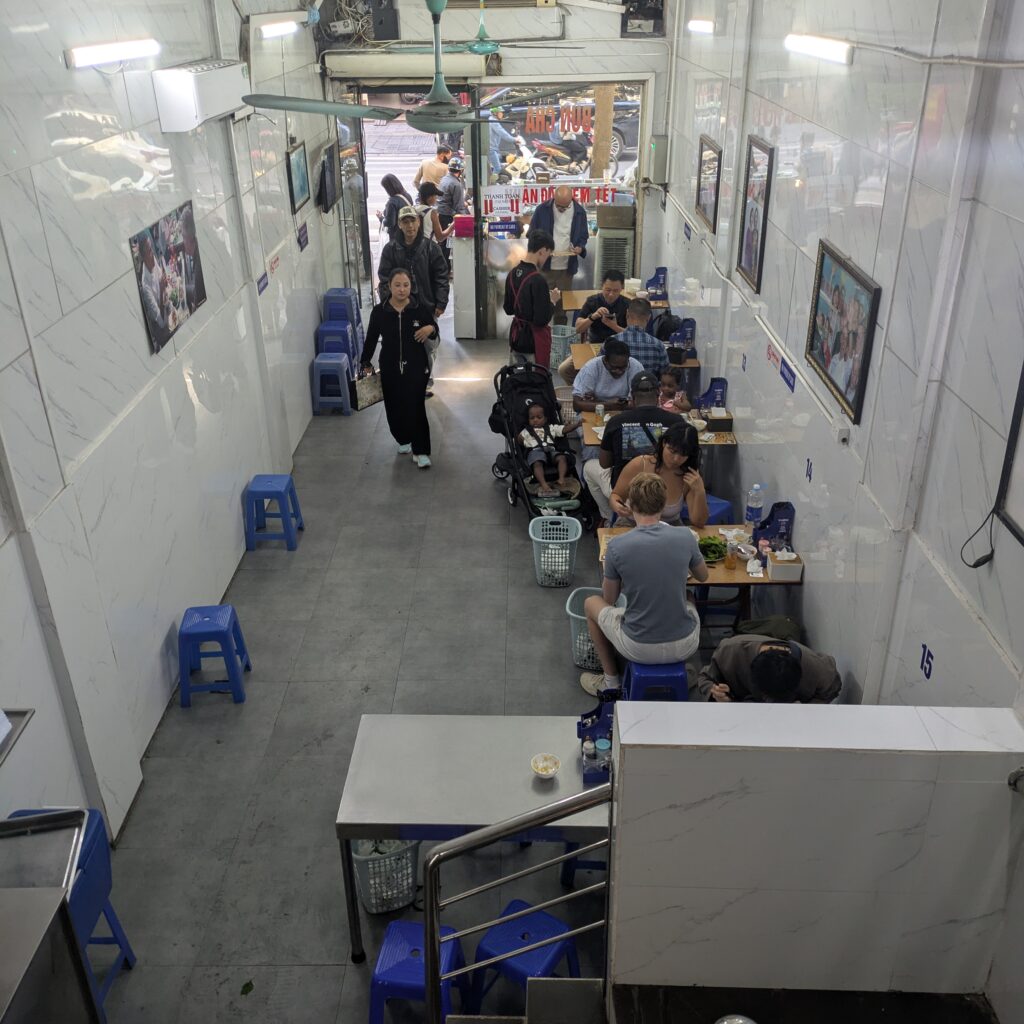
This one was packed. And not with tourists holding cameras and guidebooks—this line was full of Asians, which is always a very good sign. A quick Google check confirmed what my instincts already knew: this spot was serving some of the best pho in the Hanoi Old Quarter.

Turns out it wasn’t just “one of the best.”

It was #1 on the list.

Rich broth, perfectly cooked noodles, tender meat, zero nonsense. The kind of bowl that makes you slow down halfway through because you don’t want it to end.

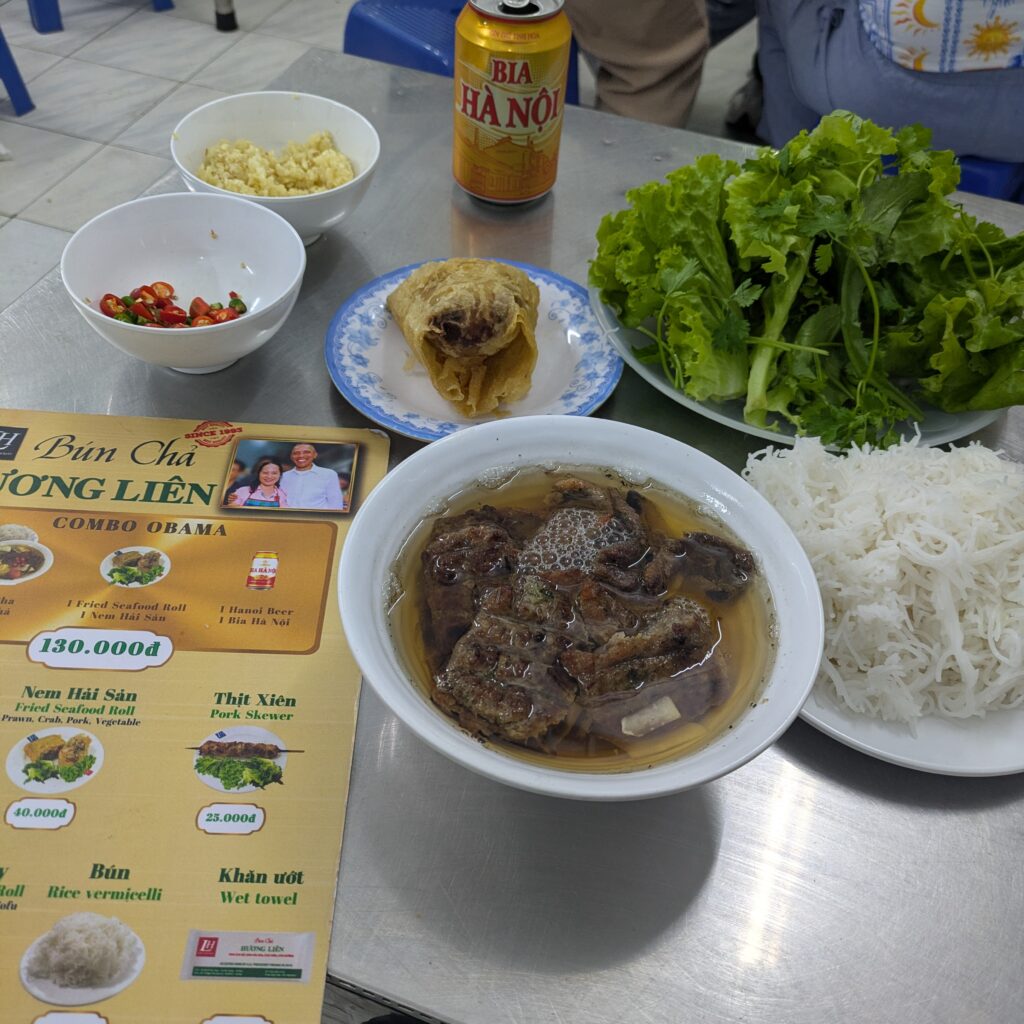
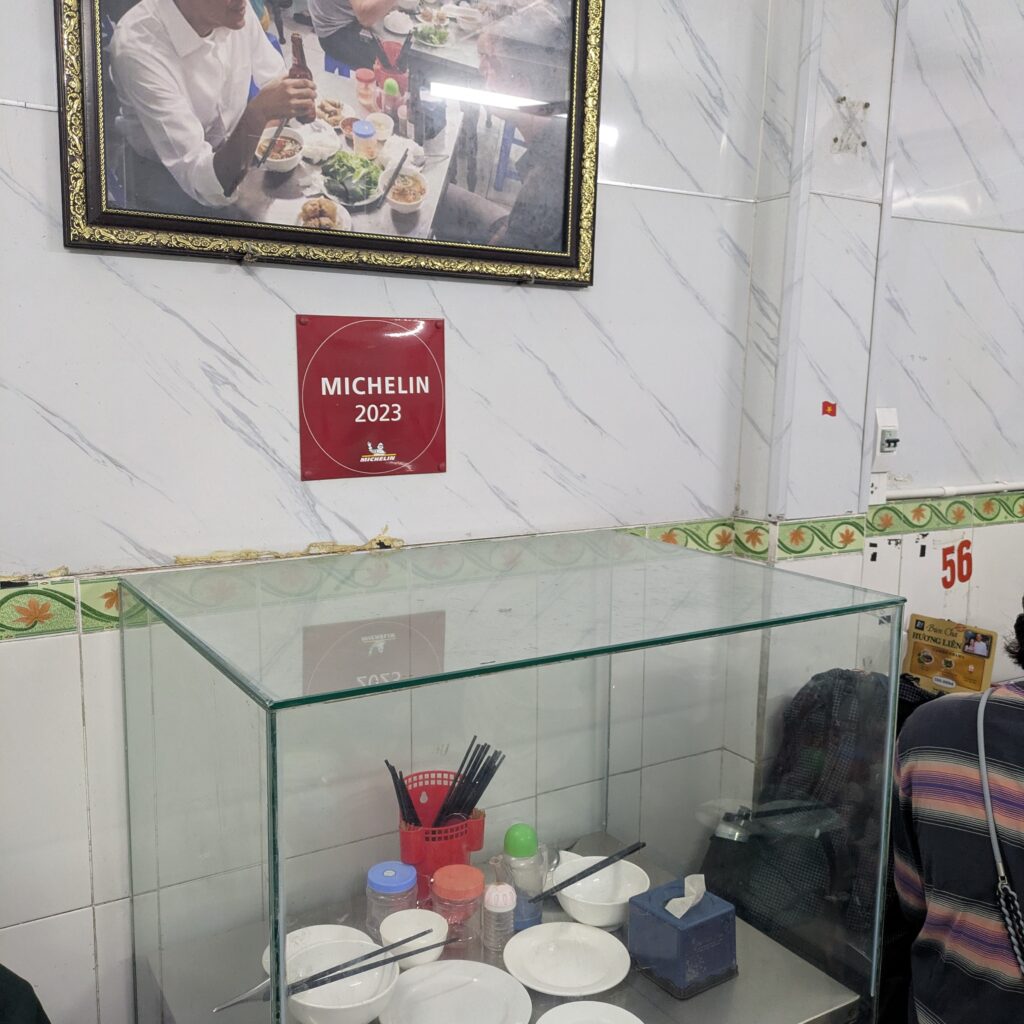
I’ll talk about #2—aka Obama Bun cha version of Pho (and yes, it absolutely nailed it too). But this one? 

Pho 10 was undoubtedly the benchmark.

Sometimes the line tells you everything you need to know.

I’ll talk about #2—aka Obama Bun cha version of Pho (and yes, it absolutely nailed it too). But this one? 

I’ll talk more about #2—aka the Obama BĂșn CháșŁ version of pho—later in the blog (and yes, it absolutely nailed it too). But this place deserves its own moment.

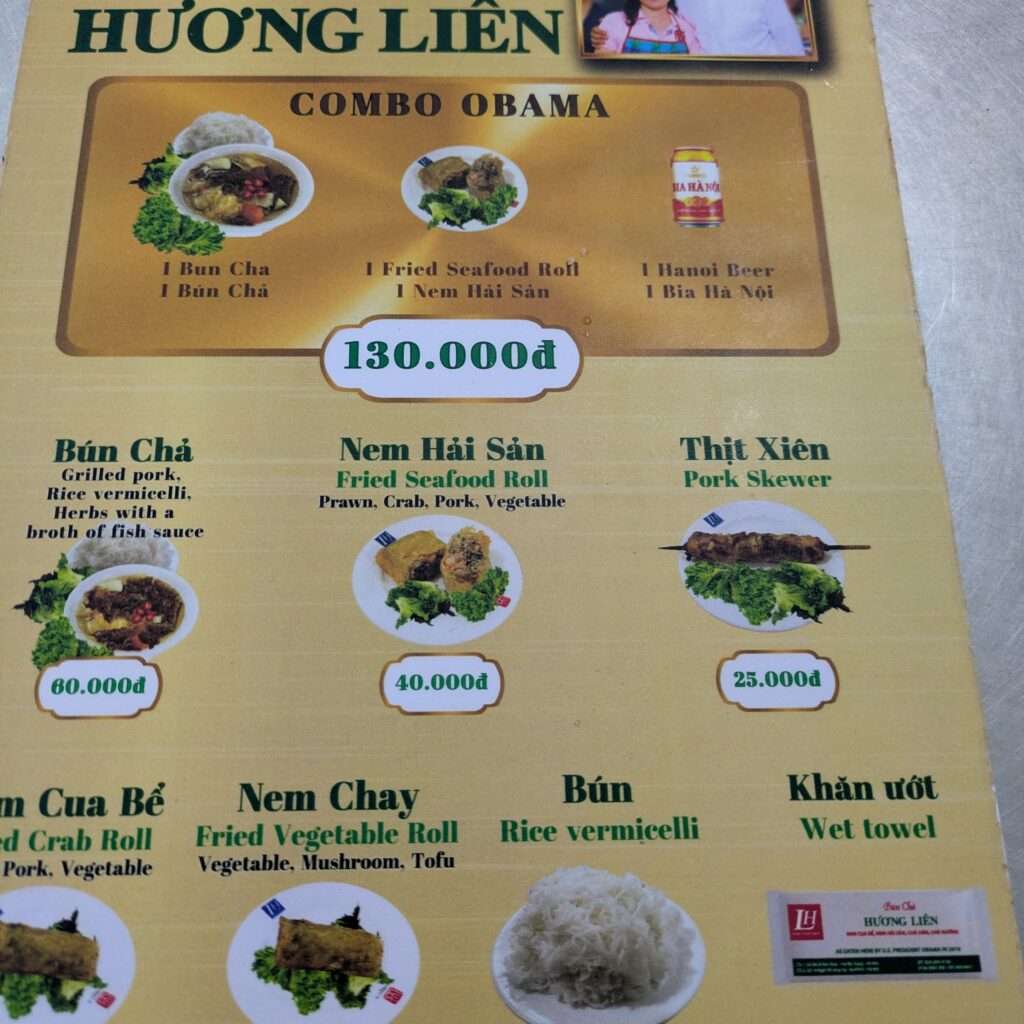
The visit gave rise to the now-iconic “Combo Obama”, which includes:

BĂșn CháșŁ (grilled pork with noodles and herbs)

Crab spring rolls

A local Hanoi beer

Simple. Perfect. Universal.

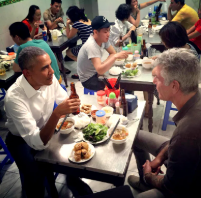
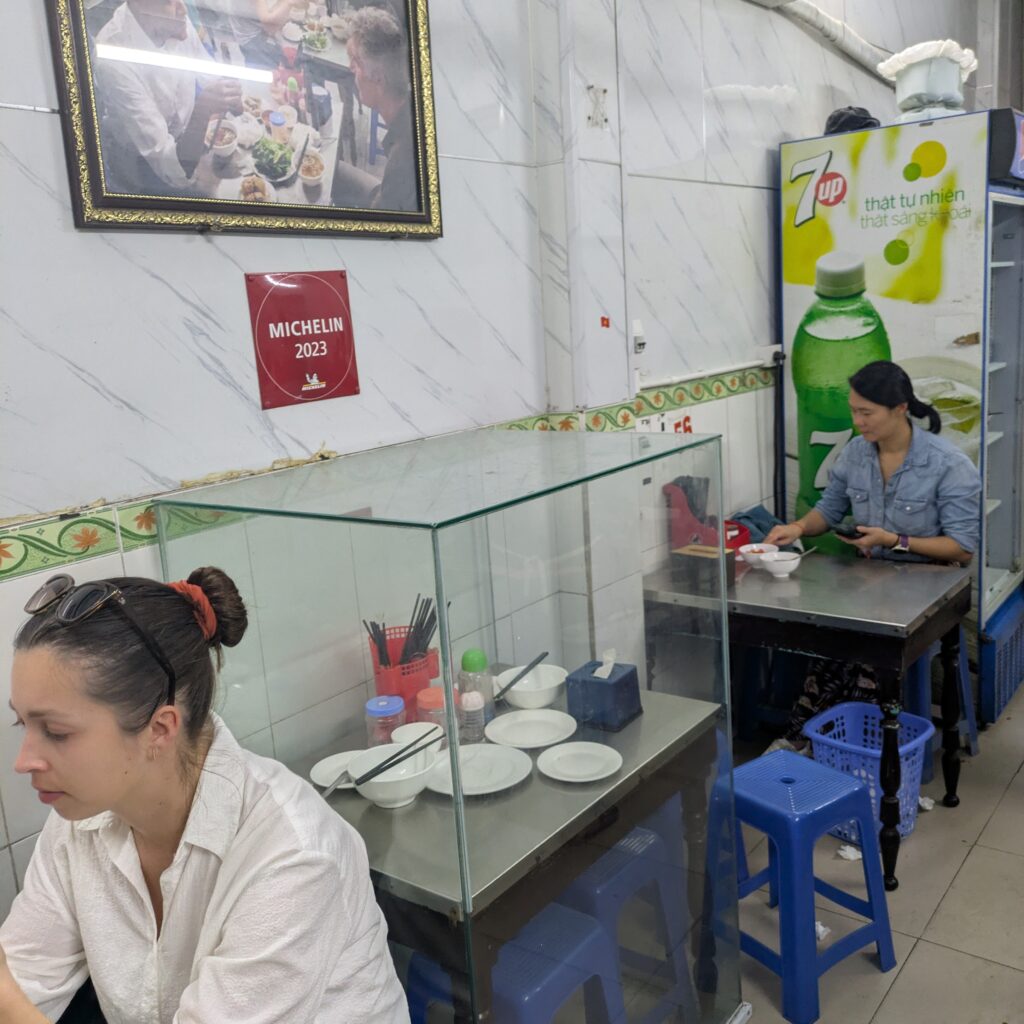
This spot became famous after Barack Obama shared dinner here in 2014 with Anthony Bourdain, during an episode of Parts Unknown. Obama was president at the time, Bourdain was doing what he did best—using food as a bridge between cultures.

Plastic stools.
Cold beer.
No security theater.
No ego.

Just two people eating great food in Hanoi, proving once again that the fastest way to connect across cultures isn’t politics—it’s dinner.

The food lives up to the story.
The story lives up to the moment.

Some meals are famous because they’re good.
Others are famous because they mean something.

This one managed to be both.

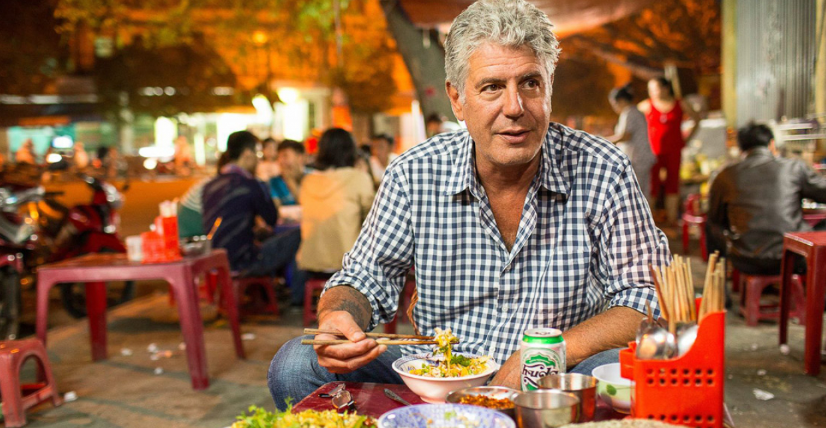
Honestly, visiting this restaurant wasn’t about Barack Obama for me—it was about Anthony Bourdain.

Vietnamese food—and pho in particular—was something Bourdain genuinely loved. He talked often about Vietnam as a place that shaped him, not just as a cook but as a traveler. What always stuck with me was how far he was willing to go for food: wandering down side streets, eating at hole-in-the-wall spots, and staying out until absurd hours just to find something real. The ironic part is that once he found something real, it turned into a tourist trap.

That mindset influenced how I travel. I’ve always tried to do the same—skip the polished places, follow instincts, watch where locals eat, and say yes to places that don’t look impressive on the outside.

So sitting there, eating Vietnamese food in Hanoi, felt less like a tourist stop and more like paying quiet respect to someone who showed a lot of us how to travel differently—through curiosity, humility, and a love of good food.

For me, that’s what made the place special. I try to live life the way he did, as he was such an absolute travel legend.

Here was my experience eating the “Bourdain” combo!

Only a few things make me happier than finding these kinds of places that fuel more travel.

PXL_20251213_082811692

Hanoi, Vietnam – train street!🚆

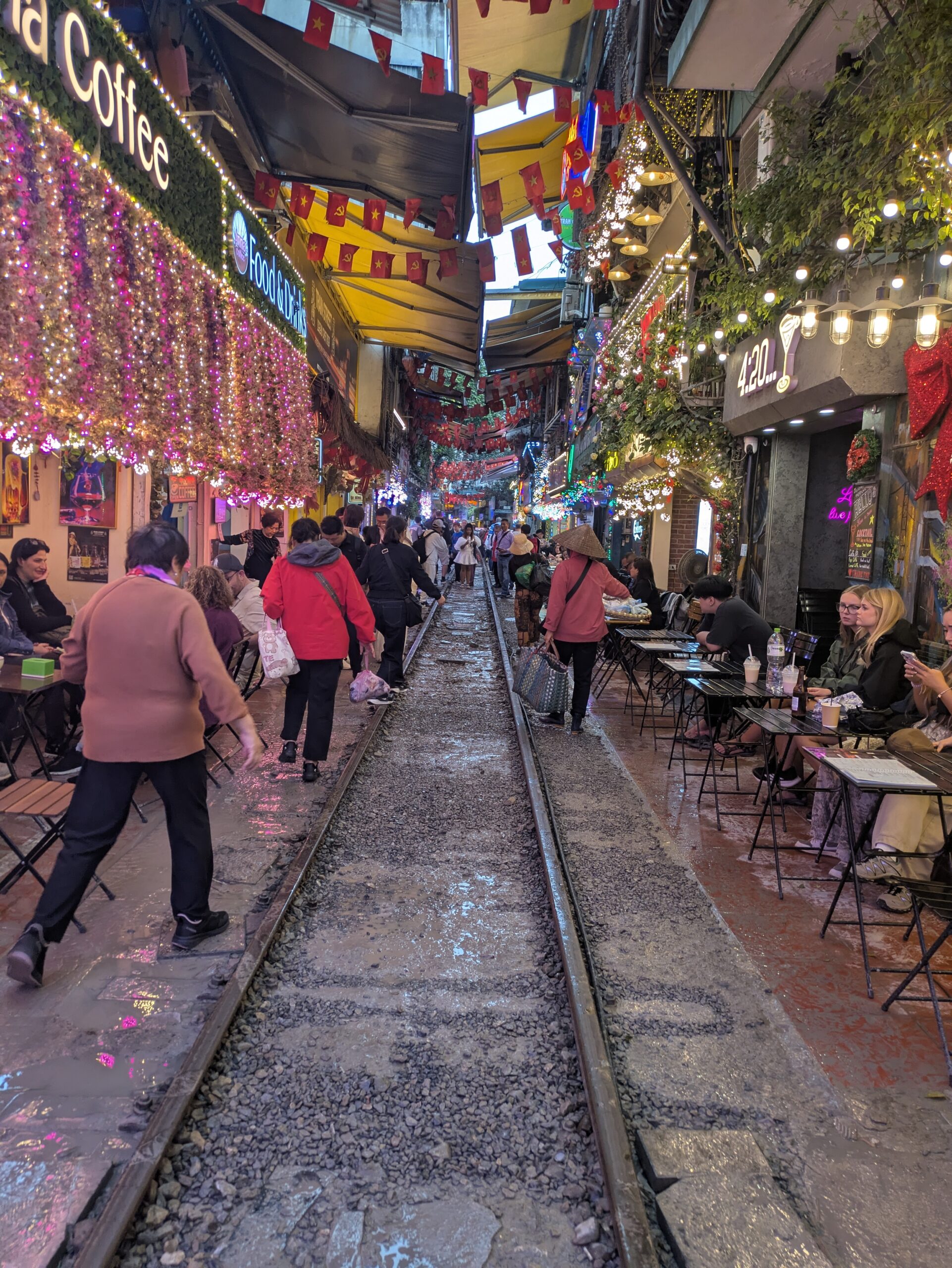
If you’ve watched even a handful of travel videos, there’s a pretty good chance you’ve seen Train Street in Hanoi.

The concept is beautifully unhinged.

Feed people beer.
Sell them questionable souvenirs.
Pack everyone into a narrow alley.
Then send a full-size train blasting through at close range like it’s part of the entertainment.

Every few minutes, cafĂ© owners calmly tell everyone to pull their knees in, lift their drinks, and trust the process. The train whizzes by, missing people by inches, and everyone cheers like they didn’t just flirt with death for Instagram content.

It’s equal parts:

terrifying

fascinating

absurd

and somehow very organized chaos

You leave thinking, “That was amazing
 and I absolutely should not still be alive.”

My assistant (ChatGPT 😄) can be a bit dramatic at times—but I can promise you this: when that train comes through within inches of you, it absolutely feels like a near-miss incident.
Standing on Train Street in Hanoi, your brain knows you’re technically “safe,” but your body does not agree. The ground vibrates, the wind hits you, and suddenly that narrow track—already looking a little suspect—has a full-size train ripping through it at well over 50 mph, depending on route.

Your heart rate spikes.
Conversations stop.
Beers are clutched like emotional support animals.

It’s loud, fast, uncomfortable, and wildly memorable. No video really captures how intense it feels in person. For a split second, every instinct you have says, “This is a bad idea.”

And then it’s gone.

Adrenaline fades.
Everyone laughs.
Phones come back out.

Was it dramatic? Yes.
Was it a dangerous feeling? Absolutely.
Was it unforgettable? 100%.

That’s Hanoi train street- it was so awesome, 

Here are three angels as I went back for more training:

Someone put their phone on the tracks, and they were nice enough to share the video with me!

I can honestly say this was way cooler than I expected, even after seeing it a hundred times on TV and YouTube. 

Some things only make sense when you show up.

You can watch the videos, read boring blogs like this one, and scroll forever—but none of it compares.

Standing there, feeling the sheer force of that train ripping by with a beer in your hand and phone filming in the other.

Life doesn’t reward spectators. It rewards participation.

Get off the couch. Book the trip. Go see it for yourself.

I would love to motivate and save you some money if needed – send me a PM

Screenshot 2024-12-28 085419 (1)

Tokyo, Japan – $12 on points Feb 1st, 2026!

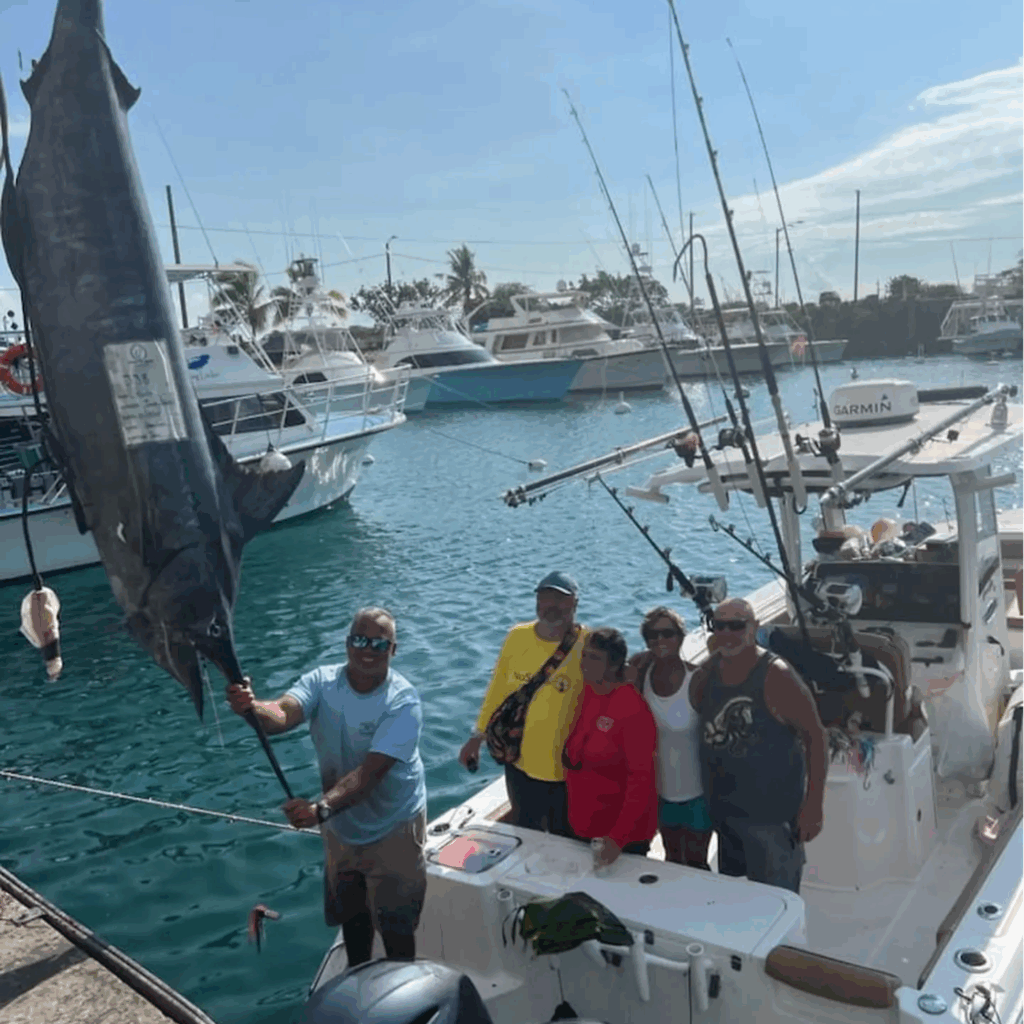
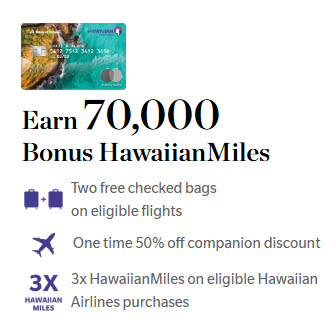
A few years ago, during a perfectly innocent fishing trip to Hawaii, I applied for a Hawaiian Airlines Mastercard.

Somehow, this resulted in 70,000 points.

Those points have been burning a hole in my pocket ever since—quietly judging me every time I checked my balance.

Until now.

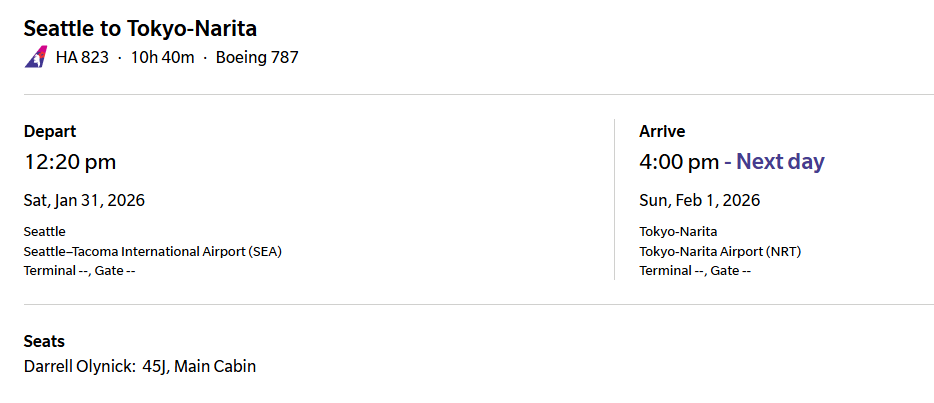
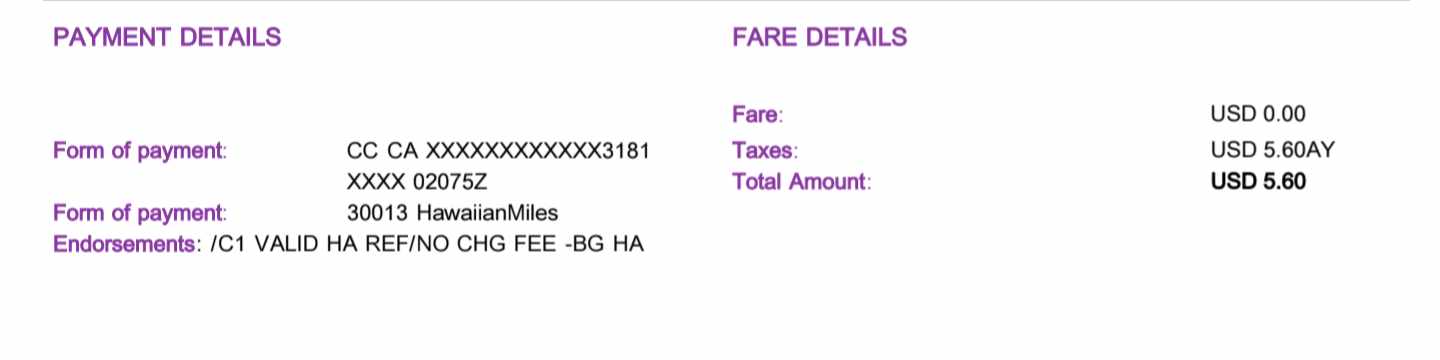
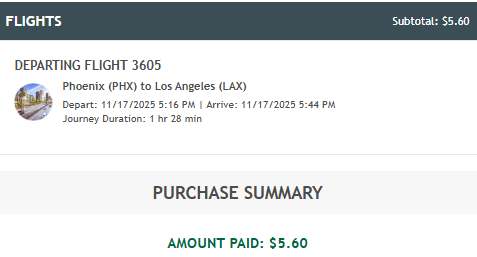
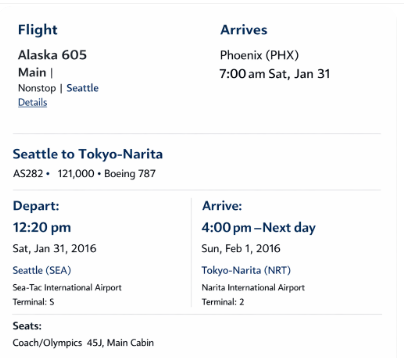
I officially booked a trip to Tokyo, Japan, departing February 1st, 2026—paid entirely with points. Turns out, the long game does pay off.

Especially when it ends in Tokyo.

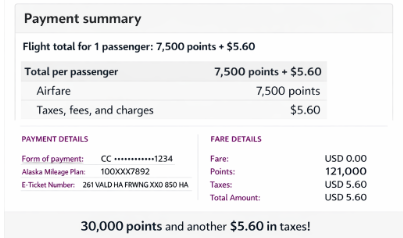
30,000 points and another $5.60 in taxes!

That’s right—$11.20 to get from Phoenix to Tokyo using points. đŸ€˜đŸ»

Eleven dollars.

And twenty cents.

I haven’t finalized my return flight yet—because commitment is overrated and flexibility feels very on-brand. Plus, Korea is just around the corner and on the bucket list.

The plan is to stay two and a half months, since my Airbnb is locked in until April 15th.

If you’re curious how a fishing trip turned into a trans-Pacific flight for the price of a vending machine snack, you can read more about the Hawaiian Airlines credit card on my blog by clicking:

âžĄïžâžĄïžHERE.âŹ…ïžâŹ…ïž

You can read my long-winded Kona fishing blog. 

No refunds. Never getting that time back by clicking

âžĄïžâžĄïžHERE âŹ…ïžâŹ…ïž

Why Japan Tops the Travel Charts

Japan is often ranked the number one travel destination because it’s a magical mix of tradition, technology, and sheer wow factor. You can go from serene ancient temples and cherry blossom gardens to bustling neon-lit cities and bullet trains in a matter of minutes.

Add to that world-class food, from Michelin-starred sushi to street-side takoyaki, ultra-clean streets, incredibly polite locals, and a culture that balances the ultra-modern with centuries-old customs—and it’s easy to see why travelers can’t get enough.

Plus, every season brings something spectacular: spring for cherry blossoms, autumn for fiery leaves, winter for skiing, and summer for festivals that make your Instagram explode. Japan isn’t just a trip—it’s a full-on sensory adventure.

PXL_20251213_082811692

Hanoi, Vietnam – Nov.17/25đŸœđŸ«–

There’s a balance I’m always chasing when I travel—but I wish I understood it better, so I’d stop booking flights. I know I need to begin with lower-cost, slower journeys, and once again, Vietnam felt like the perfect calibration.

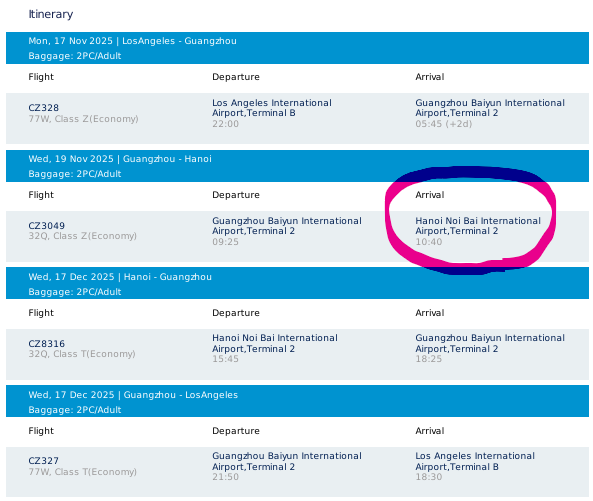
I landed in Hanoi, Vietnam on November 17th, 2025—because apparently I like good decisions.

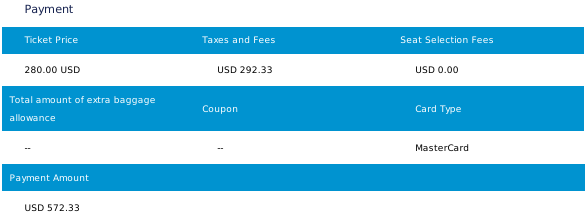
~$572 for the flight and ~$263 for an entire month’s rent (yes, a month).

I skipped Northern Vietnam earlier in 2025, so this trip was basically my “fine, I’ll do it properly this time” trip. đŸȘŁđŸ“ƒ

Used points to get from Phoenix to Los Angeles and back home to Phoenix on the cheap!!đŸ€‘
$572 for a return flight from Los Angeles to Hanoi, Vietnam

Anytime I find a cheap flight, I’ve learned to check the accommodations before I start emotionally packing.

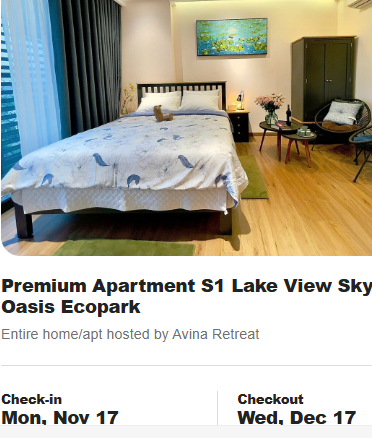
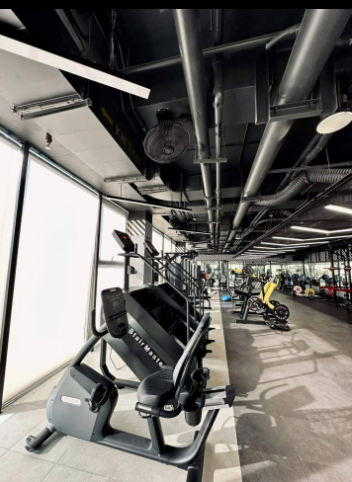
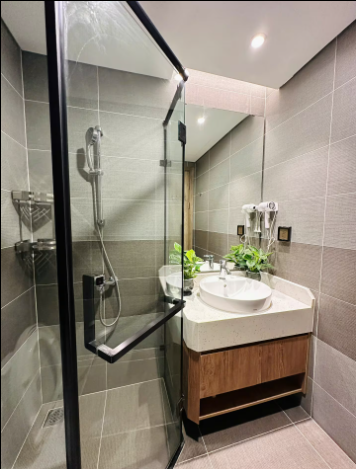
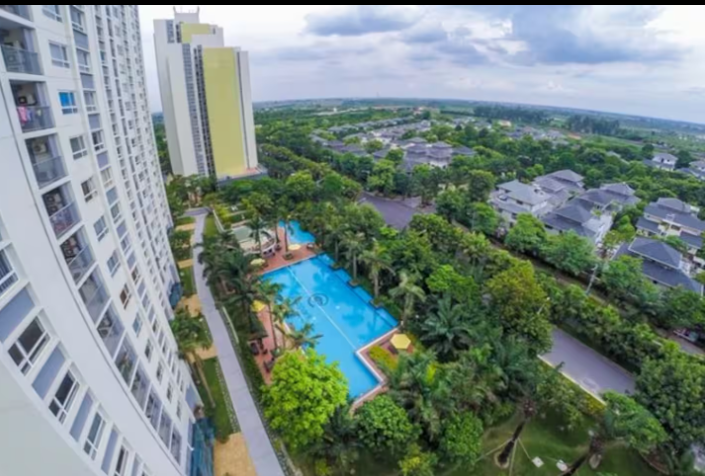
I knew it would be budget-friendly, but I didn’t expect a full-on resort situation—pool, gym, and a games room with a river view
 all for “are we sure this is real?” prices.

An entire month $263/$9 day (Pool, gym, games room studio on the lake.)

The history of Hanoi: A City That Refuses to Sit Still

Hanoi has been around for over 1,000 years, which basically means it has more history than most people have Instagram posts. It started as a sleepy riverside settlement until Emperor LĂœ ThĂĄi Tổ decided in 1010 to move the capital there and call it Thăng Long—“Rising Dragon”—because why settle for boring when you can be mythical?

Fast forward a few centuries, and Hanoi became a cultural, educational, and political hotspot, surviving invasions, occupations, and a fair share of bureaucratic headaches. The French showed up in the late 1800s, built boulevards, colonial buildings, and cafĂ©s where you can still sip coffee pretending you’re in Paris.

After a mid-20th century revolution and reunification, Hanoi officially became the capital of Vietnam, a city where ancient temples, motorbike chaos, and modern skyscrapers collide. Basically, it’s a city that refuses to sit still—and you’ll love every chaotic, delicious, history-packed second of it.

default

Venice, Italy – The Grand CanalđŸ›¶đŸ·đŸ‘đŸ»

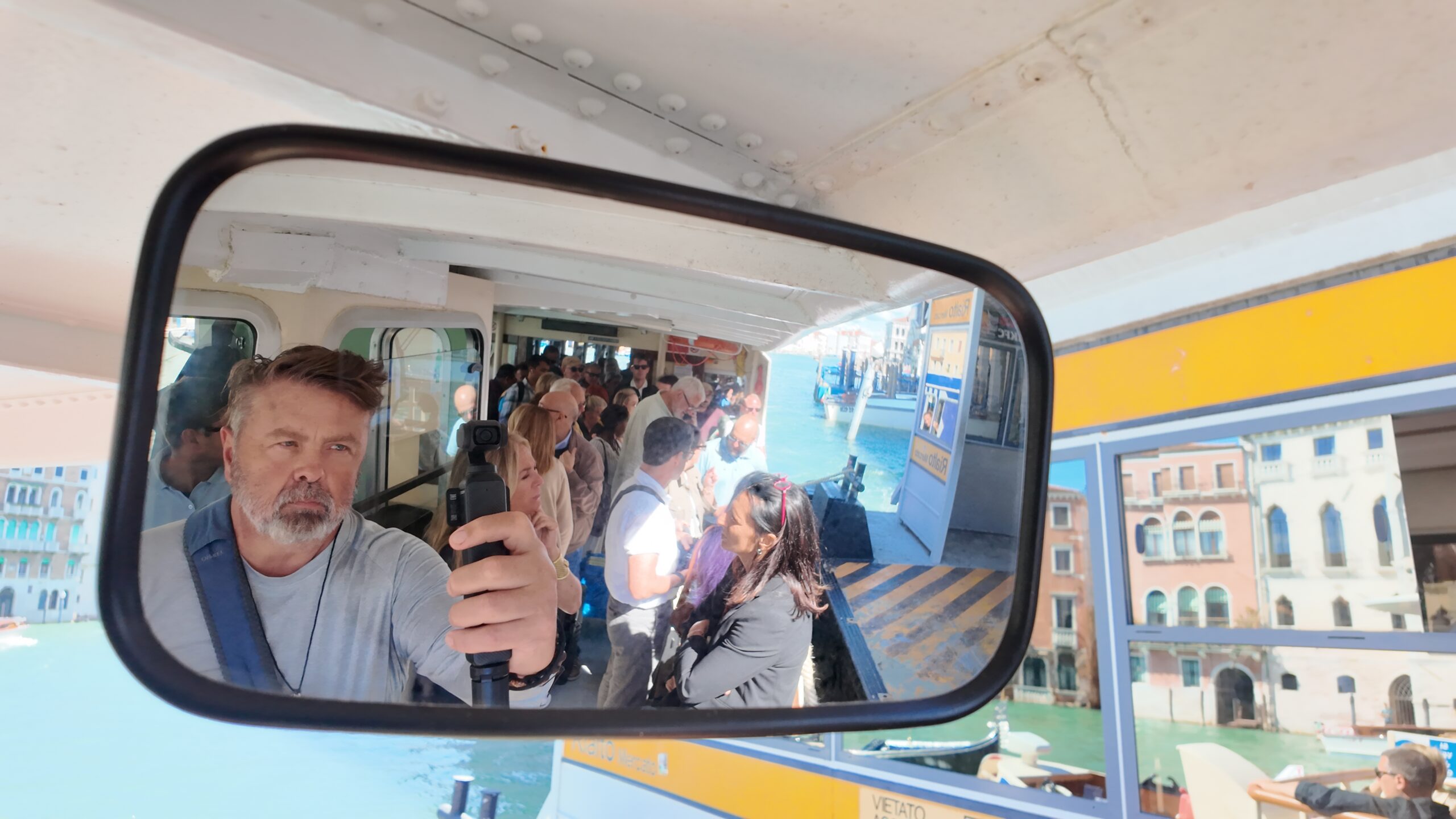
I somehow managed to miss Venice the last time I was in Italy, so this time I overcorrected—with a casual 14+ hours on a train to make sure it happened.

To be fair, the journey was actually pretty incredible. We cut through a different part of Switzerland on the way to Milan, which would’ve been great if Milan hadn’t been in full Fashion Week mode. After about five minutes of that chaos, I was very happy to hop on the short train ride to Venice.

After that marathon travel day, my first Venice memory was asking someone in the train station, “Where’s the Grand Canal?” He pointed to my left and said, “You mean that one?”

Turns out the Venice Santa Lucia train station is literally sitting on the canal. Subtle city, Venice. Very subtle.

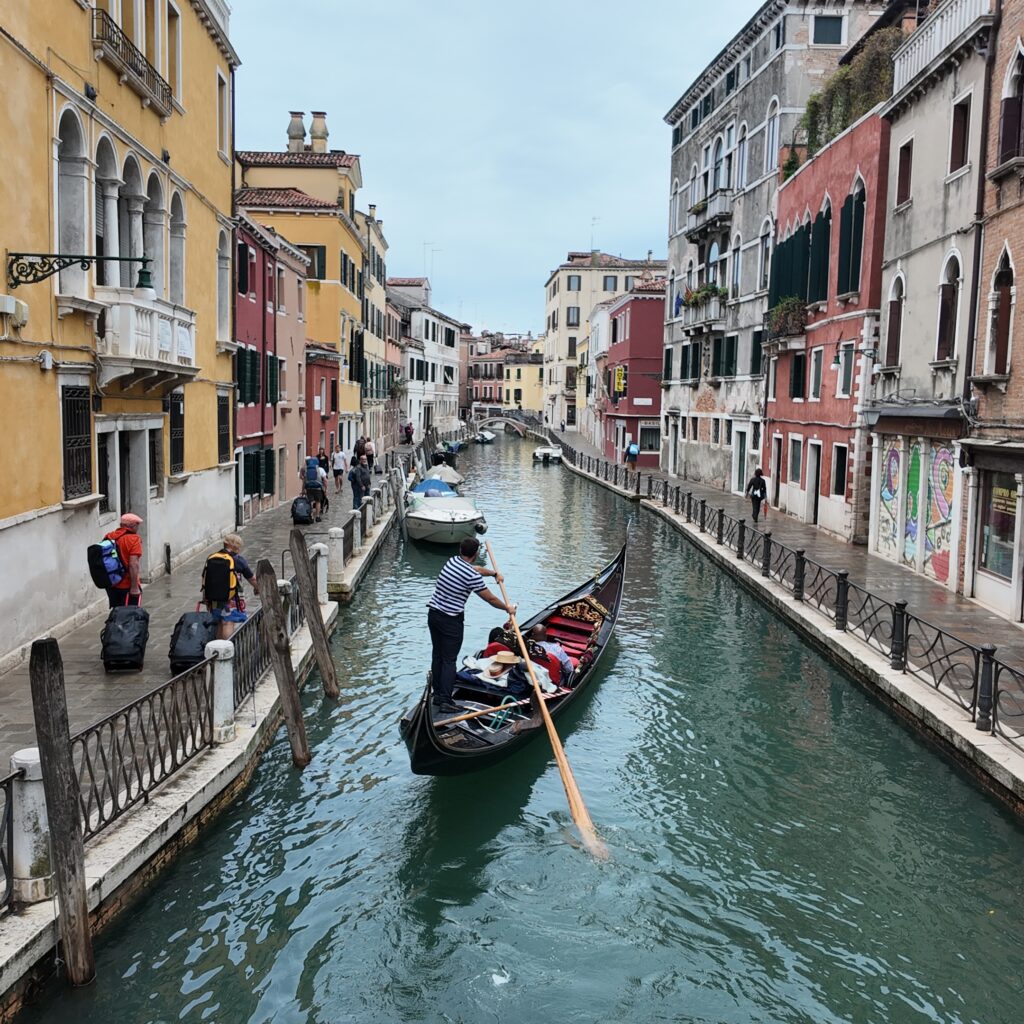
One of the things that completely blew my mind about Venice is that the water is the road. No streets—just canals. Water taxis, delivery boats, construction barges
 and yes, I even watched a casket float by with the family following along as part of a funeral.

It’s strangely beautiful and slightly surreal, and somehow all of it works. Watching everyone calmly navigate canal “traffic” like it’s rush hour on Main Street was one of the coolest parts of being there.

Pretty much everyone was lounging by the waterfront with a wine in hand, and of course, we all drowned in spritzers like it was a civic duty.

I enjoyed them so much that I stocked up when I got home—because nothing screams “this isn’t Venice” like sipping a sad spritzer in Arizona while staring at a cactus.

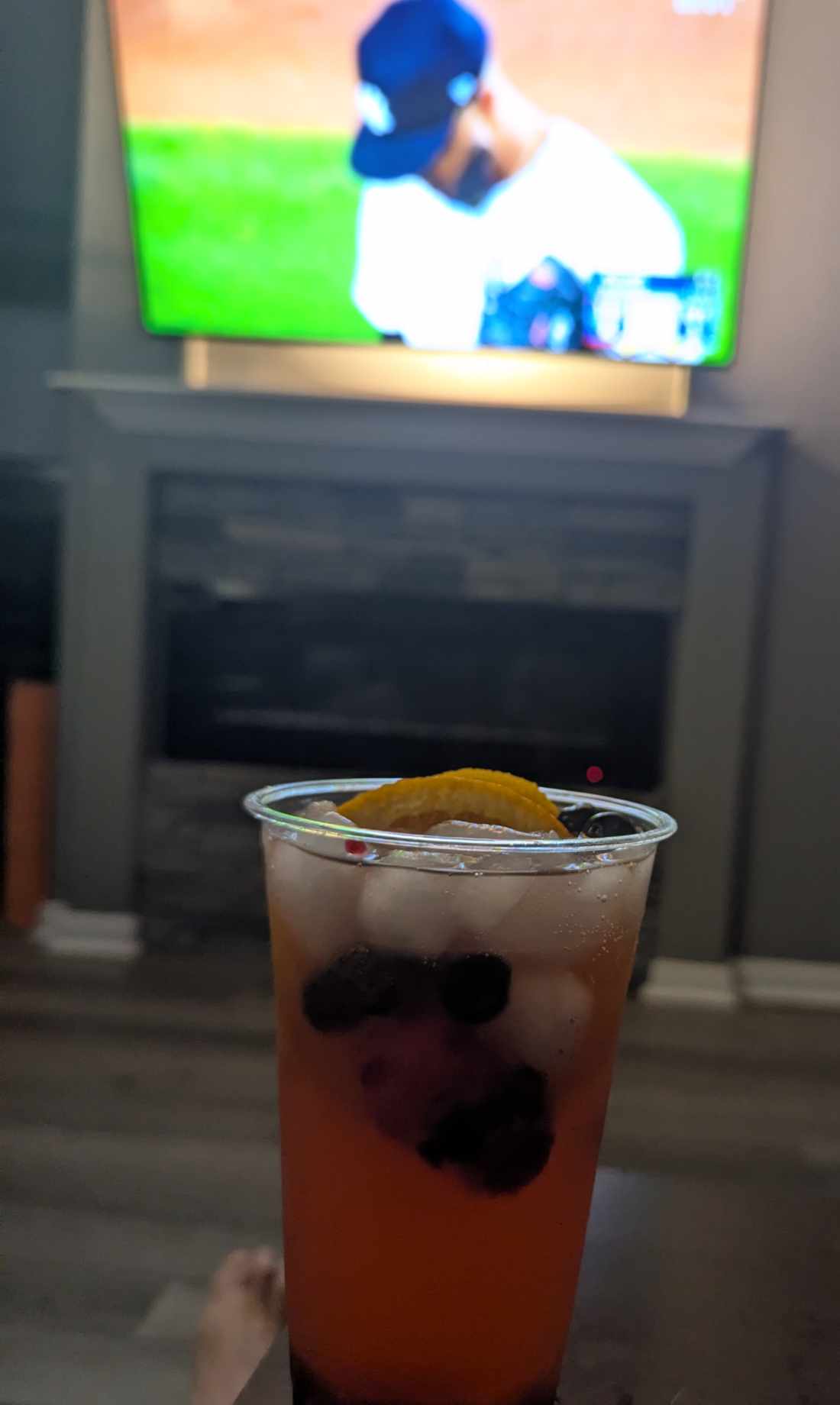
It’s not the Grand Canal, but it’s still pretty glorious during a Jay’s playoff game.

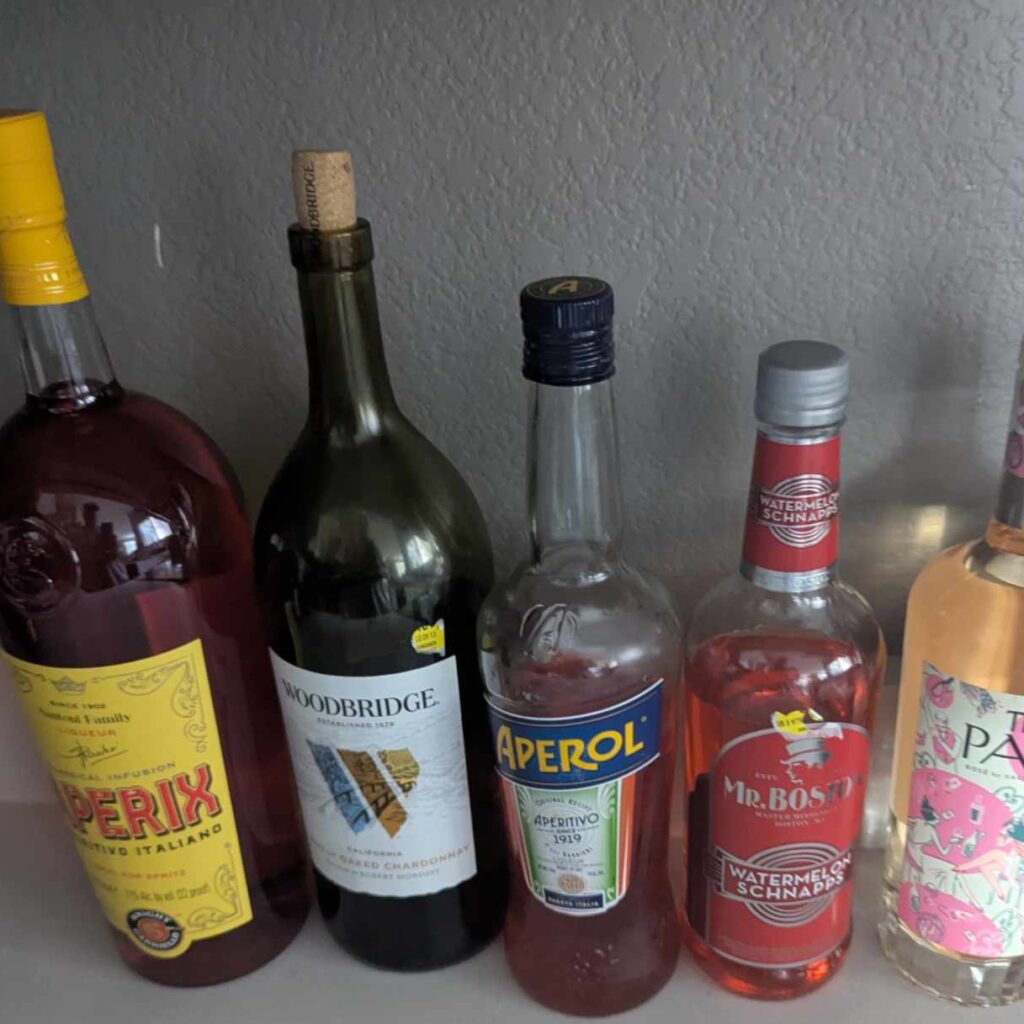
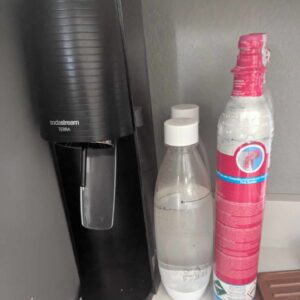
Mix some SodaStream soda water with your favorite alcohol flavoring (Aperol, Aperix, or Rosé—because why not), toss in white wine, fruit, and orange slices, and boom: Venice vibes at home. Bonus: it costs less than a dollar instead of €5–8+ per sad spritzer by the canal. 🙌

Here are a few more GEMs from my Venice adventure—because someone has to show off while I sip my homegrown “canal.” that hauls waste water in AZ.

Want more Grand Canal vibes (without the €8 spritzers)? Check out my videos on YouTube—watch canals, gondolas, and chaos unfold from the comfort of your own home.

www.YouTube.com/@NorthAmericanDarrell

Don’t forget to hit subscribe and dive into over 1,500 travel videos—because apparently, watching me roam the globe is considered quality entertainment.
Venice’s history began in the 5th century.

Refugees decided building a city on stilts in a swampy lagoon was a brilliant idea. By the Middle Ages, it became a maritime superpower, raking in riches while everyone else was figuring out taxes. Centuries later, it joined Italy, and today it’s a tourist mecca of canals, gondolas, and carnival chaos. Basically, it’s a city that floats, dazzles, and occasionally smells like history, depending on which alley waterway you visit.

default

Portugal – the beauty of the Algarves! 😍

My September 2025 European vacation began in Faro, Portugal, following a travel day that felt like it had its own time zone.

Uber from home to the airport!

light from Phoenix to LA 

8-hour layover in LA 

10-hour flight to London

3-hour London layover 

2-hour flight to Faro, Portugal. 

It was miserable. I even had loud, dry heaves when we touched down in London. I almost made it
 But nope. We had a “go around” because apparently, someone else’s plane hadn’t moved off the runway yet. That was the end of me for the day. đŸ“ąđŸ€źđŸ™‹đŸ»â€â™‚ïž

I really should cut people some slack when they say they don’t want to travel like me—clearly, they have better judgment but sitting at home is not an option.

The first week in Portugal was pure exhaustion—jet lag hit hard, and I barely had time to remember what day it was before I was off on the next adventure.

Totally worth it—Spain and Portugal were both at the top of my bucket list. I’ve barely scratched the surface of either, but who cares? 

Dropping pins does not need full coverage.

📍🌍😎

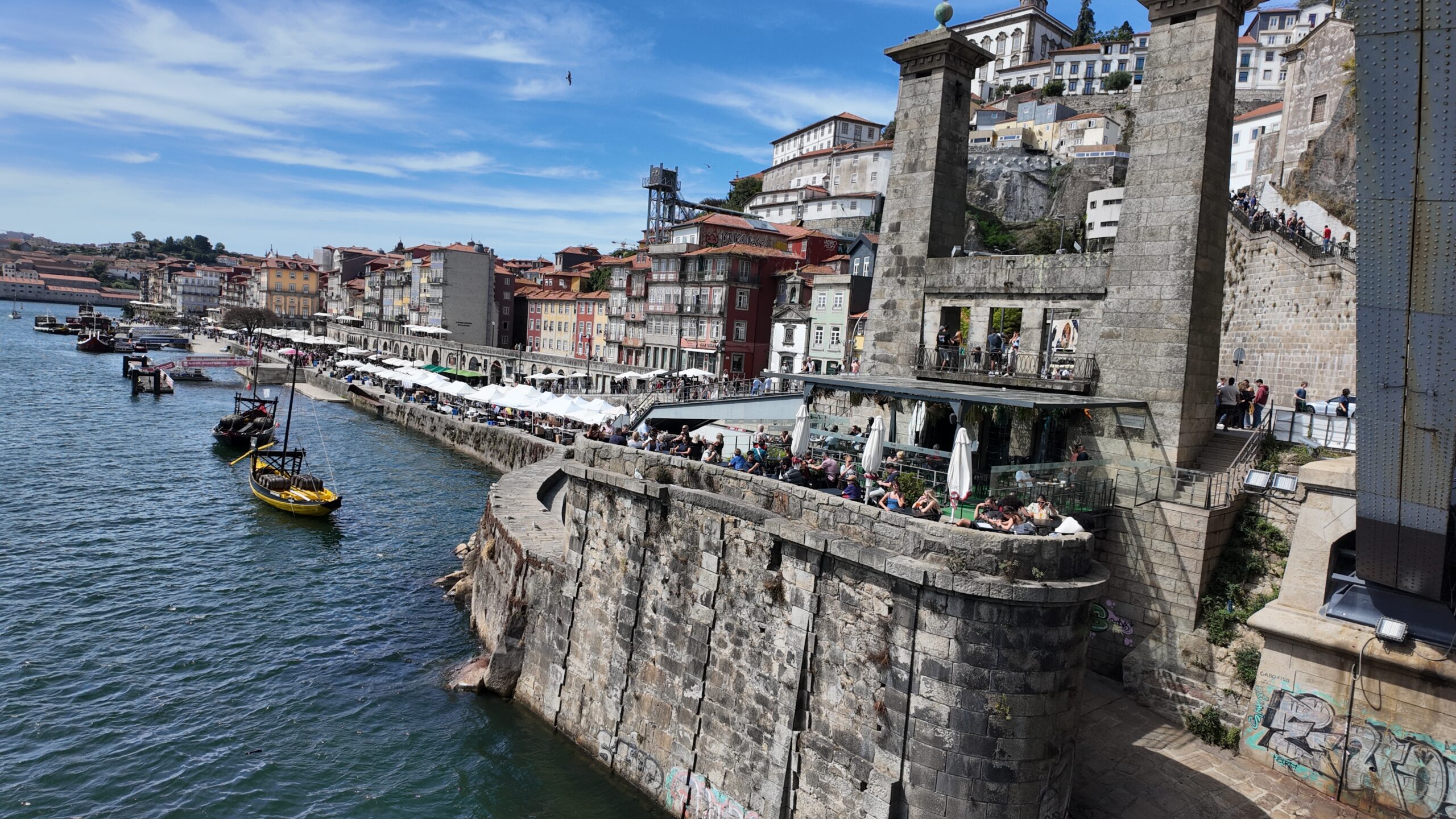
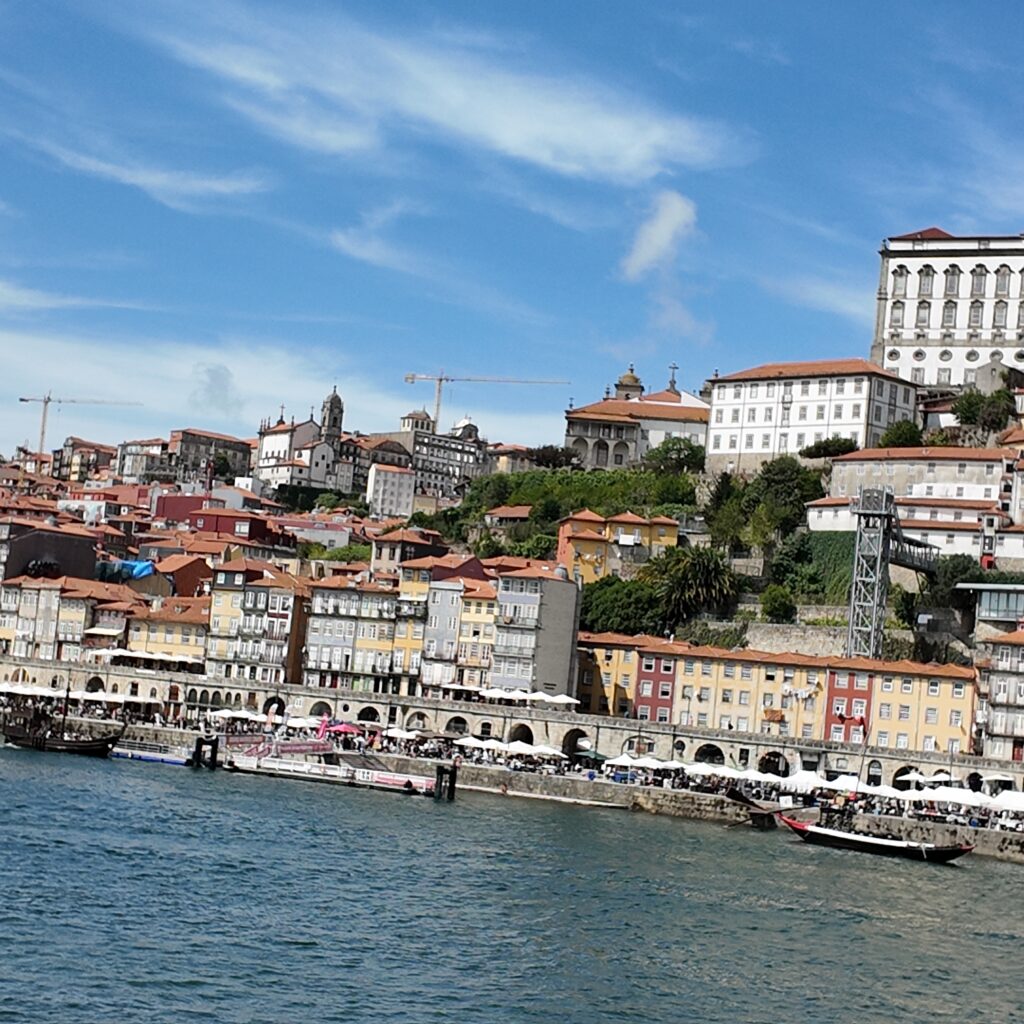
I had a great time in Faro and Lagos, just hanging out by the water and soaking it all in. But Porto—hands down—stole the show. It had been at the top of my bucket list for ages, and it did not disappoint. I also made sure to take in the short bus rides and longer train journeys along the coast, which were spectacular, pretending to be a local.
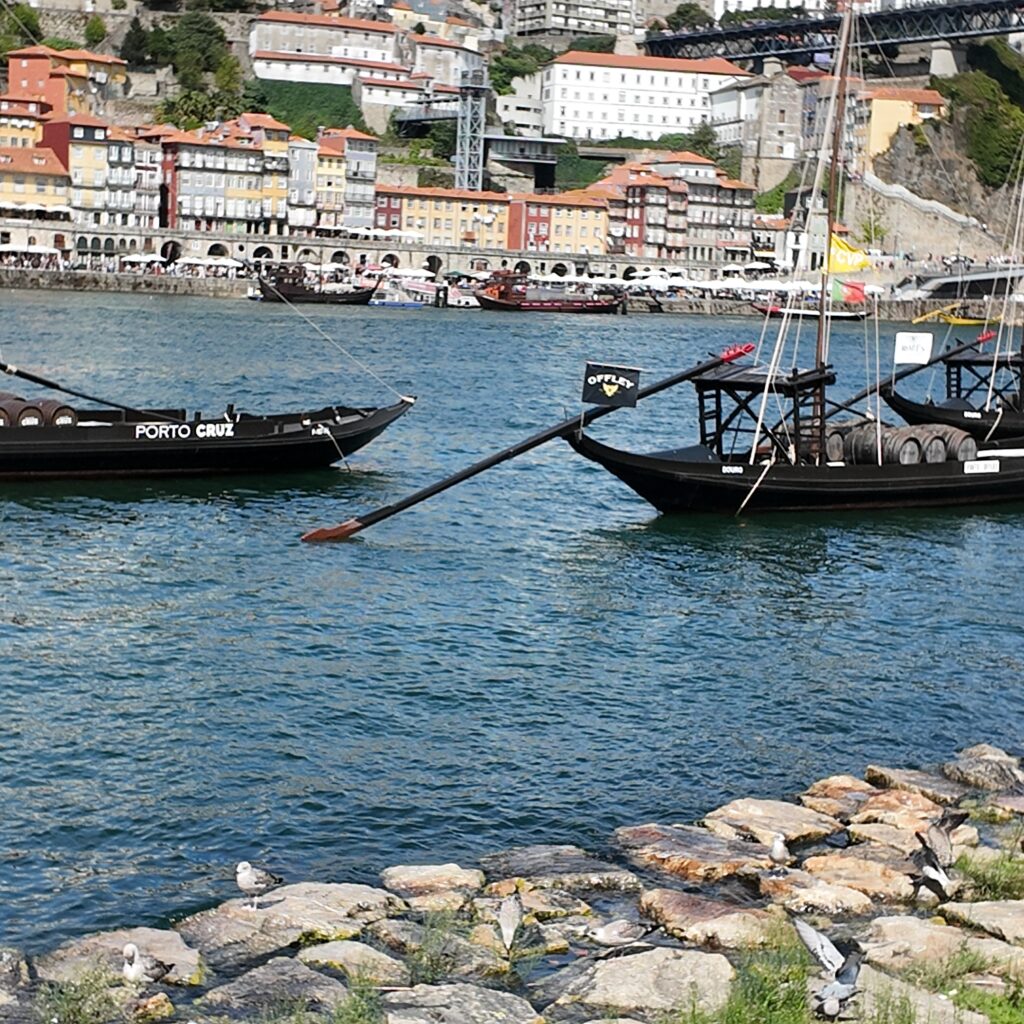
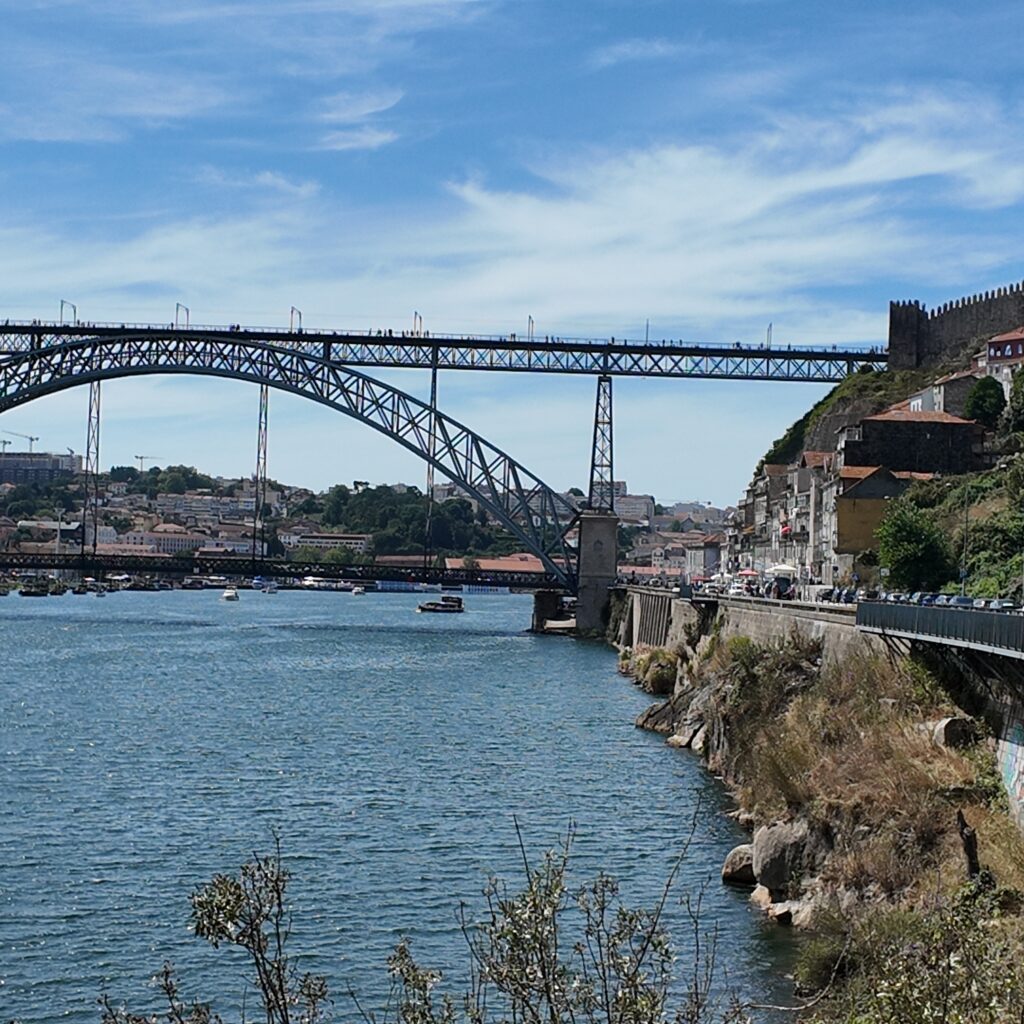
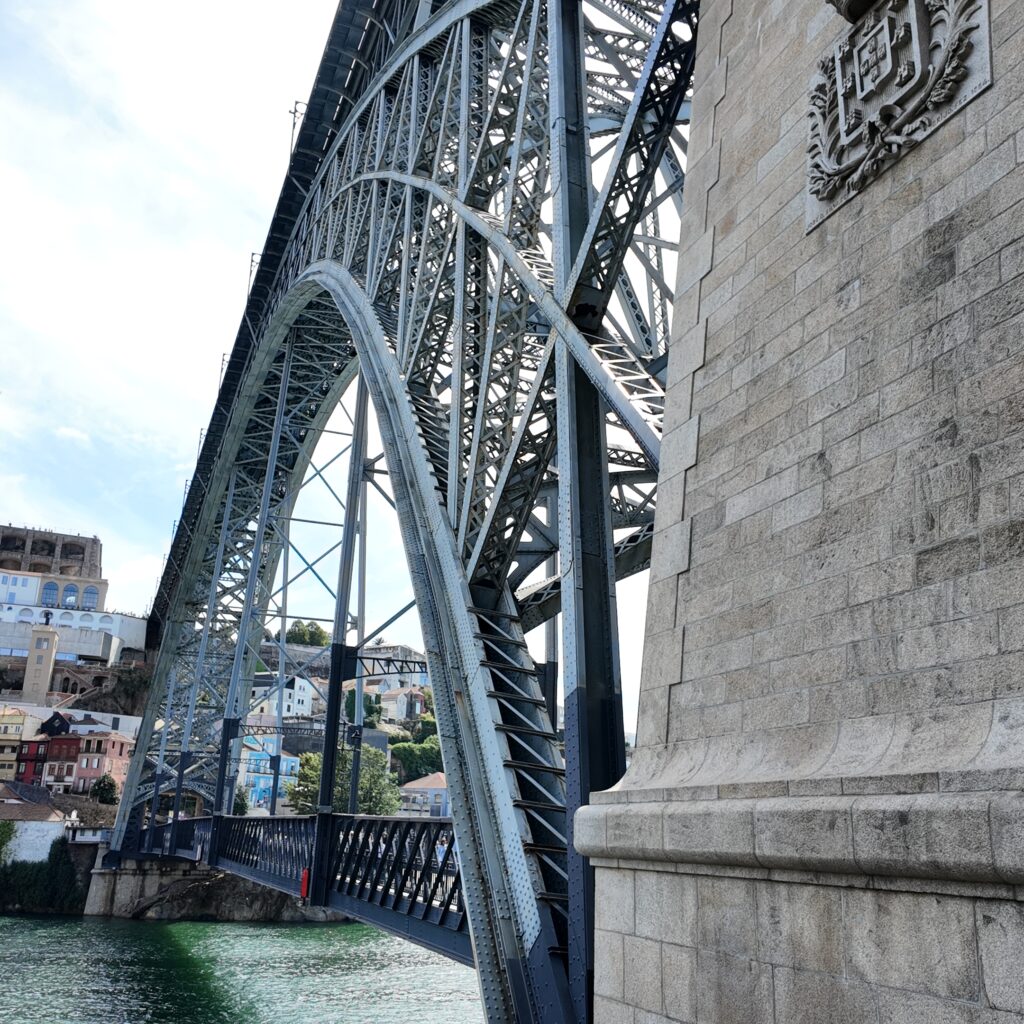
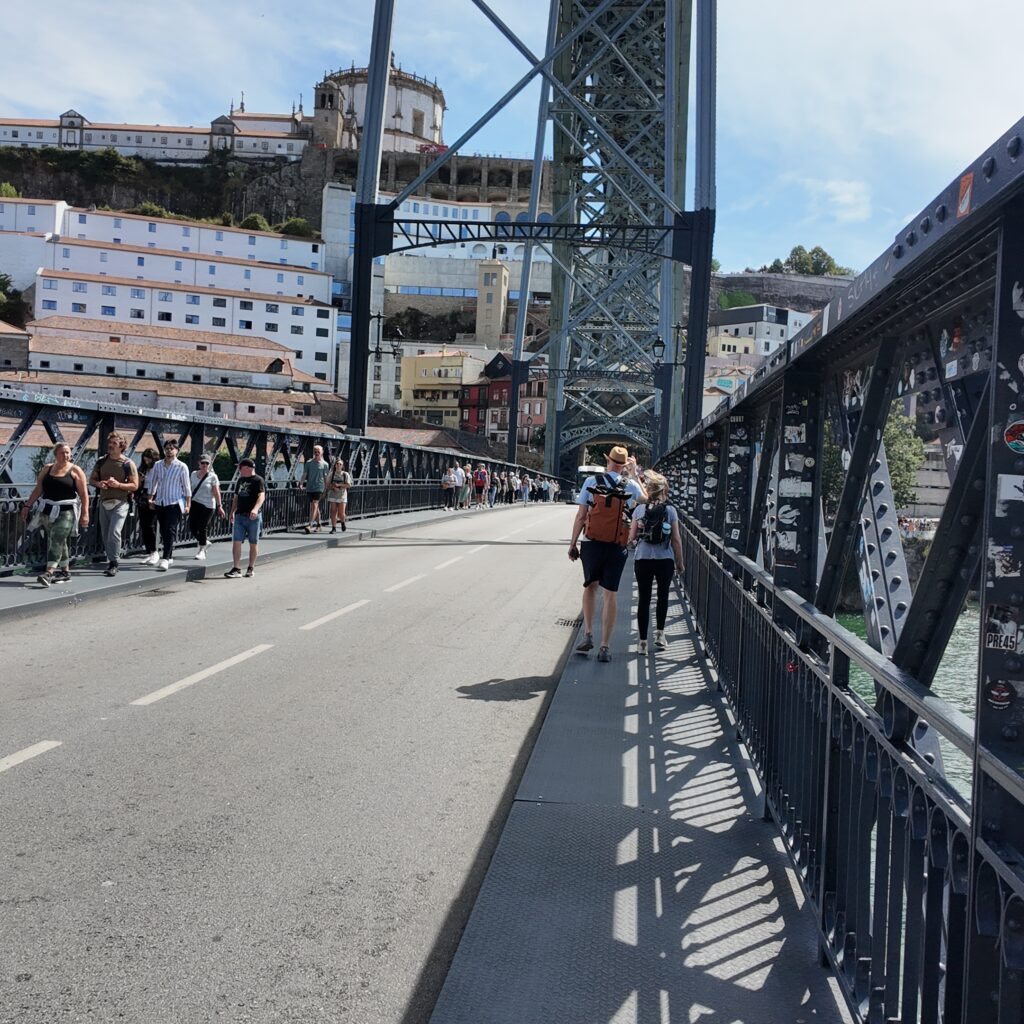
The city is split by the Douro River, and there are six famous bridges to cross at various points. The crown jewel is the Dom Luís Bridge—a stunning double-deck metal arch that links Porto with Vila Nova de Gaia. Honestly, I couldn’t stop taking pictures; it’s one of those “blink and you’ll miss it” moments that you also want to document from every possible angle.

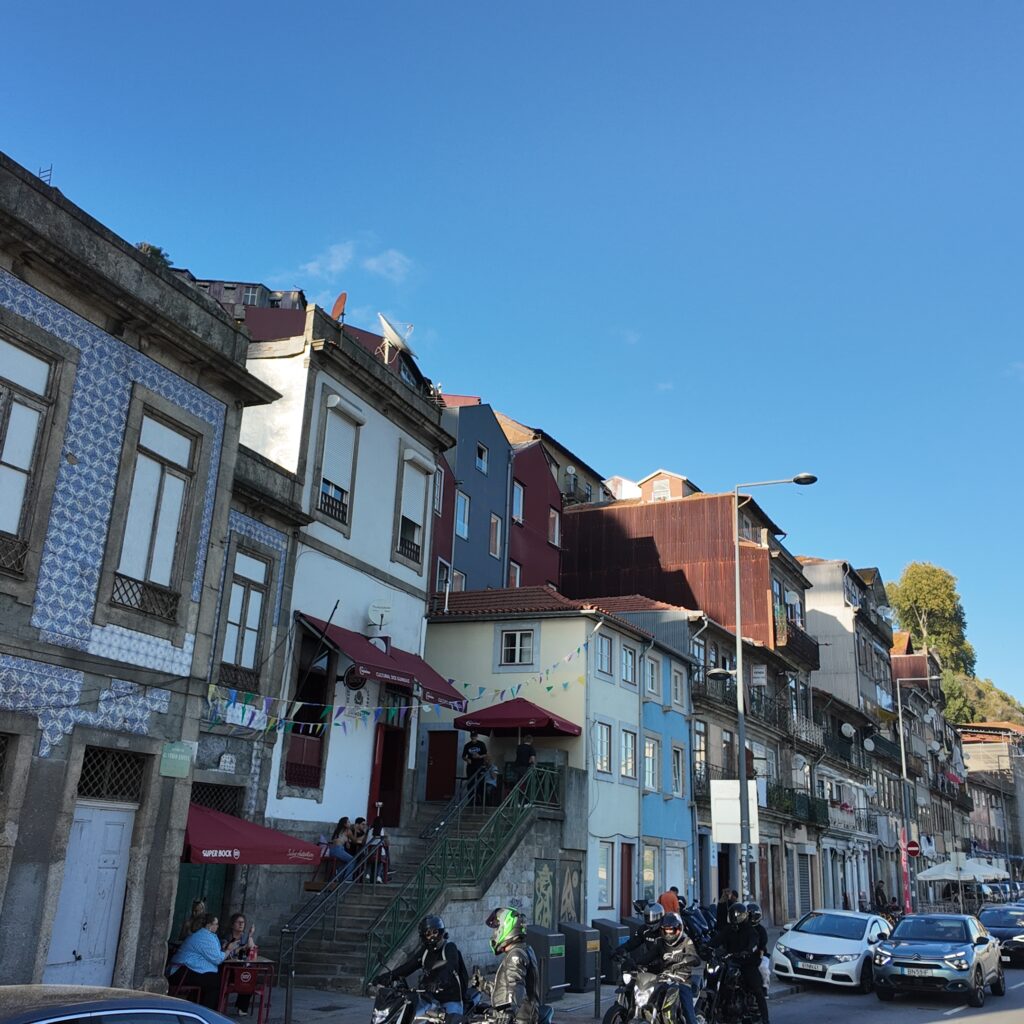
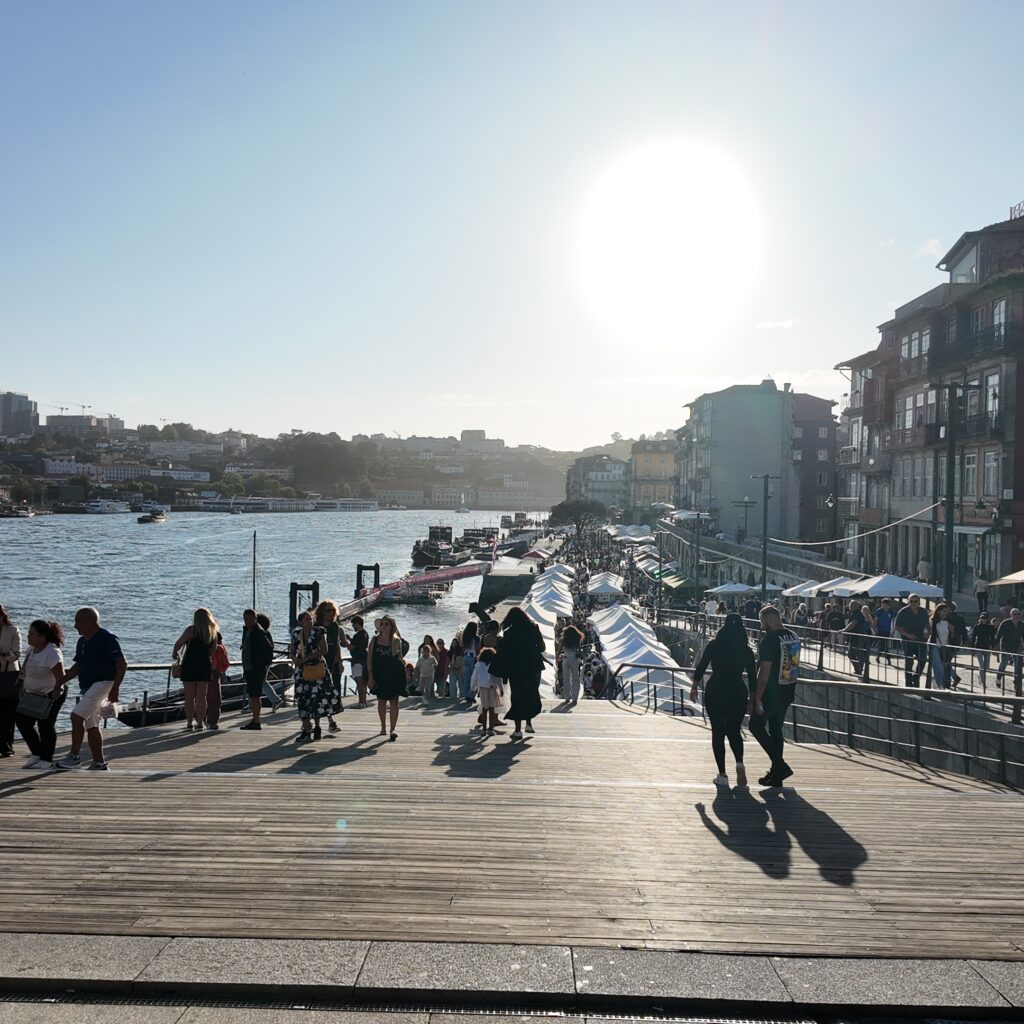
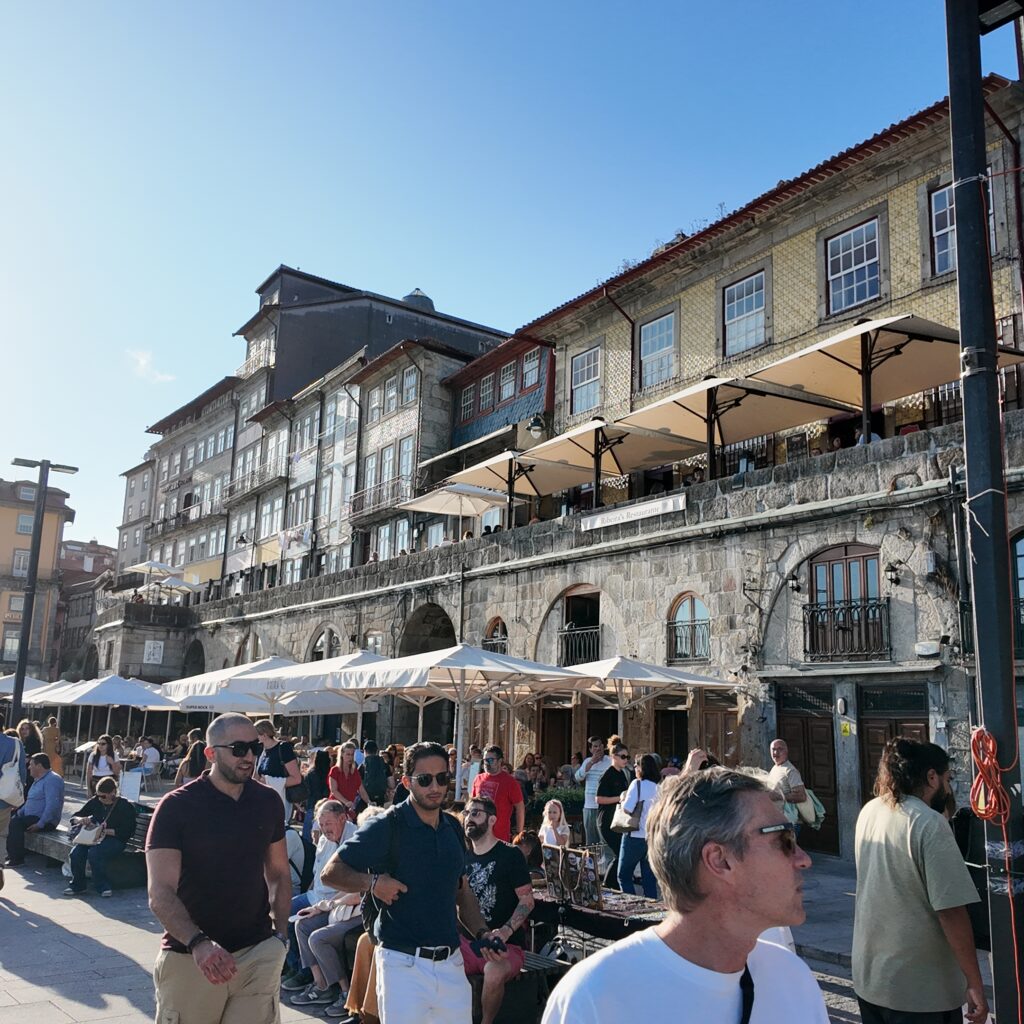
I spent a solid two days in Porto walking over 20,000 steps each day—up and down the river, soaking in the stunning architecture. The buildings lining the water are even more jaw-dropping in person. There’s also a gondola that gives you a sky-high view, but the line was so long I decided my legs had already earned a vacation of their own.

Want more Portugal chaos, cobblestones, and coastal views? Check out my YouTube channel for all the videos—no jet lag required.

www,YouTube.com/@NorthAmericanDarrell

Hit subscribe to dive into the full 1,500+ travel video catalog—because why stop at one continent when you can live vicariously through all of them?

Portugal’s history: Small Country, Big Ambitions

Portugal started getting serious in the 12th century, when Afonso I declared, “I’m king now,” and voilà—Portugal was officially a thing. Not content with being a tiny corner of Europe, the Portuguese set sail during the Age of Exploration, sending legends like Vasco da Gama around Africa to India and basically telling the world, “We’ll take it from here.”

They built an empire stretching across Asia, Africa, and Brazil—riches, spices, and cultural chaos included—while most Europeans were still figuring out how to map their own backyard. Today, Portugal is chill, gorgeous, and full of history: sun-soaked beaches, pastel-colored streets, port wine, and the occasional reminder that this tiny country once ruled the seas.

default

Prague, Czech – beer is served half full?!đŸ€”

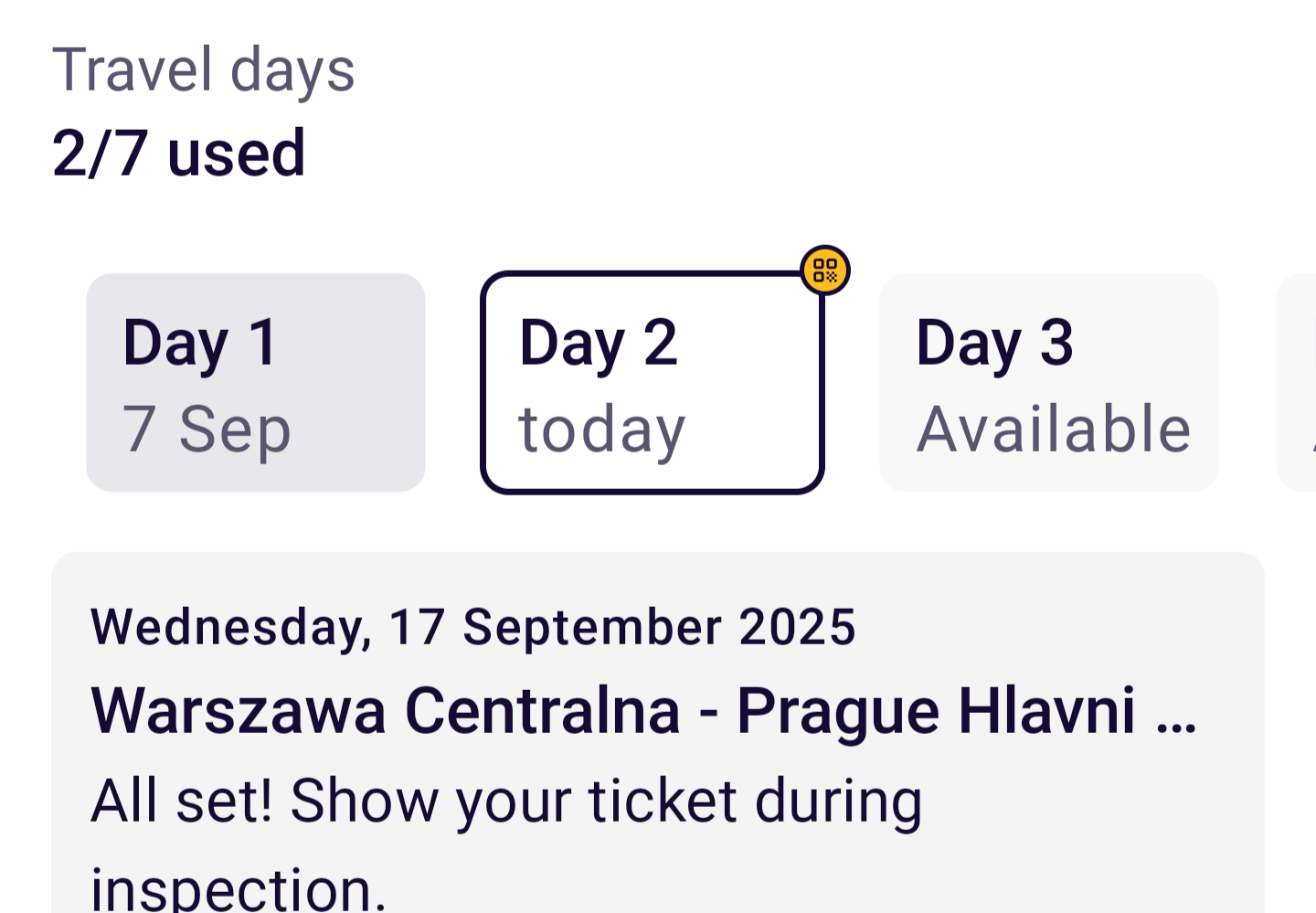
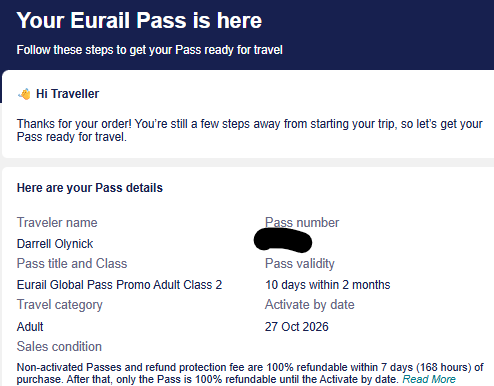
As September 19th, 2025 crept closer, I was happily settled in Warsaw—but quietly plotting Munich for the first weekend of Oktoberfest. With my Eurail pass, booking the trip was almost absurdly easy: 
Warsaw to Prague, then a short hop into Munich.
Portugal. Poland. Iceland. And now Prague.

Everything was lining up so cleanly. Routes connected. Dates made sense. Just a perfectly unfolding chain of cities—one rail segment at a time.

This was day two using my Eurorail pass. Day one was used getting from Faro to Porto Portugal along the amazing coast. Massive wins using the pass the first two days.

The Czech Republic has always intrigued me—between its legendary international hockey and, of course, its world-class beer, how could it not? I only spent a couple of days in Prague, but every minute landed. The city feels effortlessly historic without being frozen in time, the beer is somehow even better than advertised, and there’s a rhythm to the place that invites you to slow down and look around.

It was one of those stops that proves you don’t need weeks somewhere for it to leave a mark. Sometimes a place shows you exactly what it is right away—and Prague did that beautifully.

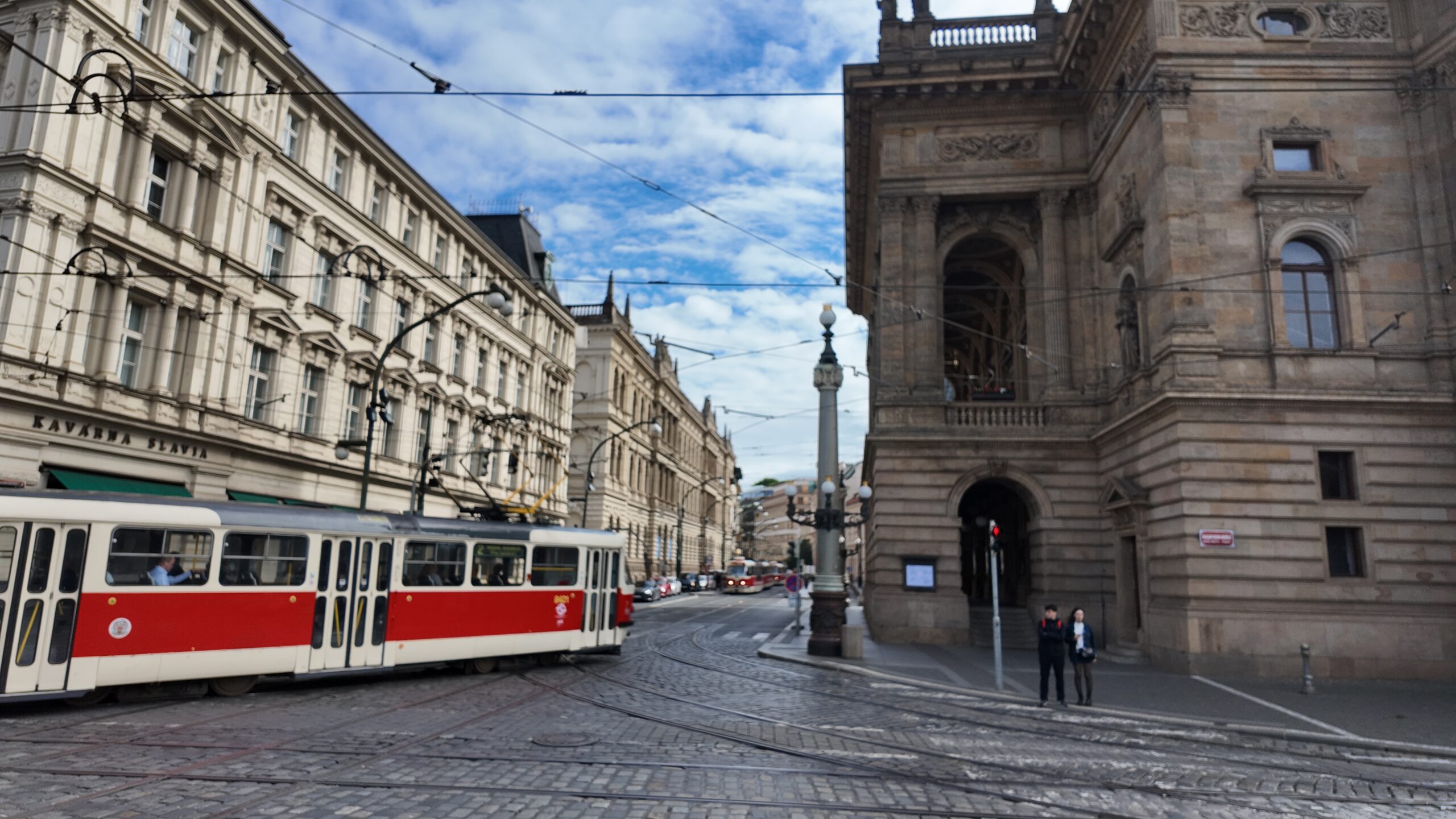
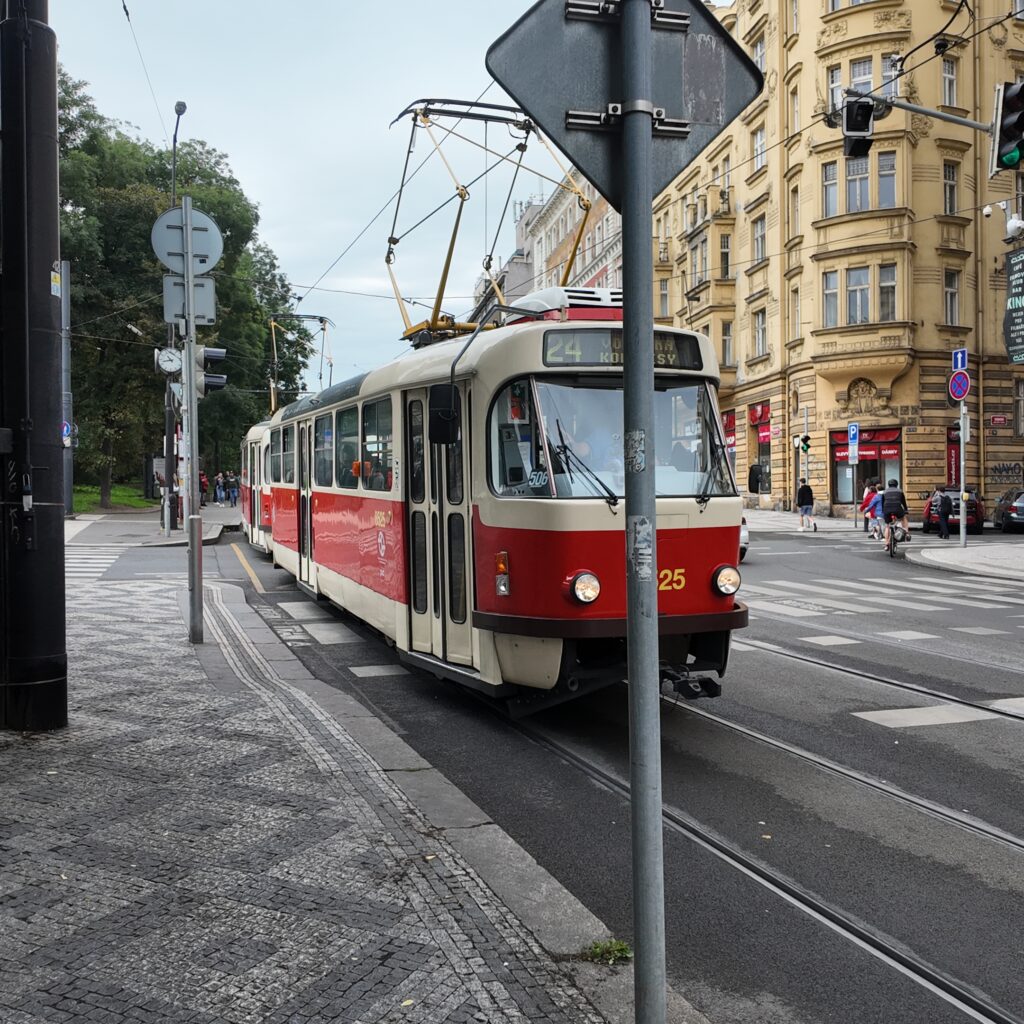
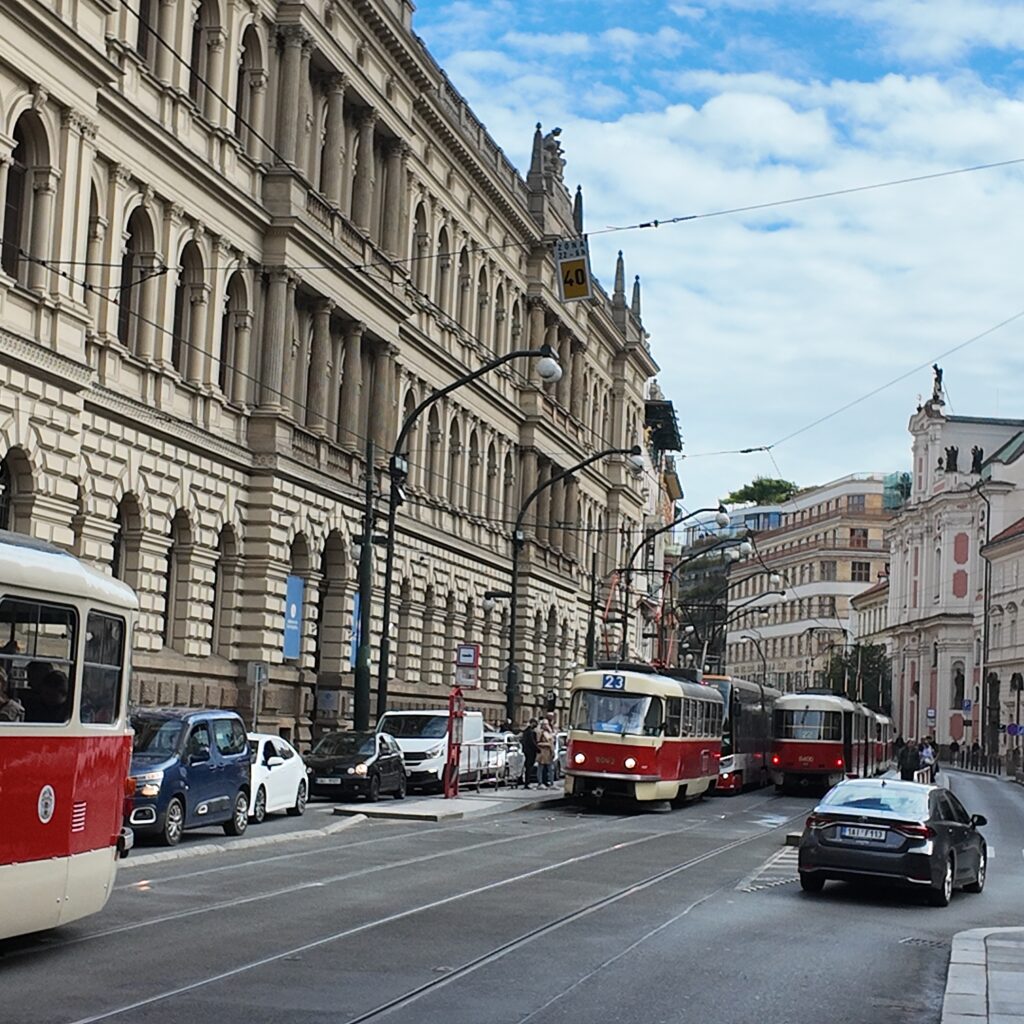
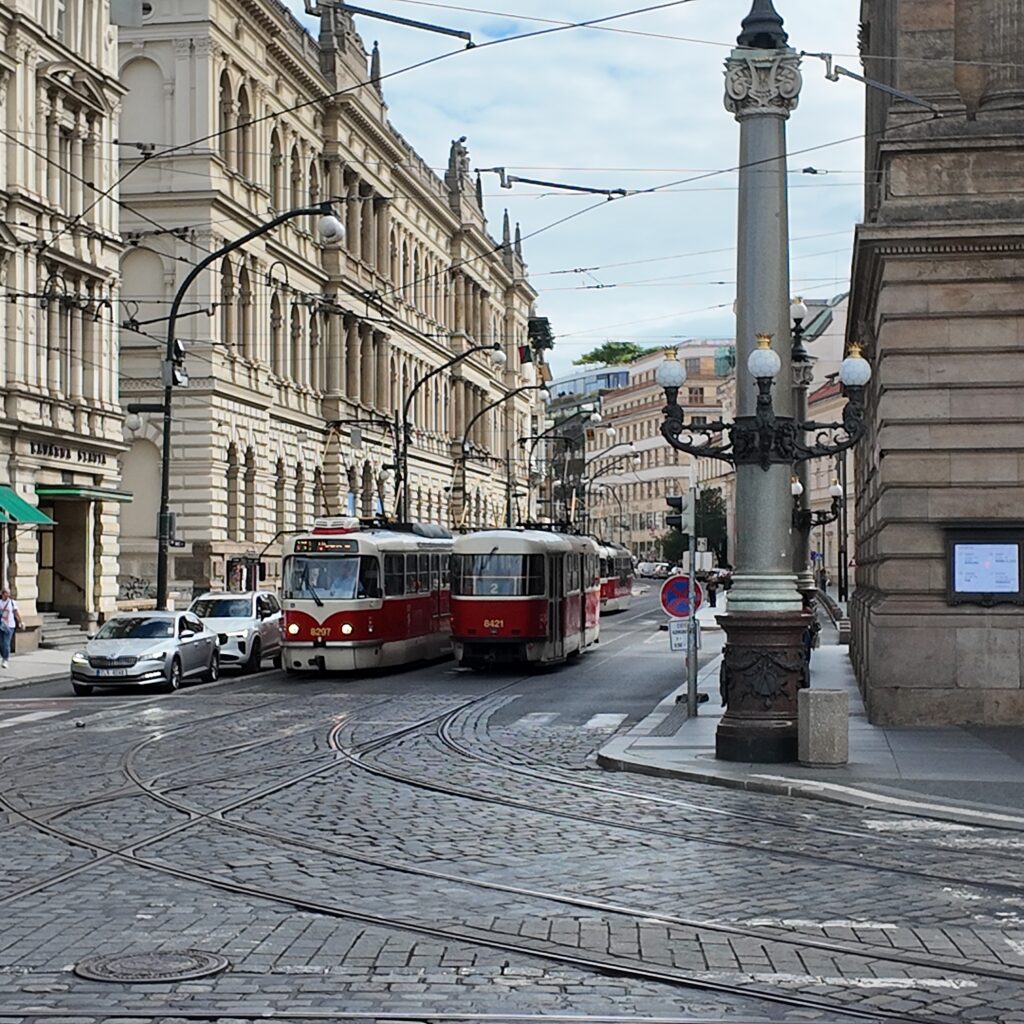
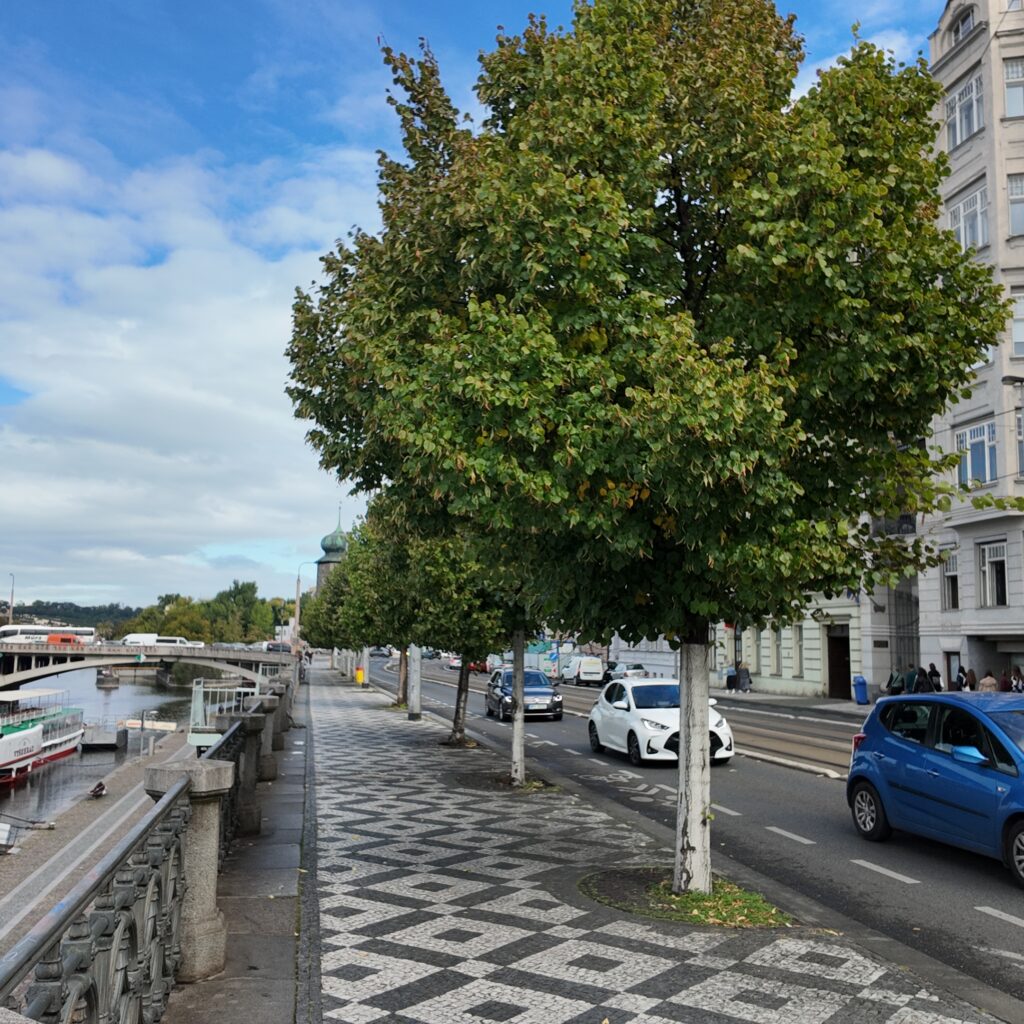
There’s something undeniably awesome about streetcars sharing the road with everyday traffic. I first saw it in Vienna and thought, “Okay, that’s pretty neat.” But Prague? Prague turns it into an art form.

You’ve got ancient, rattling trams rubbing elbows with sleek, modern ones—both weaving through cars, bikes, and pedestrians like they’re operating inside some chaotic, high-speed safe zone. Everyone somehow knows where everything else is going. No hesitation. No drama. Just motion.

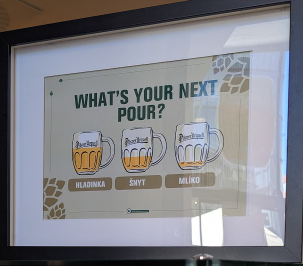
The beer in Prague is something else entirely. They pour it with half the glass—sometimes more—foam. There’s even a style called Mlíko where about 75% of what you’re holding is foam
 and you pay full price for the privilege.

I ended up in a lively debate with a bartender about it. He swore it “tastes better that way.” I countered with my very scientific position: 90% of a beer lives in the top 10% of the glass—and yes, we are both professionals. We laughed. The foam probably laughed. And I still drank it.

Because when in Prague, you surrender to the professionals. đŸ»

Czeck beer musuem ... If you;re ordreing a "Mliko", it's apprantly your last beer of tghe night. I still do not understand! LOL
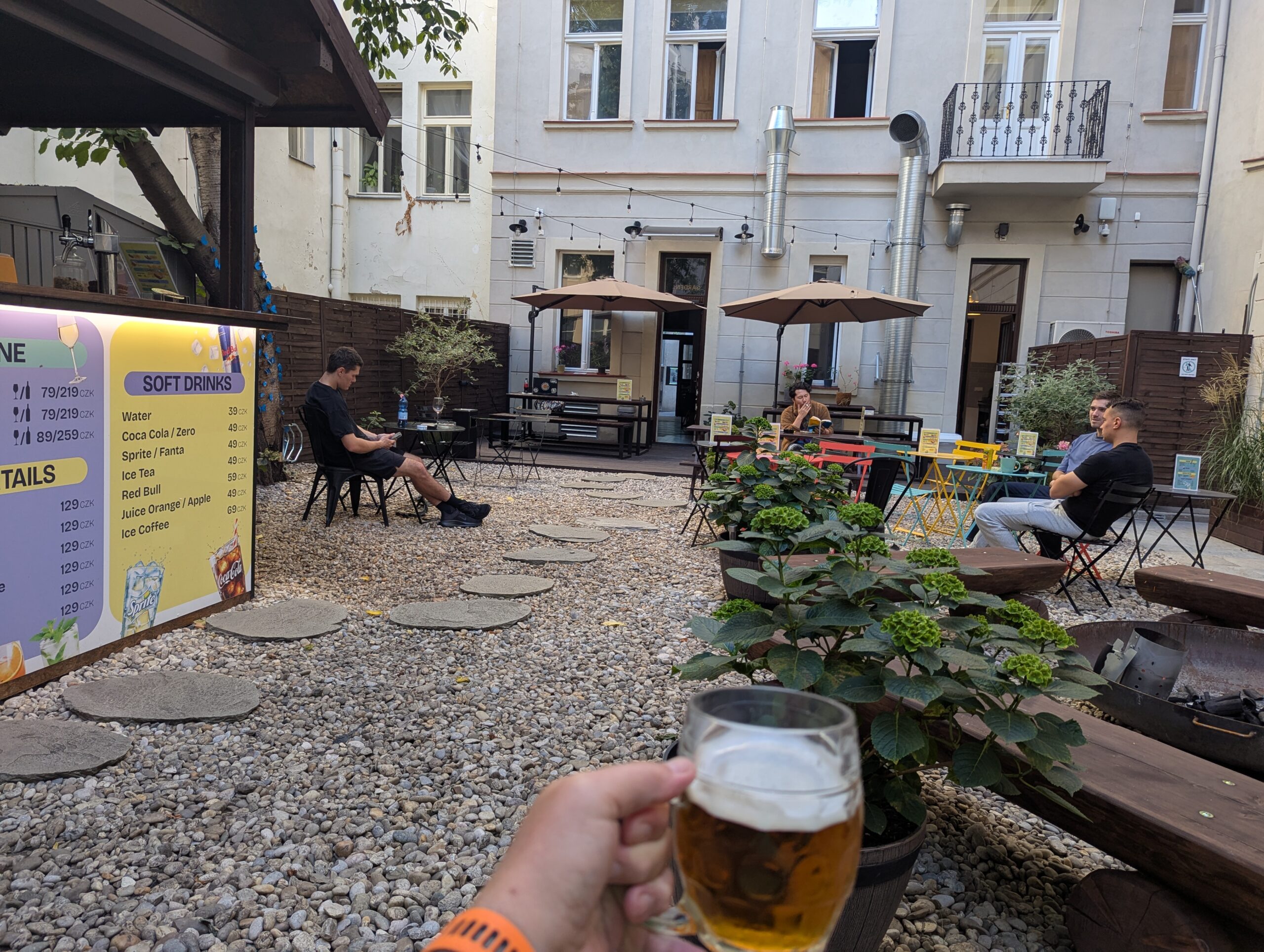
Beer in my amazing $20 a night hostel courtyard! That is how much beer you get once the foam goes away! đŸș

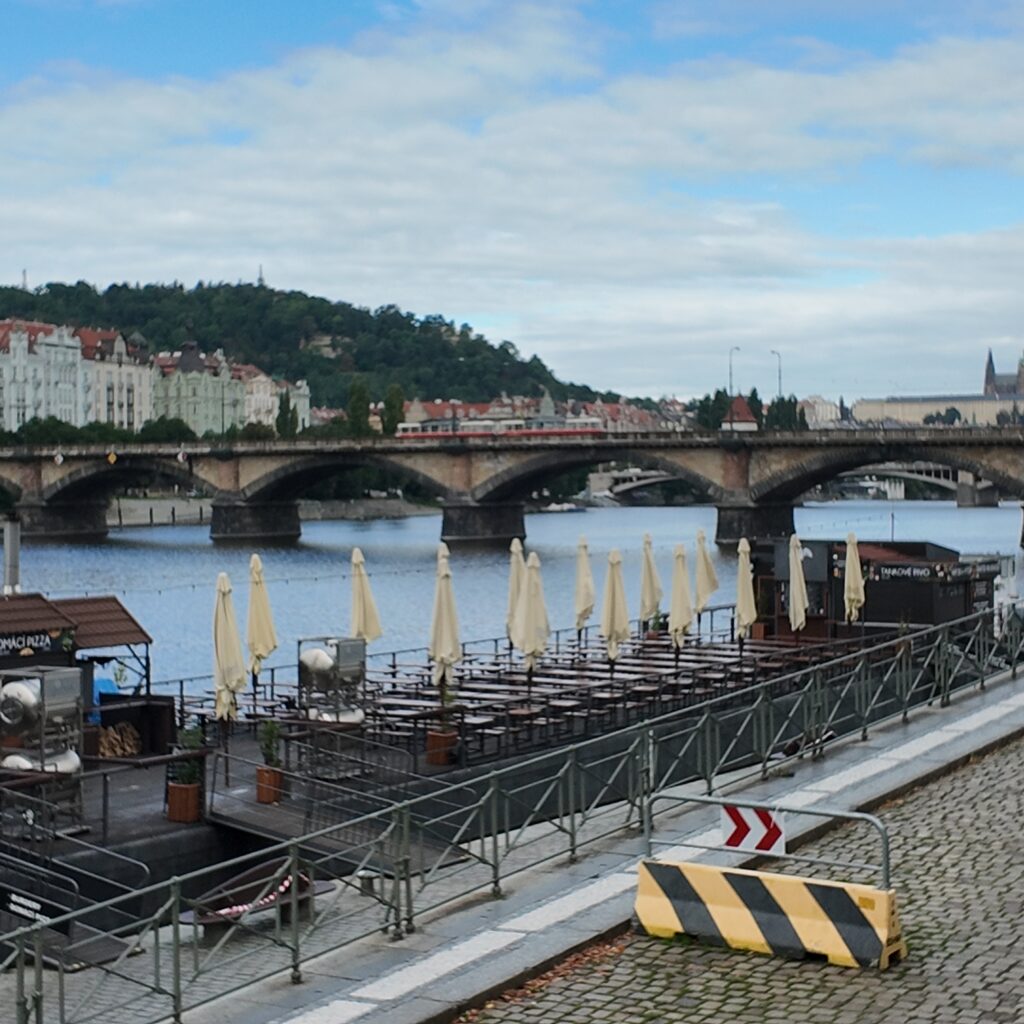
The city itself—and especially the riverside—was incredible. I can only imagine how stunning it must be in winter
 though, to be honest, I’d probably never make it outside in that kind of cold.

So instead, here are a few pictures and videos—so you can admire Prague from a warm, safe spot, just as nature intended.

Want more Czech Republic adventures—and proof that I walked way too much? Head over to my YouTube channel for videos, chaos, and maybe a beer or two:

www.YouTube.com/@NorthAmericanDarrell

There are over 1,600 travel videos from around the globe—enough to make your couch feel like first class.
Apparently, my wandering now qualifies as educational content.
Prague history: The City That Time Forgot
 and Then Perfected

Prague started way back in the 9th century as a collection of hilltop settlements around what’s now Prague Castle—basically, medieval real estate with a view. By the Middle Ages, it became the capital of Bohemia and a cultural powerhouse, where kings built castles, churches, and universities while everyone else was still figuring out plumbing.

Under Charles IV, the city got fancy: the oldest university in Central Europe, bridges, cathedrals
 Prague basically said, “We do grandeur better.” Fast forward a few centuries, and the city survived wars, empires, and communism, only to emerge in 1989 via the Velvet Revolution as a stunning, slightly magical city where Gothic spires, cobblestone streets, and craft beer coexist in perfect harmony.

PXL_20250909_163011199

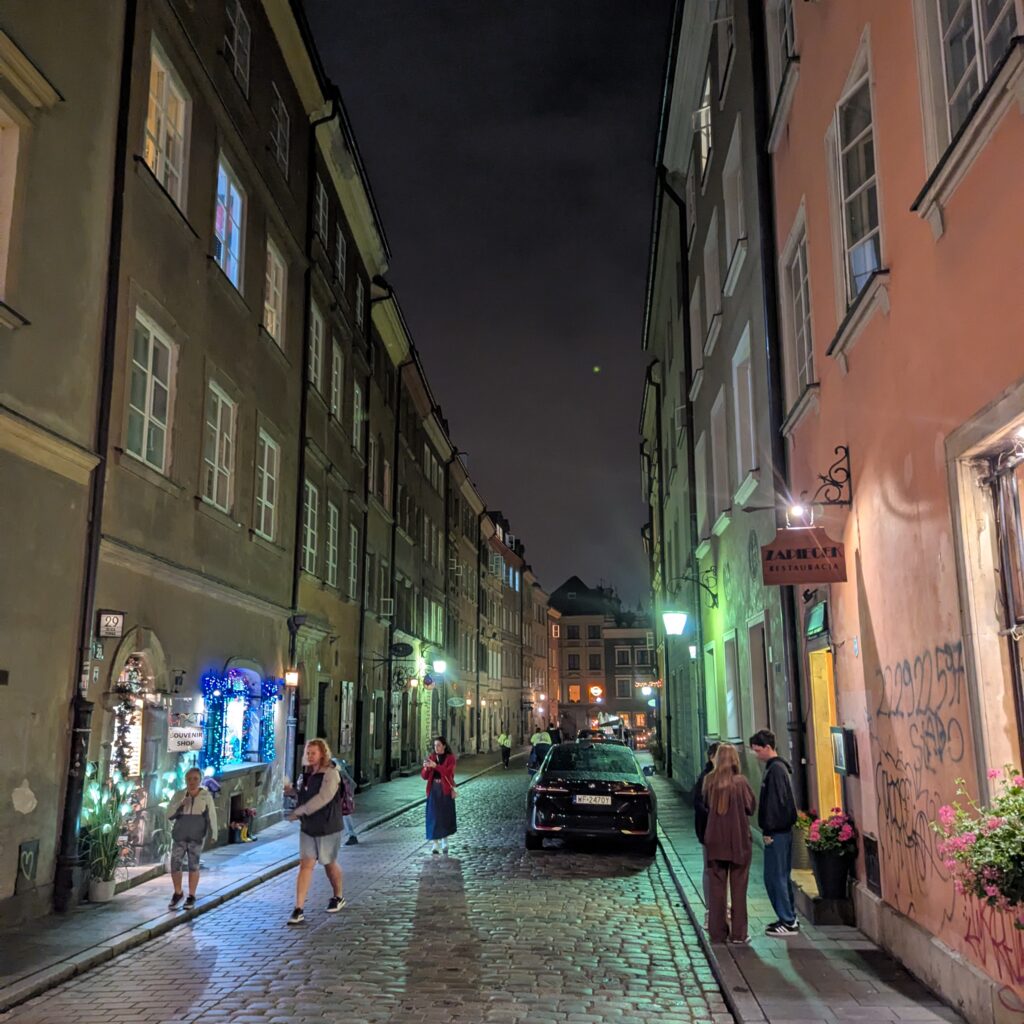
Warsaw, Poland – Just like Ukraine!

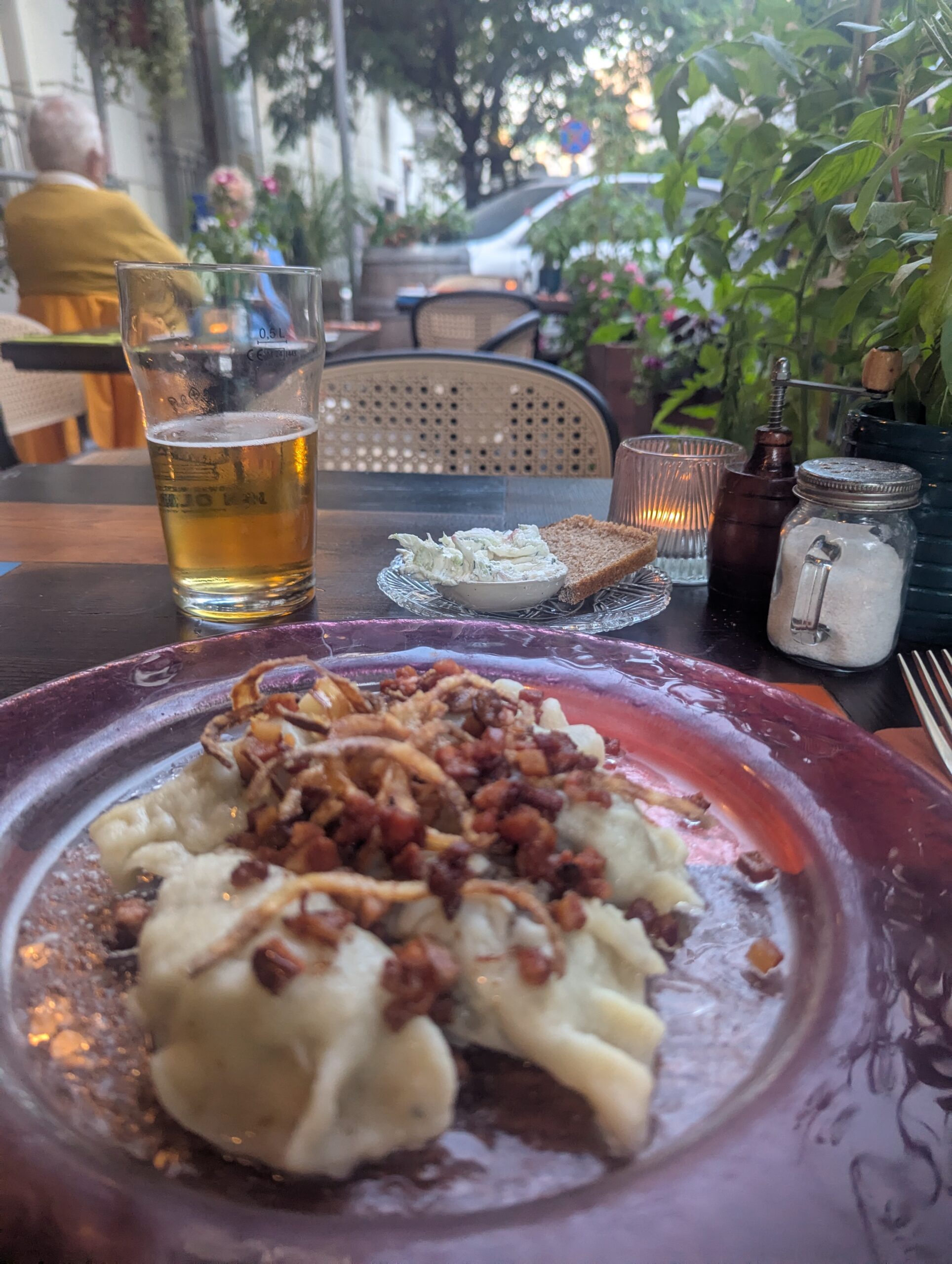
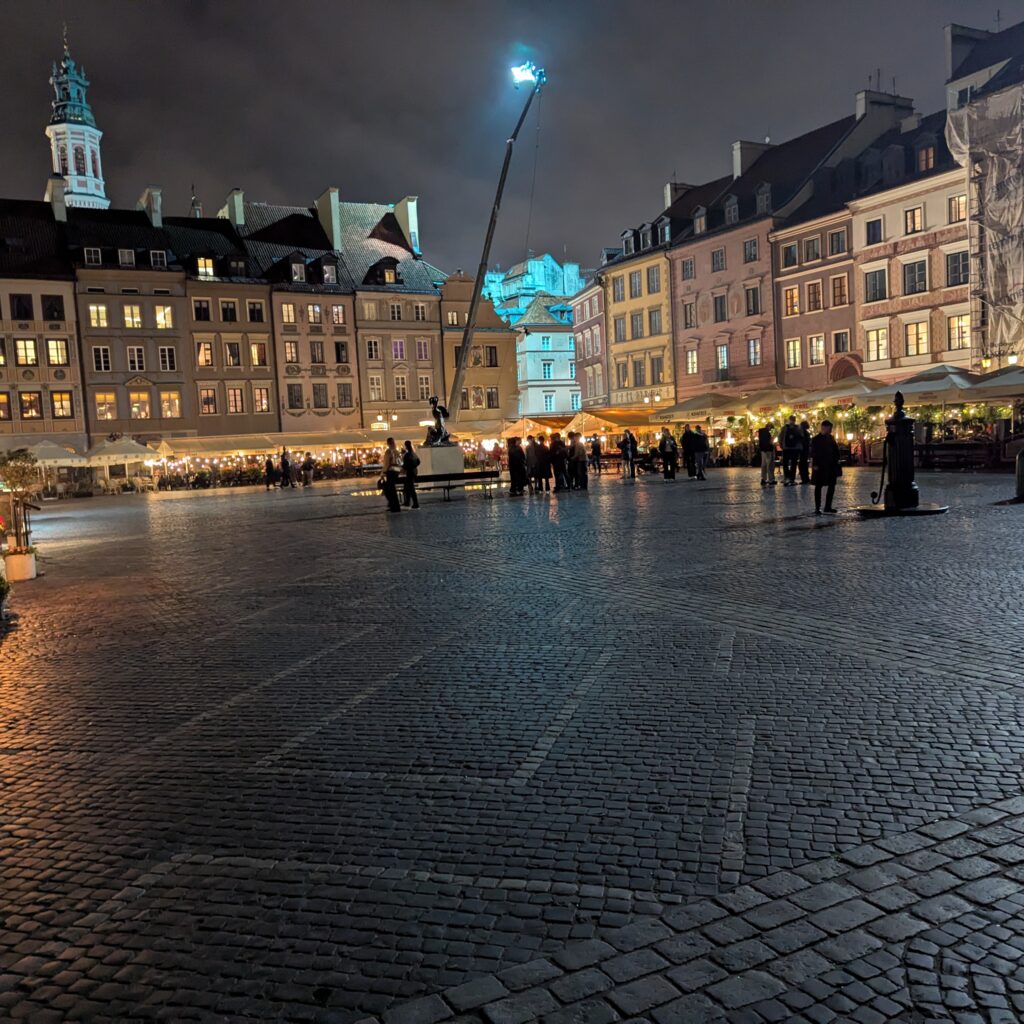
I have to say, Warsaw ended up being one of my favorite stops on the entire trip. There were no flashy tourist traps or overproduced experiences—just a calm, lived-in city with an easy rhythm and, most importantly, incredible food.

Everywhere you turned, people were speaking Polish (and Ukrainian), and pierogies weren’t just a menu item—they were practically a food group. Warm, simple, comforting food done right.

In a quiet, unexpected way, it reminded me of my mom in Heaven. The kind of comfort you don’t plan for, but recognize immediately when it shows up.

I spent three days in Warsaw before launching into a 48-hour Iceland whirlwind using my Wizz Air Pass—essentially a masterclass in how much jet lag one human can endure in two days.

Booking the flights there and back at the same time made me feel like a travel genius
 or someone who should probably be supervised, but no one wanted the job.

Coming back to Warsaw was pure relief. Slow walks, nonstop eating in Old Town, and convincing myself that aggressively shoving pierogies into my face absolutely counts toward my 10,000 daily steps. Balance is important.
Want more Warsaw adventures, pierogies, and wandering chaos? Check out my YouTube channel for all the videos—no passport required.

www.NorthAmericanDarrell.com

Smash that subscribe button and step into the beautifully chaotic universe of 1,600+ travel videos—with more questionable decisions added weekly.

Watch me:

Wander the globe with zero chill

Battle jet lag like a caffeinated (possibly drunken) superhero

Make deeply questionable food choices

And survive airports that appear to actively hate humanity

All from the comfort and safety of your couch

While you roast me. đŸ€˜đŸ»


Just real travel, bad ideas, and solid stories.

—all from the safety of your couch while making fun of me! đŸ€˜đŸ»

Warsaw history: The Phoenix City

Warsaw started out in the 13th century as a sleepy riverside settlement, minding its own business along the Vistula. By the 16th century, it said, “Move over Kraków, I’m the capital now,” and quickly became Poland’s political and cultural hub.

Over the centuries, foreign powers—Russia, Prussia, Austria—kept trying to boss Warsaw around, and the city responded with uprisings, rebellions, and general stubbornness. 

Then came World War II, when almost everything got flattened
 but Warsaw didn’t just sulk. It rose from the rubble, rebuilt its Old Town brick by brick, and now stands as a gleaming, slightly sarcastic symbol of resilience: “You can’t break me, folks, nice try.”

default

ReykjavĂ­k, Iceland – Hot springs! ♚

I didn’t end up using my Wizz Air All You Can Fly pass as much as I originally planned.

After experiencing European train travel, I found myself preferring it. Trains were smoother, more comfortable, and often more enjoyable overall, which made short-haul flights feel less appealing by comparison.

That said, I still managed to squeeze in a 48-hour trip from Warsaw to ReykjavĂ­k, finally checking Iceland off my bucket list.

That journey wrapped up my 23rd, 24th, and final flights on the €499 pass.

Looking back, it was a busy, sometimes chaotic stretch of travel—but also a reminder of how fortunate I am to keep moving, exploring, and learning what styles of travel work best for me.

Hot springs entry came with a free beauty mask, mine did not work! 😆

A big part of using an AYCF pass is always having your next destination locked in. If you don’t, you risk getting stranded somewhere, staring at a snack bar and wondering if your life has quietly turned into a low-budget travel documentary. Since Iceland can only be reached by plane, that mattered. Thankfully, I booked my return flight at the same time as my departure, guaranteeing I’d make it back to the mainland. Score one for planning—or possibly luck.

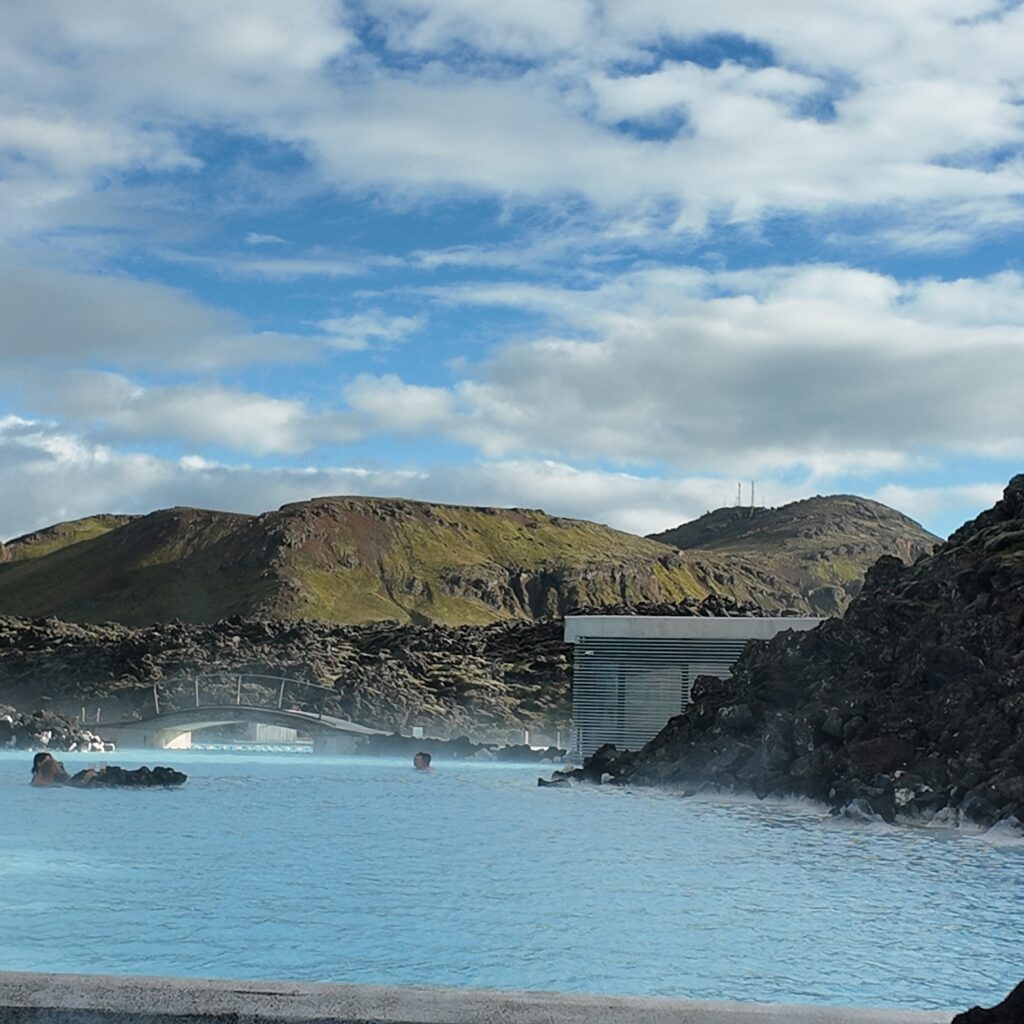
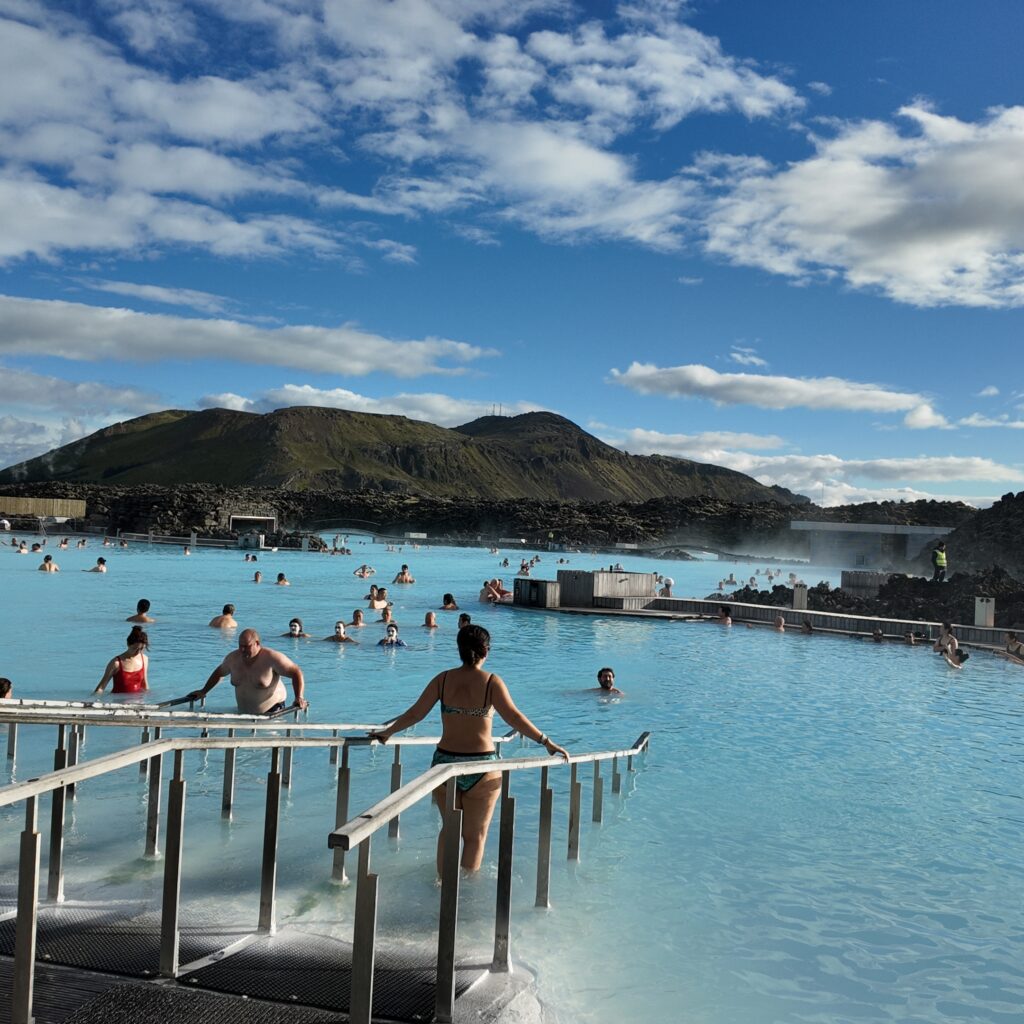
I didn’t do much while I was there. I mostly walked around Reykjavík and visited two hot springs, which was exactly the point of the trip. Ironically, there was a public pool and hot spring complex right next to my hostel. After weeks away from my usual spa routine, it felt incredible. I rotated between three temperature-controlled pools, cold plunges, saunas, and steam rooms like a professional relaxation athlete.

I enjoyed it so much that I went back again the next morning before heading to the Blue Lagoon.

While soaking, I met a traveler from Seoul, a professional writer who was going through a rough patch. I got him laughing by telling him I spend hours writing things that almost nobody reads. He even offered to show me around when I visit Seoul in March—which perfectly sums up why I travel in the first place: strangers, shared moments, and unexpected laughs.

No cameras were allowed at the hot springs, which honestly felt like a gift. The attendant said phones distract from relaxation—and she was probably right. She also likely saved me from posting a thousand blurry photos of me pretending to be interesting.

Sometimes the best travel moments are the ones that don’t end up on camera at all.

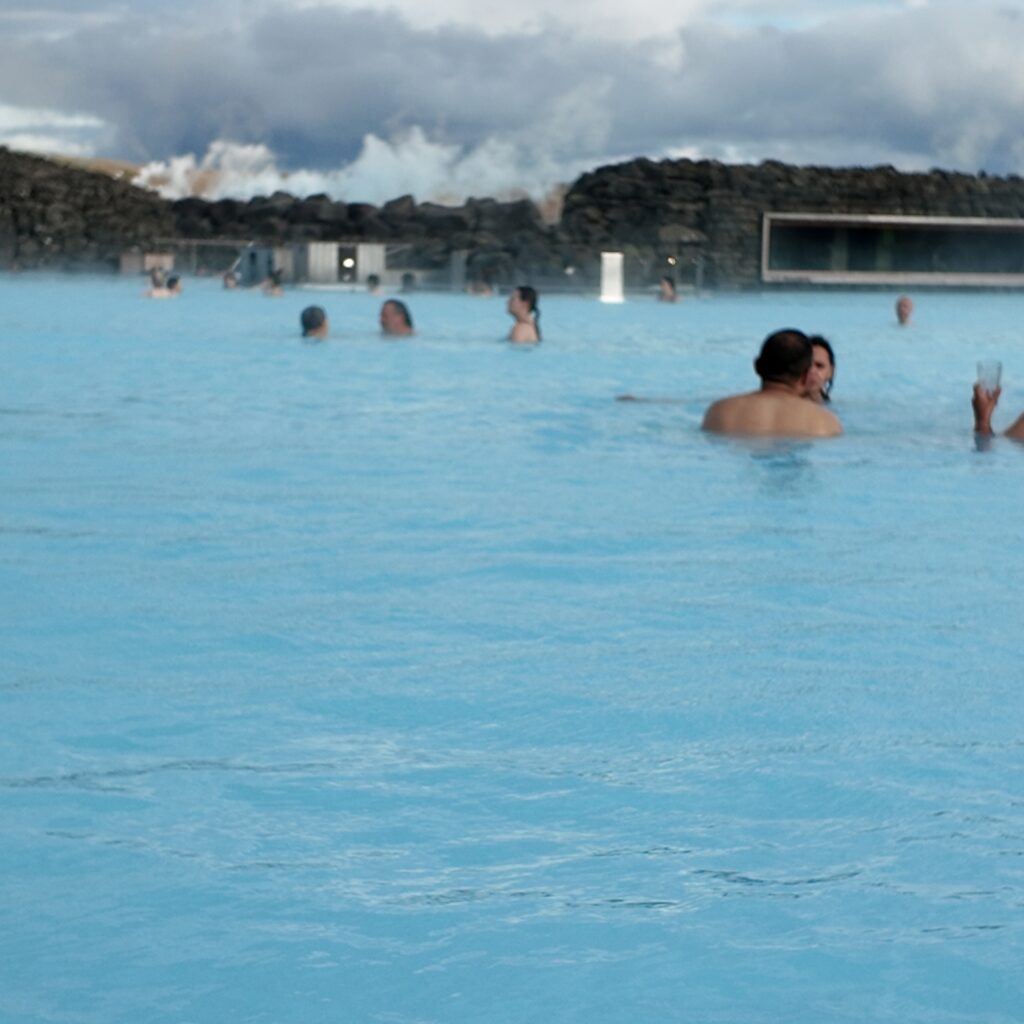
Below are just a few snapshots and short videos from the Blue Lagoon—because words don’t quite do justice to soaking in steaming geothermal water while convincingly pretending you’re a sophisticated spa-goer.

If you want more, check out my YouTube channel for the full adventure (and all the bubbles I responsibly chose not to photograph):

NorthAmericanDarrell – YouTube

And yes—feel free to smash that subscribe button like it just stole your passport.

Iceland’s Hot Springs: Nature’s Hot Tub Since Forever

Icelanders didn’t waste time—they landed in the 9th century and thought, “Why chop wood when we can just soak?” And so began the country’s love affair with geothermal hot springs, perfect for bathing, cooking, and gossiping about Viking drama.

By the Middle Ages, these steamy pools were community centers, where locals scrubbed, plotted, and probably swapped embarrassing stories. Fast forward to today, and Iceland has turned those natural hot tubs into luxury spas like the Blue Lagoon, proving that even a volcanic island can serve up relaxation, selfies, and a little Icelandic sass.

bucket1

Sept. 2025-Europe bucket listâœˆïžđŸš…

I wrapped up my month-long European adventure in September 2025, and it felt like the right moment to take stock.

Once I got home, I updated the list with a fresh perspective, fewer expectations, and a little more honesty about what actually matters on the road.

Turns out, it worked out great.

Some boxes got checked.
Some stayed open.
And a few new ones appeared that weren’t even on the list to begin with.

Spontaneity is kind of the adventure, isn’t it?

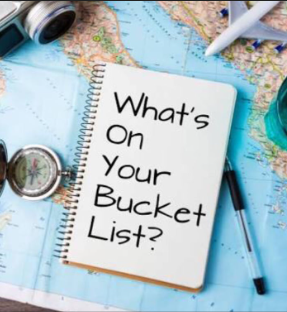
We all have bucket lists! Daily, montlhy, yearly or even a lifetime. Retire early and travel overwhelms my bucket list!

The best part is realizing that no bucket list is crazy—as long as you’re willing to work toward it, tolerate the criticism, and put in the effort
 all while actually enjoying the process.

And the criticism? That’s the funny part.

When people critique your life choices, it’s worth asking:
Is this really about you

Or is it about them?

Because people living their own lives rarely have time to criticize yours.

If they criticize, tell them to take a look in the mirror, as there is something wrong with them.

Let’s review the September 2025 European adventure, now that the dust (and jet lag) has settled:

Fly from Phoenix to London on September 1st, and return from London to Phoenix on September 28th via Los Angeles

✅ Nailed it.

Use my Wizz Air all-you-can-fly pass and a 7-day Europass

✅ Worked exactly as planned (which still surprises me)

Get stuck in airports and/or train stations with no seat availability and “make the best of it

❌ Shockingly
 this never happened. Europe chose kindness

Another adventure of a lifetime!

Final score:
Plans made ✔
Plans survived ✔
Memories upgraded ✔

Will do it again in the fall of 2026—zero contingency planning, and more trains.

Wizz air flies to 52 different countries!
The Wizz pass was $499 Euro. I do not plan to sign up once it expires on Septebmer 24th, 2025 towards the end of this trip.
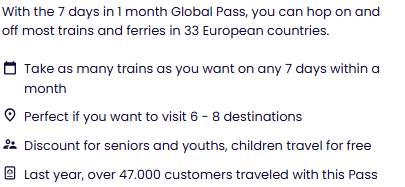
Europass covers 33 countries.

The Europass cost $350 for seven days, which breaks down to about $50 per full 24-hour day.

For the flexibility it offered—multiple trains, zero stress about individual tickets, and the freedom to change plans on the fly—it was money well spent.

Here is my updated hit/miss bucket list updated:

Portugal (Faro, Lisbon, and Porto) ✅

 Coast of Spain (I have been to Madrid and Barcelona) ❌

Octoberfest in Munich, Germany ✅

Ride the train through the Swiss Alps ✅

Poland ✅

Prague ✅

Take a short bus ride into Lviv, Ukraine ❌

Southern Italy ❌ (I purposely missed a flight to Sicily)

I went to Venice instead ✅

The coast of Croatia train tour into Eastern Europe❌

Iceland (Wizz flies into Reykjavik) ✅

The Baltics (Hopefully Germany plus more) ❌

 Denmark❌, Estonia❌, Finland❌, Germany✅, Latvia❌, Lithuania❌, Poland✅, and 

Sweden. ❌ (I had a flight booked to Stockholm but decided against it) ❌


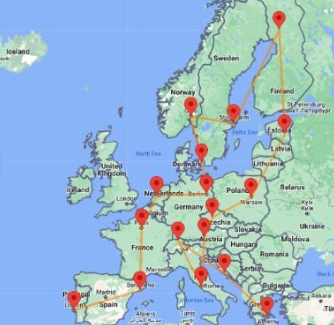
(I consider the ❌ plus more buckets in the fall of 2026 trip below):


Here’s an update on my Wizz Air All-You-Can-Fly (AYCF) pass, based on three separate trips to Europe over 12 months—

It 100% delivered on the spontaneous hype.

November 2024:

London, UK

Varna, Bulgaria

Budapest, Hungary

Vienna, Austria

Abu Dhabi/Dubai, UAE

London, UK (second time)

March 2024

London, UK

Barcelona, Spain 

Madrid, Spain

Naples, Italy

Rome, Italy

Sharm El Sheikh, Egypt

Athens, Greece

September 2025:

London, UK

Faro, Portugal (took train to Lisbon and Porto)

Warsaw, Poland

Reykjavik, Iceland

(Cancelled flights to Stockholm and Sicily)

Here are the train routes I took on the Europass:

Faro, Italy to Porto, Italy via Lisbon

Warsaw, Poland to Prague, Czeck

Prague, Czeck to Munich, Germany

Munich, Germany to Chur, Switzerland

Chur, Switzerland to Lucia, Switzerland

Lucia. Switzerland to Zurich, Switzerland

Zurich, Switzerland to Strasbourg, France

(Switzerland trip over two days including the famous Bernia Express)

Bernina Express | Switzerland Travel Centre

Strasbourg, France – Paris, France

Paris, France – London, England (Chunnel)


Previous European trains taken:

Madrid to Barcelona return on high-speed train

Naples, Italy to Rome, Italy

Paris, France – London, England (Chunnel)


Some ferries were included in the Europass that I never used:

          Ferries in Europe | Eurail.com

Bucket Lists: Adulting with a To-Do List of Awesome

People make bucket lists because “someday” is never specific enough—and staring at the same couch for 40 years eventually loses its charm. A bucket list is basically a socially acceptable way to chase your wildest ideas without anyone demanding a permission slip.

It’s equal parts motivation and bragging rights. Whether you’re skydiving, eating gelato in Rome, or learning to surf, you get to cross it off, post the proof, and casually say, “Yeah
 I did that.”

Bottom line: bucket lists exist to remind you that life is short, the world is huge, and your comfort zone is wildly overrated.

image

Sept.2025 Europass train travel!đŸ›€ïžđŸš…

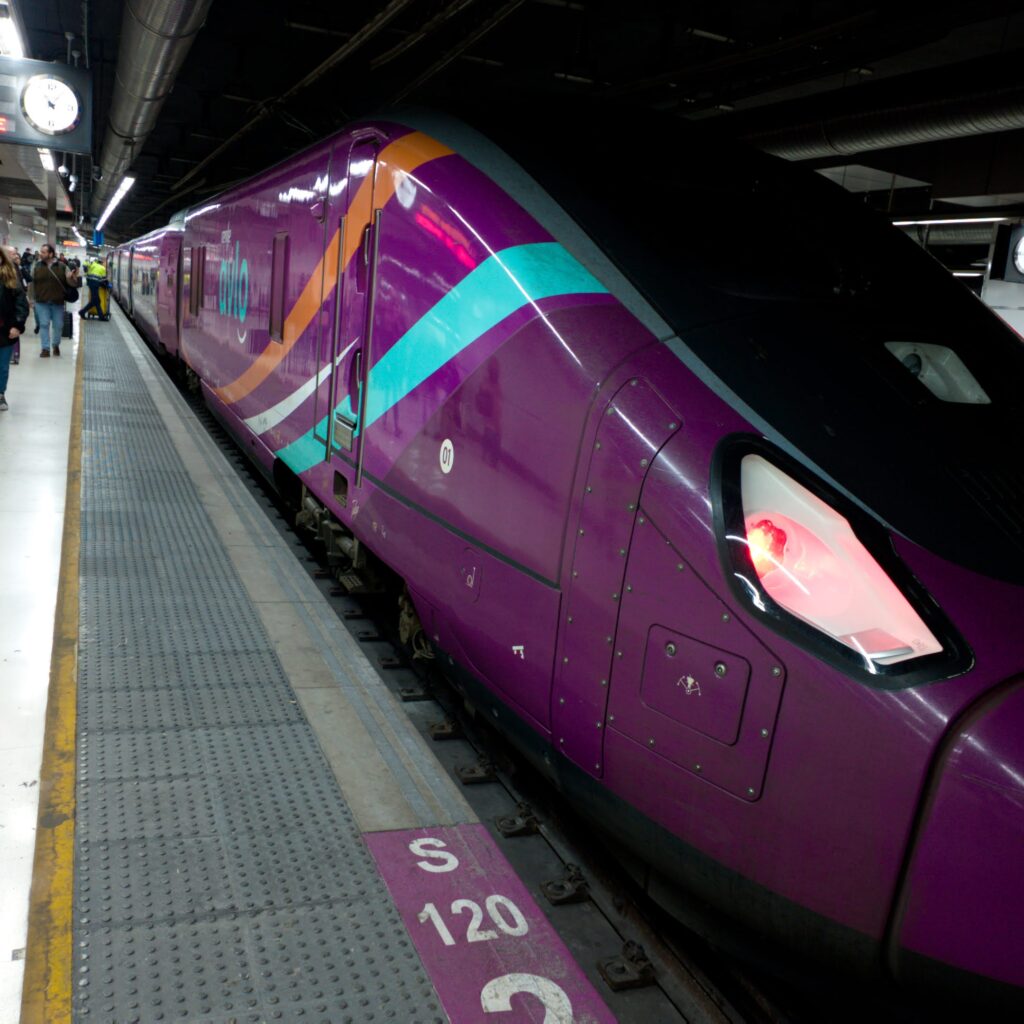
I rebooked for September 2025 with a 7-day train travel pass, which works out to roughly USD $50 per travel day, plus any required reservation fees. For the distance covered and flexibility you get, it’s an incredible deal.

Until I visited Europe in mid-2024, I honestly had no idea how amazing—and how popular—train travel is there. It’s fast, comfortable, scenic, and stress-free. No security theater, no baggage roulette, no sprinting through airports.

These train trips weren’t just transportation—they were part of the experience. Watching cities turn into countryside, countryside into mountains, and borders quietly disappear from your seat changes how you think about moving through a continent.

Once you do Europe by train, it’s hard to imagine doing it any other way.

Here are the routes I took in September 2025 on my seven-day pass

Day 1:

Faro, Portugal to Porto, Portugal via Lisbon

Day 2:

Warsaw, Poland to Prague, Czeck

Day 3:

Prague, Czeck to Munich, Germany

Day 4:

Munich, Germany to Chur, Switzerland

Day 5:

Chur, Switzerland to Lucia, Switzerland

Lucia. Switzerland to Zurich, Switzerland

(Famous Bernia Express)

Day 6:

Zurich, Switzerland to Strasbourg.

Strasbourg, France – Paris, France

Day 7:

Paris, France – London, England 

These trips were taken over the month of September. I more than paid for the pass with these trips as Day 5 in Switzerland would have been $300+

Reservation fees were a bummer!  It cost me over and above pass to secure seats on some of these routes. I spent about $100 on top of the $350 pass.

Here are some **pictures and videos from train travel in Vietnam and across Europe during the spring of 2025.

I rode so many trains, for so long, that I eventually made a smart call and postponed the European portion of my train-heavy travel until September 2025. At a certain point, even the best journeys deserve a pause.

That’s one of the underrated lessons of slow travel: knowing when to keep moving—and when to save something great for later.

I also got to experience a high-speed train from Barcelona to Madrid, cruising along at 300 km/h on the return.

Smooth, fast, quiet—and wildly efficient. One minute you’re in the city, the next you’re watching the Spanish countryside blur past like a screensaver. It’s another perfect example of how, in Europe, the train isn’t just a backup to flying—it’s often the best option.

The slow train from Naples to Rome, Italy, was also a great experience as I was able to see a lot more of the Italian wine Countryside.

IMG_20240402_080108 (1)

Uruguay – ferry, bus from Buenos Aires!

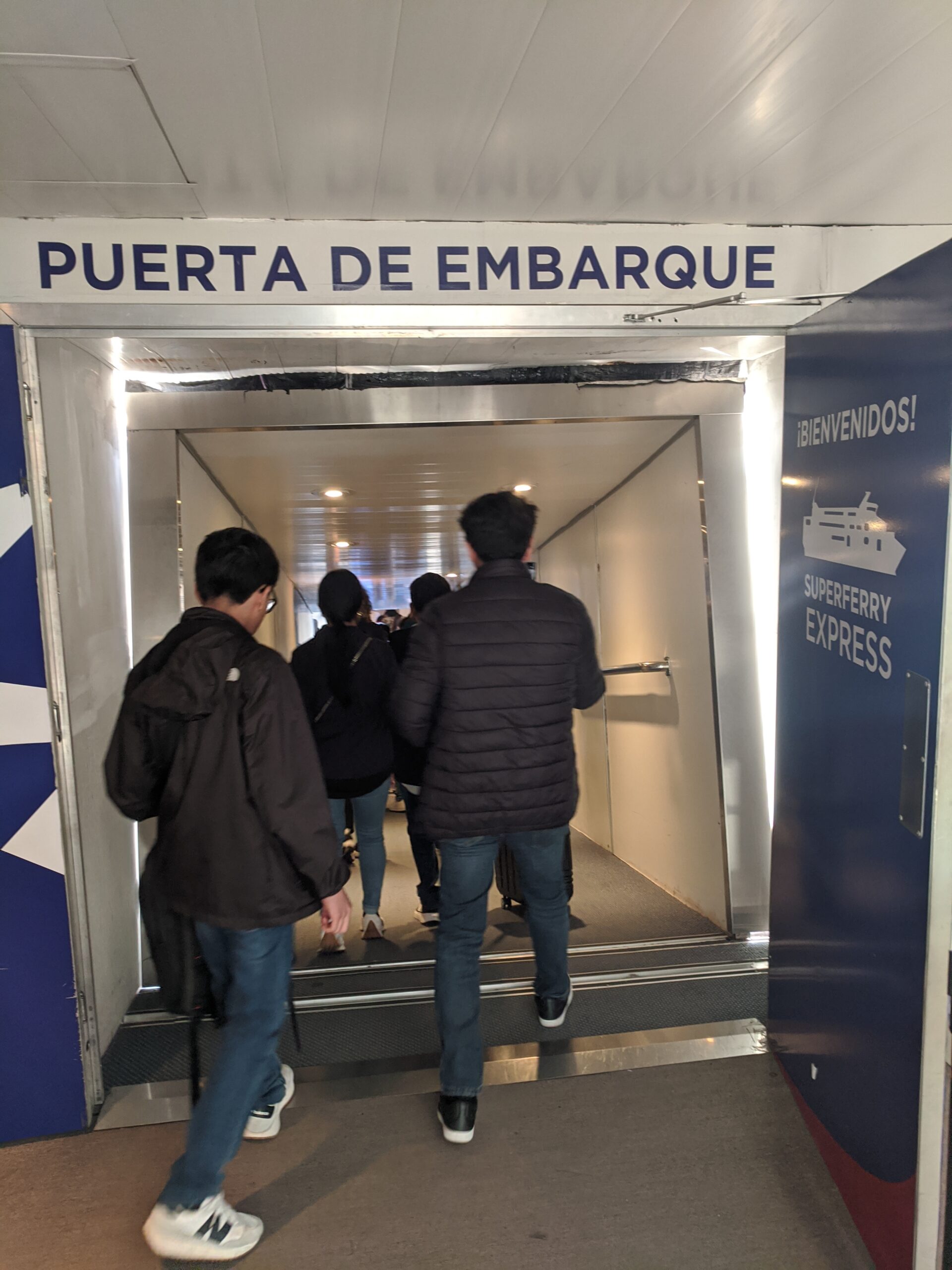
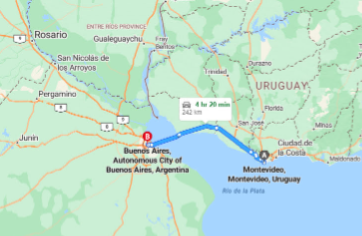
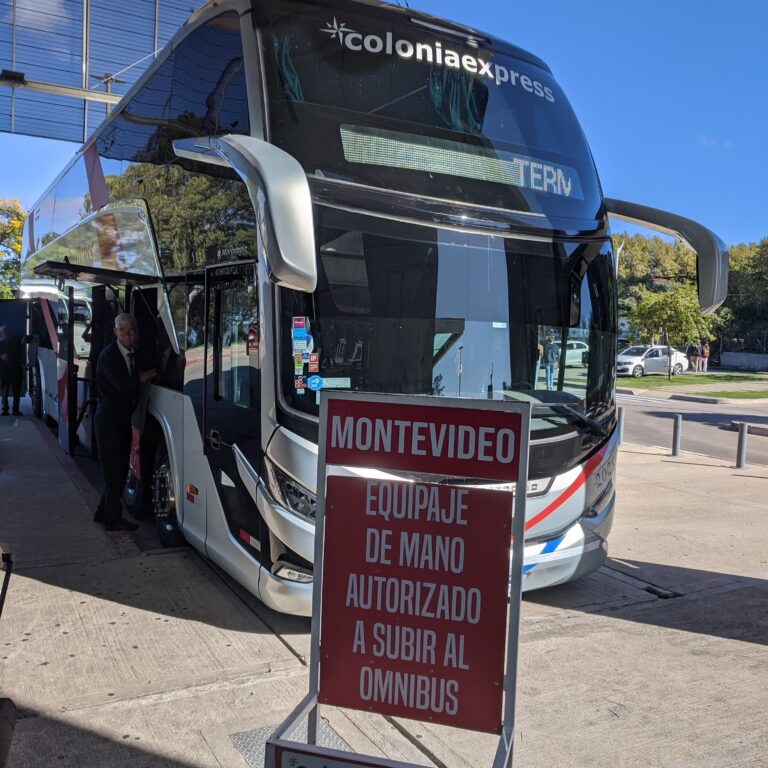
As part of my 2024 trip—which took me through Central America and into South America—I made a stop in Uruguay. Getting there was easy and inexpensive thanks to a short ferry ride from Buenos Aires across the Río de la Plata.

It was one of those classic travel decisions: cheap ferry, new country, zero downside. So
 why not?

That’s one of the underrated perks of slow travel—when borders are close, transport is affordable, and curiosity wins.

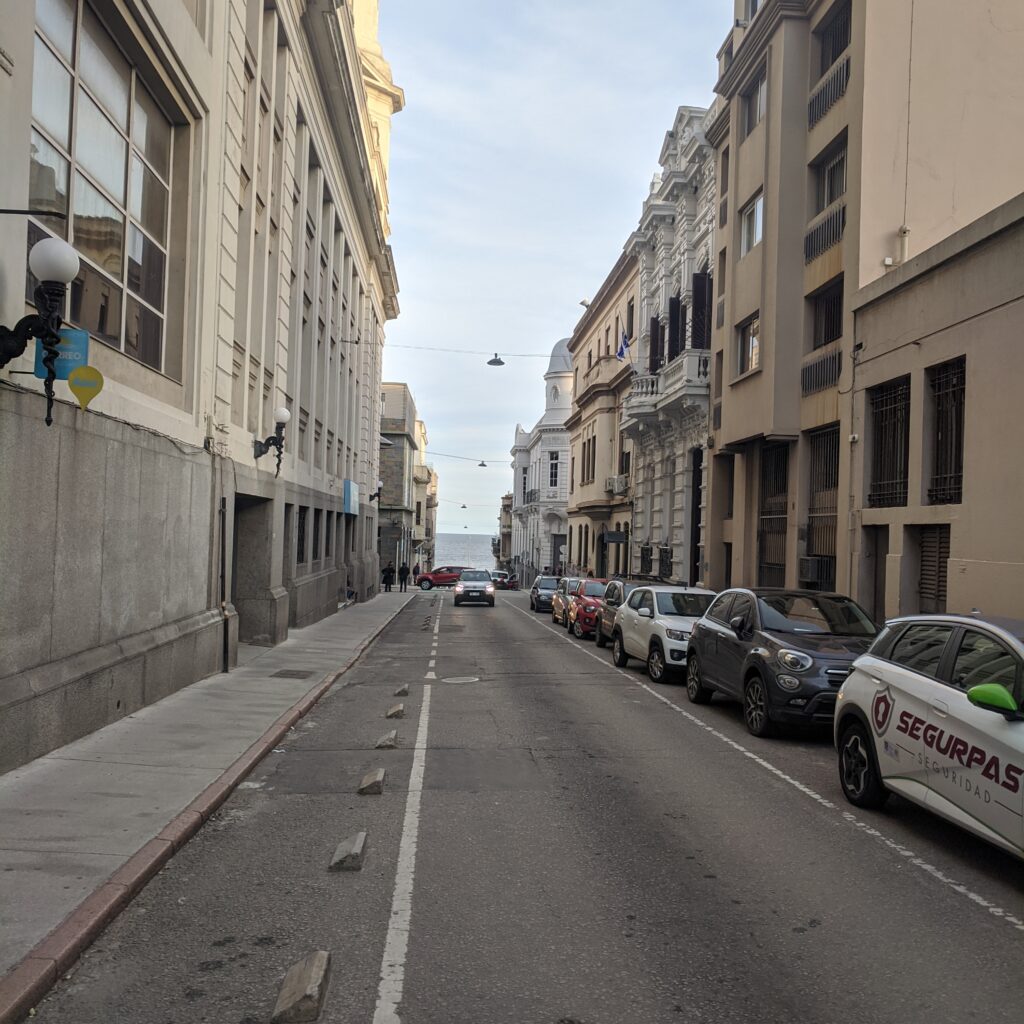
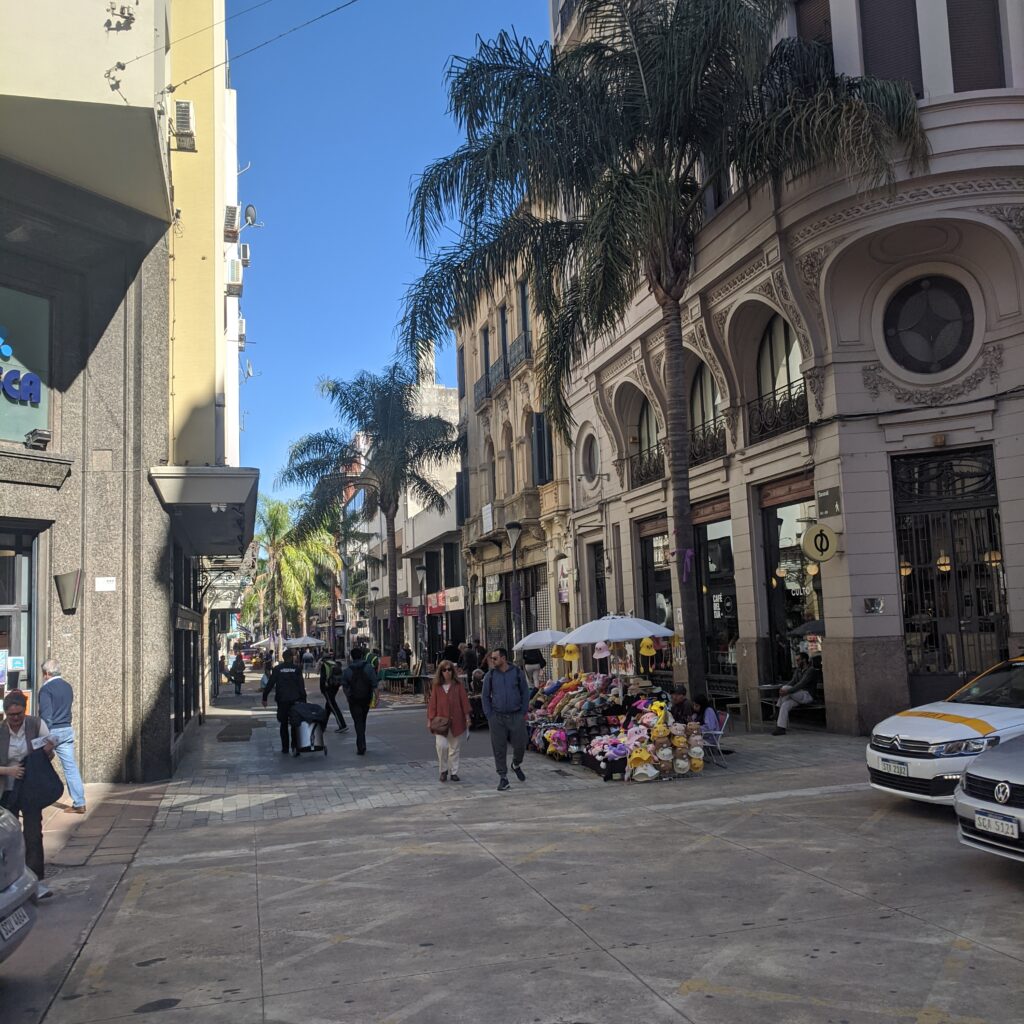
I did not know what to expect as I had not read much about Uruguay. It was just the fact that I was so close to getting to experience it, and I took advantage of dropping another pin on the map. 📍🌏

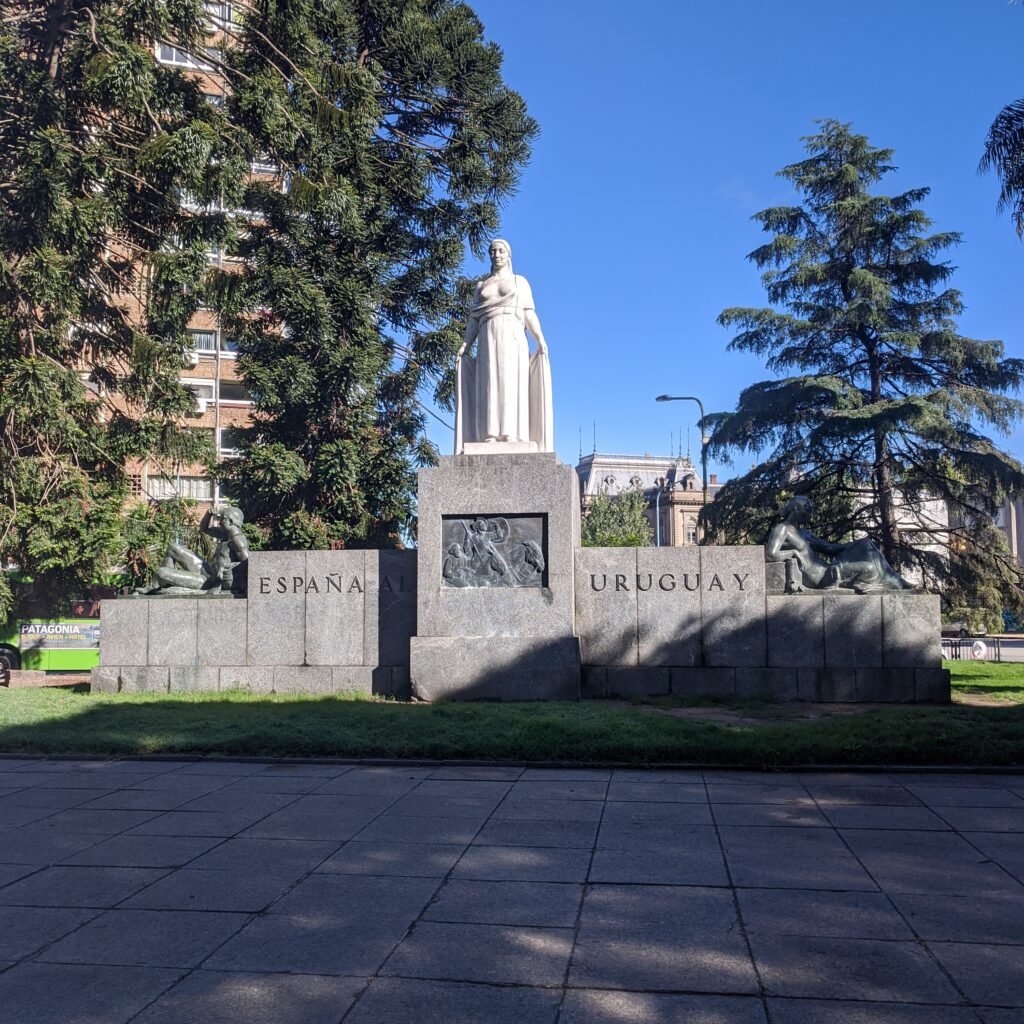
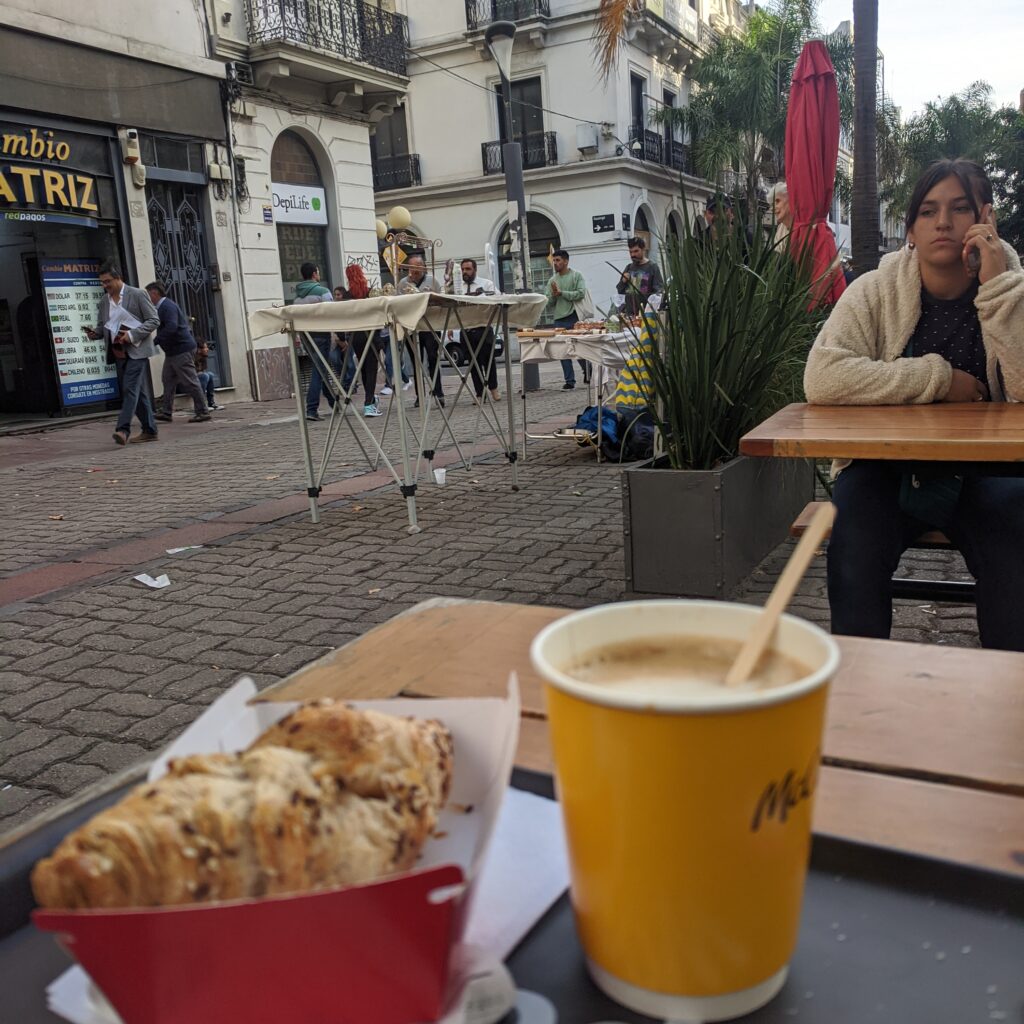
Montevideo has a great beach walk, very nice cobblestone downtown, and friendly people, but I do not need to go back.  There was nothing that stood out like most Countries other than my Airbnb. 

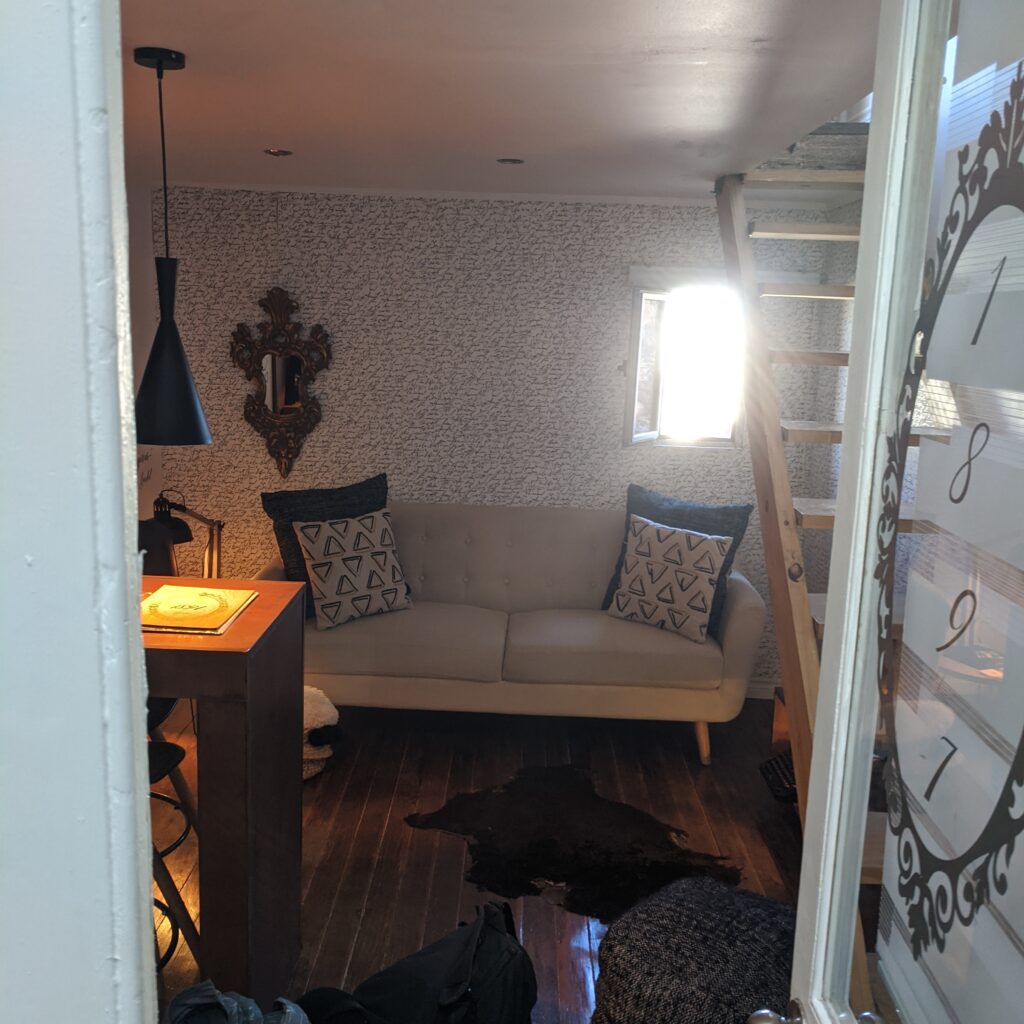
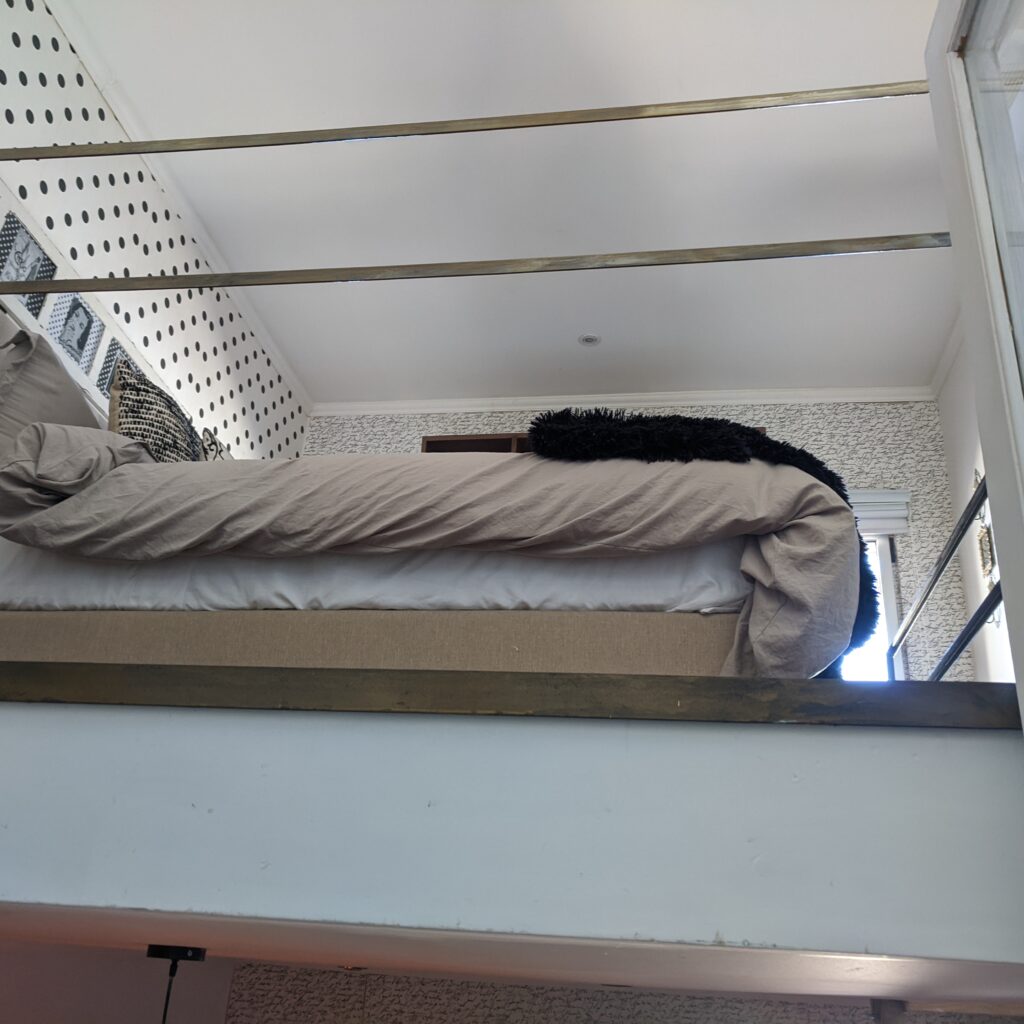
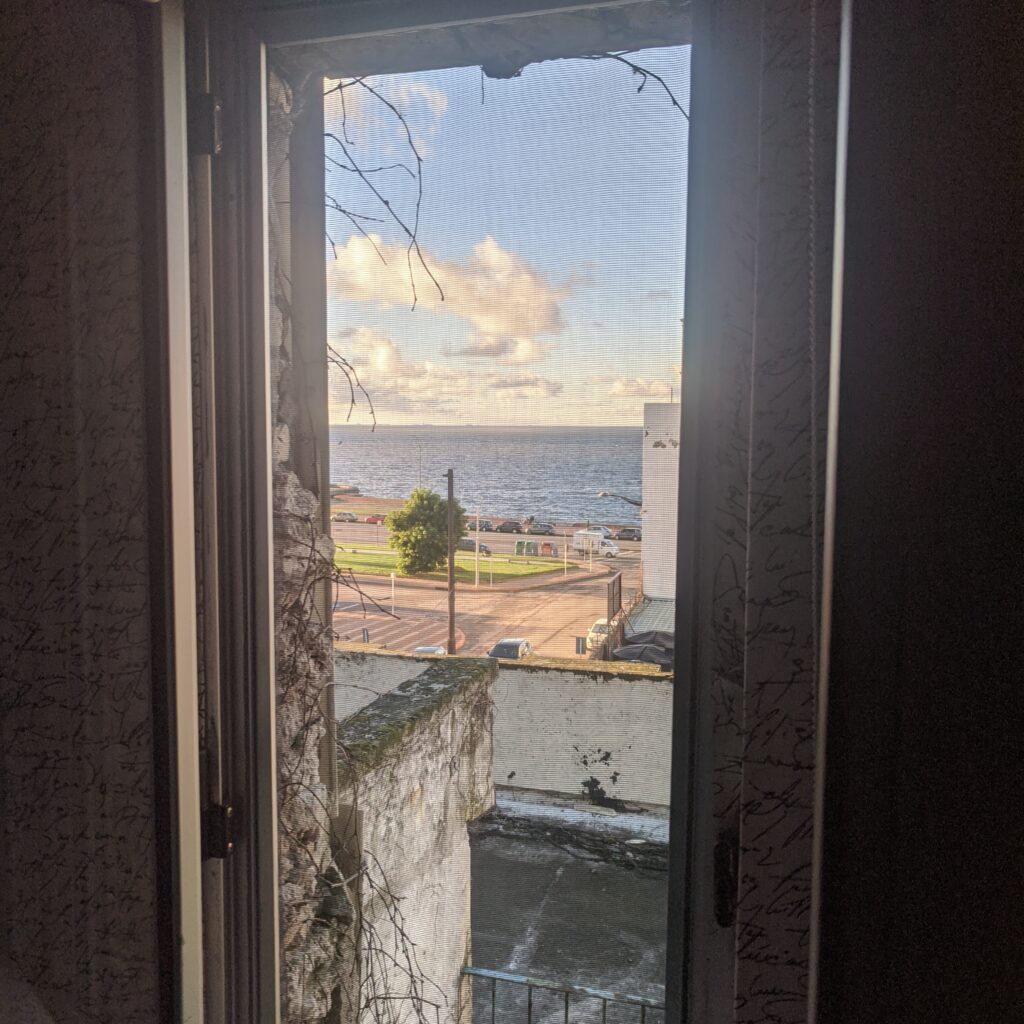
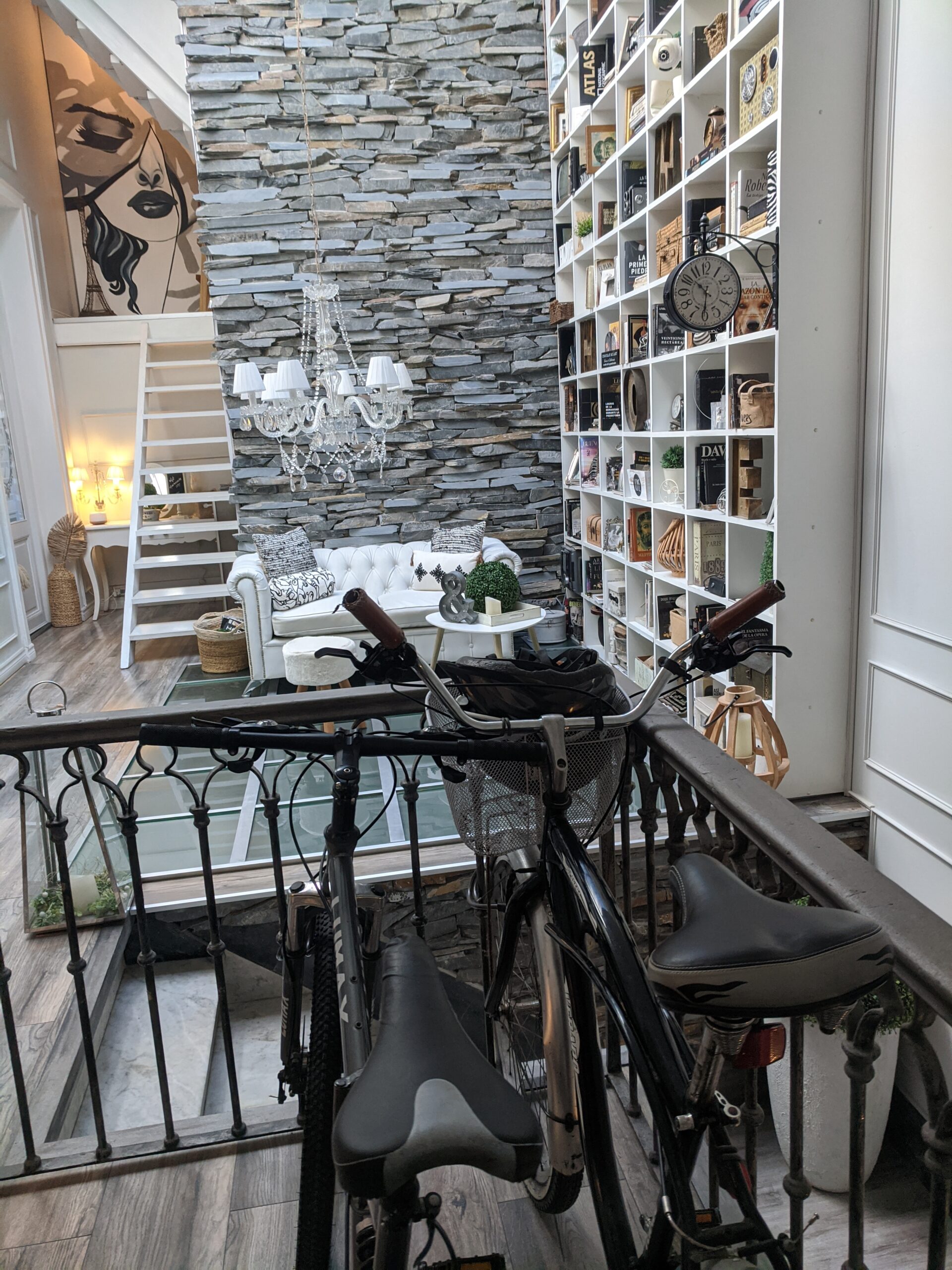
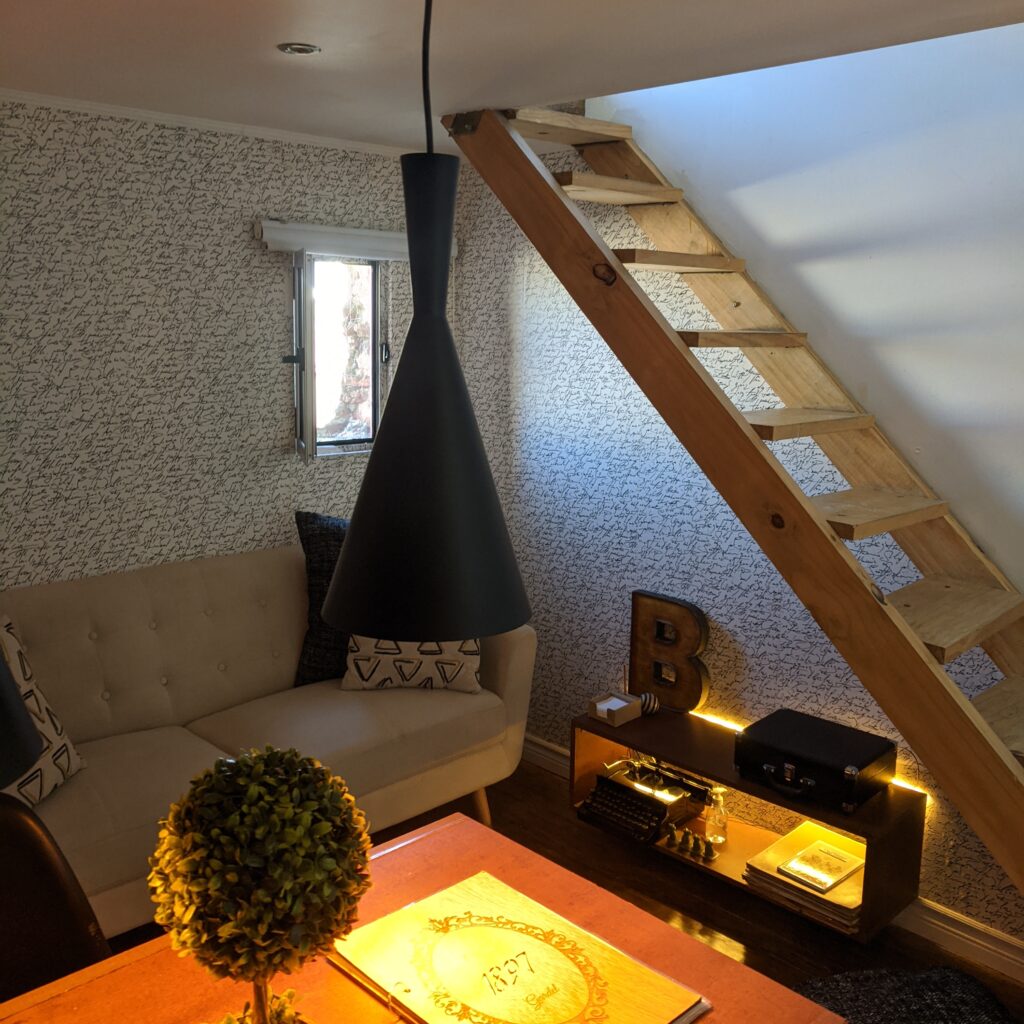
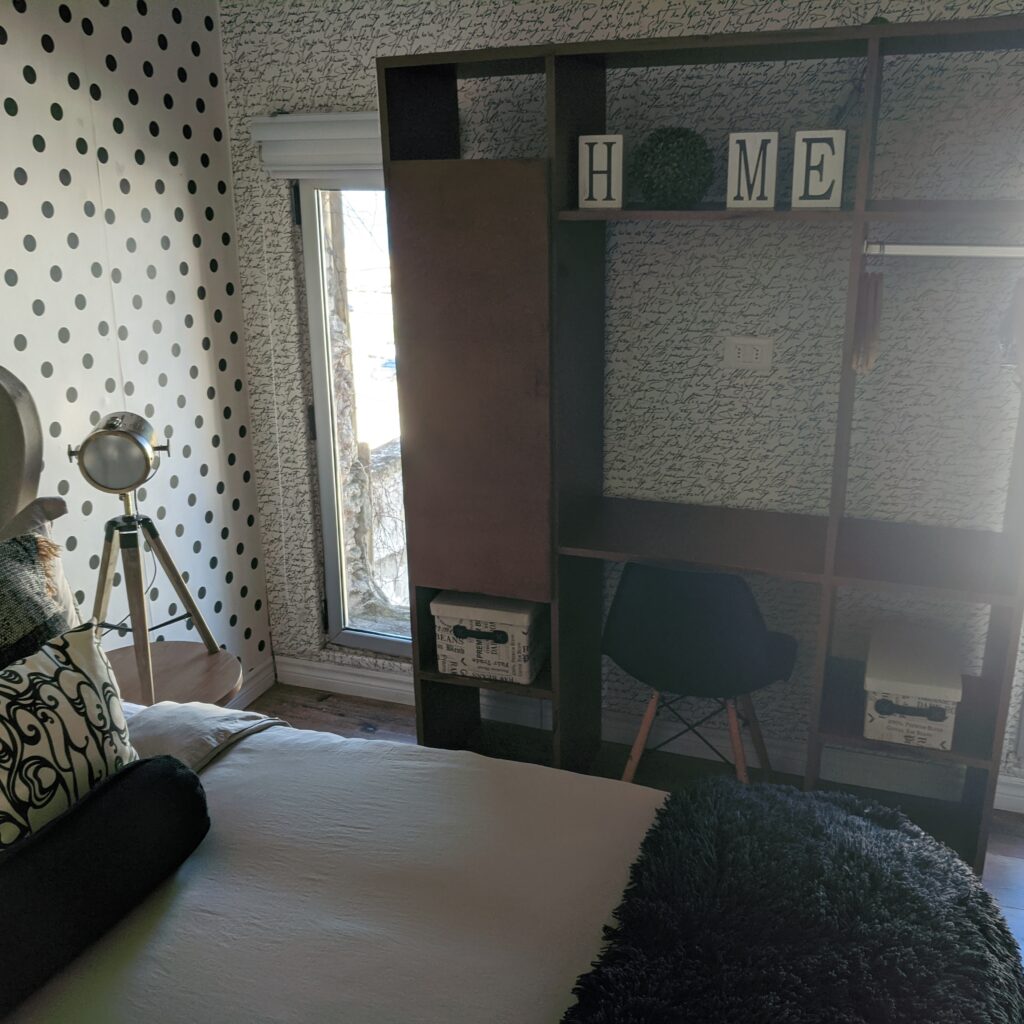
I have never experienced so much pride in the presentation of this place.  Every little nook and cranny had something awesome displayed and check out the view from the bedroom!

The couple who ran the Airbnb were architecture lawyers from Argentina, and their background showed in every detail. Their shared love of music and antiques turned the place into an absolute gem—not flashy, just deeply thoughtful.

The lobby alone set the tone. A full wall of antiques, each piece clearly chosen with care, paired with calming music that made you slow down the moment you walked in. It didn’t feel like a rental—it felt like someone’s personal sanctuary that they happened to share.

It was one of those stays where the space itself becomes part of the travel experience. Honestly, that Airbnb left more of an impression on me than the city itself—and that says a lot.

There were hundreds and hundreds of trinkets throughout the property—every room, every corner, every shelf had something interesting to notice. During the day, jazz music played softly in the lobby, setting a calm, timeless mood. In my room, there was even a record player with a small collection of old jazz records. Sitting there, listening to vinyl and staring at the bookcase, felt almost meditative.

The Airbnb itself was about $25 a night, perfectly located between the main street and the ocean in Montevideo. You really couldn’t ask for a better setup.

It was hands down the best Airbnb experience I’ve ever had. Not because it was luxurious, but because it was thoughtful. Every detail felt intentional, personal, and cared for—and I’m genuinely glad I got to experience it. Some places stick with you because of what you see outside. This one stayed with me because of what was inside.

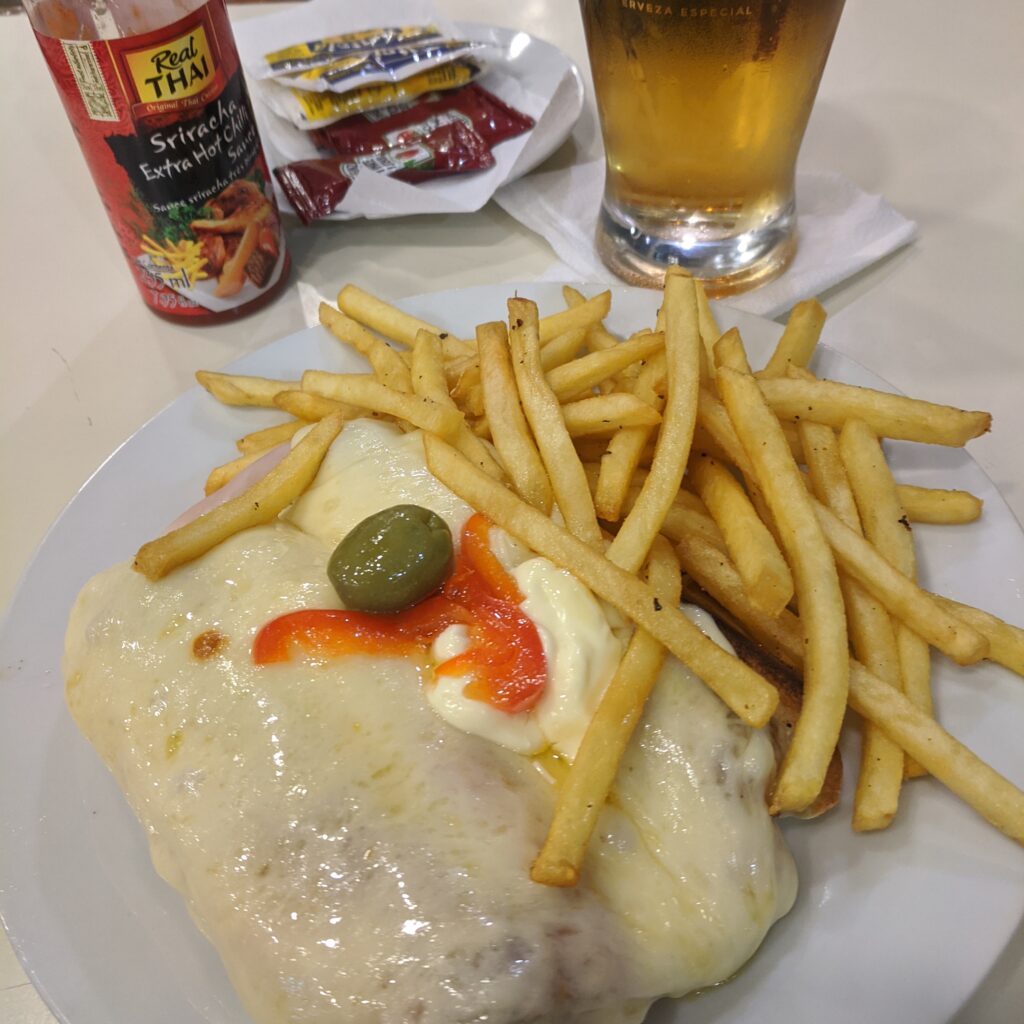
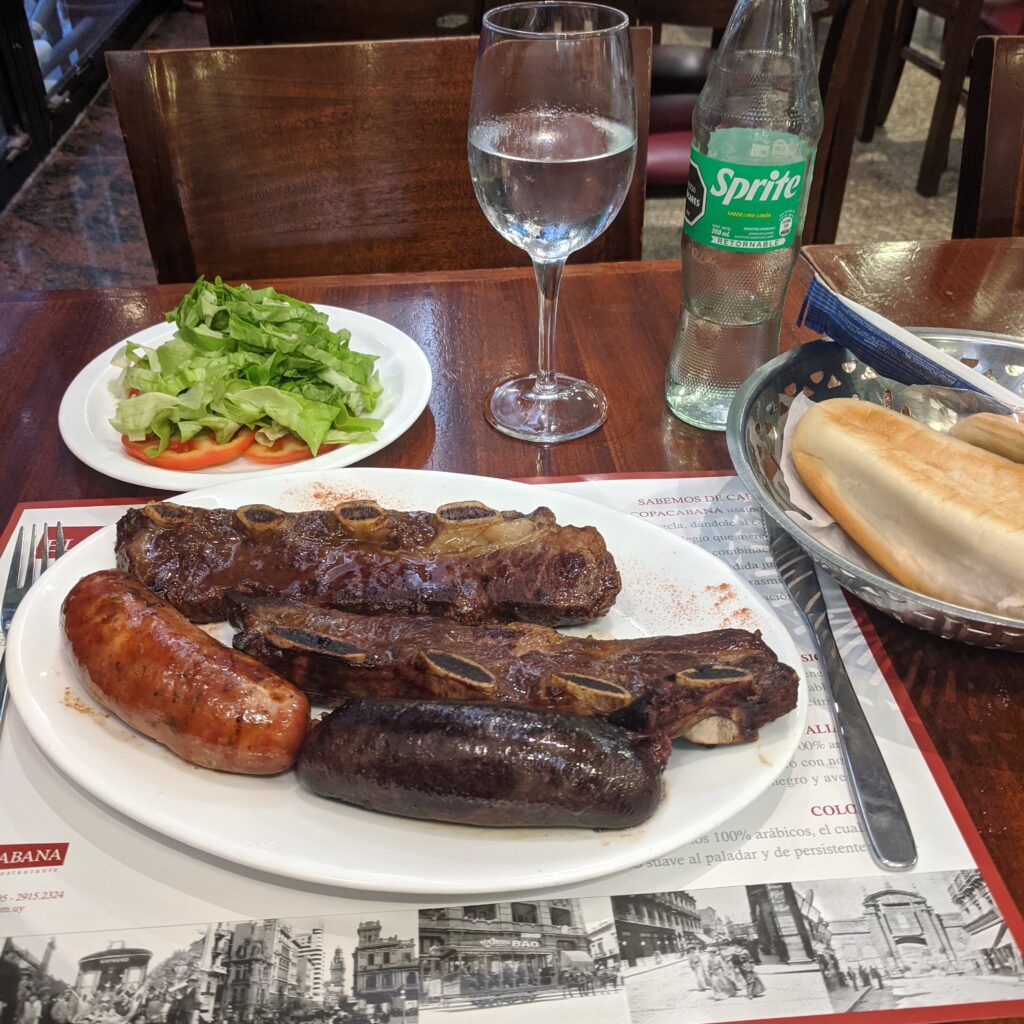
After spending the previous week in Argentina, the food scene in Montevideo was a bit of a shock—in the wrong direction.

Coming off Argentina’s absolute paradise of steaks, flavor, and value, these two meals were both underwhelming and overpriced. Not terrible in a dramatic sense, just disappointing enough that you immediately stop ordering food with any enthusiasm.

To be fair, I didn’t go to Montevideo for the cuisine—and after Argentina, that became very clear. Sometimes travel is about incredible meals. Other times, it’s about the place, the stay, and the experience around it.

I played it safe both times and ordered the house special, mostly because I honestly didn’t know what else to order.

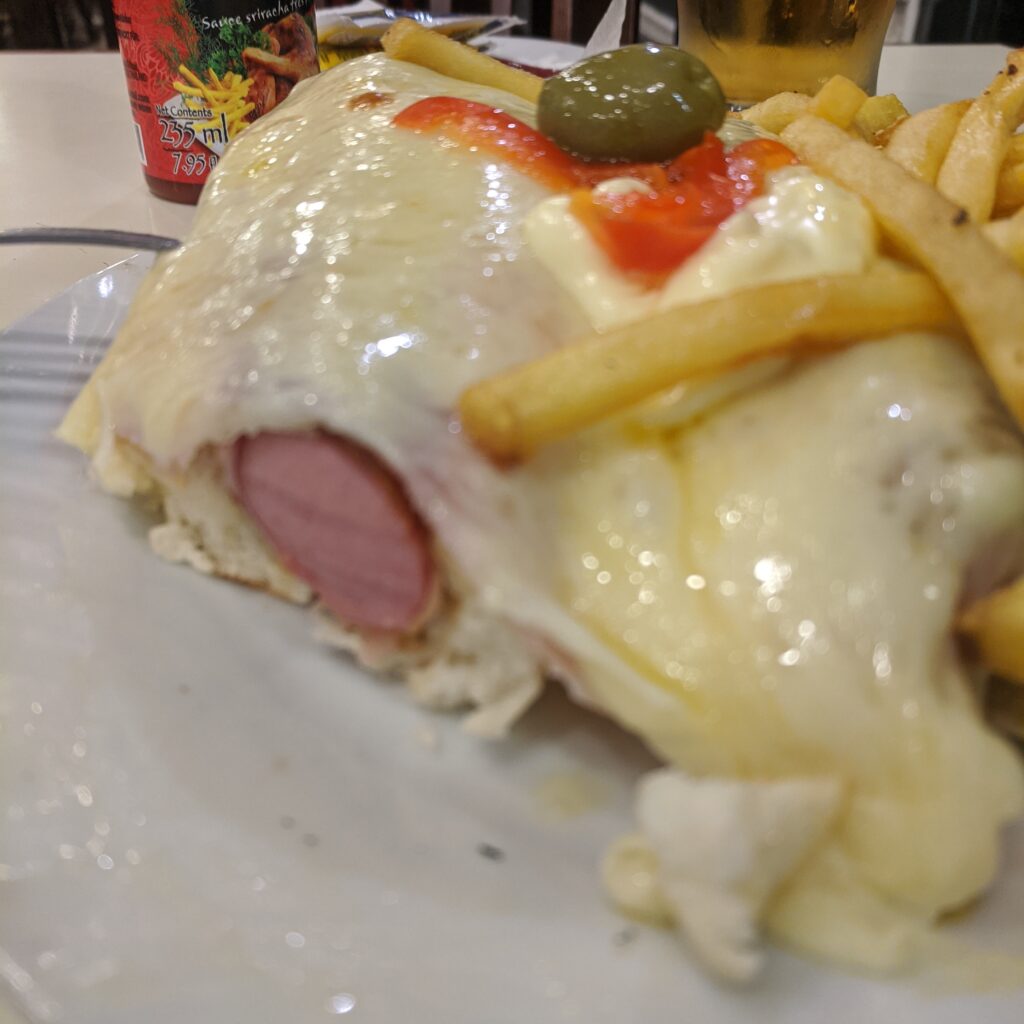
On the left: two hot dogs buried under what felt like five pounds of cheese. Just
 not good. At all.
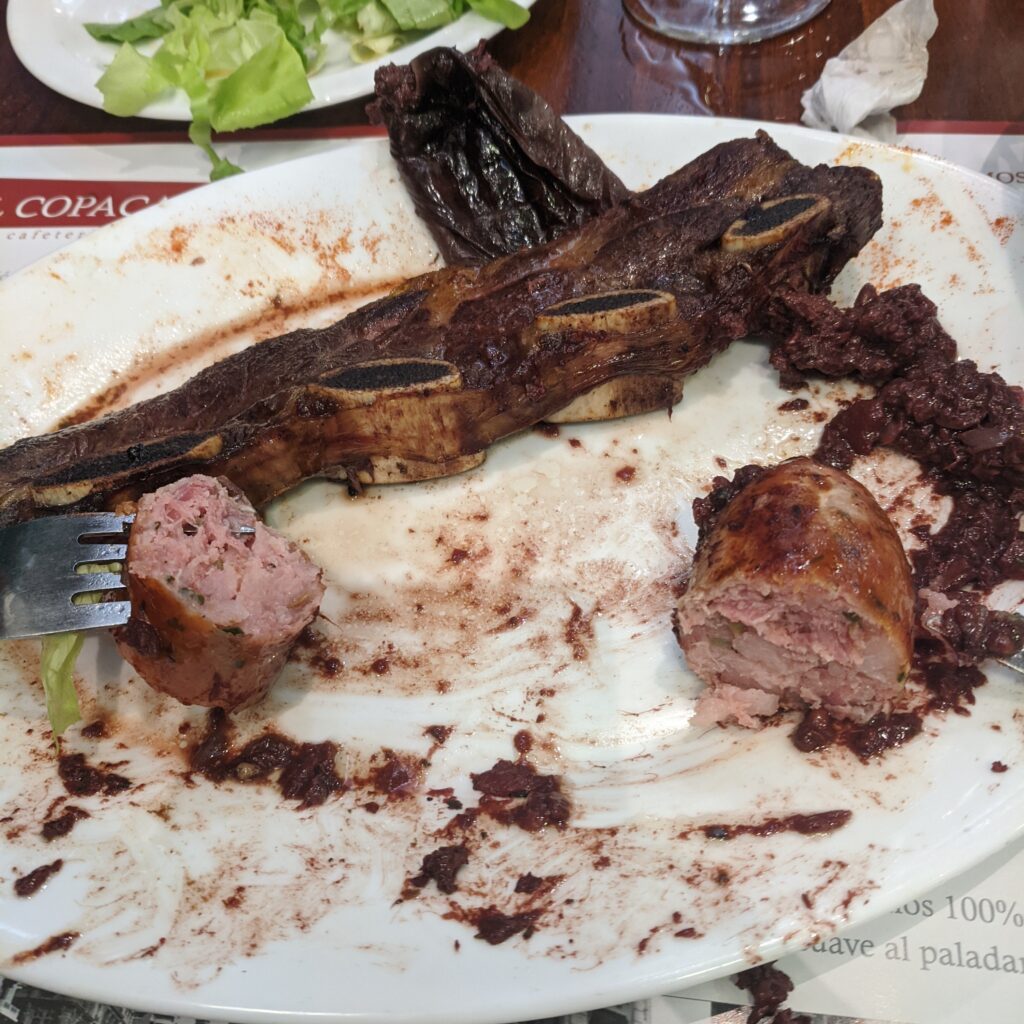
On the right: a meat plate that ran about $50, and when I cut into it, it was practically raw.

After a week of steak perfection in Argentina, this was a rough landing. I wasn’t expecting miracles, but I also wasn’t expecting hot dogs drowned in cheese or an expensive plate of meat that never met a grill properly.

It honestly may have just been bad luck both times. That said, after paying $50 for food that was raw and borderline inedible, I was beyond annoyed. I ended up calling my credit card company—and they refunded the charge without hesitation. It was the first time in my life I’d ever done that, which tells you how bad it was.

Thankfully, Montevideo redeemed itself in other ways. The city itself is relaxed and walkable, the coastline is beautiful, and that Airbnb more than made up for the food disappointment.

Between the thoughtful design, the music, the ocean proximity, and the price point, it was an incredible stay—especially considering how inexpensive it was. Sometimes travel works out that way: the meals miss, but the place, the vibe, and where you rest your head absolutely deliver.

A Brief History of Uruguay

Uruguay’s history is shaped by its position between two giants—Argentina and Brazil—and by centuries of struggle over who would control it.

Indigenous Roots

Before Europeans arrived, the region was inhabited primarily by the CharrĂșa people. They were semi-nomadic hunters and resisted colonization fiercely. Tragically, most of the CharrĂșa population was wiped out during the 19th century, making Uruguay one of the few South American countries with a very small remaining Indigenous population today.

Spanish vs. Portuguese Tug-of-War

Unlike much of South America, Uruguay wasn’t immediately colonized. Spain and Portugal both wanted it, largely because of its strategic location along the Río de la Plata.

  • Colonia del Sacramento was founded by the Portuguese in 1680

  • Spain countered by establishing Montevideo in 1726

For over a century, control of the region shifted back and forth between the two empires.

Independence & Artigas

Uruguay’s path to independence was complicated. The country’s national hero, JosĂ© Gervasio Artigas, led resistance movements in the early 1800s, advocating federalism and local autonomy.

After periods of occupation by both Argentina and Brazil, Uruguay finally became an independent nation in 1828, largely as a buffer state to prevent conflict between its neighbors.

20th Century: Stability & Reform

In the early 1900s, Uruguay earned a reputation as one of the most progressive countries in the world:

Early adoption of free public education

Separation of church and state

Strong labor protections and social welfare programs

This era gave Uruguay the nickname “the Switzerland of South America.”

Dictatorship & Recovery

Like many Latin American countries, Uruguay experienced a military dictatorship from 1973 to 1985. Democracy was restored peacefully, and since then, Uruguay has been one of the most stable, democratic, and transparent nations in the region.

Modern Uruguay

Today, Uruguay is known for:

Strong democratic institutions

High quality of life

Liberal policies (early legalization of same-sex marriage and cannabis)

A calm, understated culture compared to its neighbors

It’s not flashy. It’s not chaotic. And for many people, that’s exactly the appeal.

Screenshot_20250705-170142

No-alchohol beer – He likes it!đŸ„ł

Disclaimer: This is NOT the final answer, but it has become a clear option for IPA consumption for me!  IPAs are my favorite and can have up to 8% alcohol, which can put me in the shitter, quickly!

One of my favorite things to do when traveling is trying the local beer. There are microbreweries in every city, so I can try them during my visits and have done so over the years.  Honestly, I never really considered NA beer until trying them and realizing how good they are and better yet, how they don’t make me feel.  

I get the same feeling of drinking a beer while watching the game, with no hangovers or questionable decisions.  Talk about a win-win-win!

I have tried quite a few NA IPAs, and I will share my thoughts in this post in hopes that you give them a chance.  One of the first IPAs on my market that I remember is Lagunitas.  

These have put me under the table more times than I would like to admit, and I quit drinking them years ago.

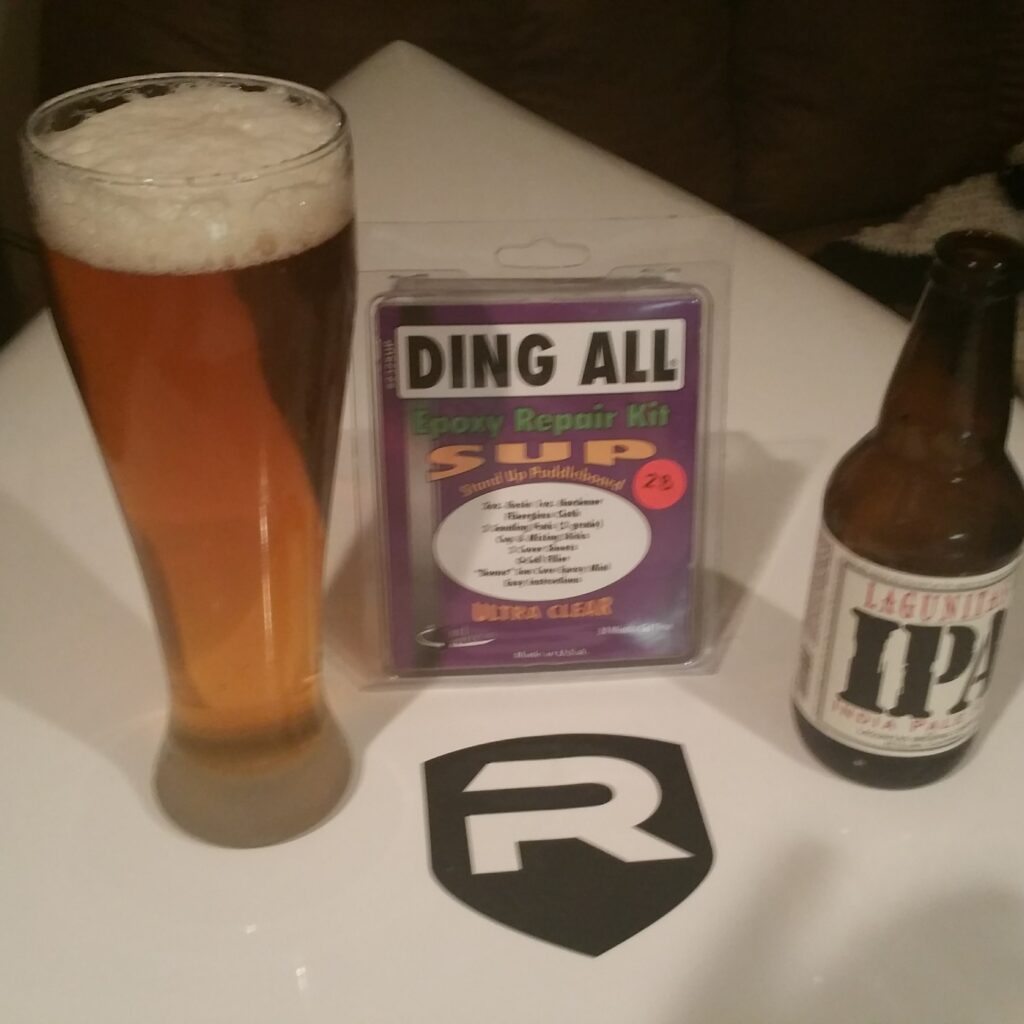
It wasn’t hard to dig up an old Lagunitas picture, I did ding all, including my liver (LOL). The Lagunitas India Pale Ale (6.2% alc): 190 calories per 12 fl oz đŸ€Ș

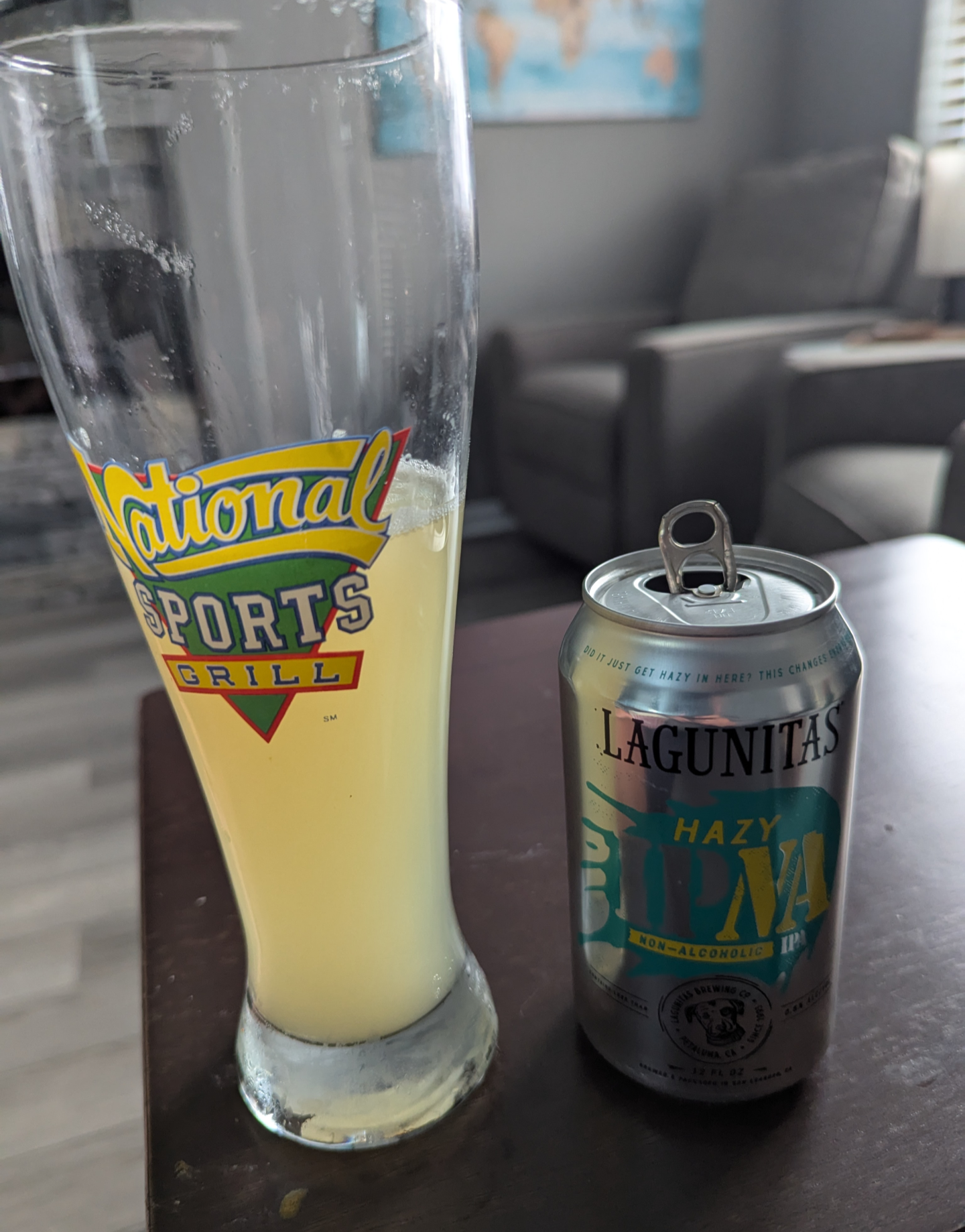
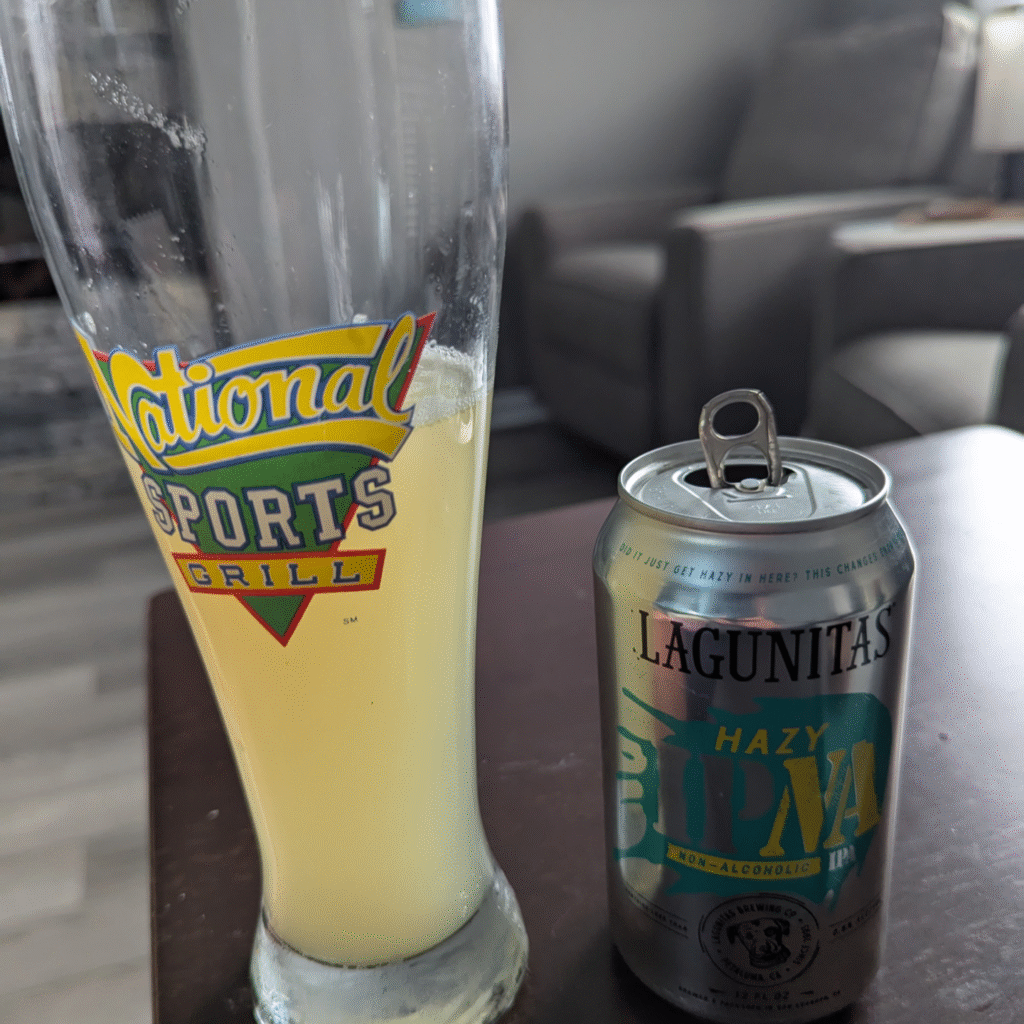
The next picture was the first time I tried a similar NA version, and what an amazing surprise.  Here is the description from their website, and you can find more information by clicking here:

“With the rising need for more near-beer, and with Hazys taking over beer fridges, our clever brewers did the math and put the two and two together and gave you .05% and 60 calories. Enter Hazy IPNA, a flavorfully juicy non-alc option that’s packed with passionfruit flavor. It’s bright and hoppy like our IPNA, only this time we went crazy hazy and tropically hoppy. It’s everything you want in a refreshingly satisfying IPA
It has all of the juicy flavor, all of the haze, and none of the compromise.”

 I have tried other brands and find myself at Total Wine package store looking for new onesGoogle and here is a “Top 10” and “Top 12” I found to during my research to try to keep this momentum.

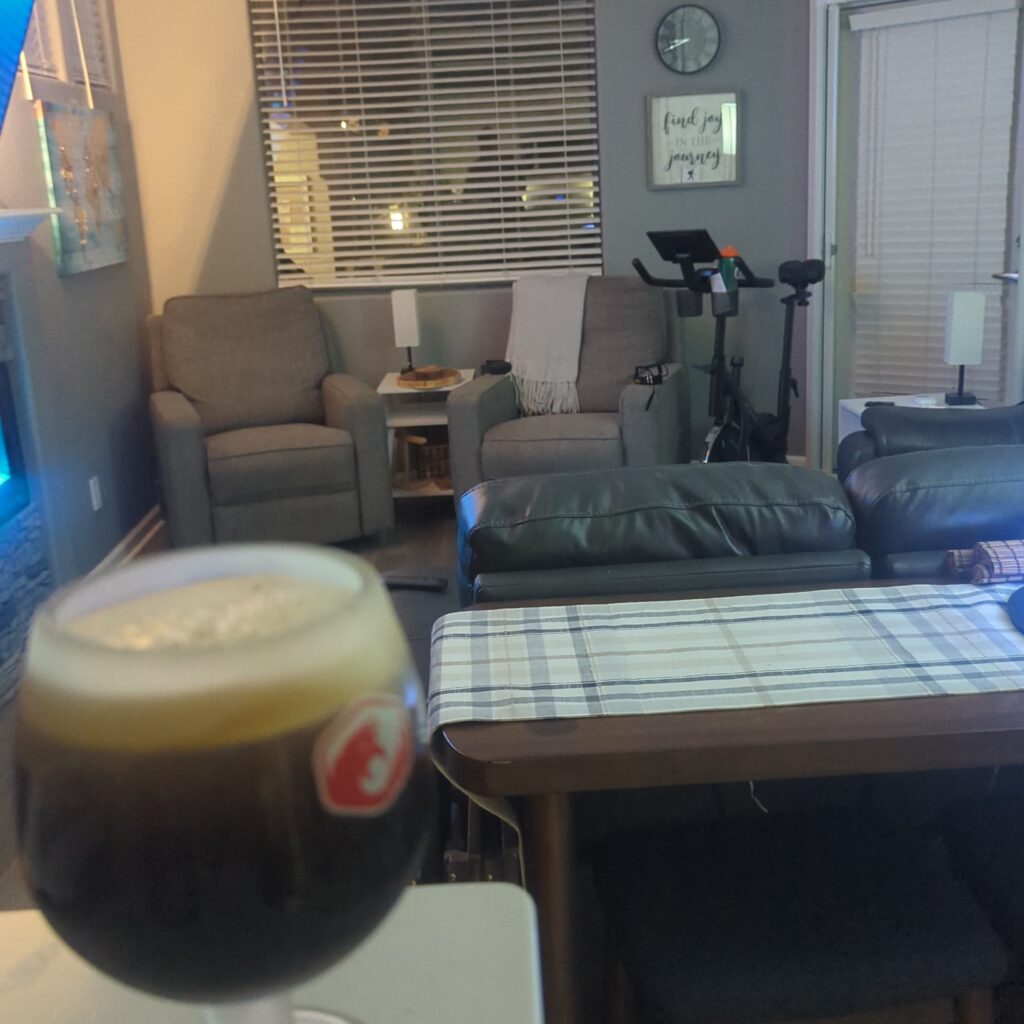
The next on my list of favorites is Guinness NA.  I have also had a few of the original, including tasting them right from the Brewery in Dublin, Ireland, where I acquired the unique taste.  This NA tastes almost the same, and it was a staple for me during the Edmonton Oilers’ run during the hockey playoffs in 2025.

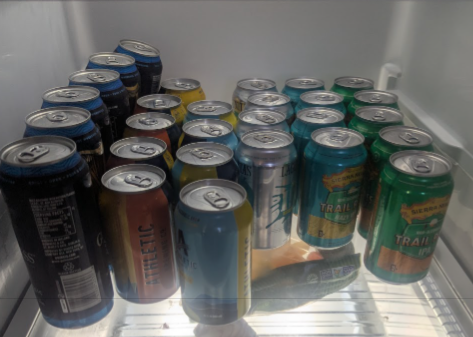
The secret to keeping this trend going is finding different flavors in the fridge to avoid a beer run. 

My first serious attempt was spending ~$80, which is basically the same price as regular beer. 😐

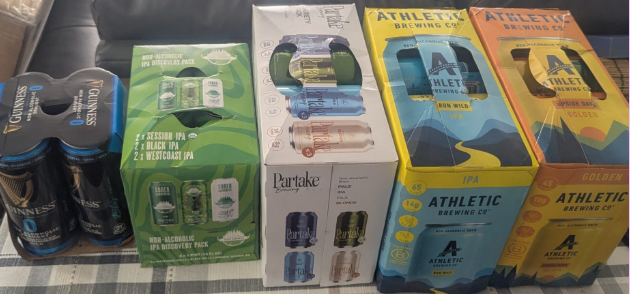
The winners in this order were Guinness, which I already mentioned, Partake IPA, Sober Carpenter IPA, Athletic IPA, and then the far right Athletic, which was ok with a lime but watered down version of beer.  It did taste great with Clamato, which was a win to keep around.

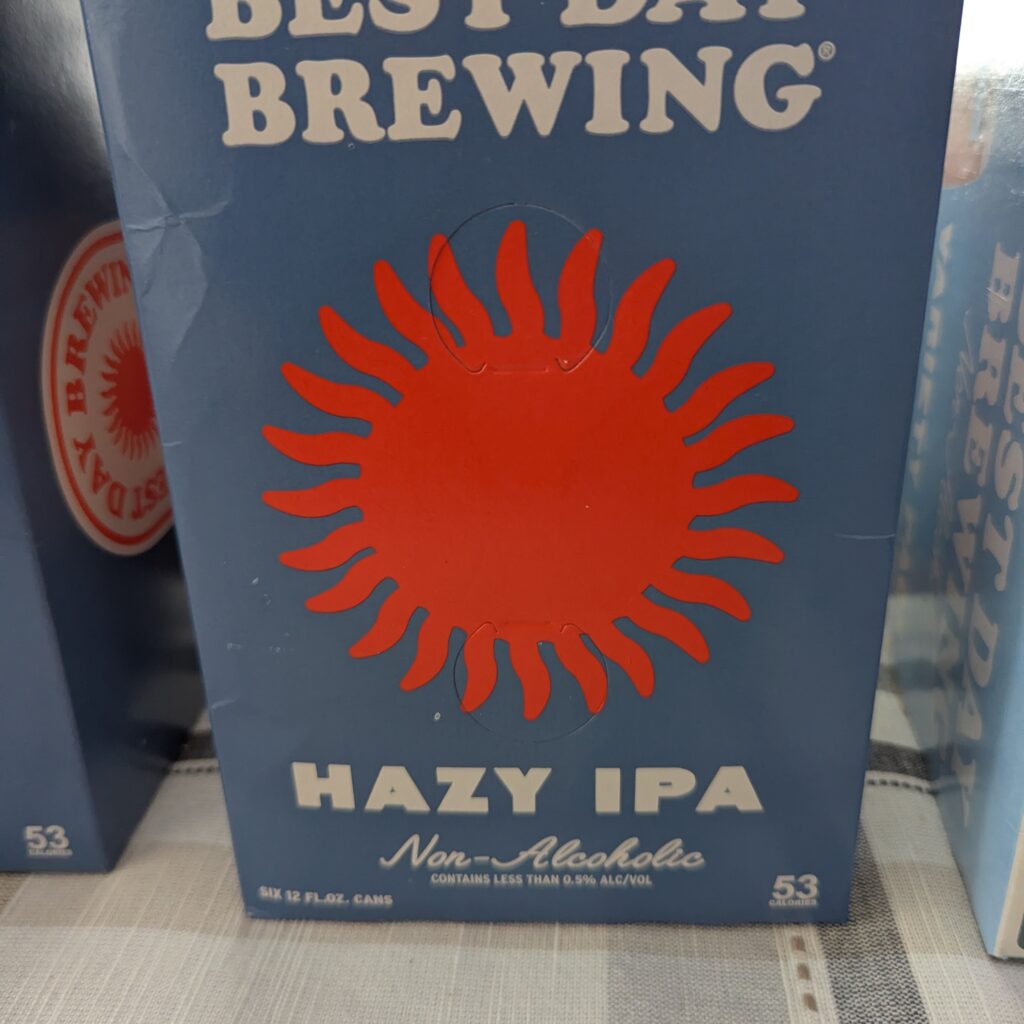
This is when I knew I was onto something awesome!  I then started researching the best IPAs and found Go Brewing, and they delivered right to my front door for FREE.  Below is $96 in NA beer with 20% off promo, which worked out to under $2 a beer. They had the best rating on IPAs, but unfortunately, they were not as good as Lagunitas, but glad I ordered them as I now have a legitimate favorite.

I have had some people congratulate me on switching to NA beer, while others ask, “What’s the Point?”.

Well, after taking a break from real beer, here is how it helped me so far:

1. I have been to the gym/spa almost every day for the last two months.

(Steam, sauna, cold plunge, hot tub on repeat for 2-3 hours)

2. I set up my cardio at home and work out every morning before the gym.

3. I have not had a hangover for the last two months.

(I haven’t been back to Mexico since, but I have already packed a NA cooler). 😐

4. The best of all, I feel fantastic, and people are starting to notice my weight loss.

Admittedly, I have always been a fad person my whole life, and this may be no different.

I have lost/gained many times over the years, which is something that does not stick long term.  It has to be a lifestyle change, and a routine takes a lot longer than two months to show 100% commitment. The first thing I mentioned in this blog is that it is not a replacement but an alternative that has been working for me.  

Another good reason is to let you know that I am headed to Mexico soon and Oktoberfest in two months, which will be a good test of this fad.  A German friend told me that they do sell NA beer in Munich and there is a NA tequila that I will take to Mexico in my cooler of hope, but I will have real beer there in moderation.

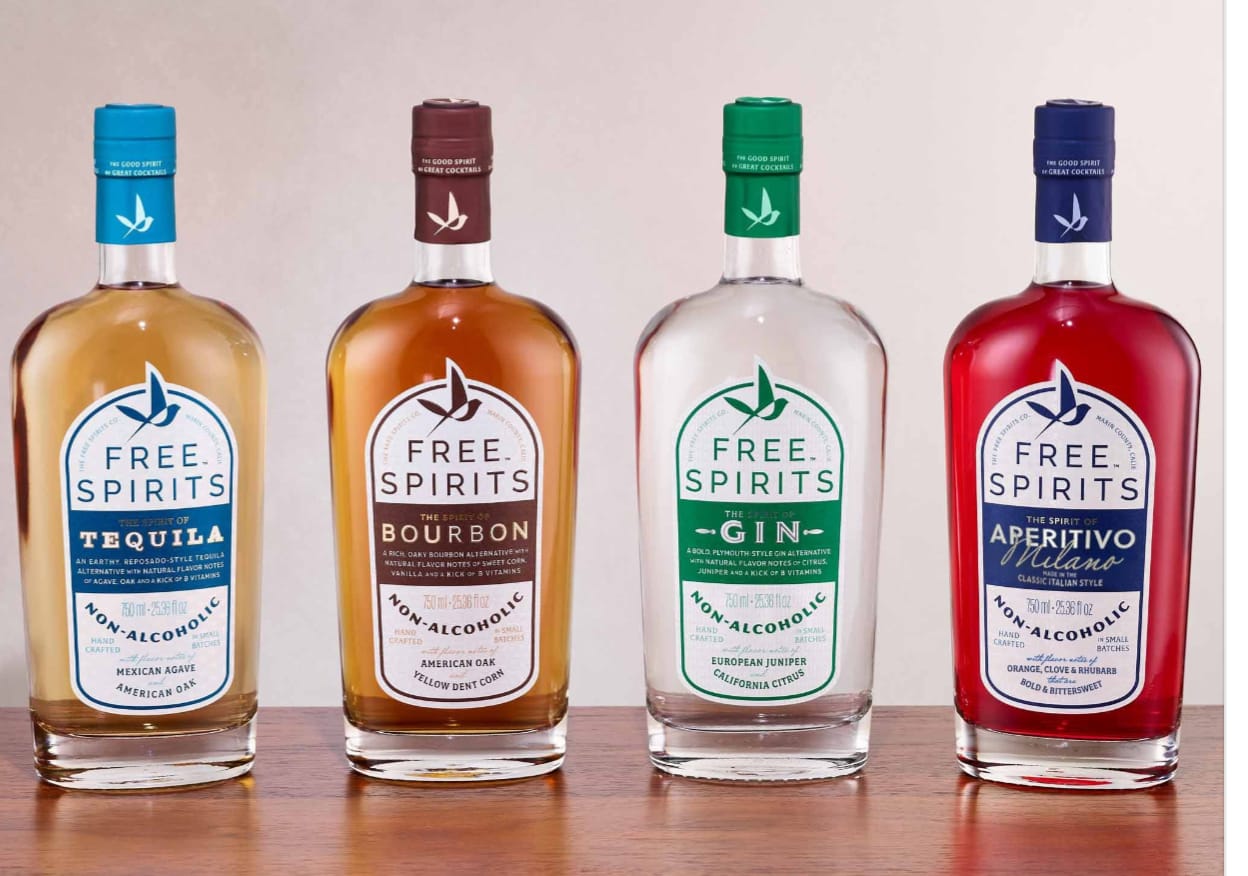
 Other than Margaritas and the odd Bloody Mary/Caesar, I do not drink alcohol, but you can see that there are NA options, including Ritual and Free Spirits brands.  Ritual is the number 1 seller of “Mocktail” replacements, as they use it in bars, from my understanding. Here is a YouTube video I found, and making a mocktail margarita:

If this is something that has piqued your interest, I found another company that creates fancy Mocktails.  Some are even premade as testers and their website can be found here:

I will update my blog after Mexico and Oktoberfest, as I often do with my blogs.

Here are the NA beers I have tried with links, and I will also continue to update.

Athletic Brewing 

Lagunitas Hazy IPA

Sober Carpenter

Guinness 0.0

Go Brewing

Partake Brewing

Sierra Nevada Brewing

Bero 

Penn’s best (Less than half price compared to others – $3.99 six pack – most others $10+)

Heinieken 0.0 

Tecate 0.0 Mexican cerveza

What is your favorite NA feel-good beer so I can add it to my list?

pope

Rome, Italy – Second visit to Vatican City!

I spent the last day of my recent travels in Rome, a place I’d already explored before. I’d checked off most of the major tourist traps on earlier visits, but it still felt essential to revisit the Colosseum and Vatican City—some places deserve more than one look.

Ironically, I chose a Sunday, which meant the Vatican Museums and the Sistine Chapel were closed. Not ideal—or so I thought at the time.

Unbeknownst to me, I was about to get a much bigger—and completely unexpected—treat that day.

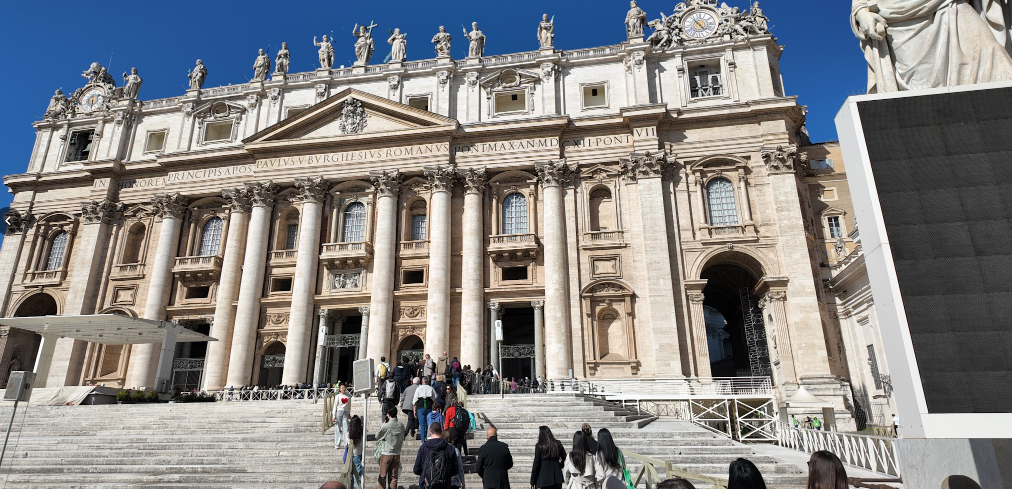
Below is a video I took earlier in the week, showing St. Peter’s Basilica from the outside, walking inside, and soaking in the atmosphere. Even without the museums open, this place never disappoints.

It was simply a good feeling knowing I was there on a day when Pope Francis was well enough to make a public appearance. With Holy Week approaching, it felt like an important moment—likely a quiet test of strength and endurance ahead of what is normally an incredibly demanding time.

Sadly, I later learned that he had to cut his speech short due to shortness of breath—and that this appearance would turn out to be his final public speaking engagement before his passing. Knowing that now adds a weight to the experience that I didn’t fully understand in the moment.

As I walked through Vatican City, the atmosphere felt different—solemn, but meaningful. A massive crowd was lined up to enter St. Peter’s Basilica, far larger than anything I’d seen earlier in the week.

It was one of those rare travel moments where you realize you weren’t just visiting a historic place—you were quietly present for a small but significant piece of history.

How to get to Italy (cheap)

If you’re coming from North America, I highly recommend flying Norse Atlantic Airways from Los Angeles to Rome for around $220 USD.

Getting to Los Angeles is easy and inexpensive from almost anywhere in Canada or the U.S. if you use Google Travel. Even better—consider staying in LA for a day or two. You essentially double your vacation while still saving a ton of money overall.


Where I stayed

I stayed at Freedom Traveler, which offered a single bed for €40 a night. Hotels in Rome can easily run $150+, so this was a no-brainer.

If dorms aren’t your thing, they also have private studio-style rooms for under $100, which is excellent value if you just want a quiet place to sleep. I stayed here twice—once before and once after my trip to Barcelona—and the staff were fantastic, always helping me get the best room available.


Best local meal & drink

Pizza. Obviously. 🍕

Rome is packed with corner spots selling freshly made pizza, and walking past them without stopping should honestly be illegal. While wine dominates in Italy (vino everywhere), I kept laughing because I’d walk into places with 10 taps, and every single one was wine. Beer lovers, adjust expectations accordingly.

My favorite pizza spot was just around the corner from Vatican City. I grabbed three slices (yes, all at once—you can see them stacked in the photo), and it was hands-down the best pizza I had in Italy.


Would I return?

To Rome specifically? Probably not.

Once I spent a full day at Vatican City and the Colosseum, I was ready to move on. I’d originally planned to stay a full week, but instead booked a last-minute trip to Barcelona to break things up.

That said, Italy absolutely deserves more time—just maybe not all in Rome. Cities like Venice, Sicily, Milan, Capri, and the Amalfi Coast are all worth visiting. One important lesson learned the hard way: book train tickets early. Last-minute fares were over $200, sometimes 5× the normal price, which is no different than flights.

If you plan to stay within one country, trains are amazing—but procrastination is expensive.

spain

Real Madrid & Barcelona FC stadiums!

The first week of April 2025 was my last week on this adventure. I left on January 12th, and it was time to return home to Arizona. My Airbnb tenants were checking out, and I had a home to go back to, finally.

The plan was to hang around Italy since my flight left from Rome on April 7th. 

My first day, I toured the Colosseum, and the second day was the Vatican. I did not want to spend five more days in Rome, and the train to Venice was over $200 return.

I checked out my Wizz Pass to see if there was availability to depart and return within a 72-hour window. My choices were Gdansk, Poland, or Madrid, Spain. I honestly did consider Poland before I found the Madrid flight.  

Ultimately, I chose Madrid so I could also visit Barcelona with a quick train ride.

There is no better feeling than booking a last-minute flight for $10 on an all-you-can-fly pass!

One minute, I am in Italy and the next day flying to Spain, watching football locals in a Madrid pub!  It sure beats working for a living!!

I also like to think that I am responsible when traveling, but not this time. Once I arrived in Madrid, I was very hungry, so I went to find food. I thought there was food in the Irish pub, but only beer. 

I was going to find a hostel after the game as I stayed for the whole game, plus, whoopsie! 

GOOOOAAAALLLLLL!!! âšœđŸ„…

After the game, slight panic started as it was after midnight, dark, rainy, and in a City I had never been to in my life.  How is that for an adrenaline rush!  I reset and looked for food and nailed it!

I have honestly never had Tapa’s before, as it reminds me of the foos-fos that go for Dim Sum or Sushi.  Well, holy shit – I am foo fucking foo for this Tapa’s gig!!  Check this out!

Pushing 2 AM, still no hostel, but new friends!  We pigged out on so many items!

Since it was past midnight and check-in time, I set out on foot, in the rain and half in the bag, looking for a place to sleep.

** I have a string chain around my neck with two charms, a cross and a foot for adventure.  I was rubbing the cross this time, and it always works out!  ***

After knocking on door after door, I came to find out that the entire City center was sold out. 

Well SHIT!!  This is where I do my best thinking, WTF now dumbass?  Why not head to the train station, catch a high-speed train to Barcelona for $40?  Perfect recovery plan!!

I was able to get a couple of hours’ sleep on the train, even though it was going 300K/H.  I woke up in Barcelona (huge bucket list,) and I was able to find a great hostel in the city center for $30 a night.  After touring the city for a couple of days, I was off to find the biggest attraction, the Barcelona FC iconic Stadium, on my last day.

Ironically, the football stadium was closed for renovations.  I visited the amazing team store and do not think I have seen anything else like it in the world. It was massive:

I cannot wait to reference this memory when the new ultra-modern stadium opens. I can say, I sat in this pub pre-gaming months/years earlier, preparing for the grand opening. LOL

I had better luck when I got back to Madrid.  I was able to take the metro with fans to a Real Madrid game and experience gameday.  I was flying back to Rome that night, so I could not go to the game, but this was amazing enough without paying hundreds of dollars for tickets.

It was a match between Barcelona FC and Valencia, and here is a little pre-game action:

After waiting an hour walking around as fans entered the stadium, I needed to leave.  I was one of the few who headed the other direction on the metro as more fans arrived for the game.

It looks like I missed a great game which an exciting ending with the visiting team winning!

cap10

FB travel memories mashup!

Facebook memories will often share mash-ups of my travel memories!

This is a great mashed-up memory that covers so many amazing posts around the world.

Puerto Vallarta, Lake Paddle/Hawes hiking trail, amazing sunsets, camping with my rooftop tent, Kona/Honolulu, Rocky Point and Lima sunsets, Philippines ferry ride, Vienna, Austria walk, and the last one is the spectacular Dubai harbor.

Seeing them all together makes me realize how fun it is to share my amazing travels!

I am a pretty lucky schmuck!Â