acc3

Green card, Citizenship & travel visas🛂

I’ve been dealing with travel visas for over 25 years—long enough to know this topic is wildly misunderstood by anyone who’s never actually lived it.

You can’t just let people casually wander into a country…
unless, apparently, you’re shopping for votes.

Like it or not, visas are 100% necessary.
Not glamorous.
Not fun.
Necessary.

My travel saga started in the late 1990s, flying for work between Calgary, Canada and Dallas, Texas.

I regularly traveled from our manufacturing plant in Calgary to our U.S. headquarters in Dallas. And every trip began exactly the same way:
Me, arriving at the Calgary airport—already sweating—fully aware that my real journey was about to begin… with U.S. Immigration.

The script never changed.

Agent: Purpose of travel?
Me: Meetings.
Agent: How long?
Me: One week.
Agent: That’s a long meeting.
Me: We have meetings all week.
Agent: Go sit in our office.

Me (internally): Yes sir. Thank you sir. I respect the process and my fragile freedom.

Then came the waiting.

The agents would let me slowly marinate in anxiety—right up until five minutes before boarding.

Agent: You’re free to go.
Me: Immediately sprinting to the gate like I’d just been released from a minimum-security prison.

Every.
Single.
Time.

🏃🏻‍➡️✈️

Eventually, I graduated to actual work visas.
Real ones.
Laminated.
Official.
Very fancy.

I would calmly present my current visa to the immigration officer, exactly as instructed.

[“DO NOT ANSWER QUESTIONS.”]

The office rules were very clear:
Show the visa.
Say nothing.

Apparently, immigration officers are highly trained professionals whose primary job is to trick you into saying one wrong word, realize you have the wrong visa, and deny you entry—
purely by accident.
On your part.

This never happened to me.
I suspect it’s because they eventually recognized me.

“Oh. It’s this guy again.”

Somewhere along the way, I stopped being “potential international threat” and became “frequent flyer with anxiety.”

Eventually, I moved to the United States full-time, which—shockingly—required an entirely different visa.

I will forever clutch my citizenship like it’s a winning lottery ticket.

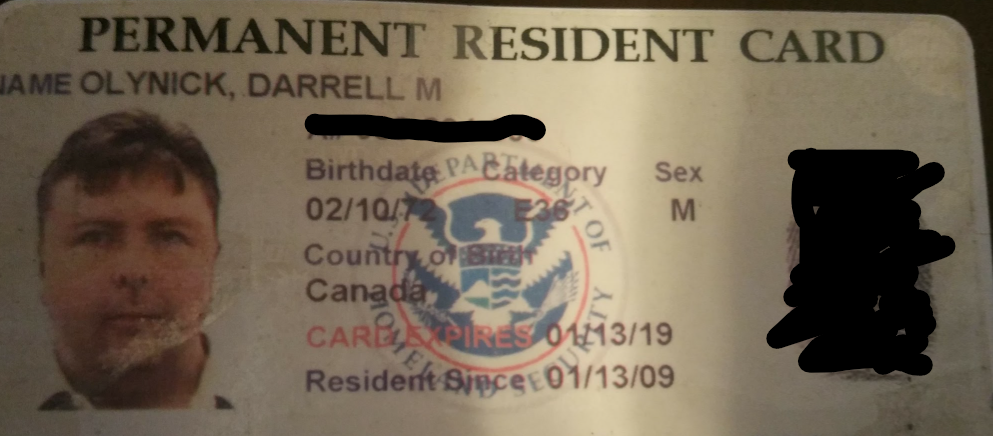
Ten years and dozens of visas later, I finally received my United States Permanent Resident card—
the government’s way of saying, “Fine. You can stay.”

“TEN YEARS LATER”

Another ten years passed, and—six months after my green card expired on January 13, 2019—I officially became a U.S. citizen on July 3, 2019.

Yes, there was a brief but thrilling period where I existed in pure bureaucratic limbo:
No longer green-card valid, not yet American enough.

USA Immigration has always loved a good cliffhanger.

Then, just in time for Independence Day sales, fireworks, and historically poor life choices…

I became a U.S. citizen.

Sworn in by DJT himself.

Roll credits. 🇺🇸🎆

My entire immigration journey took roughly 20 years.

Two decades of forms, fees, interviews, fingerprints, photos—and the low-grade terror of checking the mailbox.

So yes, I tend to notice immigration policy.

Between 2020 and 2024, under a Democratic administration, millions of migrants were allowed into the U.S. with what appeared to be minimal vetting. Many arrived with criminal records, some unvaccinated, and many had their expenses covered.

At the exact same time, Americans were required to get vaccinated while enduring shutdowns that hit them financially.

That contrast did not go unnoticed.

The current Republican administration, by contrast, treats border security as non-negotiable. Their 2025 immigration policies can best be summarized as FAFO—and they are the strongest I’ve seen.

And just for context—so this doesn’t sound like vibes-only commentary—I’ve also held travel visas for:

Thailand (three of them), Cambodia, and Vietnam (two).

Turns out, when you’ve played immigration on hard mode across multiple countries, you develop opinions.

Earned ones.

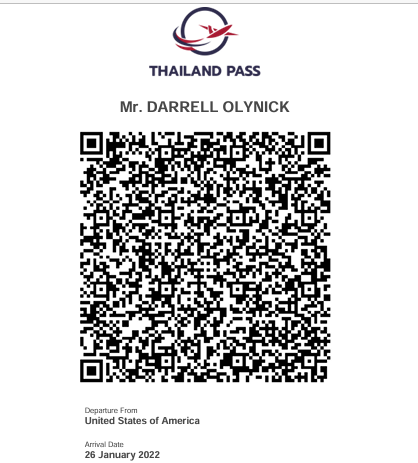
This pass was just after COVID and there were many hoops to jump through!

Cambodia Immigration — departing Vietnam

No computers.
No scanners.
No backup system.

Just pens, paper, and deeply suspicious vibes.

Everything was done by hand.
Every passport.
Every stamp.
Every long, silent glance that felt like a background check conducted telepathically.

The process took hours—not because anything was wrong, but because time itself had chosen to opt out.
The heat was oppressive.
The fans were decorative.
The concept of “boarding time” was aspirational.

This was immigration in its purest form:

slow, deliberate, and completely immune to deadlines.

And watching it all unfold, I realized something oddly comforting—

no matter the country,
no matter the technology,
no matter the system…

immigration always finds a way to remind you who’s really in charge.

These Asian visas are extremely strict.

As in: follow the rules… or enjoy a complimentary tour of the prison system.

There’s no confusion about the process.

No gray area.
No “I didn’t know.”

You follow the entry requirements, or there are consequences.

And somehow—miraculously—when you follow the immigration process wherever you go, you avoid those consequences entirely.

Seems 100% fair to me.

Legal immigration history:

It didn’t start with some fancy red carpet—it started when governments realized people moving freely could get… complicated. Back in the 19th century, countries like the U.S., Canada, and Australia were basically like, “Sure, come on in… as long as you check a box or two.”

Then came the U.S. Immigration Act of 1882, which basically said, “Not everyone’s invited to the party.” Fast forward to the early 1900s: Ellis Island became the ultimate checkpoint, where millions of hopeful immigrants faced the judgment of border agents, health inspections, and that ever-important first glimpse of America.

By the mid-20th century, things got organized: work visas, student visas, green cards… a whole bureaucratic buffet. Today, legal immigration is basically a government-approved, multi-step obstacle course—and yes, you can survive it, but only if you brought your paperwork, patience, and maybe a stiff drink. 🍹

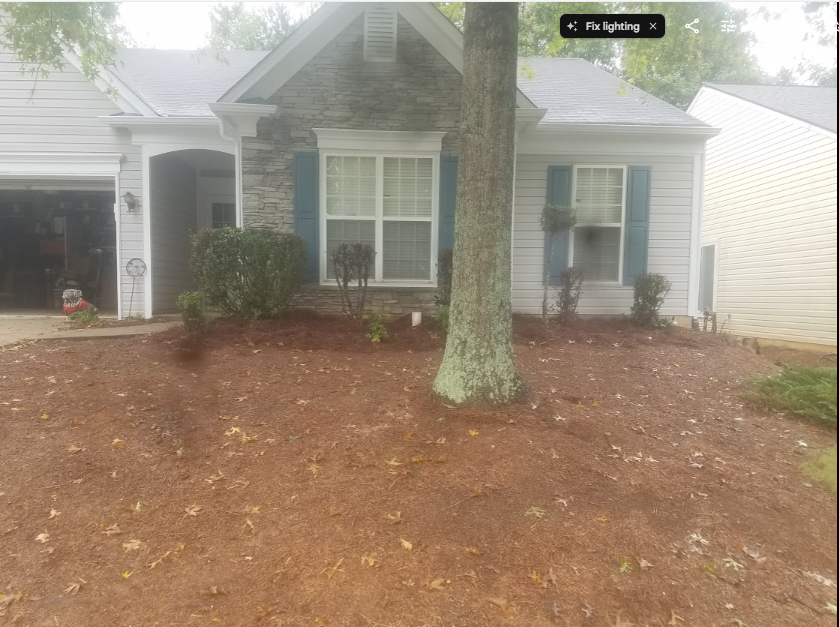
front big ga house

Cumming, GA – Home 2003-2010

In 2003, I finally got off the road from my telecommunications job and took a desk role in Alpharetta, which felt both responsible and slightly suspicious.

I’d been traveling nonstop for about five years, and honestly, I was done. Fortunately, an old manager reached out and offered me a desk job supporting Verizon Wireless 3G operations for Georgia and Alabama as a Customer Support Associate (CSAM). My role was to make sure the Norel product behaved itself—and when it didn’t, I worked directly with Verizon to manage outages and issues.

Once problems were identified, I handled root cause analysis, presented the findings, explained how we’d fix it, and—most importantly—made sure it never happened again. In theory.

I was also responsible for ensuring new network components were introduced, upgraded, and deployed properly. It was a 24/7/365 operation, with other states backing each other up. Stressful? Absolutely. But it was also a great time in my life, and Georgia turned out to be an amazing place to land after years of living out of a suitcase.

What made it especially pivotal was the timing. I was in the middle of building a house in Edmonton while simultaneously being offered this desk job in Georgia. Two very different lives pulling in opposite directions.

I still think about that decision. I’m almost certain that if the Georgia job hadn’t come along, I would have moved to Edmonton. I was finished with road work—and road work was finished with me. I couldn’t keep up with the demand anymore, which would have meant losing my job. And since my U.S. work visa was tied directly to employment, staying in the States wouldn’t have been an option.

I loved that Edmonton house. I loved it even more because it didn’t have a mortgage.

Thanks to years of road work, favorable exchange rates, and converting USD to Canadian dollars at exactly the right time, I was able to pay for it in cash. 🤑 That part still makes me smile.

I can’t remember the exact model of the house, but I do remember the square footage and the builder. If this wasn’t the exact model, it was close—it definitely had a bonus room above the garage, which at the time felt like peak adulthood.

What I remember most clearly, though, is that I chose the worst possible color scheme. Think teal siding with brown trim. Not tasteful teal. Aggressively teal. The kind of choice you make when you’re more excited about square footage than aesthetics.

This was also pre-smart home, pre-everything. So naturally, despite the fact that wireless Bluetooth and Wi-Fi were already a thing, I ran cables everywhere like an absolute dumbass. Through walls. Into places that never needed them. All because I wanted security cameras and—wait for it—a TV above the TV. A bold vision in the early 2000s, and one that required way more effort than it deserved.

Looking back, it was wildly overengineered and completely unnecessary. But at the time? It felt futuristic.

I’ll write a separate blog about the Edmonton house at some point, because honestly, it was an incredible experience in my life and deserves its own spotlight.

But for now, back to the choice that actually got made—the house in Georgia. And no, that one was no slouch either.

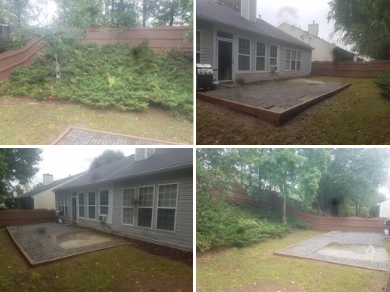
These pictures were taken ten years after I moved out. I didn’t realize it at the time, but this ended up being the last annual maintenance trip I’d ever need to make. For years, I’d fly down, trim the bushes practically down to the roots so they’d survive another twelve months, and this time I would’ve finally fixed and painted the fence too.

Funny how you never know it’s the last time when you’re in it.

You can see the empty spot on the patio where the hot tub time machine used to live. That backyard saw a lot of good times. There was a fire pit, and a pergola-style gazebo over the hot tub, complete with lights and speakers—basically a perfectly engineered relaxation zone before I even knew I needed one.

The same guy who rented the house for over ten years eventually bought it as is. I gave him a fair deal and worked directly with him and his financer to get everything done smoothly. I was relieved to be done with the ongoing headaches of long-distance ownership—but I’d be lying if I said I don’t miss that house, and that area, quite a bit.

Some places just stick with you.

And of course…
GO Atlanta Braves! 🪓🪓🪓