








IMG_20240406_142756

Buenos Aires, Argentina! ⚽🏟️🤤🥩

When I was laid off in February 2024, the very first thing I did was start planning a trip through Central America and South America. I’d been there before, but seeing South America again felt different this time—less rushed, more intentional, and exactly what I needed.

The journey started in Phoenix and unfolded like this:

Phoenix → Los Angeles 🚌

Los Angeles → Guatemala → Costa Rica → Peru ✈️✈️✈️✈️

Lima → Chile → Argentina → Uruguay → Guatemala → Los Angeles → Phoenix ✈️✈️✈️✈️✈️✈️✈️

Along the way, I visited multiple cities in each country, took my time, and let the trip evolve as it went. Every stop had its own rhythm and personality.

That said, one place stood out enough that it deserved its own post: Buenos Aires.

There’s something about Buenos Aires—the food, the architecture, the pace of life—that makes it linger in your head long after you leave. So instead of trying to cover everything at once, I wanted to slow it down and give that city the space it deserves.

Buenos Aires, Argentina—It was absolutely unforgettable!


I took the bus to Los Angeles, then used my Volaris all-you-can-fly pass to work my way through Guatemala, San José, and on to Lima.

The pass costs about $200 per year and runs on availability. In real life, I’ve rarely had issues—if you’re flexible with timing and routing, there are almost always seats open.

It’s a perfect example of how cheap flights can unlock big trips. With a little patience, that single pass turns Los Angeles into a gateway to Central and South America.

Once you’ve paid the $200, the prices get kind of ridiculous. I could fly from Los Angeles to Guatemala for about $80. The same plane continues on to San José for another $30. I’d done both routes before, so I knew I could push as far south as Lima and then switch airlines.

From there, SKY Airline took me from Lima to Santiago, and then on to Buenos Aires—which was fantastic.

I hopped a ferry over to Uruguay for a few days, then back to Argentina, back to Lima, and finally used my Volaris pass to get the rest of the way home. The result: a surprisingly long, surprisingly affordable trip.

Now—let’s focus on Buenos Aires (BA), since the intro mirrors my Santiago, Chile post.

This was my $20-a-night studio in a high-rise near downtown Buenos Aires. The accommodations were cheap, the food was even cheaper, and the value was off the charts.

To get oriented, I jumped on the double-decker bus and knocked out all the tourist traps in one go—easy, efficient, and worth every peso.

When people think of legendary sports figures from Argentina, two names usually come to mind almost immediately:

Diego Maradona
and…
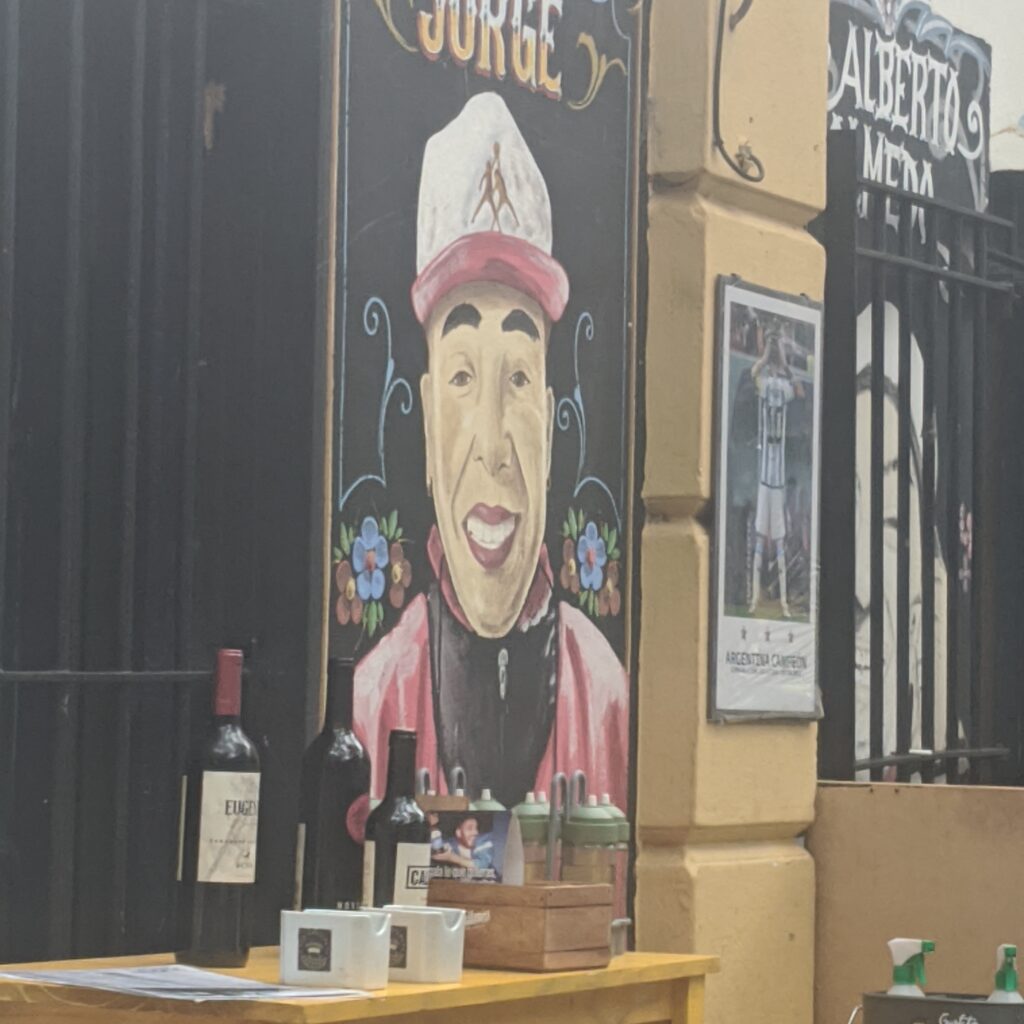
Jorge.

Yes—Jorge.

More formally known as Lionel Messi, whose full name is Jorge Lionel Messi. In Argentina, he’s earned the rare privilege of first-name-only status—right alongside Maradona.

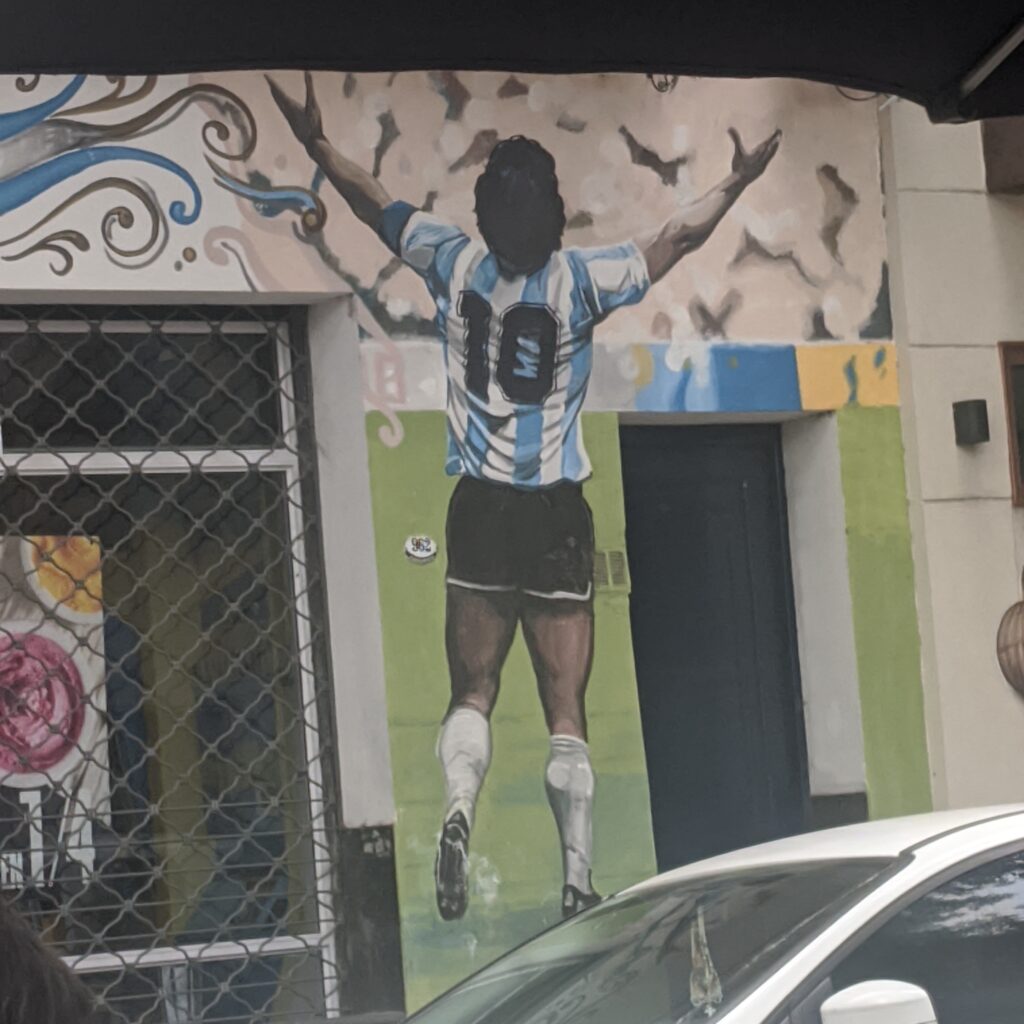
Maradona represents the raw, rebellious, almost mythological side of Argentine football. Chaos, genius, controversy, and magic all wrapped into one flawed human.
Messi represents precision, consistency, and quiet brilliance. A machine built for beauty. Different eras, different personalities—but both are stitched deep into the country’s identity.

You don’t need to follow football closely to feel it here.

Murals.
Jerseys.
Taxi conversations.
Corner cafés with TVs permanently tuned to replays.

These men aren’t just athletes in Argentina—they’re cultural landmarks.

Maradona’s legacy is shouted.
Messi is spoken of with reverence.

For context, Maradona earned 91 international caps, scored 34 goals, and played in four FIFA World Cups. His crowning moment came in 1986, when he captained Argentina to victory in Mexico—delivering both the infamous “Hand of God” goal and the “Goal of the Century” against England in the same match.

Messi’s story is different—longer, quieter, more surgical—but no less historic. His arc completed itself when he finally lifted the World Cup in 2022, cementing what many already believed.

Both were revolutionary in their own ways.

But as you walk the streets of Argentina, past walls covered in paint and memory, it’s easy to tell who the original folk hero was.

One name lives in legend.
The other lives in legacy.

Maradona…
and Jorge

I also visited Boca Juniors, the club that Diego Maradona helped turn into a legend.

Their home stadium, La Bombonera, is considered one of the most famous—and intimidating—stadiums in the world.

Even empty, it has a pulse.

The impossibly steep stands, the tight neighborhood pressing in around it, and the history baked into the concrete make it feel less like a stadium and more like a shrine. It doesn’t whisper; it hums.

You don’t need a match day to understand why Boca—and Maradona—mean so much here.
You just have to stand still and listen and watch the fans interact.

I toured the neighborhood and the La Boca football museum!

Club Atlético Boca Juniors is a professional sports club based in La Boca, one of the most iconic—and unapologetically colorful—areas of Buenos Aires. The club is best known for its men’s football team, which, since earning promotion in 1913, has never left the Argentine Primera División.

Boca Juniors is the most successful club in Argentina, with 74 official titles, including:

35 Primera División championships

17 domestic cup titles

Plus an honorary title awarded by the Argentine Football Association for Boca’s influential 1925 European tour, which helped put Argentine football on the global map.

Simply put, Boca Juniors isn’t just a club—it’s an institution.

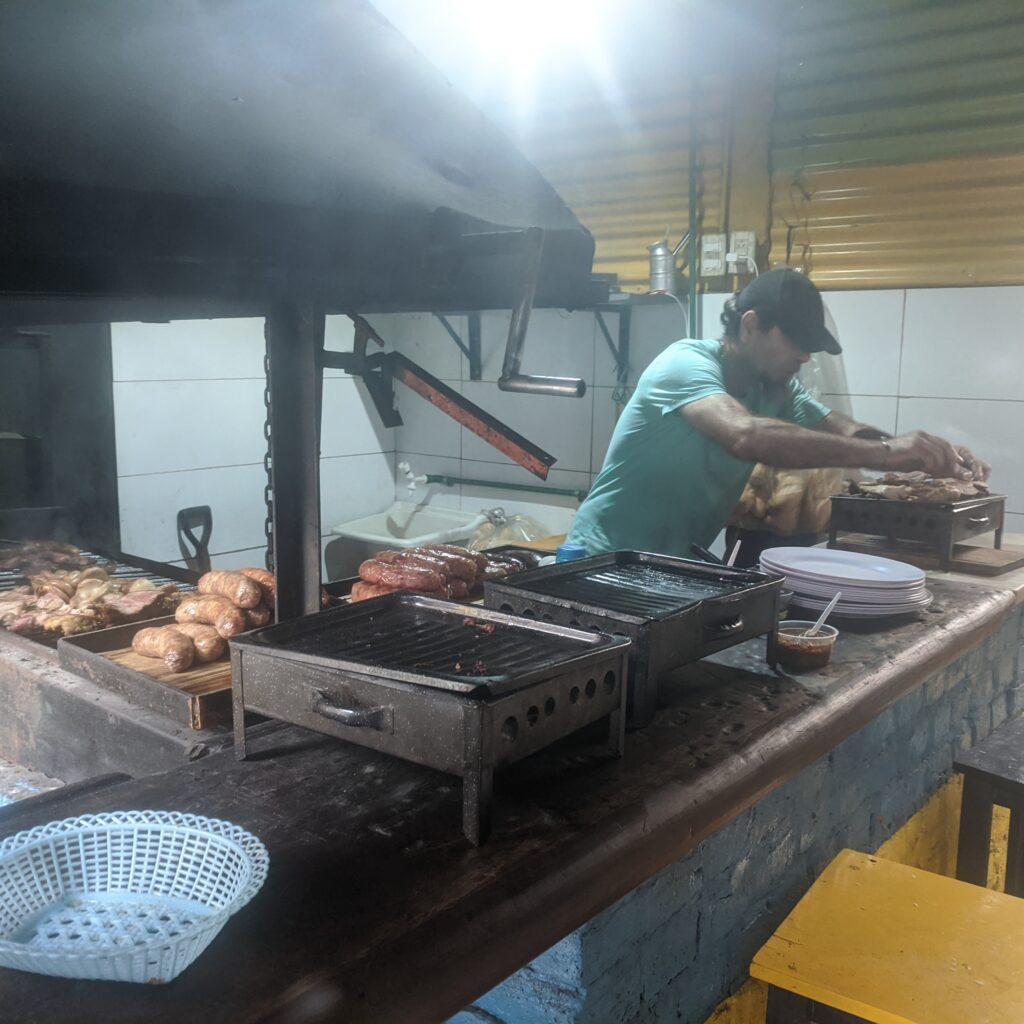
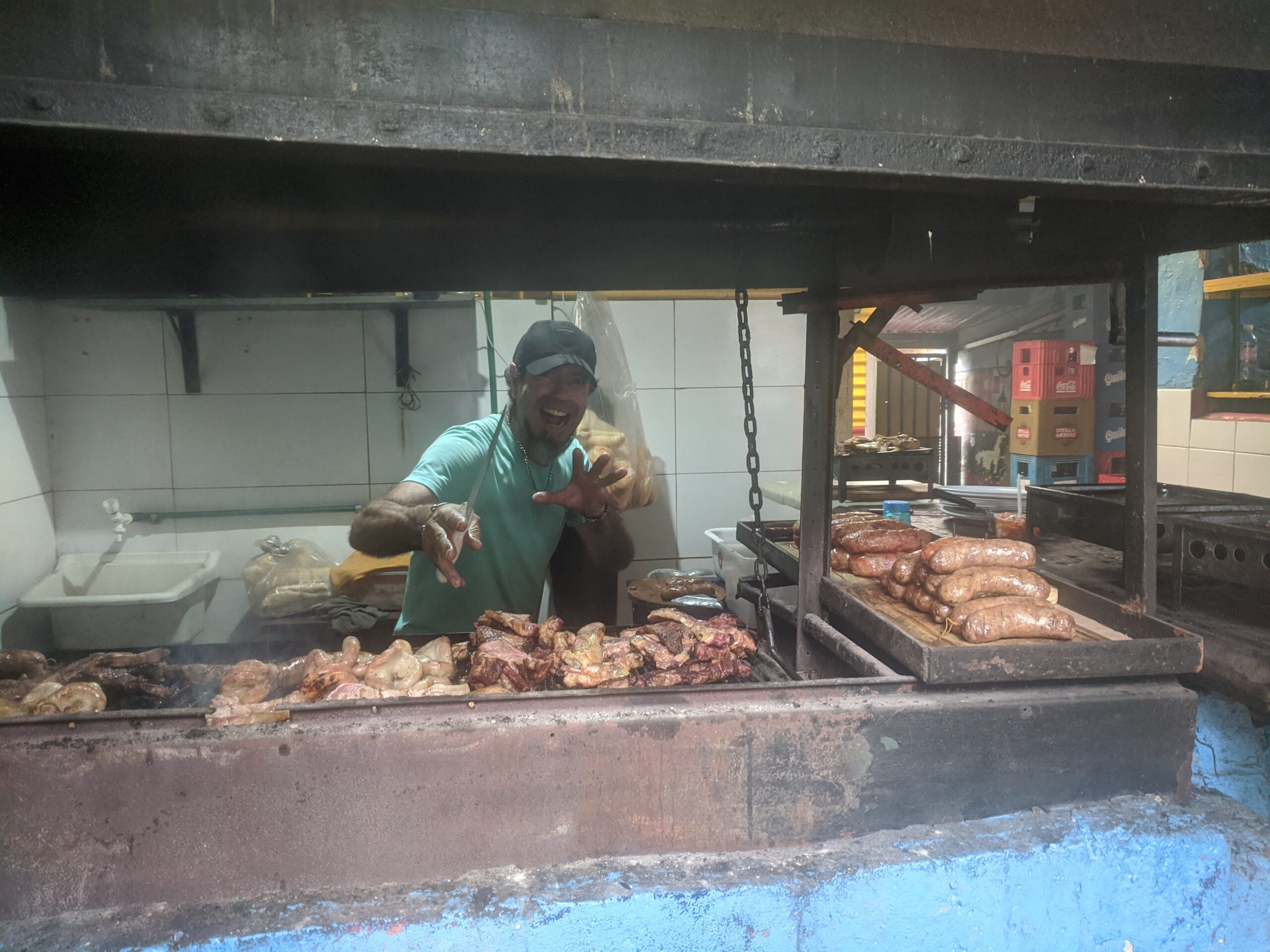
Argentina is also famous for its steak and meat—very much in the same league as Brazil. And after touring La Bombonera, I had one of the best meals of my life.

I told the cook I wanted to try all the meats. He understood the assignment.

Sausage links.
Multiple cuts of steak.
A plate that arrived full… and disappeared even faster.

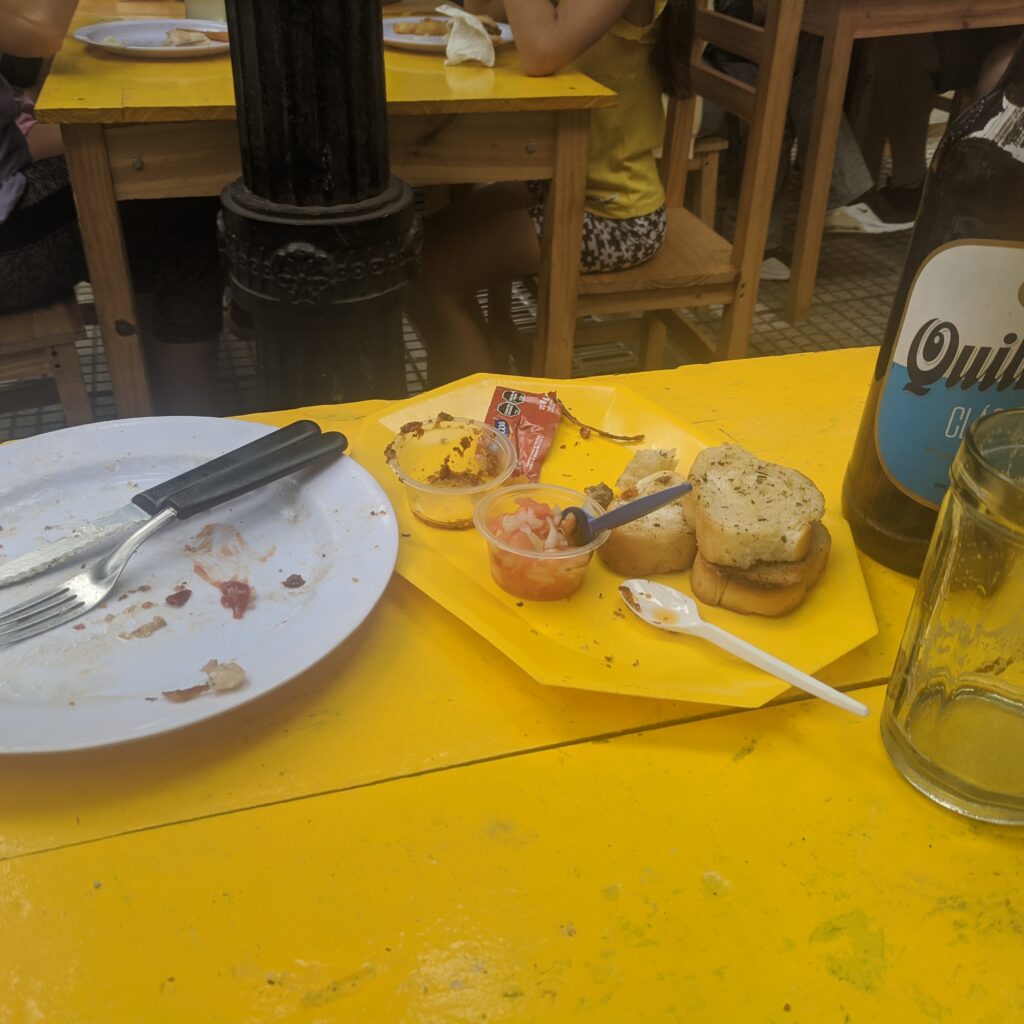
It was gone before I even thought to take a picture—which, honestly, might be the highest compliment of all. 🥩

I ate steak almost every evening in Buenos Aires, and the portions were massive. A proper steak dinner would run about $12 USD, and more often than not, I’d be eating the leftovers for breakfast the next morning.

What really stood out was how the steaks were served. They weren’t just slabs of meat dropped on a plate—they were layered with extras like eggs, tomatoes, and other simple additions that somehow made the meal even better. No fancy sauces, no nonsense. Just quality beef, cooked properly, and paired in a way that made every plate feel both affordable and unforgettable.

I know I took pictures of just about every meal, but somehow I can’t find them as of this post—which honestly might be a blessing. Some things are better remembered than documented.

Below are a few representative shots, along with an article that dives into why Argentine steak is often considered the best in the world. It comes down to the cattle, the grass, the simplicity, and the culture around cooking meat. After eating my way through Buenos Aires, I get it.

Some cities impress you.
Others feed you so well that they ruin steaks everywhere else.

Argentina is also known as a true mecca for meat lovers, and many people argue it produces the best steak in the world. After eating my way through the country, it’s hard to disagree.

From grass-fed cattle to unique cuts of beef and time-honored cooking methods, Argentine steak is a craft—from start to finish.

You can’t talk about Argentine steak without talking about the cows.

While Argentina is home to several cattle breeds, the best beef comes from cows that graze freely on the legendary Las Pampas.

So what exactly are Las Pampas?

They span roughly 750,000 square kilometers of vast, mostly flat grasslands, famous for a temperate climate that produces exceptionally nutritious grass. Cows here spend their lives roaming and grazing naturally, rather than being grain-fed in confined spaces. The result is beef that’s leaner, more flavorful, and widely considered healthier than many alternatives.

Then there’s the cooking.

Argentina’s signature Asado technique is simple, deliberate, and deeply respectful of the meat. No heavy marinades. No distractions. Just fire, salt, time, and experience. The goal is always the same: let the quality of the beef speak for itself.

From pasture to plate, Argentine steak isn’t just food—it’s culture.

If you want to go deeper into why Argentina is considered the global capital of steak, you can read the full article HERE, which breaks down the land, the cattle, the cuts, and the traditions that make Argentine beef so unforgettable.

After experiencing it firsthand, I get the hype.

Argentina doesn’t just serve steak—
it sets the standard. 🥩🇦🇷

Comments are closed.