IMG_20240402_080108 (1)

Uruguay – ferry, bus from Buenos Aires!

As part of my 2024 trip—which took me through Central America and into South America—I made a stop in Uruguay. Getting there was easy and inexpensive thanks to a short ferry ride from Buenos Aires across the Río de la Plata.

It was one of those classic travel decisions: cheap ferry, new country, zero downside. So… why not?

That’s one of the underrated perks of slow travel—when borders are close, transport is affordable, and curiosity wins.

I did not know what to expect as I had not read much about Uruguay. It was just the fact that I was so close to getting to experience it, and I took advantage of dropping another pin on the map. 📍🌏

Montevideo has a great beach walk, very nice cobblestone downtown, and friendly people, but I do not need to go back.  There was nothing that stood out like most Countries other than my Airbnb. 

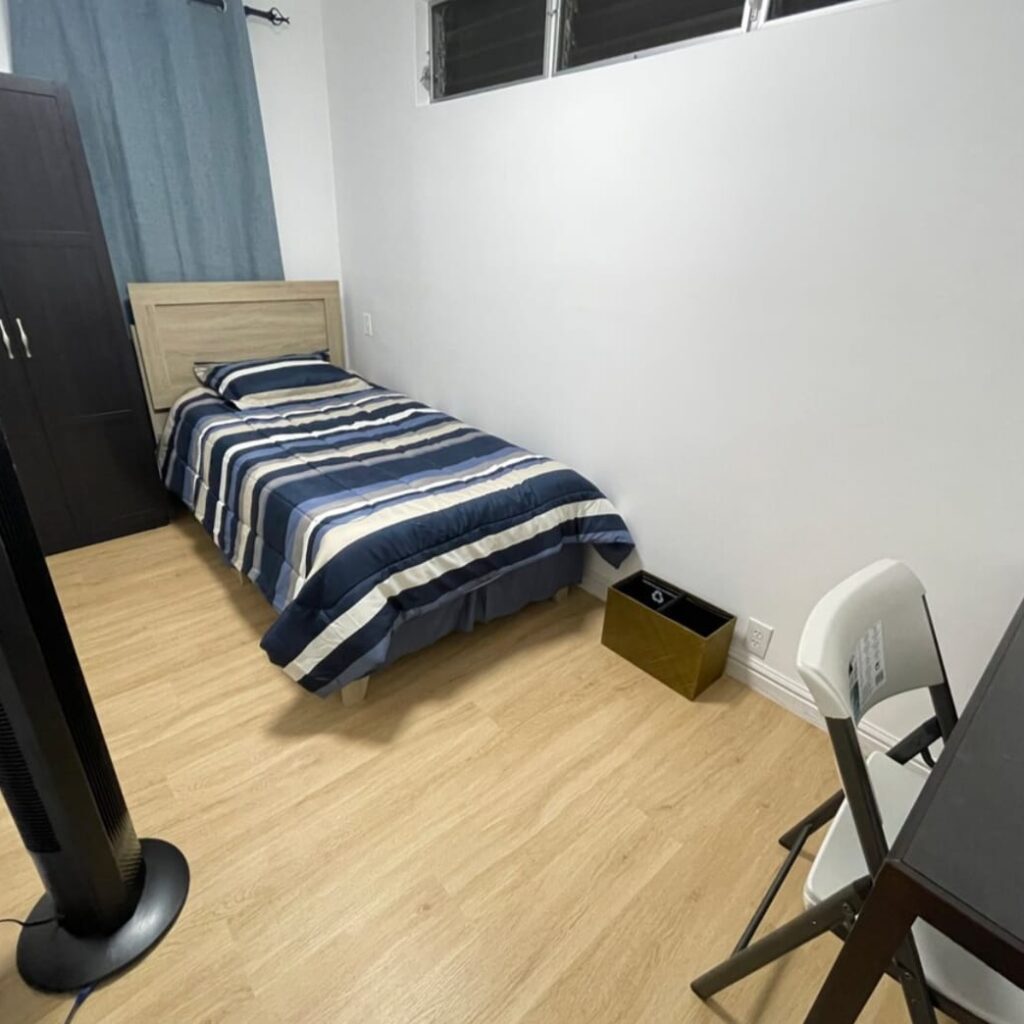
I have never experienced so much pride in the presentation of this place.  Every little nook and cranny had something awesome displayed and check out the view from the bedroom!

The couple who ran the Airbnb were architecture lawyers from Argentina, and their background showed in every detail. Their shared love of music and antiques turned the place into an absolute gem—not flashy, just deeply thoughtful.

The lobby alone set the tone. A full wall of antiques, each piece clearly chosen with care, paired with calming music that made you slow down the moment you walked in. It didn’t feel like a rental—it felt like someone’s personal sanctuary that they happened to share.

It was one of those stays where the space itself becomes part of the travel experience. Honestly, that Airbnb left more of an impression on me than the city itself—and that says a lot.

There were hundreds and hundreds of trinkets throughout the property—every room, every corner, every shelf had something interesting to notice. During the day, jazz music played softly in the lobby, setting a calm, timeless mood. In my room, there was even a record player with a small collection of old jazz records. Sitting there, listening to vinyl and staring at the bookcase, felt almost meditative.

The Airbnb itself was about $25 a night, perfectly located between the main street and the ocean in Montevideo. You really couldn’t ask for a better setup.

It was hands down the best Airbnb experience I’ve ever had. Not because it was luxurious, but because it was thoughtful. Every detail felt intentional, personal, and cared for—and I’m genuinely glad I got to experience it. Some places stick with you because of what you see outside. This one stayed with me because of what was inside.

After spending the previous week in Argentina, the food scene in Montevideo was a bit of a shock—in the wrong direction.

Coming off Argentina’s absolute paradise of steaks, flavor, and value, these two meals were both underwhelming and overpriced. Not terrible in a dramatic sense, just disappointing enough that you immediately stop ordering food with any enthusiasm.

To be fair, I didn’t go to Montevideo for the cuisine—and after Argentina, that became very clear. Sometimes travel is about incredible meals. Other times, it’s about the place, the stay, and the experience around it.

I played it safe both times and ordered the house special, mostly because I honestly didn’t know what else to order.

On the left: two hot dogs buried under what felt like five pounds of cheese. Just… not good. At all.
On the right: a meat plate that ran about $50, and when I cut into it, it was practically raw.

After a week of steak perfection in Argentina, this was a rough landing. I wasn’t expecting miracles, but I also wasn’t expecting hot dogs drowned in cheese or an expensive plate of meat that never met a grill properly.

It honestly may have just been bad luck both times. That said, after paying $50 for food that was raw and borderline inedible, I was beyond annoyed. I ended up calling my credit card company—and they refunded the charge without hesitation. It was the first time in my life I’d ever done that, which tells you how bad it was.

Thankfully, Montevideo redeemed itself in other ways. The city itself is relaxed and walkable, the coastline is beautiful, and that Airbnb more than made up for the food disappointment.

Between the thoughtful design, the music, the ocean proximity, and the price point, it was an incredible stay—especially considering how inexpensive it was. Sometimes travel works out that way: the meals miss, but the place, the vibe, and where you rest your head absolutely deliver.

A Brief History of Uruguay

Uruguay’s history is shaped by its position between two giantsArgentina and Brazil—and by centuries of struggle over who would control it.

Indigenous Roots

Before Europeans arrived, the region was inhabited primarily by the Charrúa people. They were semi-nomadic hunters and resisted colonization fiercely. Tragically, most of the Charrúa population was wiped out during the 19th century, making Uruguay one of the few South American countries with a very small remaining Indigenous population today.

Spanish vs. Portuguese Tug-of-War

Unlike much of South America, Uruguay wasn’t immediately colonized. Spain and Portugal both wanted it, largely because of its strategic location along the Río de la Plata.

  • Colonia del Sacramento was founded by the Portuguese in 1680

  • Spain countered by establishing Montevideo in 1726

For over a century, control of the region shifted back and forth between the two empires.

Independence & Artigas

Uruguay’s path to independence was complicated. The country’s national hero, José Gervasio Artigas, led resistance movements in the early 1800s, advocating federalism and local autonomy.

After periods of occupation by both Argentina and Brazil, Uruguay finally became an independent nation in 1828, largely as a buffer state to prevent conflict between its neighbors.

20th Century: Stability & Reform

In the early 1900s, Uruguay earned a reputation as one of the most progressive countries in the world:

Early adoption of free public education

Separation of church and state

Strong labor protections and social welfare programs

This era gave Uruguay the nickname “the Switzerland of South America.”

Dictatorship & Recovery

Like many Latin American countries, Uruguay experienced a military dictatorship from 1973 to 1985. Democracy was restored peacefully, and since then, Uruguay has been one of the most stable, democratic, and transparent nations in the region.

Modern Uruguay

Today, Uruguay is known for:

Strong democratic institutions

High quality of life

Liberal policies (early legalization of same-sex marriage and cannabis)

A calm, understated culture compared to its neighbors

It’s not flashy. It’s not chaotic. And for many people, that’s exactly the appeal.

IMG_20240406_142756

Buenos Aires, Argentina! ⚽🏟️🤤🥩

When I was laid off in February 2024, the very first thing I did was start planning a trip through Central America and South America. I’d been there before, but seeing South America again felt different this time—less rushed, more intentional, and exactly what I needed.

The journey started in Phoenix and unfolded like this:

Phoenix → Los Angeles 🚌

Los Angeles → Guatemala → Costa Rica → Peru ✈️✈️✈️✈️

Lima → Chile → Argentina → Uruguay → Guatemala → Los Angeles → Phoenix ✈️✈️✈️✈️✈️✈️✈️

Along the way, I visited multiple cities in each country, took my time, and let the trip evolve as it went. Every stop had its own rhythm and personality.

That said, one place stood out enough that it deserved its own post: Buenos Aires.

There’s something about Buenos Aires—the food, the architecture, the pace of life—that makes it linger in your head long after you leave. So instead of trying to cover everything at once, I wanted to slow it down and give that city the space it deserves.

Buenos Aires, Argentina—It was absolutely unforgettable!


I took the bus to Los Angeles, then used my Volaris all-you-can-fly pass to work my way through Guatemala, San José, and on to Lima.

The pass costs about $200 per year and runs on availability. In real life, I’ve rarely had issues—if you’re flexible with timing and routing, there are almost always seats open.

It’s a perfect example of how cheap flights can unlock big trips. With a little patience, that single pass turns Los Angeles into a gateway to Central and South America.

Once you’ve paid the $200, the prices get kind of ridiculous. I could fly from Los Angeles to Guatemala for about $80. The same plane continues on to San José for another $30. I’d done both routes before, so I knew I could push as far south as Lima and then switch airlines.

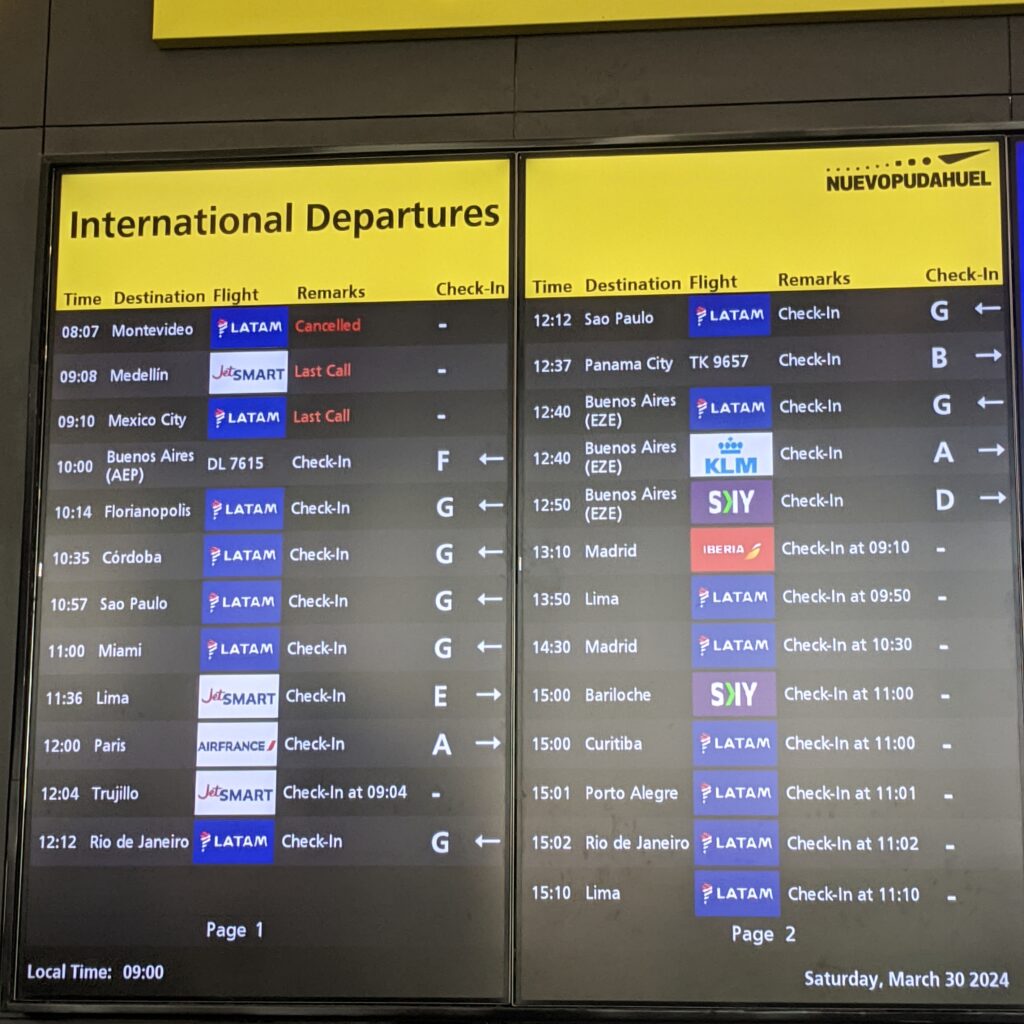
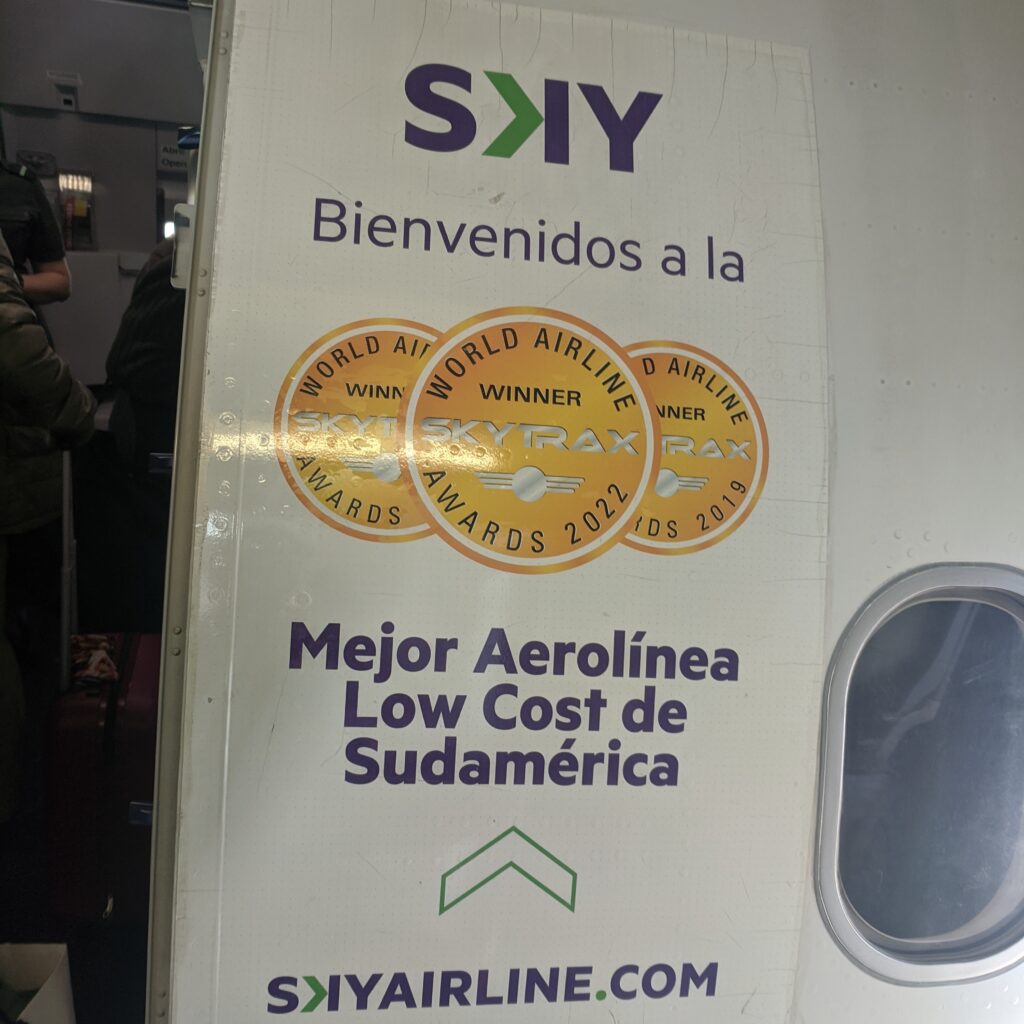
From there, SKY Airline took me from Lima to Santiago, and then on to Buenos Aires—which was fantastic.

I hopped a ferry over to Uruguay for a few days, then back to Argentina, back to Lima, and finally used my Volaris pass to get the rest of the way home. The result: a surprisingly long, surprisingly affordable trip.

Now—let’s focus on Buenos Aires (BA), since the intro mirrors my Santiago, Chile post.

This was my $20-a-night studio in a high-rise near downtown Buenos Aires. The accommodations were cheap, the food was even cheaper, and the value was off the charts.

To get oriented, I jumped on the double-decker bus and knocked out all the tourist traps in one go—easy, efficient, and worth every peso.

When people think of legendary sports figures from Argentina, two names usually come to mind almost immediately:

Diego Maradona
and…
Jorge.

Yes—Jorge.

More formally known as Lionel Messi, whose full name is Jorge Lionel Messi. In Argentina, he’s earned the rare privilege of first-name-only status—right alongside Maradona.

Maradona represents the raw, rebellious, almost mythological side of Argentine football. Chaos, genius, controversy, and magic all wrapped into one flawed human.
Messi represents precision, consistency, and quiet brilliance. A machine built for beauty. Different eras, different personalities—but both are stitched deep into the country’s identity.

You don’t need to follow football closely to feel it here.

Murals.
Jerseys.
Taxi conversations.
Corner cafés with TVs permanently tuned to replays.

These men aren’t just athletes in Argentina—they’re cultural landmarks.

Maradona’s legacy is shouted.
Messi is spoken of with reverence.

For context, Maradona earned 91 international caps, scored 34 goals, and played in four FIFA World Cups. His crowning moment came in 1986, when he captained Argentina to victory in Mexico—delivering both the infamous “Hand of God” goal and the “Goal of the Century” against England in the same match.

Messi’s story is different—longer, quieter, more surgical—but no less historic. His arc completed itself when he finally lifted the World Cup in 2022, cementing what many already believed.

Both were revolutionary in their own ways.

But as you walk the streets of Argentina, past walls covered in paint and memory, it’s easy to tell who the original folk hero was.

One name lives in legend.
The other lives in legacy.

Maradona…
and Jorge

I also visited Boca Juniors, the club that Diego Maradona helped turn into a legend.

Their home stadium, La Bombonera, is considered one of the most famous—and intimidating—stadiums in the world.

Even empty, it has a pulse.

The impossibly steep stands, the tight neighborhood pressing in around it, and the history baked into the concrete make it feel less like a stadium and more like a shrine. It doesn’t whisper; it hums.

You don’t need a match day to understand why Boca—and Maradona—mean so much here.
You just have to stand still and listen and watch the fans interact.

I toured the neighborhood and the La Boca football museum!

Club Atlético Boca Juniors is a professional sports club based in La Boca, one of the most iconic—and unapologetically colorful—areas of Buenos Aires. The club is best known for its men’s football team, which, since earning promotion in 1913, has never left the Argentine Primera División.

Boca Juniors is the most successful club in Argentina, with 74 official titles, including:

35 Primera División championships

17 domestic cup titles

Plus an honorary title awarded by the Argentine Football Association for Boca’s influential 1925 European tour, which helped put Argentine football on the global map.

Simply put, Boca Juniors isn’t just a club—it’s an institution.

Argentina is also famous for its steak and meat—very much in the same league as Brazil. And after touring La Bombonera, I had one of the best meals of my life.

I told the cook I wanted to try all the meats. He understood the assignment.

Sausage links.
Multiple cuts of steak.
A plate that arrived full… and disappeared even faster.

It was gone before I even thought to take a picture—which, honestly, might be the highest compliment of all. 🥩

I ate steak almost every evening in Buenos Aires, and the portions were massive. A proper steak dinner would run about $12 USD, and more often than not, I’d be eating the leftovers for breakfast the next morning.

What really stood out was how the steaks were served. They weren’t just slabs of meat dropped on a plate—they were layered with extras like eggs, tomatoes, and other simple additions that somehow made the meal even better. No fancy sauces, no nonsense. Just quality beef, cooked properly, and paired in a way that made every plate feel both affordable and unforgettable.

I know I took pictures of just about every meal, but somehow I can’t find them as of this post—which honestly might be a blessing. Some things are better remembered than documented.

Below are a few representative shots, along with an article that dives into why Argentine steak is often considered the best in the world. It comes down to the cattle, the grass, the simplicity, and the culture around cooking meat. After eating my way through Buenos Aires, I get it.

Some cities impress you.
Others feed you so well that they ruin steaks everywhere else.

Argentina is also known as a true mecca for meat lovers, and many people argue it produces the best steak in the world. After eating my way through the country, it’s hard to disagree.

From grass-fed cattle to unique cuts of beef and time-honored cooking methods, Argentine steak is a craft—from start to finish.

You can’t talk about Argentine steak without talking about the cows.

While Argentina is home to several cattle breeds, the best beef comes from cows that graze freely on the legendary Las Pampas.

So what exactly are Las Pampas?

They span roughly 750,000 square kilometers of vast, mostly flat grasslands, famous for a temperate climate that produces exceptionally nutritious grass. Cows here spend their lives roaming and grazing naturally, rather than being grain-fed in confined spaces. The result is beef that’s leaner, more flavorful, and widely considered healthier than many alternatives.

Then there’s the cooking.

Argentina’s signature Asado technique is simple, deliberate, and deeply respectful of the meat. No heavy marinades. No distractions. Just fire, salt, time, and experience. The goal is always the same: let the quality of the beef speak for itself.

From pasture to plate, Argentine steak isn’t just food—it’s culture.

If you want to go deeper into why Argentina is considered the global capital of steak, you can read the full article HERE, which breaks down the land, the cattle, the cuts, and the traditions that make Argentine beef so unforgettable.

After experiencing it firsthand, I get the hype.

Argentina doesn’t just serve steak—
it sets the standard. 🥩🇦🇷

IMG_20240327_150237

Santiago, Chili – there was no chill here!

When I was laid off in February 2024, the very first thing I did was start planning a trip through Central America and South America. It felt like the right response—movement, perspective, and a chance to reconnect with places that had stuck with me before. Seeing South America again was just as incredible as I remembered.

The trip started in Phoenix and unfolded like this:

  • Phoenix → Los Angeles 🚌

  • Los Angeles → GuatemalaCosta RicaPeru ✈️✈️✈️

  • LimaChileArgentinaUruguayGuatemala → Los Angeles → Phoenix ✈️✈️✈️✈️✈️✈️

I visited several cities in each country along the way, letting the trip evolve naturally instead of rushing through it. Every stop had its own rhythm, but one city stood out enough that it deserved its own post:

Santiago.

Set against the Andes, Santiago surprised me—in good ways and a few unexpected ones. So rather than trying to cover everything at once, I wanted to slow it down and give the city its own space.

Santiago, Chile—that story comes next.

I took the bus to Los Angeles, then used my Volaris all-you-can-fly pass to work my way south:
Los Angeles → GuatemalaCosta RicaLima.

The Volaris pass costs about $200 per year and is based on availability. In reality, I rarely have any issues using it—there are usually seats open if you’re flexible.

Once you’ve invested the $200, the pricing becomes almost ridiculous. I could fly from Los Angeles to Guatemala for about $80, and that same plane continued on to San José for another $30. I’d already done both of those routes before, so I knew Volaris could reliably get me as far south as Lima.

From there, I switched airlines.

I used SKY Airline to fly from Lima to Santiago, and then on to Buenos Aires—which was an excellent leg of the trip.

After Buenos Aires, I took a ferry over to Uruguay for a few days, then headed back to Argentina and returned to Lima. From there, my Volaris pass kicked back in and carried me the rest of the way home.

By mixing an all-you-can-fly pass with low-cost regional airlines, I was able to move through Central and South America efficiently—and incredibly cheaply. It’s a perfect example of how flexible routing and inexpensive flights can turn a big trip into a very affordable one.

$57,950 Chilean Peso = $61.02 US Dollar

Santiago is a massive city, and one of the things that stood out to me immediately was the level of visible poverty. In some ways, it reminded me of my first experiences in Brazil—that sharp contrast between modern city life and deep, systemic hardship existing side by side.

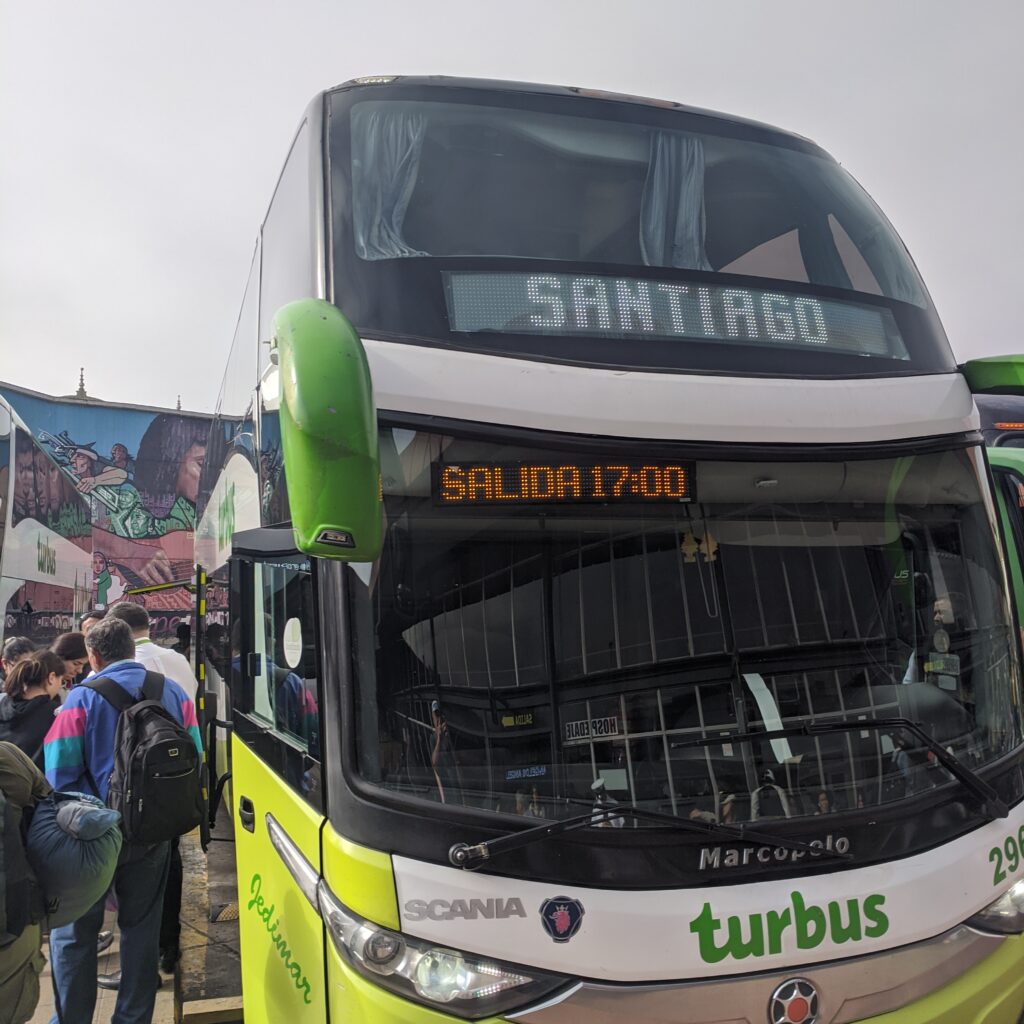
I took a day trip to Concón, a popular resort town known for its dunes, beaches, boardwalk, and nightlife. The destination itself was polished and relaxed, but the bus ride there told a different story.

We passed through several small towns along the way. Kids were playing soccer in open spaces surrounded by trash—laughing, running, fully present in the moment. It was striking and uncomfortable at the same time.

I’d seen this before in Brazil, and seeing it again was a reminder of how widespread poverty can be across parts of South America. Informal housing climbing hillsides, communities built wherever space allows, and families making the best of what they have—it’s impossible not to notice when you’re moving through the region by ground instead of flying over it.

Travel like this has a way of pulling you out of abstractions. The inequality isn’t theoretical—it’s right outside the bus window. And while places like Santiago and Concón have their beauty and energy, those moments in between are often what stay with you the longest.

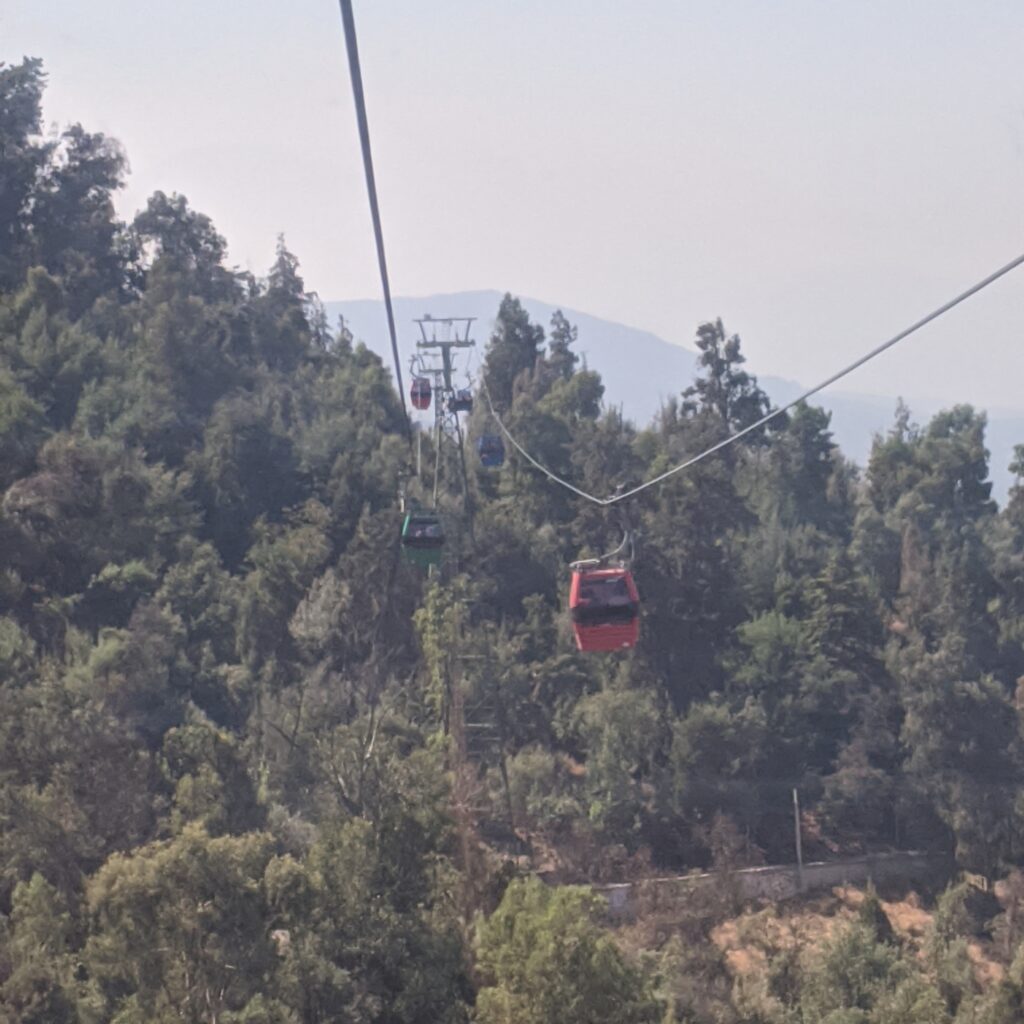
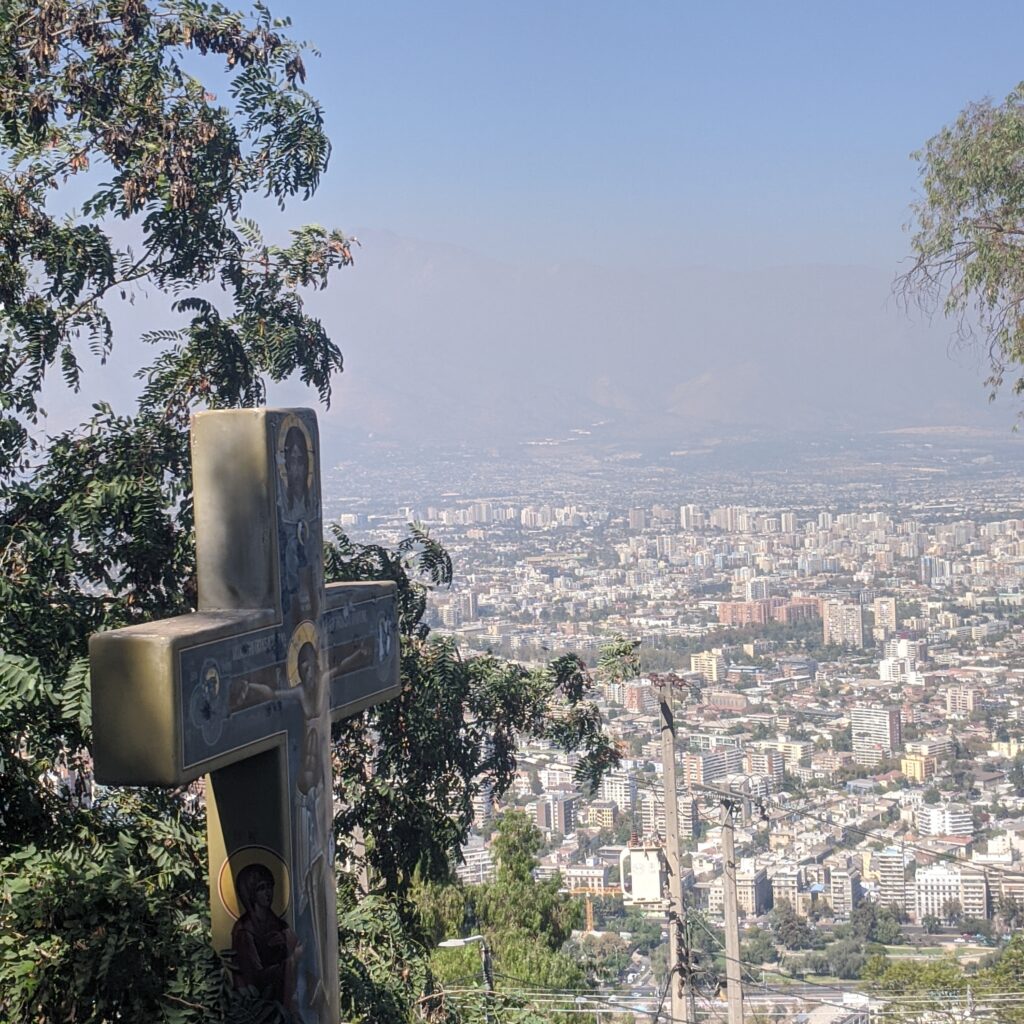
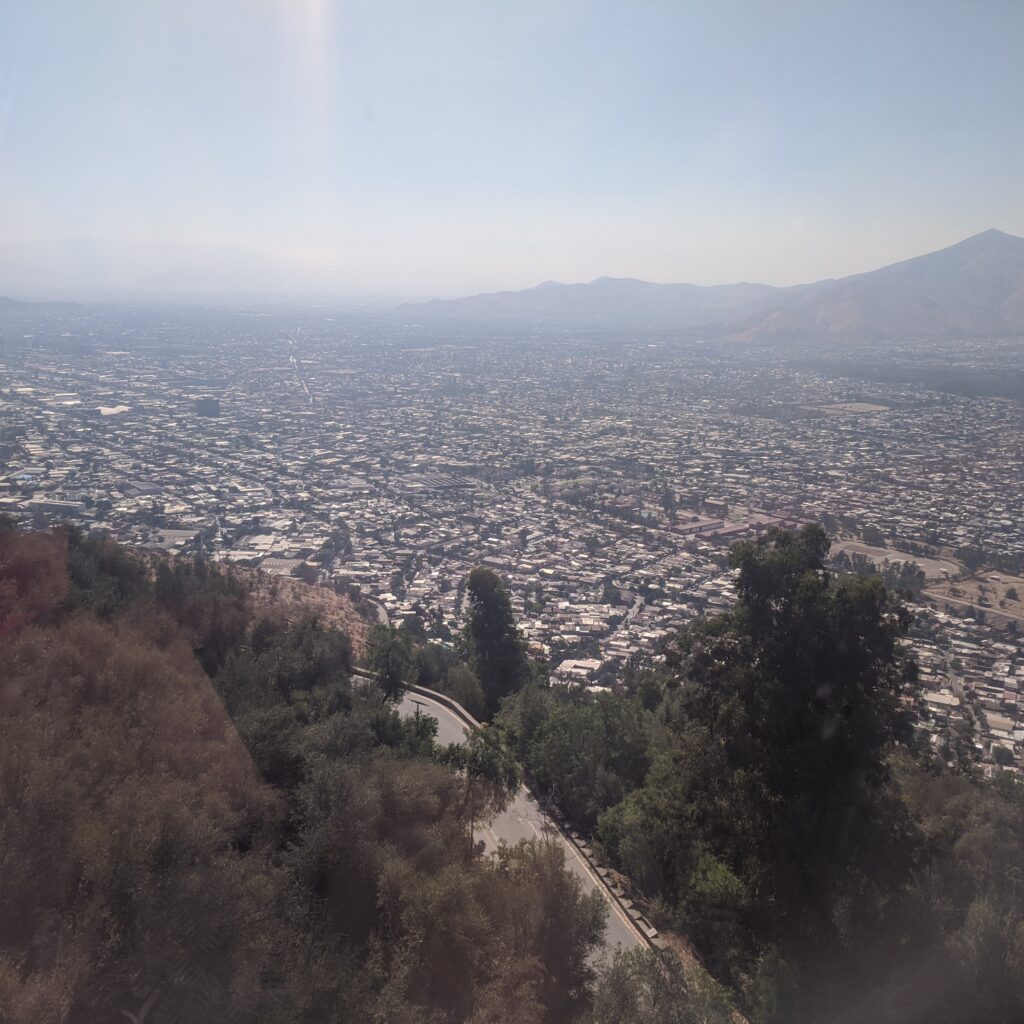
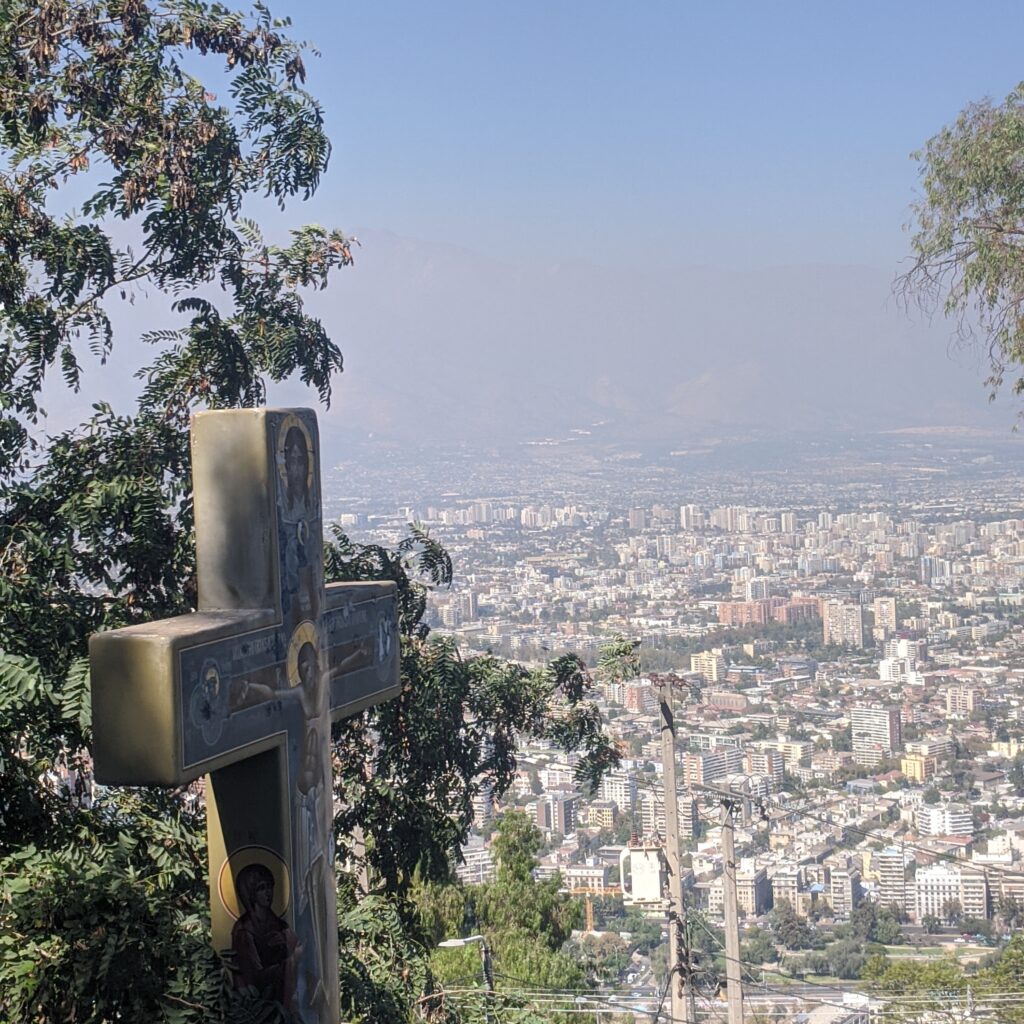
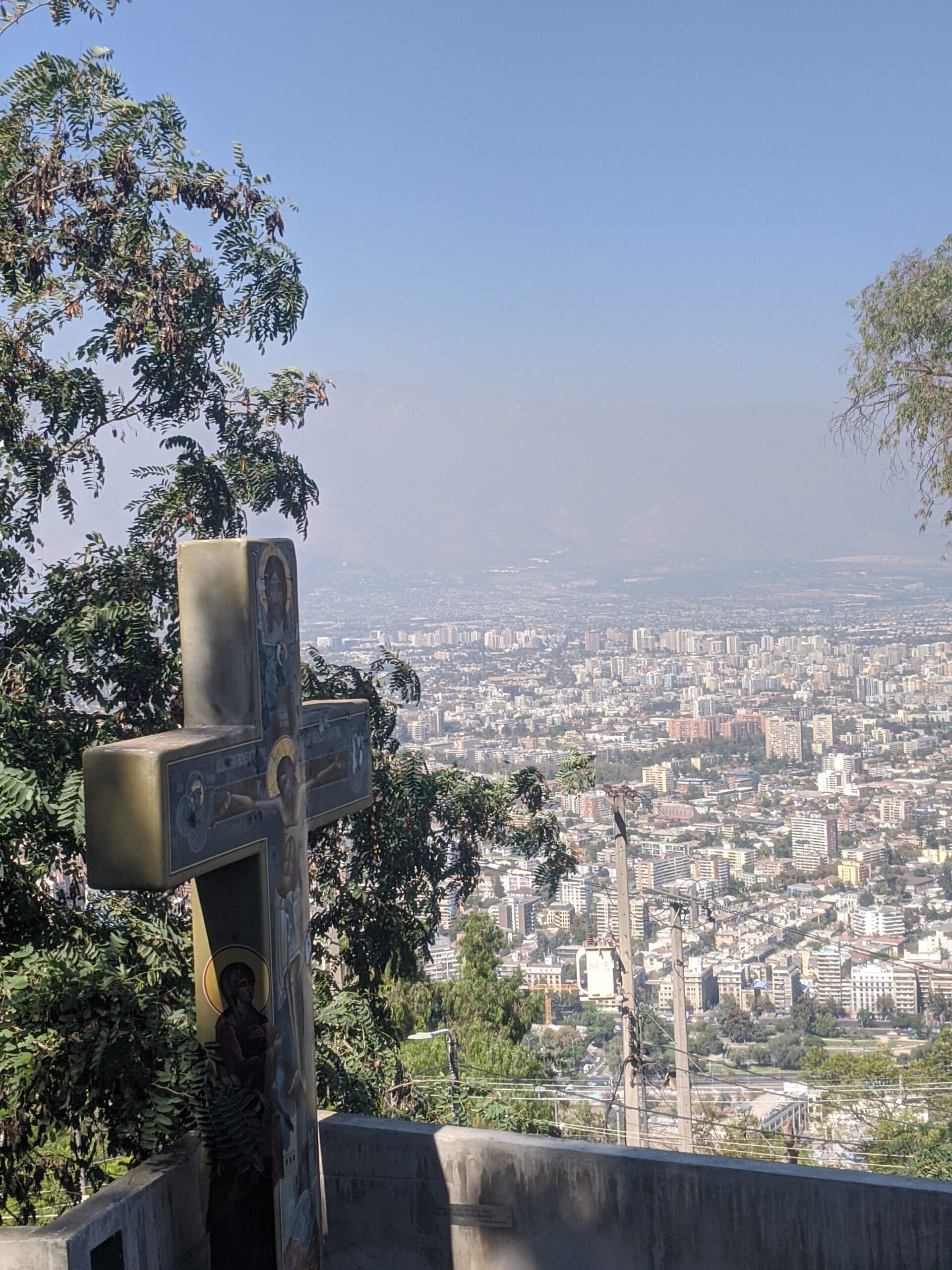
The biggest highlight of my time in Santiago was visiting Metropolitan Park of San Cristóbal Hill. Getting up high above the city completely changed my perspective and made it crystal clear just how massive Santiago really is.

From the top of San Cristóbal Hill, the city stretches endlessly in every direction, with the Andes looming in the background and neighborhoods blending into one another as far as the eye can see. It’s one of those viewpoints where everything clicks—the scale, the density, and the complexity of the city all at once.

Pictures never fully capture it, but they come close. I’ve included a few photos (and a video) here, and I hope they do it justice. Standing up there, looking out over Santiago, was one of those quiet travel moments where you just stop and take it all in.

After a fun ride up, we finally reached the top—and somehow, the view was even better than what we’d seen on the way up. Standing there above Santiago, with the city spread out in every direction, really put its scale into perspective.

It was one of those moments where you stop taking pictures, stop moving, and just take it in.

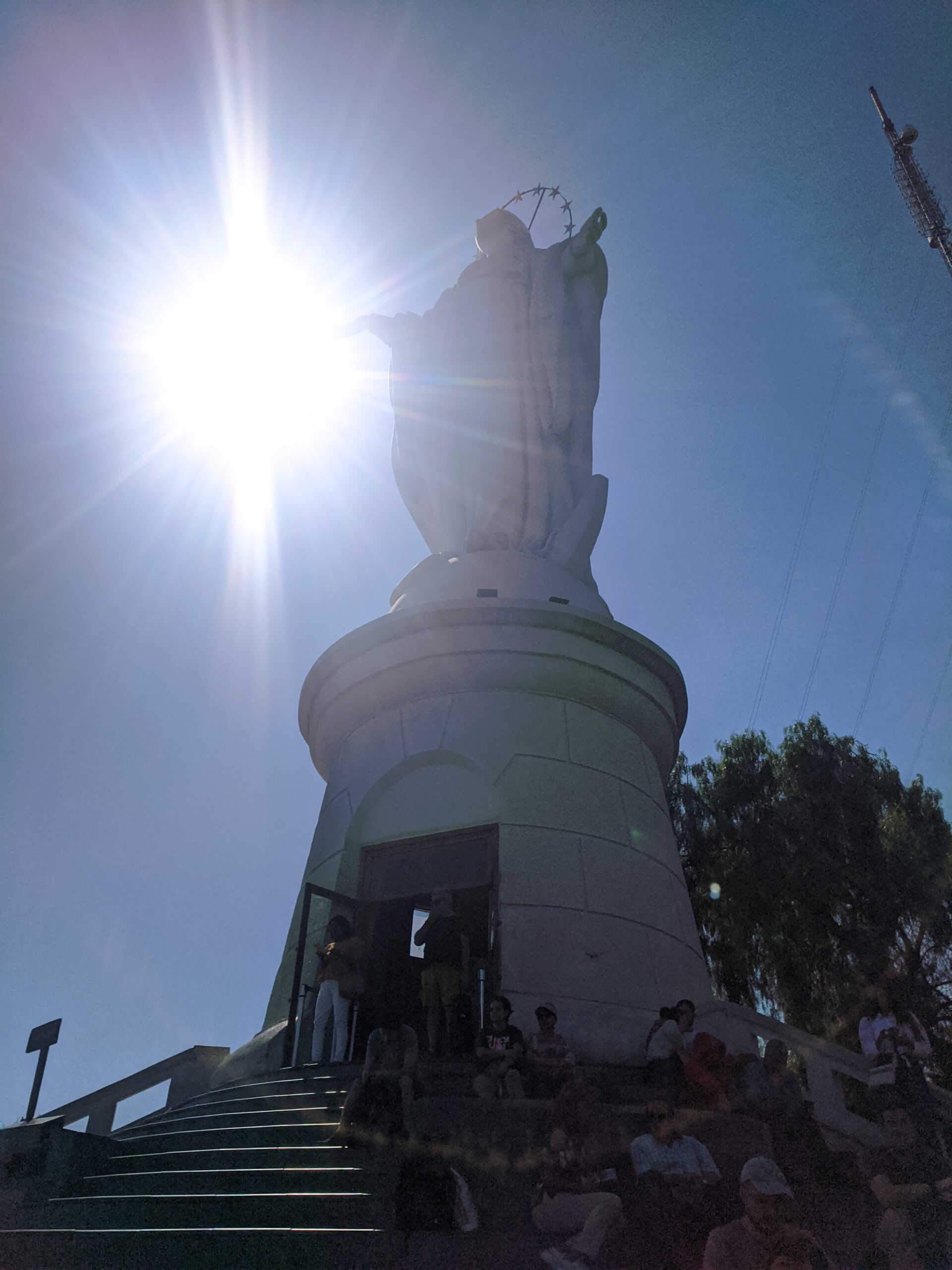
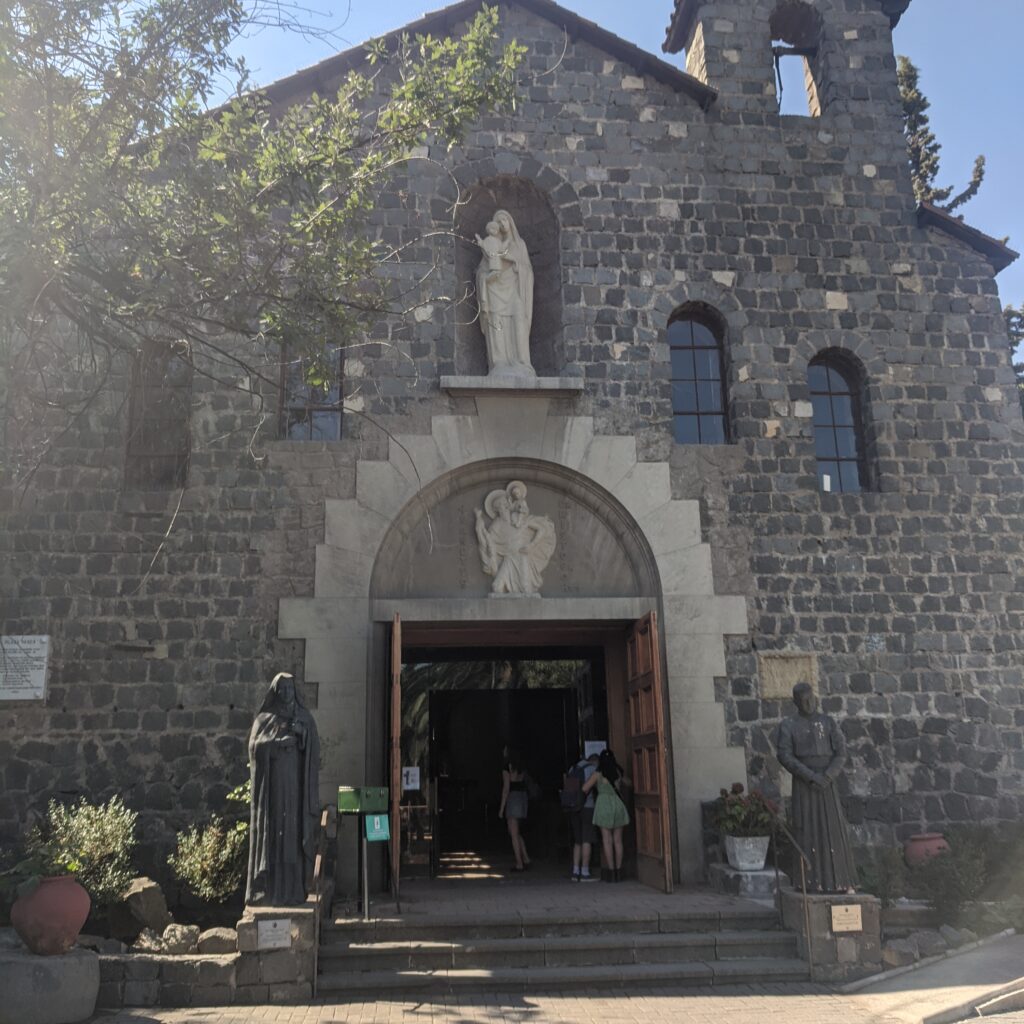
At the top of Cerro San Cristóbal, there’s a beautiful little church that feels quiet and understated compared to what comes next. Just beyond it stands the massive Virgen de la Inmaculada Concepción, watching over the entire city from above.

Seeing it immediately reminded me of Christ the Redeemer in Rio de Janeiro. Different scale and style, but the same feeling—these monuments aren’t just landmarks, they’re symbols. You feel their presence long before you understand their significance.

Standing up there, with Santiago spread out below, it was one of those moments where travel connects places in your memory. Chile and Brazil, different cultures and landscapes, but tied together by perspective, altitude, and awe.

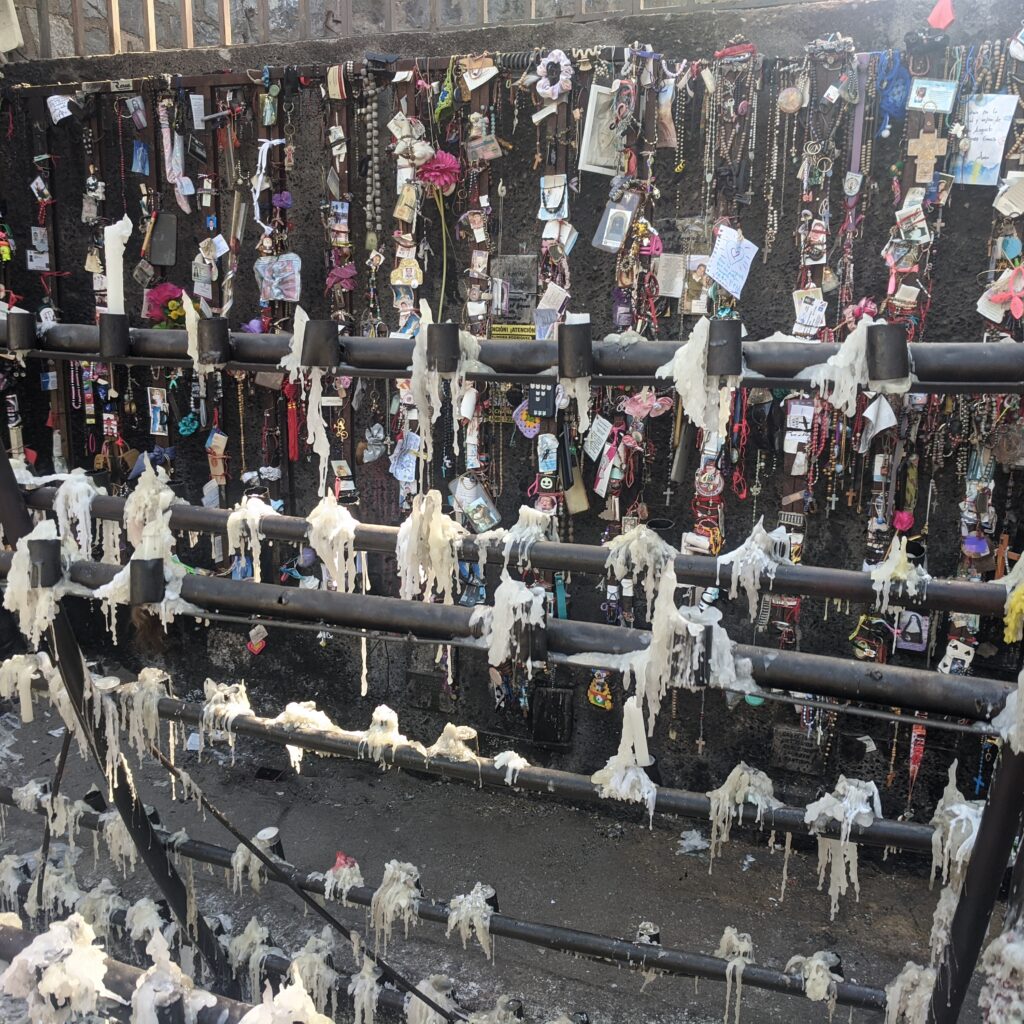
Every time I visit a church somewhere in the world, there’s that familiar ritual—lighting a candle for someone you want to pray for, and leaving a small donation. It’s simple, quiet, and grounding, no matter where you are.

My mom used to do this all the time, later in her life. Every church visit meant a candle lit, a pause, and a moment of intention.

And I know—without a doubt—that a lot of those candles were a prayer for me. 🙏🏻

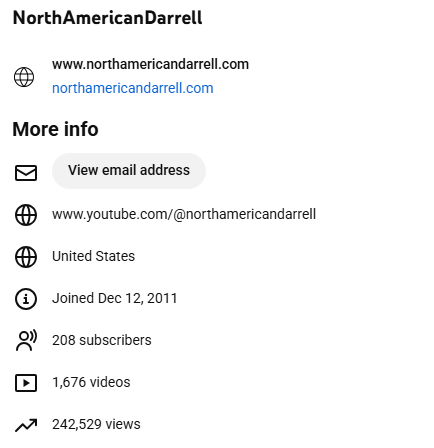
Check out my YouTube channel for 1,500+ travel videos from around the world, focused on geoarbitrage, slow travel, and living well without overspending. Real cities, real costs, real movement—nothing rushed, nothing staged.

NorthAmericanDarrell – YouTube

Smash that subscribe button like it’s the last beer in the fridge on a Saturday night.

Screenshot_20250705-170142

No-alchohol beer – He likes it!🥳

Disclaimer: This is NOT the final answer, but it has become a clear option for IPA consumption for me!  IPAs are my favorite and can have up to 8% alcohol, which can put me in the shitter, quickly!

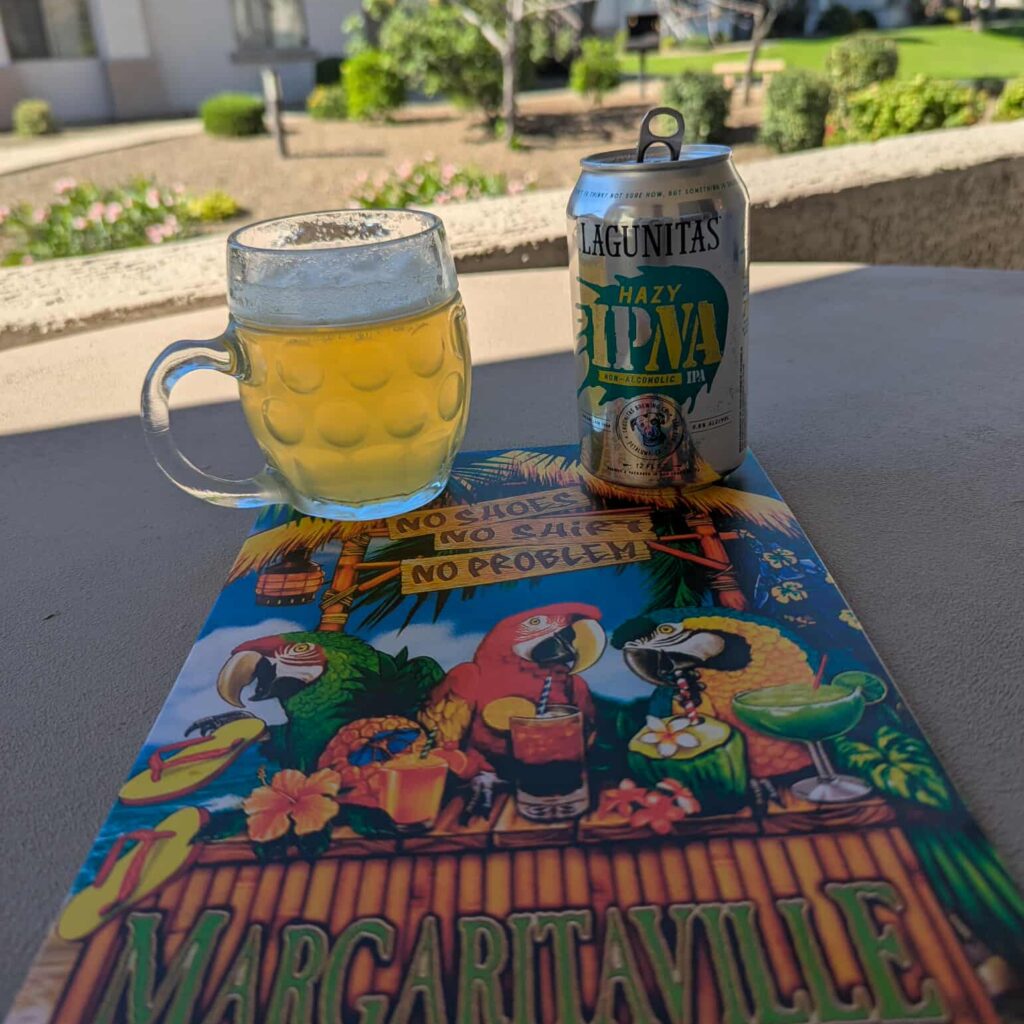
One of my favorite things to do when traveling is trying the local beer. There are microbreweries in every city, so I can try them during my visits and have done so over the years.  Honestly, I never really considered NA beer until trying them and realizing how good they are and better yet, how they don’t make me feel.  

I get the same feeling of drinking a beer while watching the game, with no hangovers or questionable decisions.  Talk about a win-win-win!

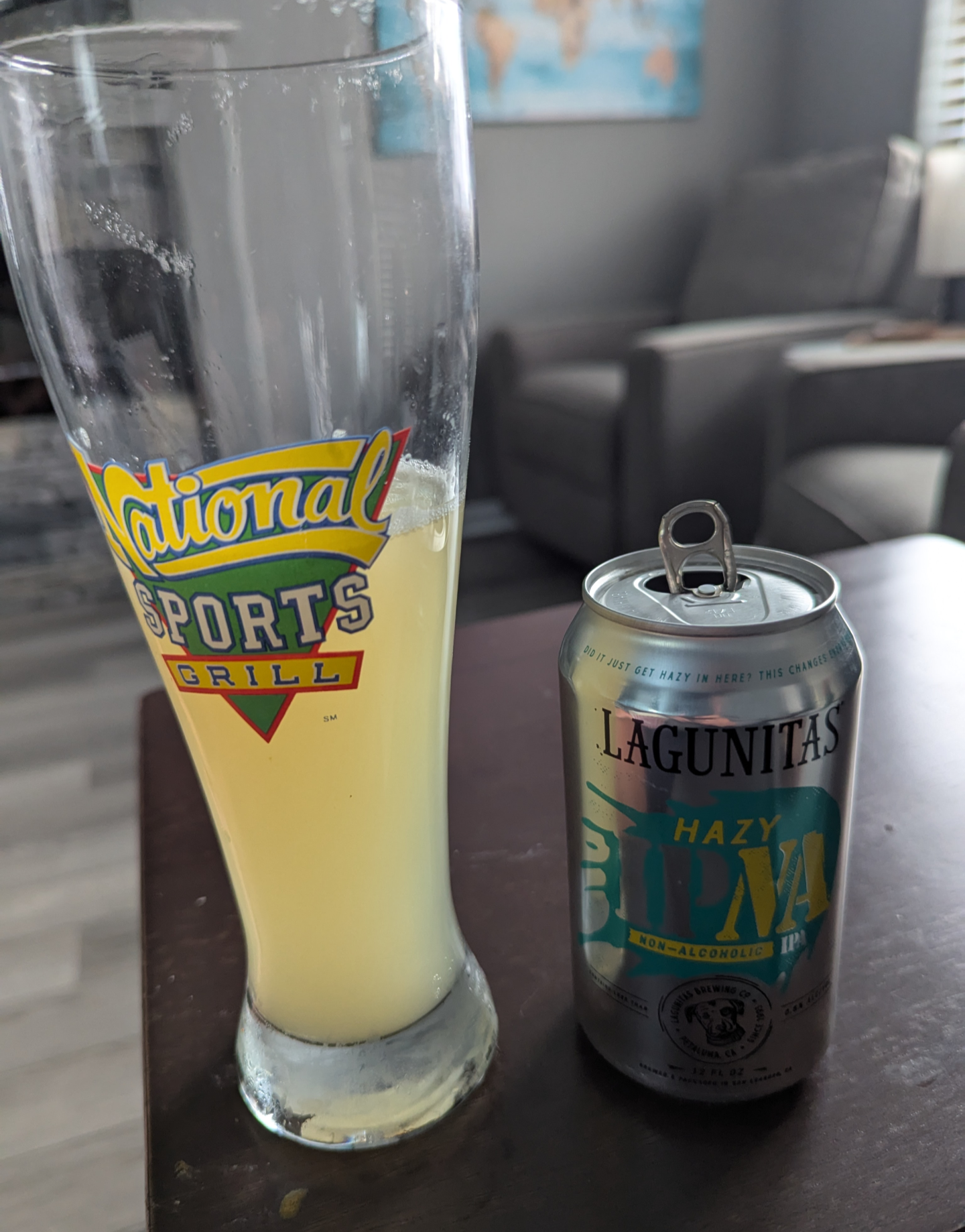
I have tried quite a few NA IPAs, and I will share my thoughts in this post in hopes that you give them a chance.  One of the first IPAs on my market that I remember is Lagunitas.  

These have put me under the table more times than I would like to admit, and I quit drinking them years ago.

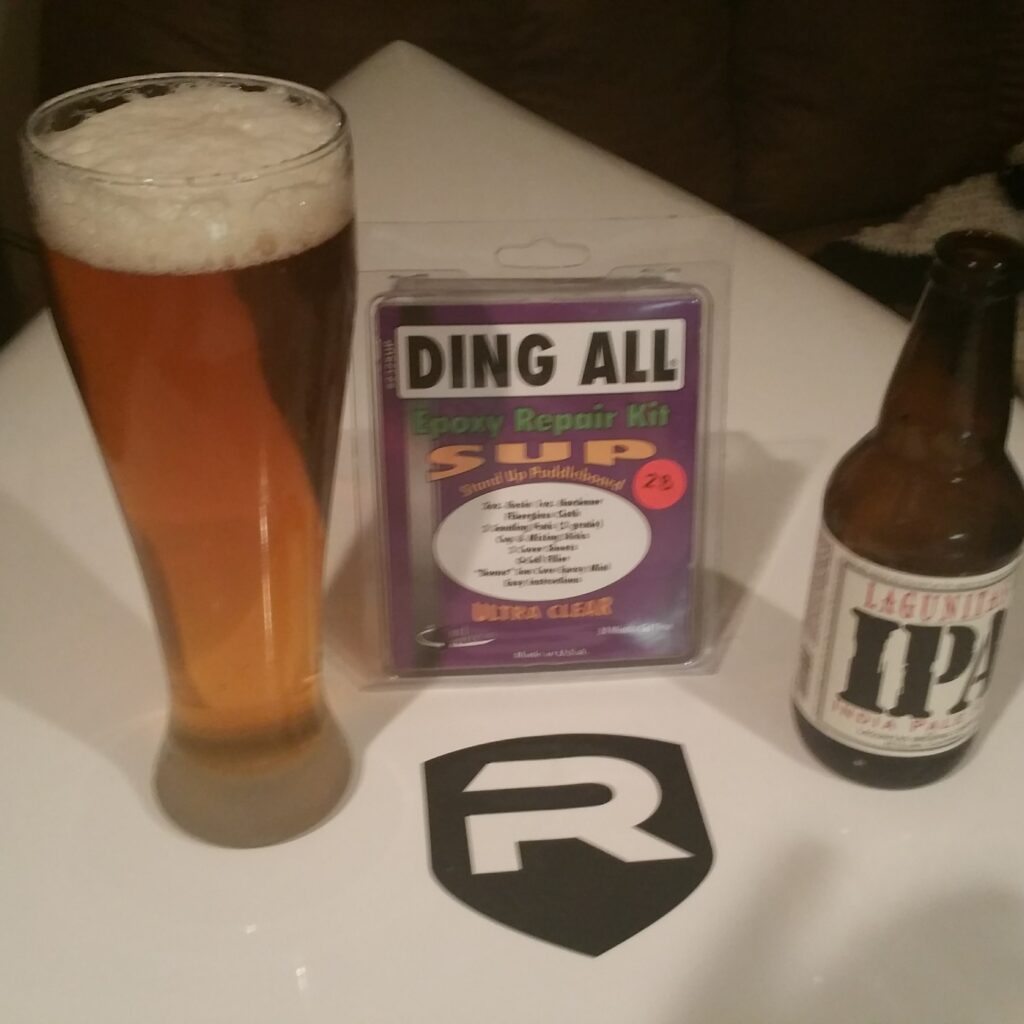
It wasn’t hard to dig up an old Lagunitas picture, I did ding all, including my liver (LOL). The Lagunitas India Pale Ale (6.2% alc): 190 calories per 12 fl oz 🤪

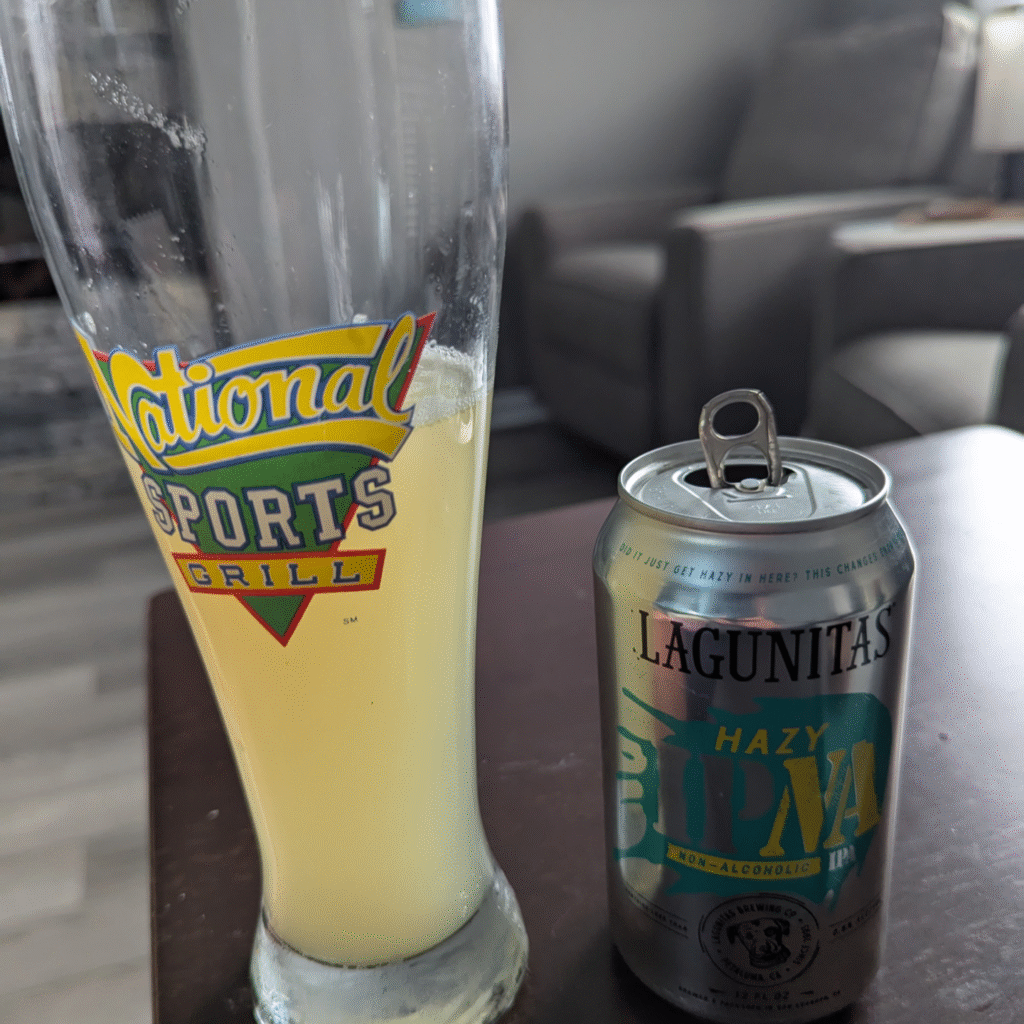
The next picture was the first time I tried a similar NA version, and what an amazing surprise.  Here is the description from their website, and you can find more information by clicking here:

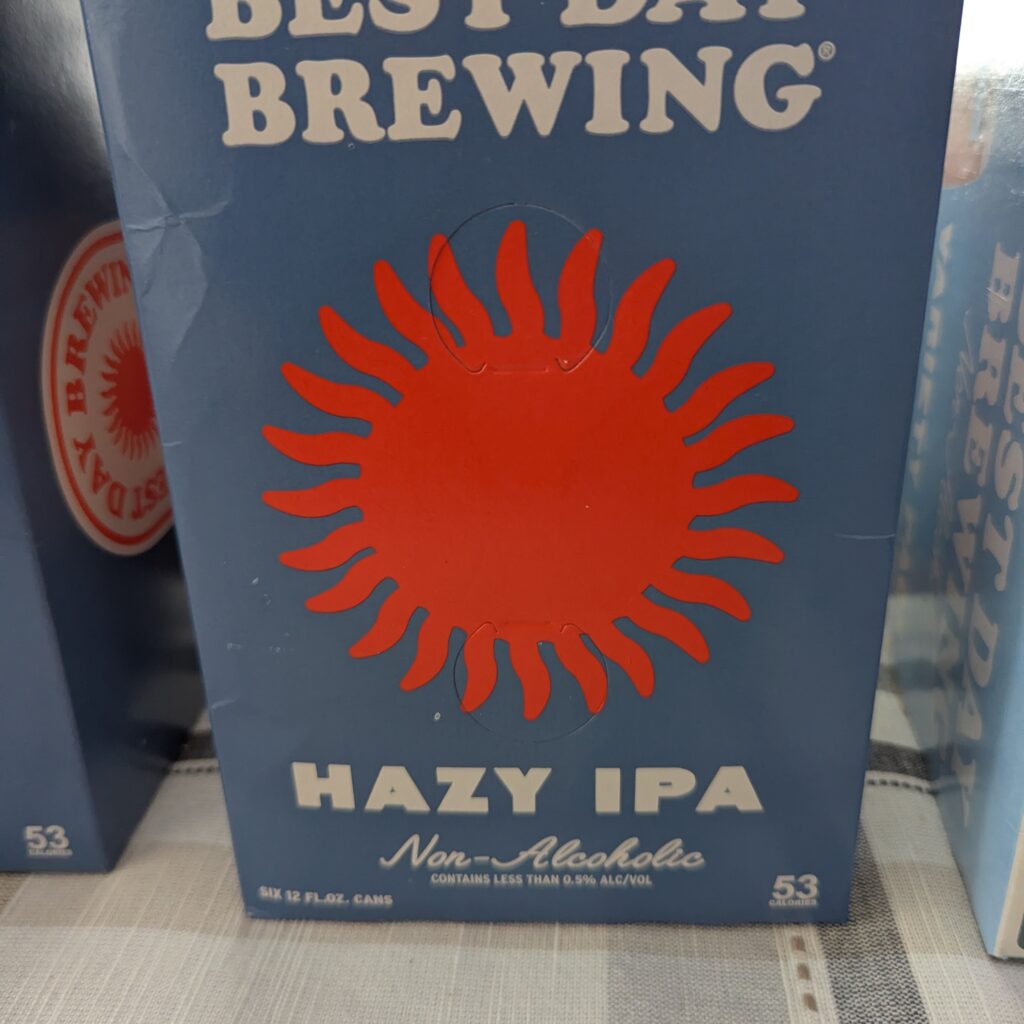
“With the rising need for more near-beer, and with Hazys taking over beer fridges, our clever brewers did the math and put the two and two together and gave you .05% and 60 calories. Enter Hazy IPNA, a flavorfully juicy non-alc option that’s packed with passionfruit flavor. It’s bright and hoppy like our IPNA, only this time we went crazy hazy and tropically hoppy. It’s everything you want in a refreshingly satisfying IPA…It has all of the juicy flavor, all of the haze, and none of the compromise.”

 I have tried other brands and find myself at Total Wine package store looking for new onesGoogle and here is a “Top 10” and “Top 12” I found to during my research to try to keep this momentum.

The next on my list of favorites is Guinness NA.  I have also had a few of the original, including tasting them right from the Brewery in Dublin, Ireland, where I acquired the unique taste.  This NA tastes almost the same, and it was a staple for me during the Edmonton Oilers’ run during the hockey playoffs in 2025.

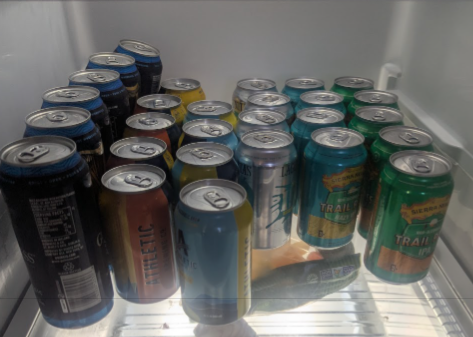
The secret to keeping this trend going is finding different flavors in the fridge to avoid a beer run. 

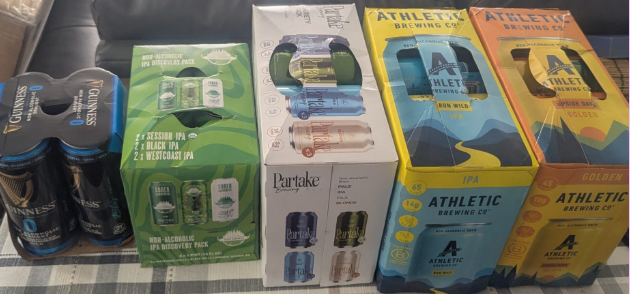
My first serious attempt was spending ~$80, which is basically the same price as regular beer. 😐

The winners in this order were Guinness, which I already mentioned, Partake IPA, Sober Carpenter IPA, Athletic IPA, and then the far right Athletic, which was ok with a lime but watered down version of beer.  It did taste great with Clamato, which was a win to keep around.

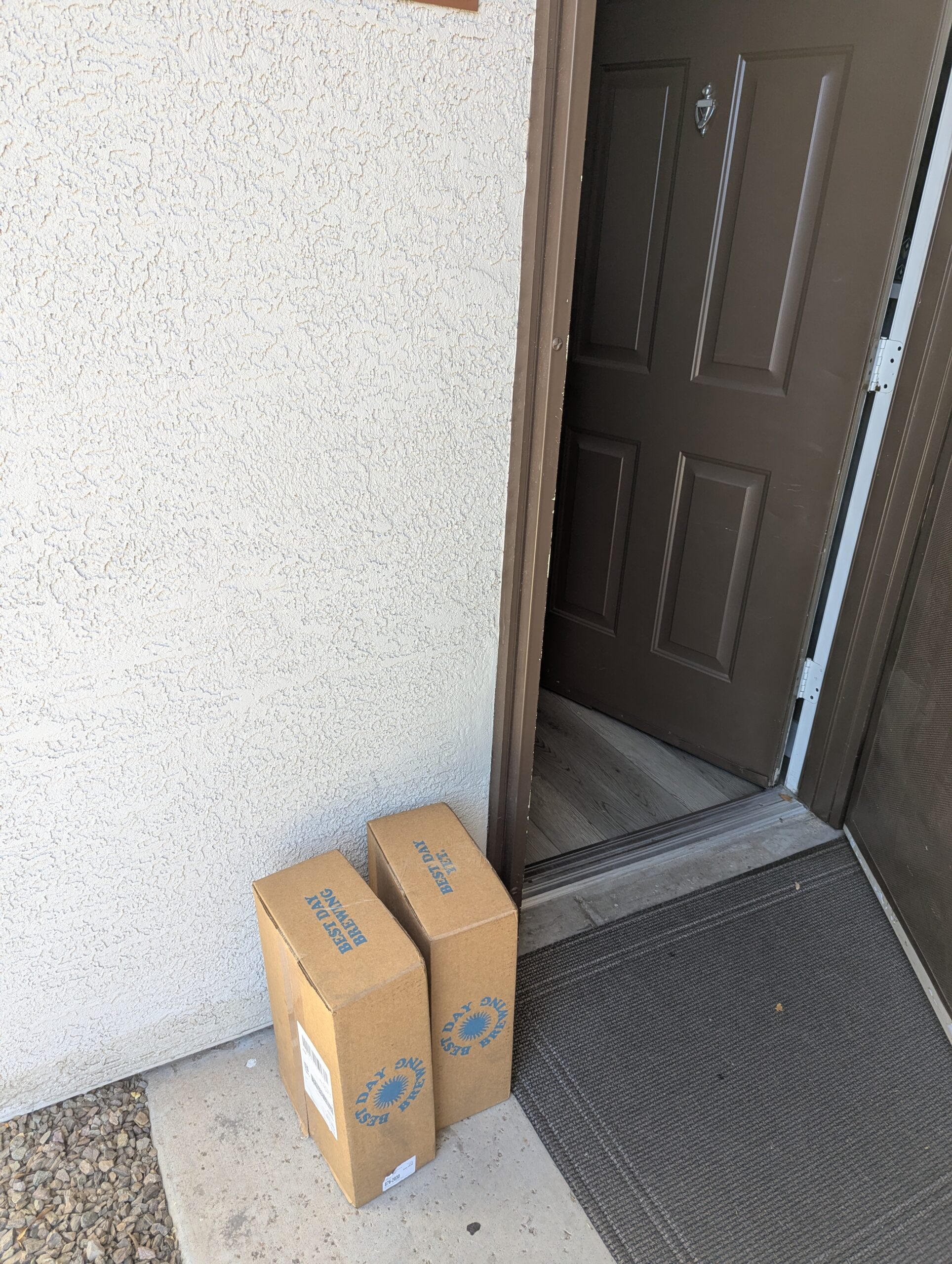
This is when I knew I was onto something awesome!  I then started researching the best IPAs and found Go Brewing, and they delivered right to my front door for FREE.  Below is $96 in NA beer with 20% off promo, which worked out to under $2 a beer. They had the best rating on IPAs, but unfortunately, they were not as good as Lagunitas, but glad I ordered them as I now have a legitimate favorite.

I have had some people congratulate me on switching to NA beer, while others ask, “What’s the Point?”.

Well, after taking a break from real beer, here is how it helped me so far:

1. I have been to the gym/spa almost every day for the last two months.

(Steam, sauna, cold plunge, hot tub on repeat for 2-3 hours)

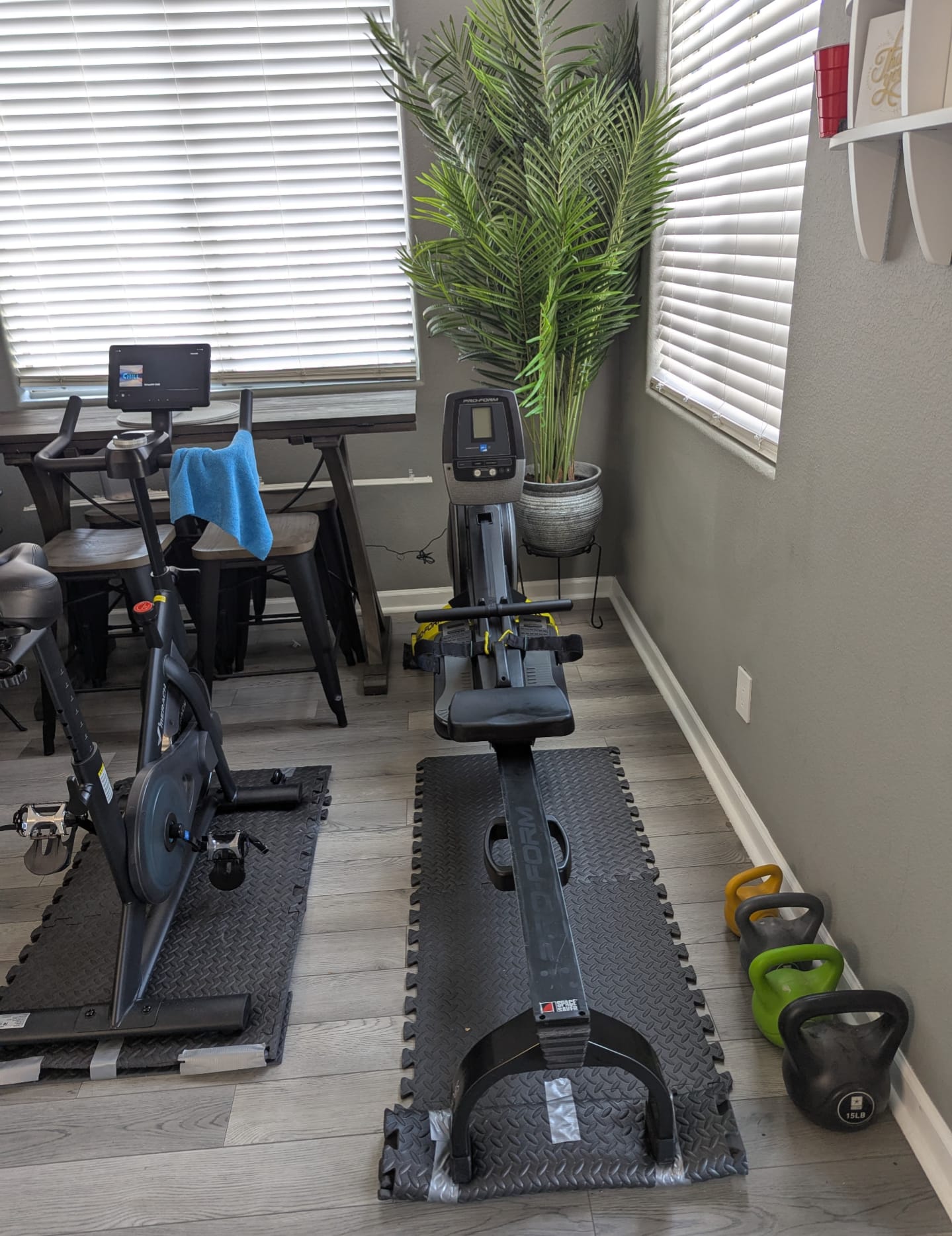
2. I set up my cardio at home and work out every morning before the gym.

3. I have not had a hangover for the last two months.

(I haven’t been back to Mexico since, but I have already packed a NA cooler). 😐

4. The best of all, I feel fantastic, and people are starting to notice my weight loss.

Admittedly, I have always been a fad person my whole life, and this may be no different.

I have lost/gained many times over the years, which is something that does not stick long term.  It has to be a lifestyle change, and a routine takes a lot longer than two months to show 100% commitment. The first thing I mentioned in this blog is that it is not a replacement but an alternative that has been working for me.  

Another good reason is to let you know that I am headed to Mexico soon and Oktoberfest in two months, which will be a good test of this fad.  A German friend told me that they do sell NA beer in Munich and there is a NA tequila that I will take to Mexico in my cooler of hope, but I will have real beer there in moderation.

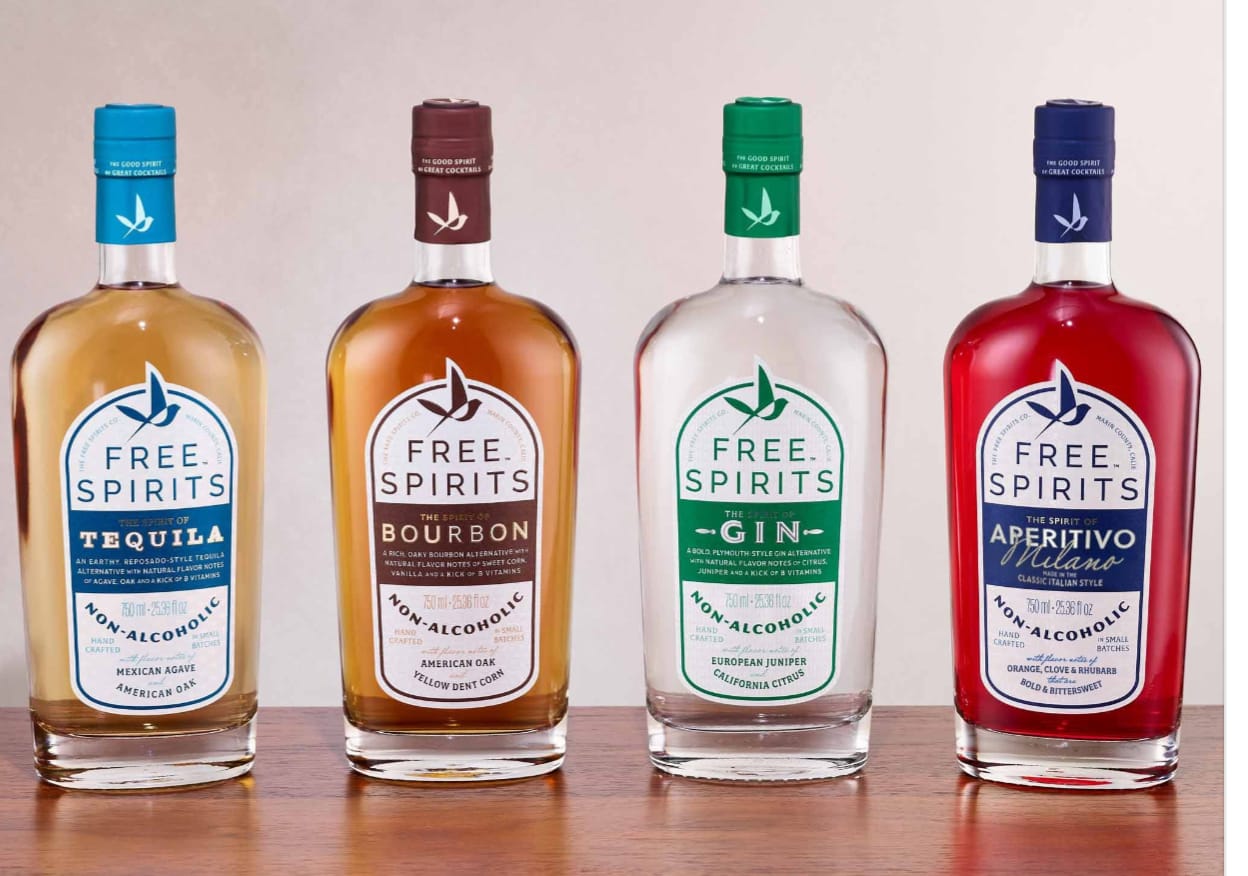
 Other than Margaritas and the odd Bloody Mary/Caesar, I do not drink alcohol, but you can see that there are NA options, including Ritual and Free Spirits brands.  Ritual is the number 1 seller of “Mocktail” replacements, as they use it in bars, from my understanding. Here is a YouTube video I found, and making a mocktail margarita:

If this is something that has piqued your interest, I found another company that creates fancy Mocktails.  Some are even premade as testers and their website can be found here:

I will update my blog after Mexico and Oktoberfest, as I often do with my blogs.

Here are the NA beers I have tried with links, and I will also continue to update.

Athletic Brewing 

Lagunitas Hazy IPA

Sober Carpenter

Guinness 0.0

Go Brewing

Partake Brewing

Sierra Nevada Brewing

Bero 

Penn’s best (Less than half price compared to others – $3.99 six pack – most others $10+)

Heinieken 0.0 

Tecate 0.0 Mexican cerveza

What is your favorite NA feel-good beer so I can add it to my list?

default

Solo travel – don’t knock it, until you try it!

rarely had great experiences traveling with other people—and yes, I fully understand that I’m the common denominator here. I’ve done the math.

That said, I genuinely don’t know how some people manage to travel together at all. Maybe they’re just comfortable arguing as a lifestyle choice. I’ve seen it. I still see it. Loudly. In public. Over nothing.

I was told more than once that I needed to change, adapt, or compromise… otherwise I’d end up traveling alone forever.

Well… look at me now.
It’s working out just fine.

Meanwhile, you’re still arguing about:

whose turn it was to plan

where to park

And why that restaurant you absolutely had to try is suddenly a disaster

🫡 Godspeed.

Some of my worst vacations were spent with other people.
Some of the best times of my life have been solo.

Watching grown adults bicker nonstop doesn’t look relaxing to me. I’ve been there. I’ve lived it. I’ve watched it unfold too many times to pretend it’s “part of the experience.”

Getting yelled at like a puppy in public while supposedly on vacation?

Yeah… HELL NO.

Solo travel isn’t for everyone.
But neither is forced compromise pretending to be a “great trip.”

Pick your chaos wisely.

So many people can’t even go out to dinner by themselves—let alone visit another country solo.

I honestly think solo travel (and yes, solo dining) is a skill. And like any skill, it has to be learned. This didn’t come naturally to me either.

It came from years of traveling for work. If you didn’t force yourself out of the hotel or apartment, you’d just stare at the same four walls every night. That gets depressing real fast. So I started going out alone—restaurants, cafés, even the movies.

Turns out, it’s kind of amazing.

No negotiating where to eat.
No waiting on someone who “isn’t hungry but might order something.”
No small talk when you just want to enjoy the moment.

And let’s be honest…

Not having to share popcorn is elite behavior.
Everyone wants the last handful. I’m just brave enough to admit it. 😁

Solo travel isn’t lonely—it’s efficient.
Solo dining isn’t sad—it’s peaceful.

Once you learn the skill, it’s hard to give it up.


I recently came across an article on Hostelworld that inspired me to write more about my solo travel and hostel experiences. Their content does a great job digging into why hostels are such a natural fit for people traveling alone.

As of this blog, I’ve stayed in hostels in:

Thailand

Philippines

Vietnam

Cambodia

London

Austria

Bulgaria

Greece

Hungary

United Arab Emirates

United States

And my favorite Hawaiian island, Kona, multiple times

(I know I’m forgetting a few—so I’ll keep updating the list as I remember them.)

Hostelworld’s articles go much deeper into the why behind solo travel and hostel culture. If this topic resonates with you, their blog is well worth a read:

Solo Traveller Hostel Blog – Hostelworld Travel Blog

At the end of the day, being comfortable on your own isn’t lonely—it’s freedom. And once you get good at it, the world opens up in ways group travel never quite allows.

I’m just going to borrow a bunch of their fancy data and stack it up against my own travels—because honestly, it lines up way better than I expected.

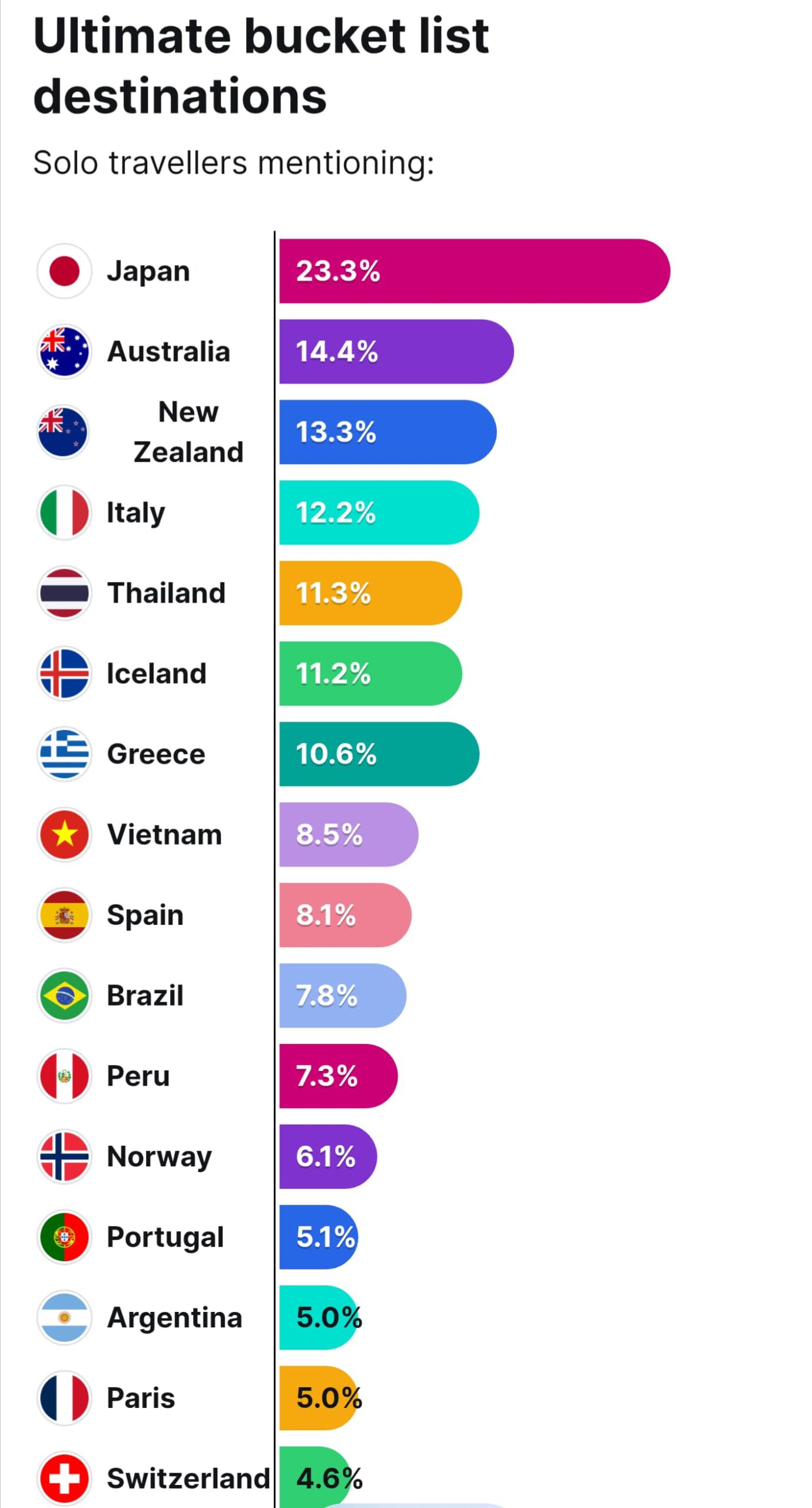
First of all… how great is it that Japan ranks as the #1 solo-travel country?
I already booked a full month in Japan for February 2026, followed immediately by another month in South Korea. Complete coincidence, obviously. Totally not validating every life choice I’ve made. 😄

While I was bouncing around Southeast Asia, I had no idea how popular Japan was for solo travelers. Then I fell down the YouTube rabbit hole (as one does), and now I’m fully committed. The planning alone has me fired up—and that’s before I even land.

And here’s the kicker…

I’ve already been to 10 of the 16 countries on their solo-travel bucket list. I’ll knock out four more on my next two trips, which leaves just New Zealand and Iceland sitting at the top of the list—according to the “experts,” anyway. 😎

Not bad for someone who was once told they’d end up traveling alone forever.

Turns out, that wasn’t a warning.
It was a recommendation.

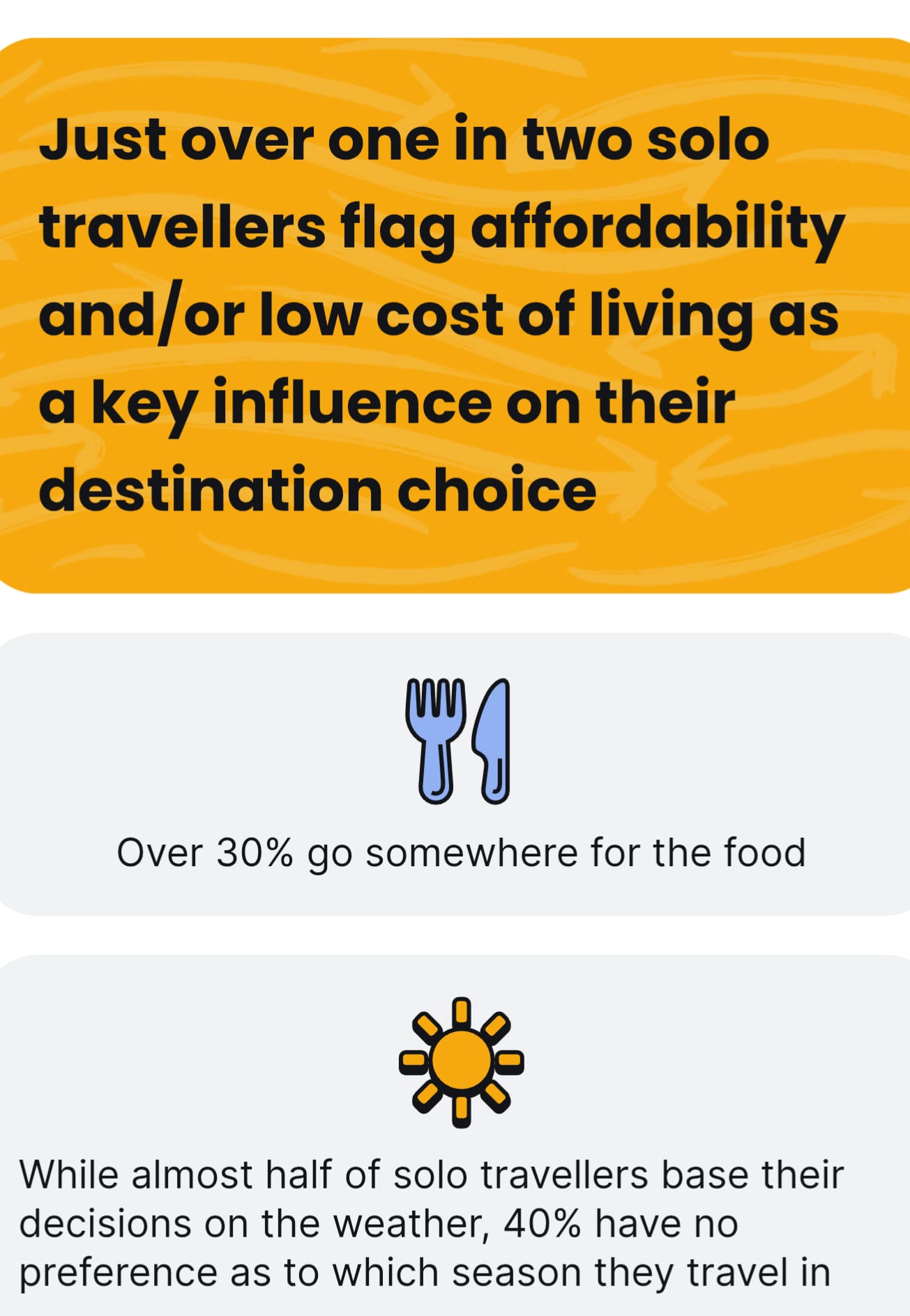
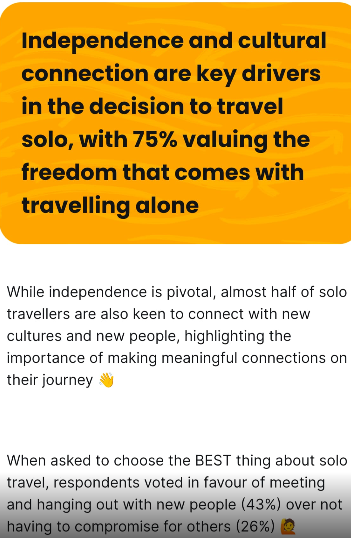
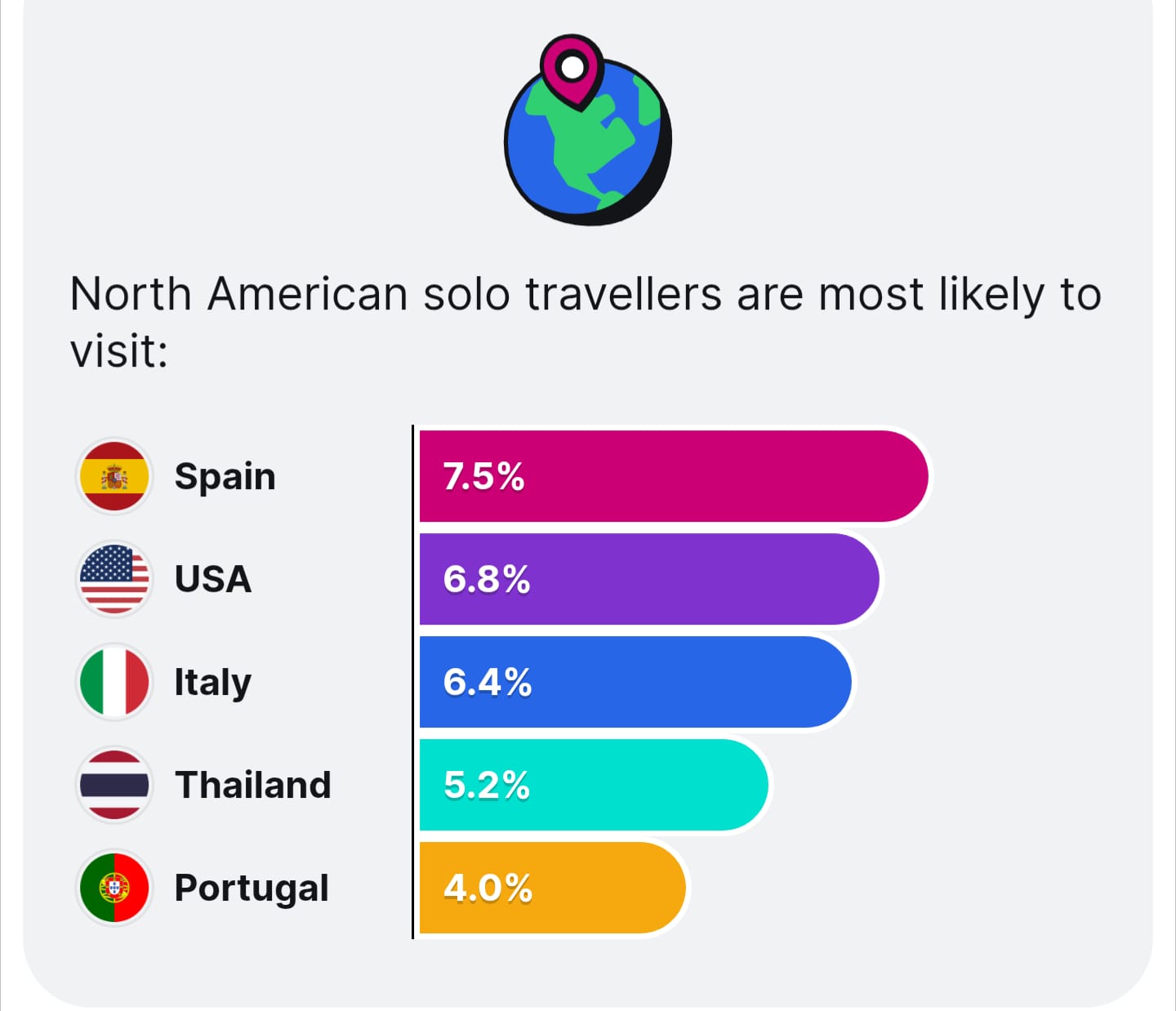
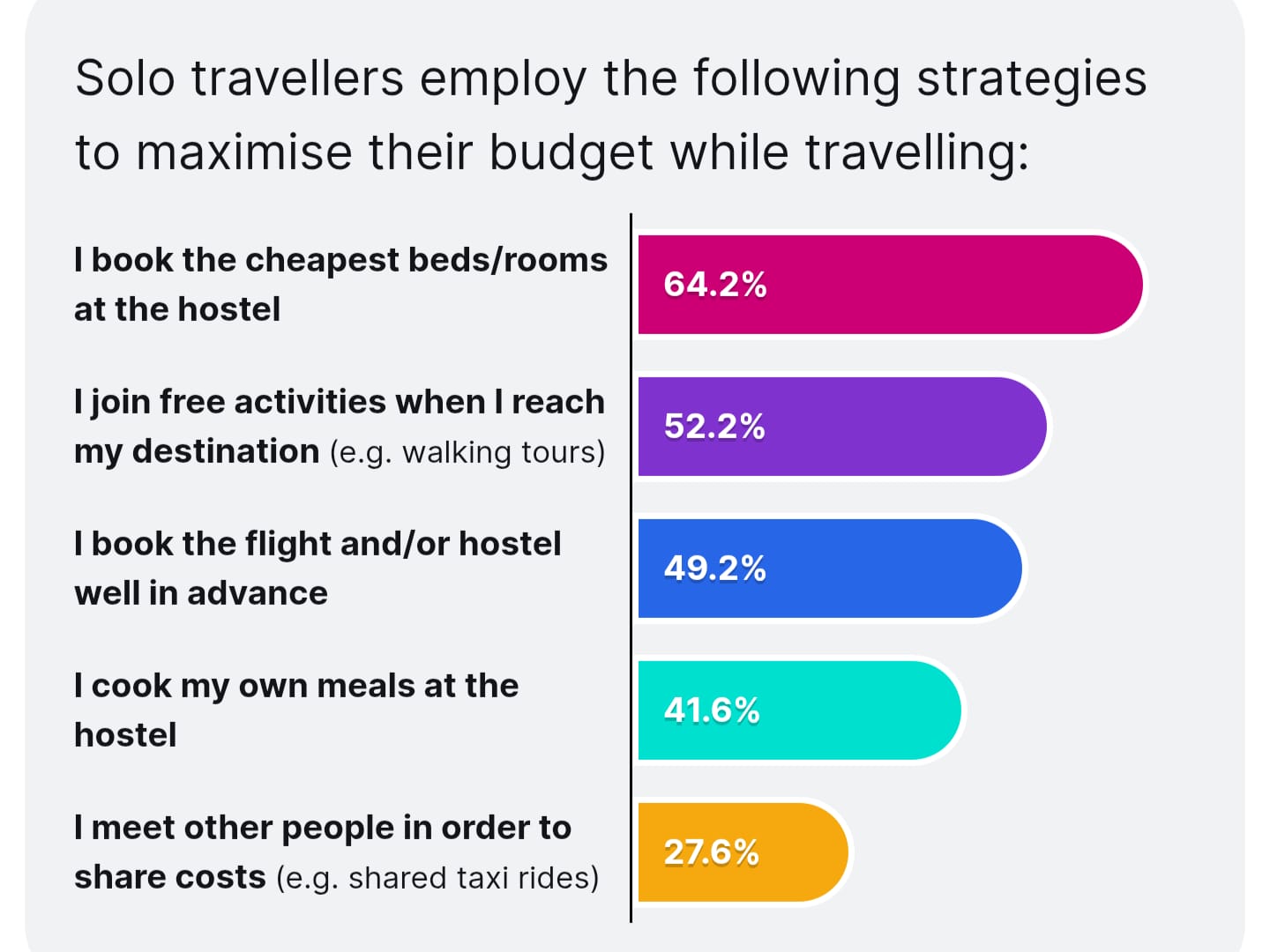
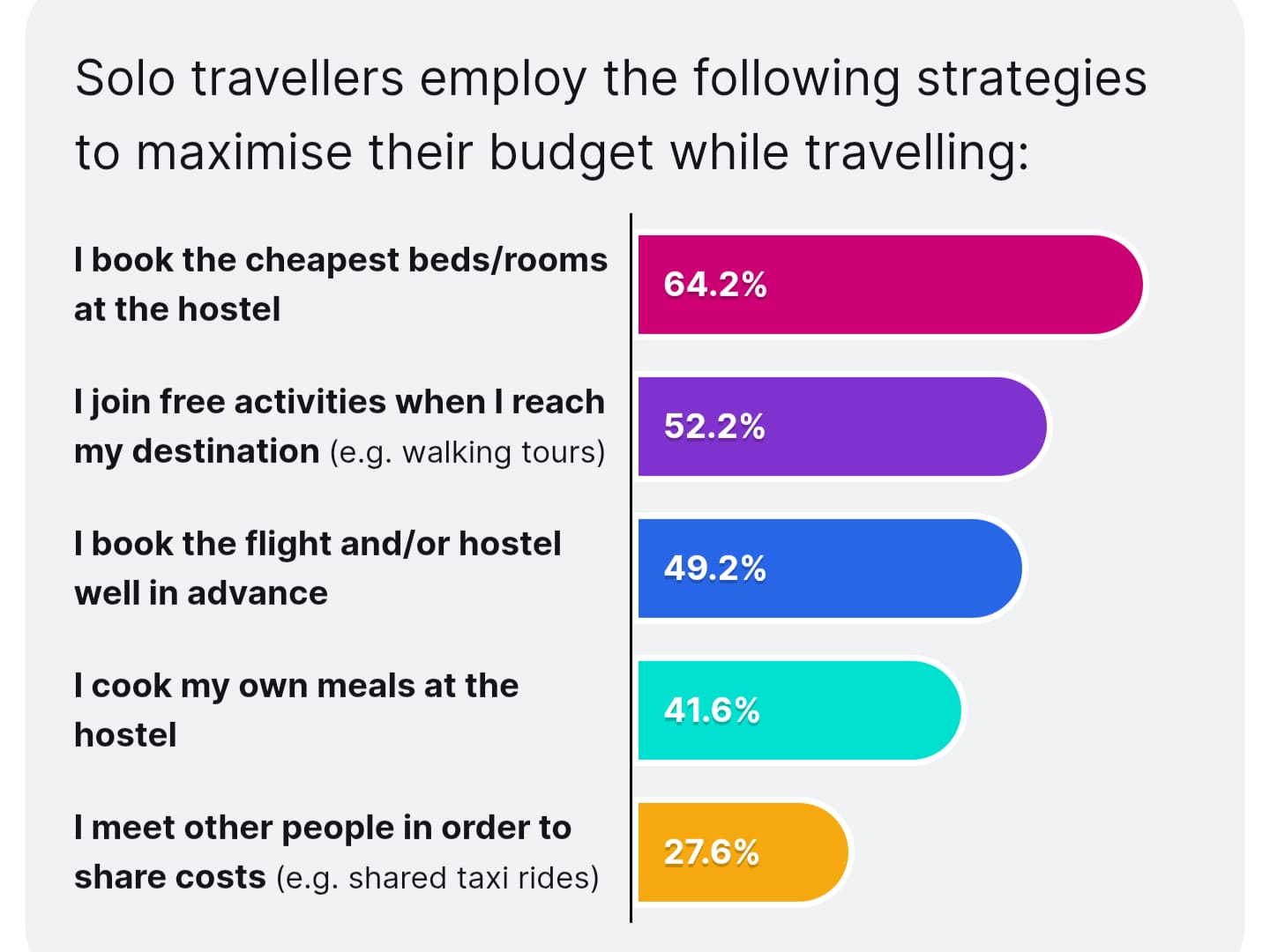
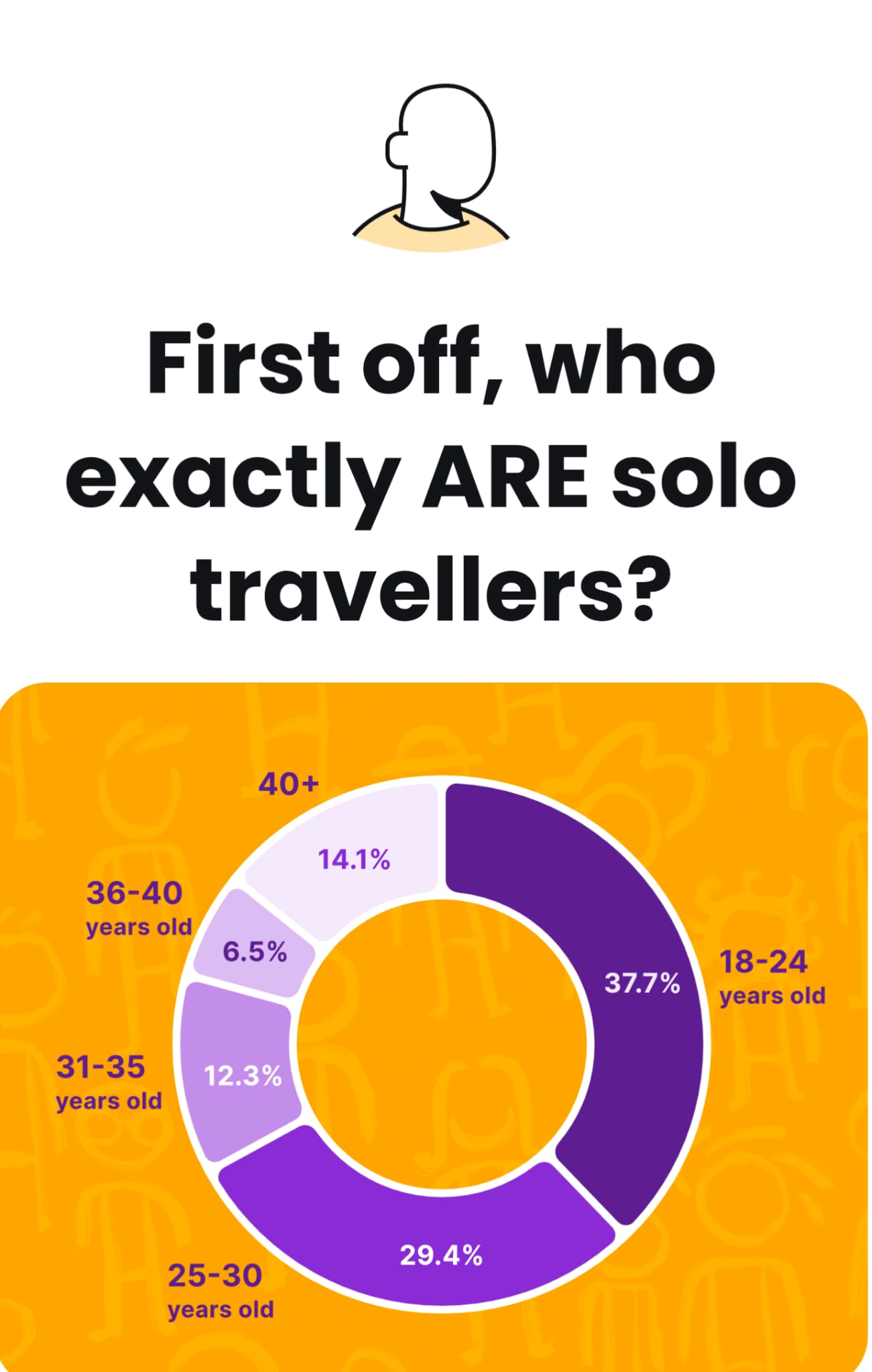
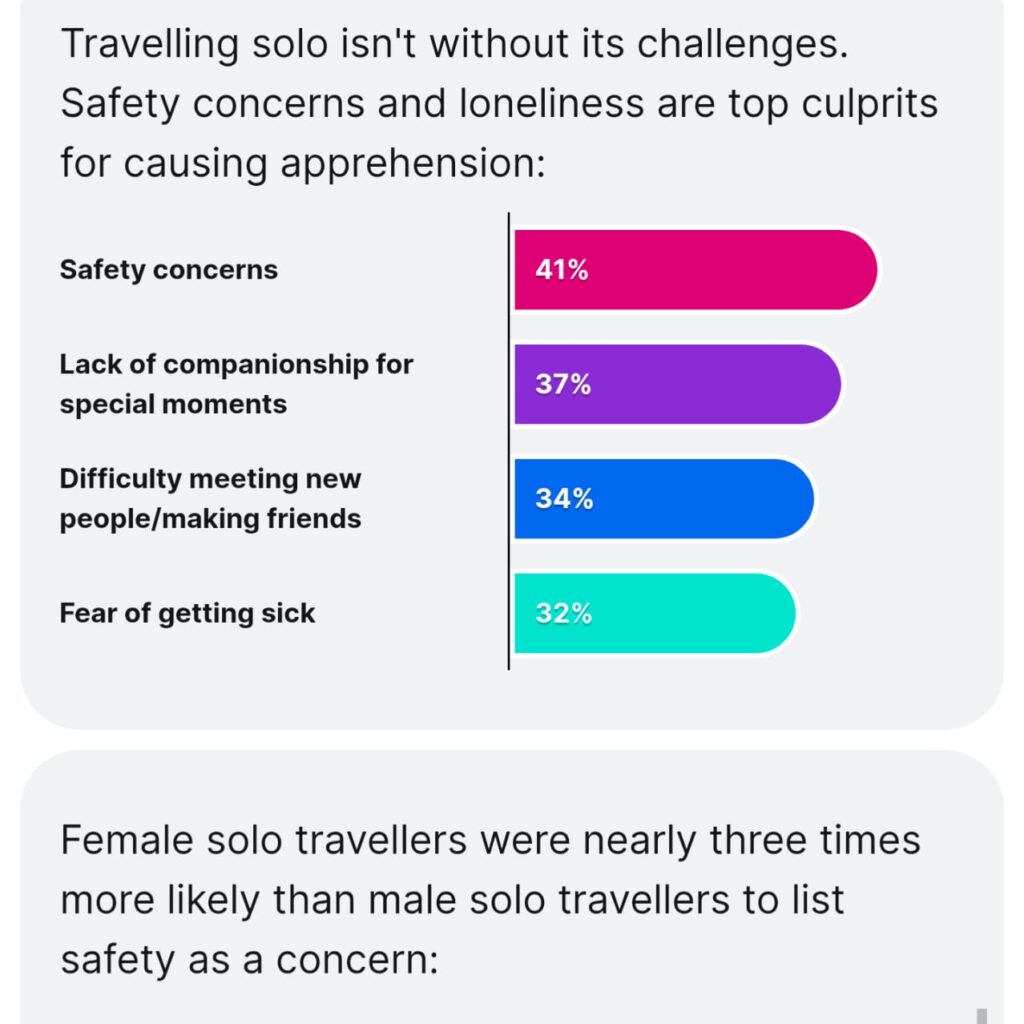
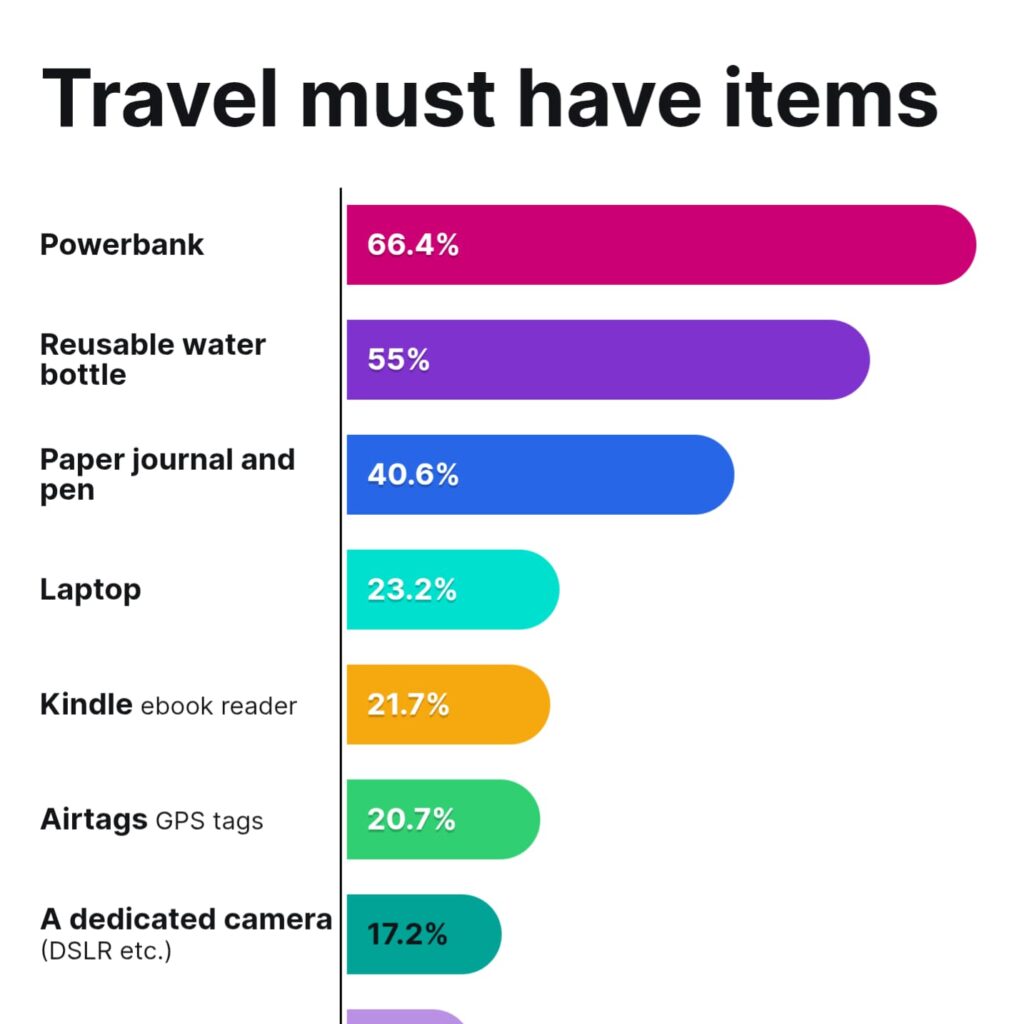
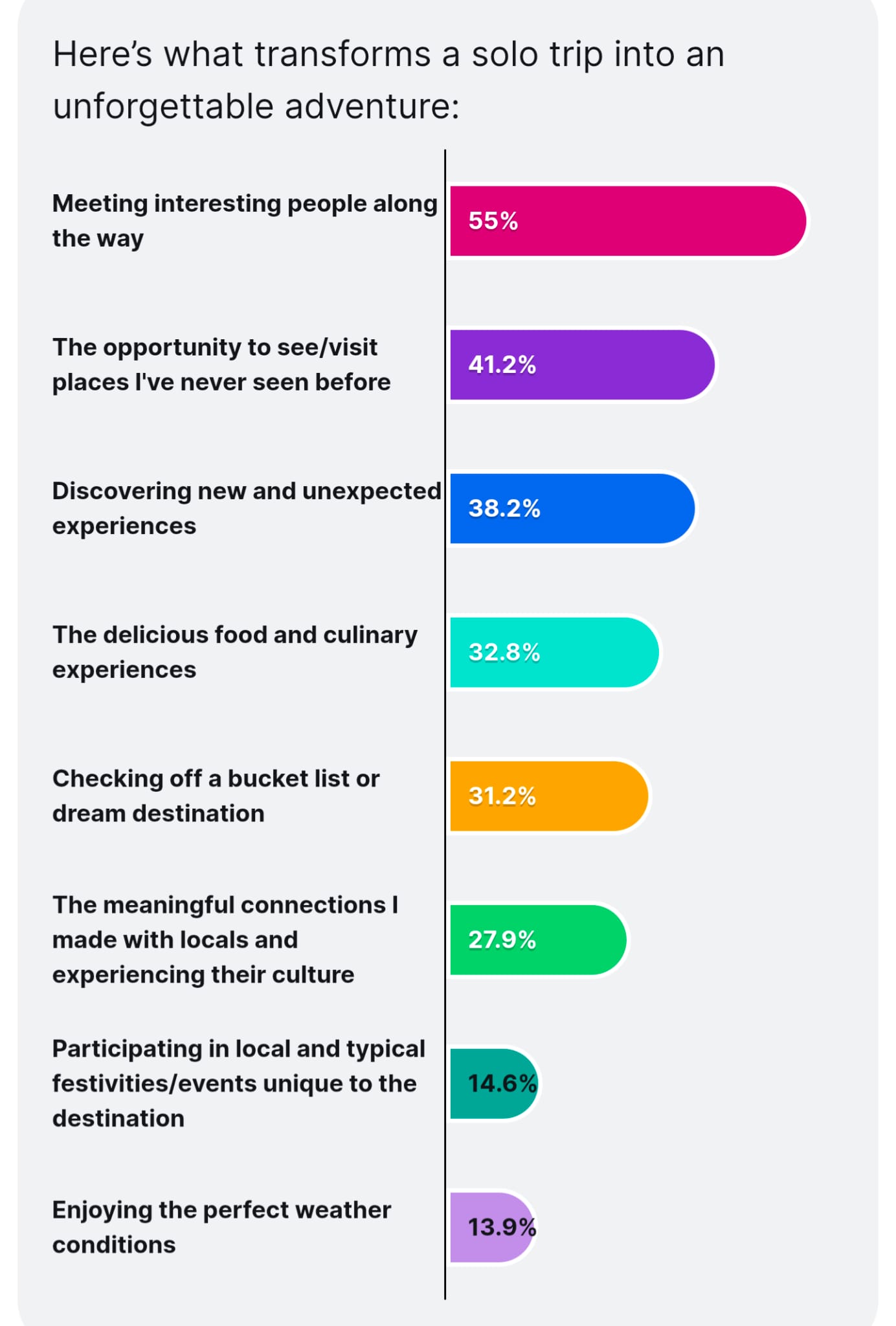
Let’s look at some of the stats on solo travelers from the Hostel World blog. These numbers help show just how big—and how legit—solo travel has become.

Whether you’re curious about who’s doing it, where they go, or why they love it, the data lines up with my own experience out on the road.

Below are the key takeaways from the blog, followed by how my travels stack up against those trends:

I know what you’ve probably been thinking since you started reading this—and trust me, I’ve been told the same thing more than once:

Aren’t you a bit old to be staying in hostels?

Maybe 🫡
But you’d be surprised by some of the experiences I’ve had.

Hostels aren’t just for 20-year-olds on gap years anymore. They’re full of solo travelers, digital nomads, long-term wanderers, and people who simply value connection over room service. Some nights it’s quiet, some nights it’s social, and some nights you end up in conversations you never would’ve had behind a hotel door.

Age matters a lot less when everyone’s there for the same reason: to see the world without overcomplicating it.

I 100% agree—the last thing I want is to make anyone uncomfortable during their travels. Because of that, I’ve developed a few personal rules when it comes to booking hostels.

First, I’ll always book a studio or private room if one is available. Having my own space matters to me now, especially after years of being on the road.

Second, I’ll only book a dorm room if a private option isn’t available or the price difference is completely out of line. In some countries, a single bunk bed can run $50+ per night—that’s $1,550+ per month—so you can imagine what studios or hotels cost in those same places.

I’ve also realized I’m far from alone in this approach. Especially in Europe, it’s common to see older travelers and even couples staying in hostels. Sometimes it’s a bunk, sometimes a private room, and occasionally a one-bedroom if the property offers it. The idea that hostels are only for twenty-somethings on gap years just doesn’t hold up anymore.

Another lingering stigma around hostels—and travel in general—is safety and comfort. In reality, modern hostels have come a long way: lockers, key-card access, privacy curtains, solid Wi-Fi, and thoughtful layouts are more common than not.

Like everything in travel, it comes down to choosing what works for you. Hostels aren’t about suffering through discomfort—they’re about flexibility, affordability, and meeting people on your own terms.

I’ve only had one truly bad hostel experience, and it happened in Orange County, California. It was bad enough that I left—and yes, I was refunded. That experience was enough for me to decide I’ll never stay in a hostel in California again. Lesson learned.

That said, let’s be real—how many people can honestly say they’ve also had a brutal stay at an expensive hotel? It happens. Price doesn’t guarantee a great experience, just like budget travel doesn’t guarantee a bad one.

If you’re a solo traveler, I genuinely hope some of this helps you feel comfortable trying it at least once. Start smart. Choose what fits you. Adjust as you go.

And if you need advice or have questions, I’d love to hear from you through the homepage contact.

Make it unforgettable—and affordable. 🤙🏻

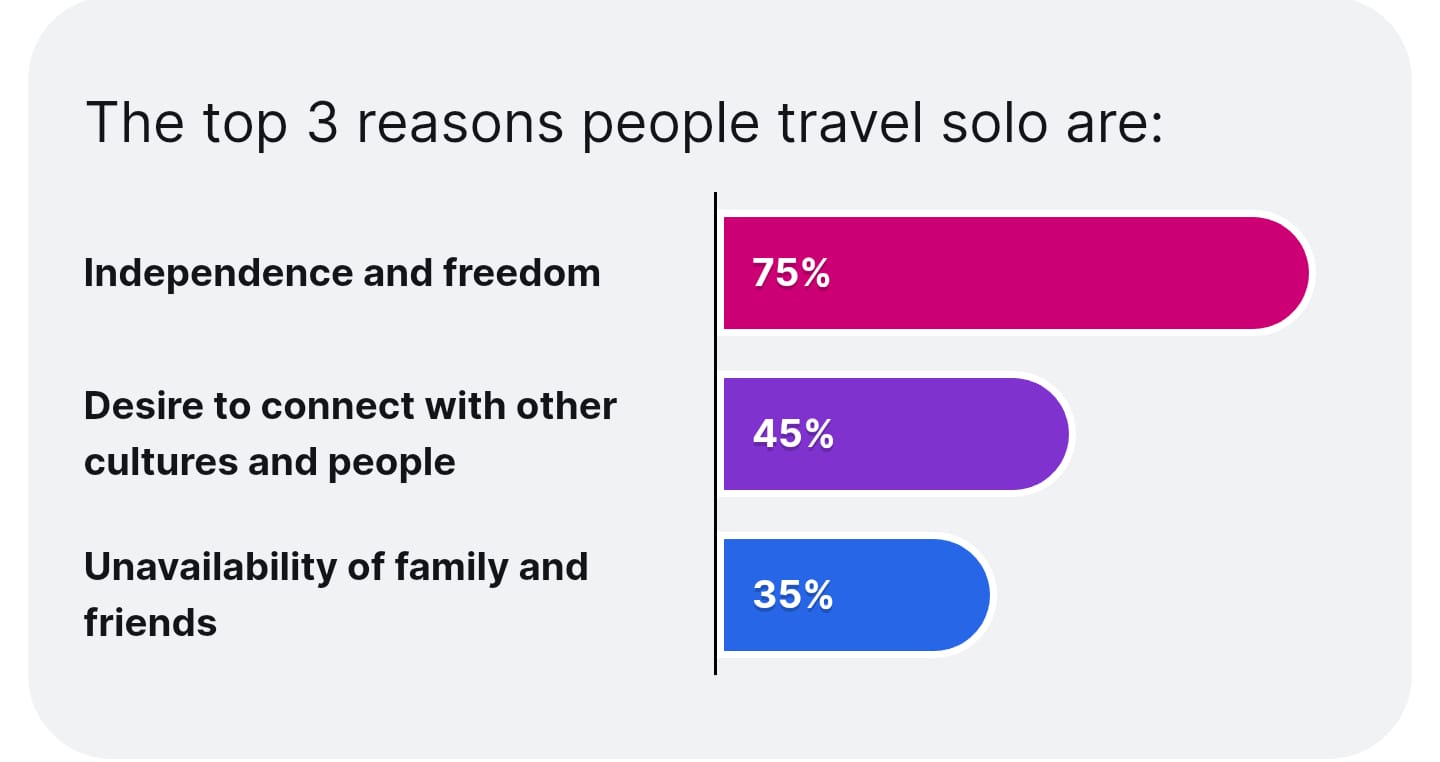
There are a lot of reasons people choose to travel solo, but these are the top three that line up with mine:

Freedom of Choice

Every decision is yours—when to wake up, where to eat, how long to stay, and when to move on. No compromises, no negotiations, no group chats arguing about dinner plans. If something feels right, you go. If it doesn’t, you pivot.

Peace Over Compromise

Solo travel eliminates unnecessary friction. No bickering over directions, budgets, or schedules. No managing other people’s moods. What you gain instead is calm, clarity, and the ability to actually enjoy where you are without tension tagging along.

Growth Through Discomfort

Traveling alone forces you to engage—with places, people, and yourself. You learn how to solve problems, sit with silence, and be comfortable on your own. That confidence carries back into everyday life in ways most people don’t expect.

Solo travel isn’t about being antisocial or avoiding people—it’s about choosing intentional experiences over forced ones. It’s not for everyone, but for the right person, it changes everything.

Affordability + Built-In Community

Hostel travel makes everything more affordable—and it’s one of the easiest ways to meet like-minded people along the way.

You’ll save significantly on accommodations, and food and drinks are often cheaper too—especially if there’s a shared kitchen or an on-site bar with hostel pricing. Even better, you’re surrounded by other budget-savvy travelers who are constantly exchanging real-time intel: what’s worth seeing, what’s overrated, how to get around cheaply, and where not to get ripped off.

Many hostels also offer discounted excursions, walking tours, and group activities that are both cheaper and more social than booking solo.

It’s not just about saving money—it’s about instantly plugging into a travel brain trust the moment you check in.

If you want, I can now:

write #2 and #3 to match your philosophy

make this funnier or punchier

or tailor it specifically to older solo travelers

You too can become a cheap travel nerd and travel the world solo!

stickboss

My YouTube – get your shit together!🫵🏻

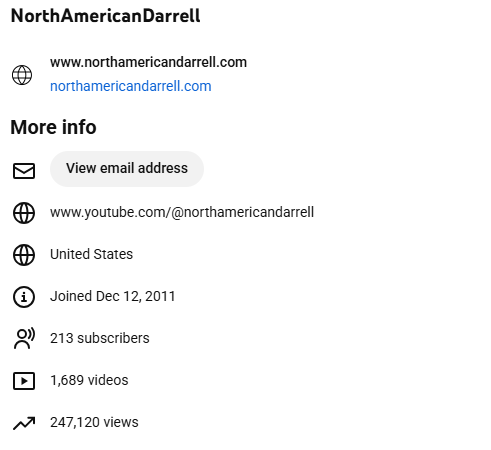
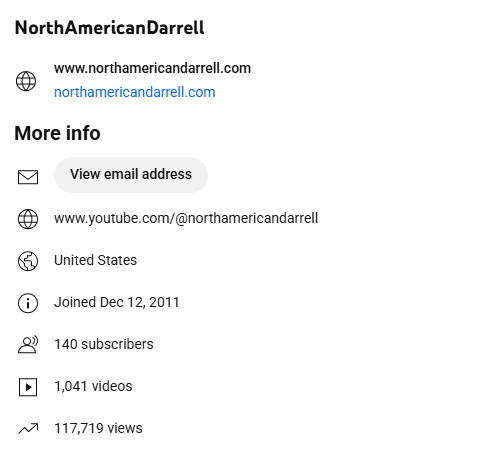
As I continue charging headfirst at the impossible—trying to build momentum on my channel—I’m starting to see some growth.

Trying to stay relevant as a boomer on YouTube is… ambitious.
Honestly, it’s probably easier to win the lottery. With worse odds.

I went into this “hobby” knowing that 99.99% of these channels fail, which weirdly makes everything easier. When success is unlikely, the pressure to make money completely disappears.

And yet—here we are.

I’m finally seeing growth in views.
Not subscribers.
Not monetization.
Views.

Monetization is still a distant fantasy, but as of 06/28/2025, the numbers are moving in the right direction—and I’m still stepping up to the plate.

Helmet on.
Bat in hand.

Here are the latest numbers!

🫡

The below updated edit is from 07/07/25!

Ten-day statistics:

Added 214 videos (20% increase)

11 subscribers (8% increase)

Added 40,238 views (34% increase)

Five weeks later, 08/13/2025 …

I hit 200K+ views! 🫵🏻😎

I’m getting some genuinely positive feedback—and a lot of thumbs-up—which tells me people are actually taking the time to say, “Yeah, I enjoyed that.”

I know, it might sound a little childish, but knowing someone is watching does help me keep putting in the time.
I am, after all, a human being.
Mostly.

The ironic part? Friends and family don’t watch at all.

Instead, the views are coming from like-minded strangers from all over the world, which somehow feels even better.

Another unexpected realization has been which videos people actually watch.

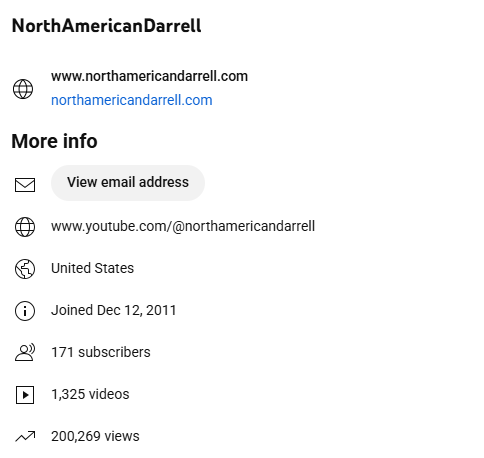
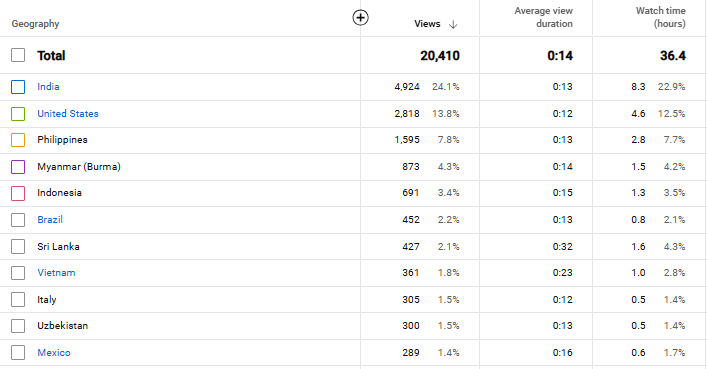
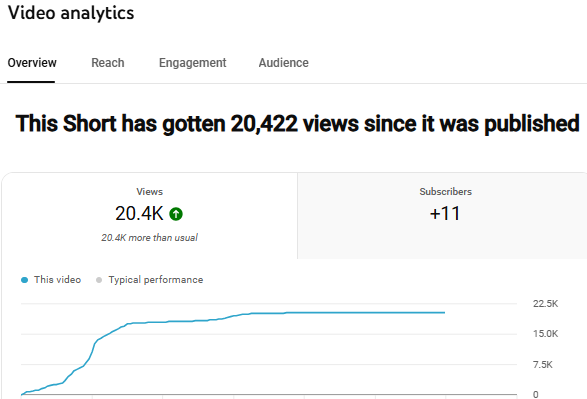
The video below has been viewed over 20,000 times, in more than 50 countries, and is still being watched a week after posting.

Turns out, the internet has a mind of its own—and apparently, it found this one interesting.

It’s almost embarrassing how simple it was.

I was just buying a coconut in Vietnam—and somehow that turned into new subscribers and a flood of
👍🏻👍🏼👍👍🏾👍🏿

No edits.
No hot take.
No algorithm whispering.

Just… coconut.

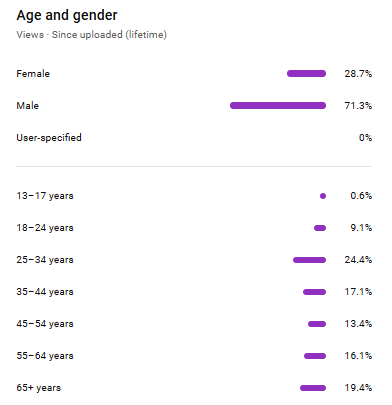
What’s even more interesting is seeing who watched it.
YouTube Analytics doesn’t just tell you how many people watched—it shows you where they’re from, and the audience spread genuinely surprised me.

Apparently, a guy buying a coconut in Vietnam is internationally relatable content.

I currently have 1,300+ videos on my channel—which sounds impressive until you remember how the internet works.

I’m heading to Europe in September 2025, then Japan and Korea in February 2026. After that, I’ll reevaluate this entire shit show and decide whether this is a content strategy… or a cry for help.

Until then, the numbers don’t lie—no matter how confusing they are.

Here are my Top 10 most-watched videos on the channel as of the blog.

So until further notice, I’ll continue being annoying AF—posting on Facebook, Instagram, and sliding into PMs like a man fully committed to this experiment. I’ll keep filming, posting, and seeing what sticks, because apparently a coconut in Vietnam can outperform ~1,599 other videos. 

Worst case? I tried. Best case? The algorithm blinks first.

Come on—hit follow.
You’ve already read this far, you’re clearly invested, and I’ve got 1,600+ videos proving I will not stop.
Follow now or I will continue being annoying AF across every platform until morale improves.

www.NorthAmericanDarrell.com 

#NorthAmericanDarrell

www.Youtube.com/@NorthAmericanDarrell

⬆️⬇️Clickity CLICK⬇️⬆️

www.YouTube.com/@NorthAmericanDarrell

air1

If tomorrow never comes …

I saw a post today from Claudia, who was my Airbnb host the first time I visited Puerto Vallarta over five years ago, and I couldn’t help myself—I had to write about it.

Thank you for the powerful message, Claudia. And here’s to you traveling exactly the way we talked about all those years ago. 🙌

I have this little schtick I like to play: “Live life to the fullest.”
I’ve said it so much that I actually tattooed it on my left calf.

Ironically, it was also my mom’s most annoying saying when we were kids. I’d roll my eyes and say, “Yes, Mom.” I didn’t really get it—until I unexpectedly lost her on July 1st, 2019. Looking back now, she couldn’t have been more right.

To be fair, she wasn’t all motivation and sunshine. Later in life, she had no problem telling people to kiss her ass, so there was balance. 😄

Every time I hear about someone dying—no matter their age—that phrase comes back to me. I’ve had too many family members whose lives were cut short in one way or another, so it always hits close to home.

That’s what pushed me to write today. Stories like these are reminders—not in a dramatic way, but in a quiet, unavoidable one—that tomorrow isn’t guaranteed. And that makes today matter a whole lot more.

So yeah…
Live life to the fullest.
Roll your eyes if you want.
I did too.

Until I didn’t.

I have this little schtick that I try to play, “Live life to the fullest!”  So much so, I even got it tattooed on my left calf!

It was my mom’s most annoying saying to all of us kids.  I would roll my eyes and say Yes, Mom.  I never realized it until I unexpectedly lost her on July 1st, 2019; she couldn’t be more right.  She would also tell a lot of people to “Kiss her ass” later in life, so she was not all motivation.  LOL

Every time I hear of someone dying, I always think of this saying, no matter the age. I have had so many family members’ lives cut short one way or another, so it does hit home for me.  

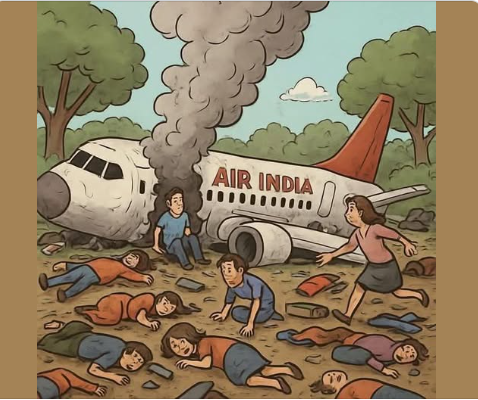
These stories from the horrific Air India plane crash made me blog today:

Air India plane crash

For some, it was just another breaking news headline.
For me, it was a stark reminder of how fragile—and unpredictable—life really is.

Four lives. Four stories. Four lessons that reshaped how I think about time, purpose, and grace.

First:
A family who waited years to fulfill their dream of emigrating to the UK. Life kept getting in the way—responsibilities, delays, decisions. When they finally boarded the plane, they believed the hard part was over. They never reached their destination.

It reminded me how often we postpone our lives for “someday.”
If we keep waiting, someday can quietly become never.

Second:
A woman who was supposed to be on that flight—but arrived late. She begged to board and was denied. Angry. Frustrated. Defeated. Only later did she realize that the delay may have saved her life.

We don’t always get what we want because we don’t see what lies ahead.
Sometimes a door closing is protection.

Third:
A man who survived. The plane broke apart, and he happened to be in the section that didn’t catch fire. He walked away from something no one expected anyone to survive.

It didn’t feel like luck. It felt like timing.
“There is a time for everything, and a season for every activity under the heavens.”
It simply wasn’t his time.

Fourth:
Those who didn’t make it. People with dreams. Families. Unfinished stories.
Someone kissed them goodbye that morning, unaware it would be the last time.

Their lives remind us of a truth we often avoid: time is not guaranteed. We are not promised old age. We are not promised later. What we have is now—a breath, a moment, an opportunity.

So while you still have today:
Don’t wait for the perfect moment.
Live now.

Because life doesn’t always come with warnings.
And sometimes… next time never comes.

Whatever “live life to the fullest” means to you — just fucking do it.

Sometimes tomorrow never comes.
Sometimes planning tomorrow assumes you even get one.

Stop waiting for permission.
Stop waiting for perfect timing.
Stop waiting for approval.

Just let it happen your way.

Because life doesn’t ask when you’re ready.

Whatever “live life to the fullest” means to you — just fucking do it.

Not someday.
Not when it’s convenient.
Not when everything lines up perfectly.

Sometimes tomorrow never comes.
Sometimes planning tomorrow assumes you even get one more day.

Stop waiting for permission.
Stop waiting for perfect timing.
Stop waiting for approval—from your boss, your family, society, or the version of yourself that’s “more ready.”

There is no finish line where life suddenly begins.
There is only now.

Make the trip.

Do it scared.
Do it imperfectly.
Do it your way.

Because life doesn’t ask when you’re ready.
And the only real failure is never showing up at all

Don’t forget to post about it to keep your haters updated!

IMG-20250507-WA0005

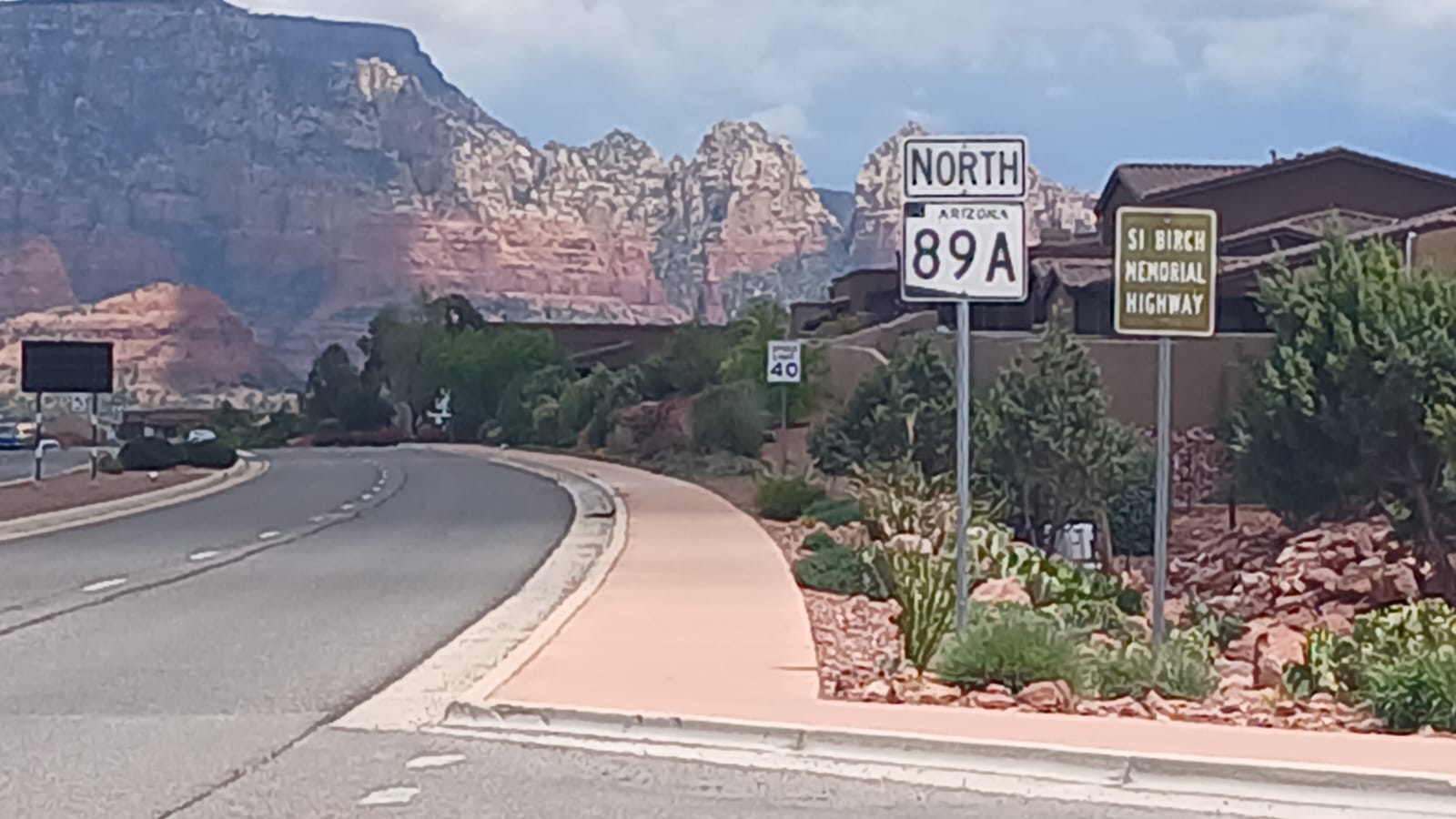
AZ: PT home, PT Airbnb & FT awesome!

This is the large, heated pool and hot tub right at the front of the property. There’s also a smaller pool in the back, and my condo sits perfectly between the two—which is honestly the ideal setup. Maximum pool access, minimal effort.

This is the view the moment you walk in the front door.
Pools. Palm trees. Adult beverages.

That instant “I’m definitely not at work anymore” feeling never gets old.

And if you want to work from paradise, I’ve got that covered, too.

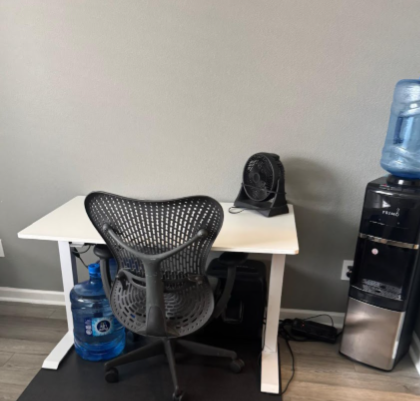
The setup includes a proper sit/stand desk and an ergonomic chair, so it’s an actual work-from-home space—not a balanced laptop on the couch pretending this is a fine situation. It’s comfortable, functional, and easy to settle into.

Now imagine the water-cooler conversations when people ask how work is going… and you casually mention sunshine, pools, and palm trees.

Yeah—those stories tend to make friends, family, and coworkers just a little jealous. 😎

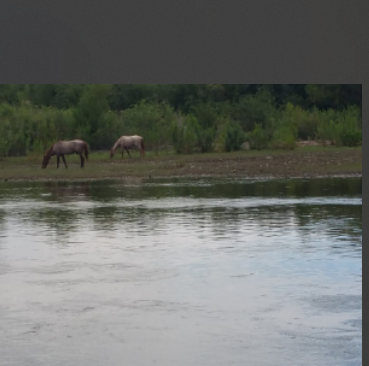
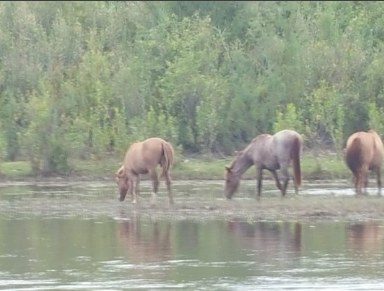
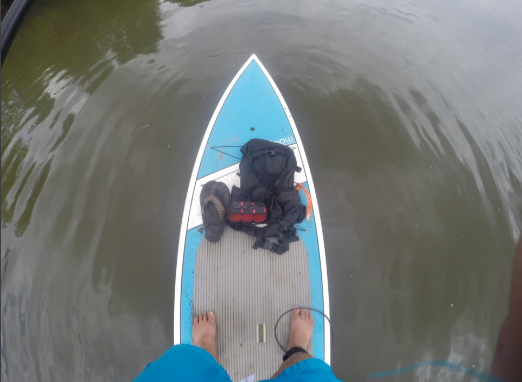
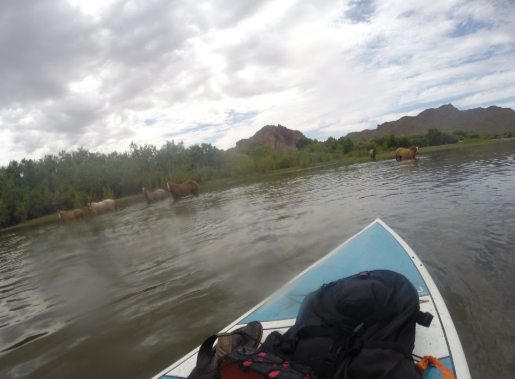
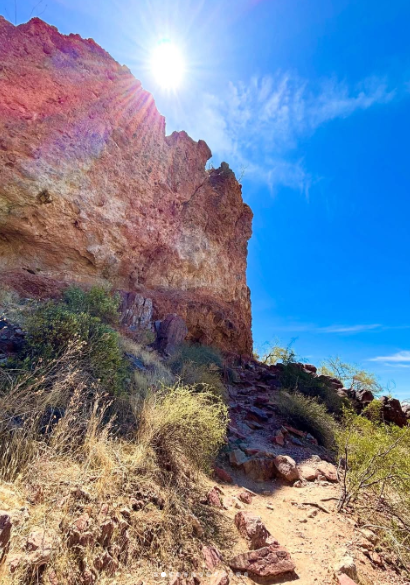
Less than a 30-minute drive puts you at the Salt River in the Tonto National Forest, where you’ll find one of Arizona’s coolest—and most unexpected—surprises: wild horses roaming freely along the river.

You can kayak, paddleboard, float, or just hang out by the water, and there’s a very real chance they’ll wander right past you like it’s no big deal. No fences. No zoos. Just horses doing horse things with desert cliffs in the background.

It’s one of those only-in-Arizona moments that sounds fake until you see it for yourself—and even then, it never really gets old.

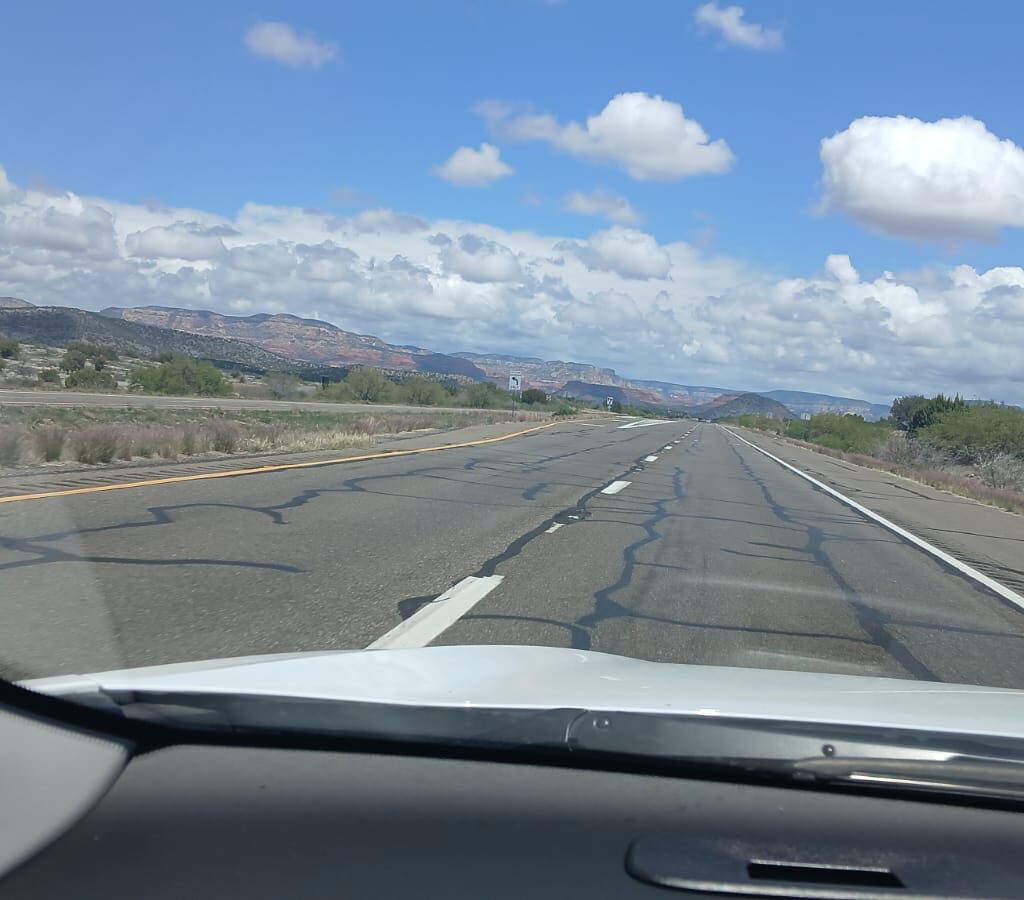
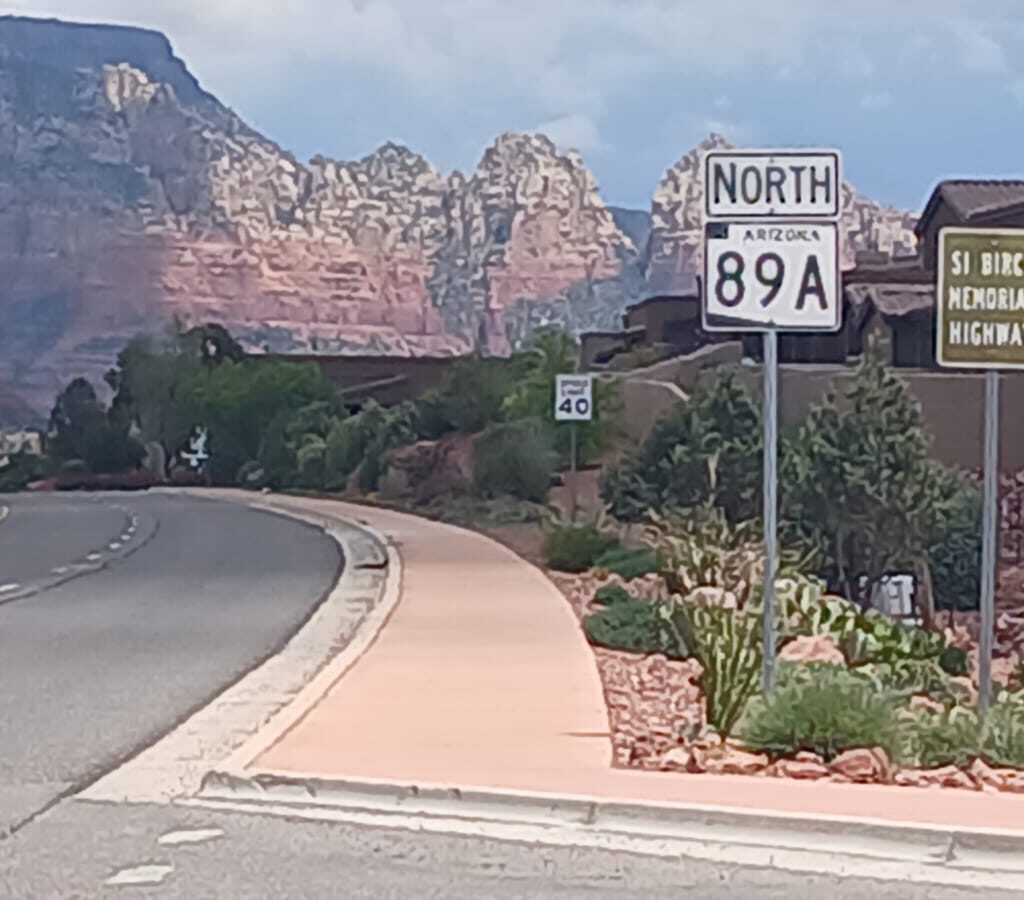
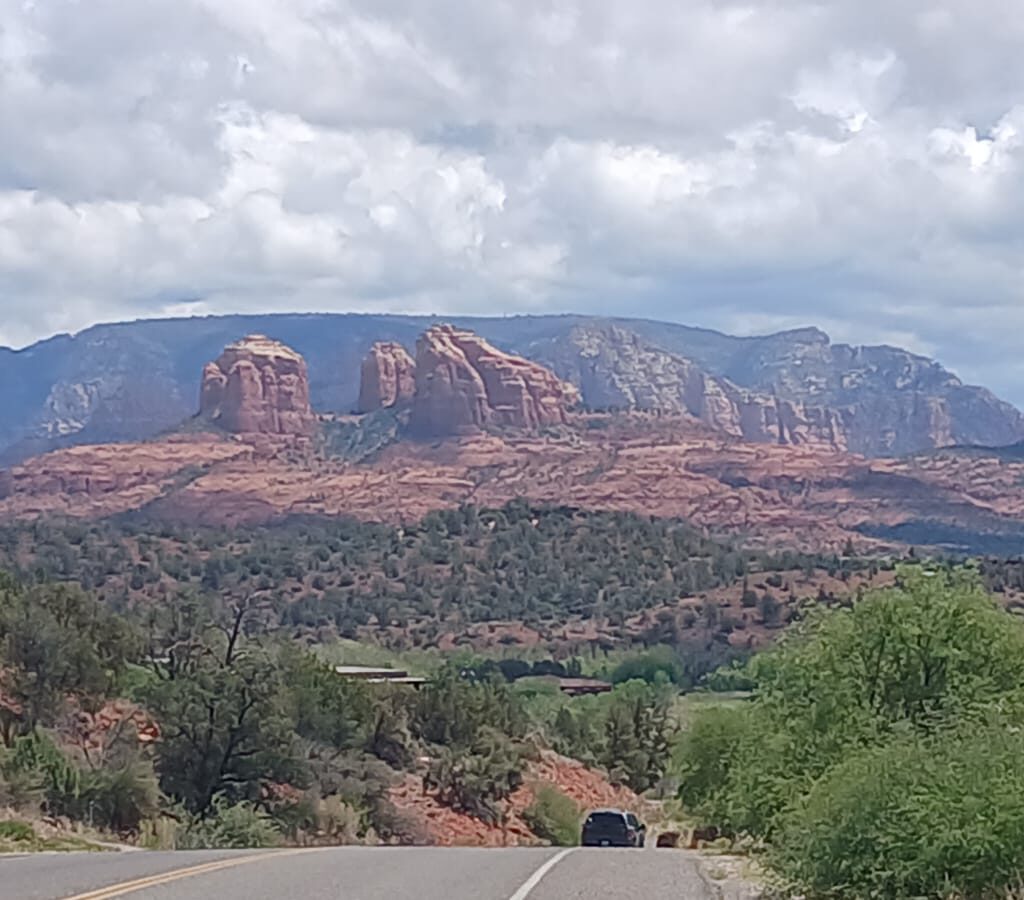
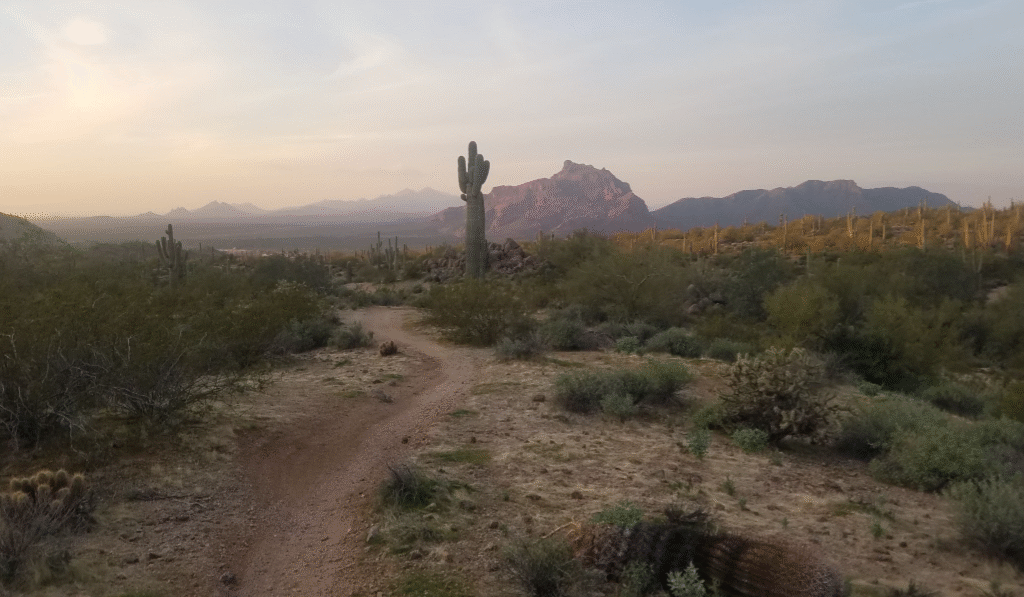
Less than a couple of hours’ drive from Mesa puts you in Sedona—a place that almost doesn’t feel real the first time you see it.

The red rock formations are absolutely captivating. Whether you’re hiking, driving through town, or just pulling over to stare at the scenery, Sedona has a way of slowing everything down. The light changes constantly, the views never repeat, and it somehow feels both grounding and otherworldly at the same time.

It’s one of those places that makes you grateful you didn’t stay home—and a perfect reminder of how much variety Arizona packs into a short drive.

Book on Airbnb—or reach out directly for Friends & Family pricing—and come experience Arizona for yourself.

Beautiful landscapes, endless adventure, warm weather, and wide-open space are all waiting. Arizona is ready when you are. 🌵✨

Photo tour – Listing editor – Airbnb

Wide-open space, warm weather, endless adventure—Arizona is ready when you are. 🌵✨

My nephew and his GF visited from Canada and had an amazing adventure during their visit in the Spring of 2025!

Click below to book your stay or send me a PM from the contacts on the homepage with any questions.

Photo tour – Listing editor – Airbnb

There is nothing like the top off a Jeep and driving through the AZ mountains with the tunes cranked.

Arizona can fix this situation—at least temporarily—if you’re lucky enough to stay at my Airbnb. 

Side effects may include:

 Constant happiness

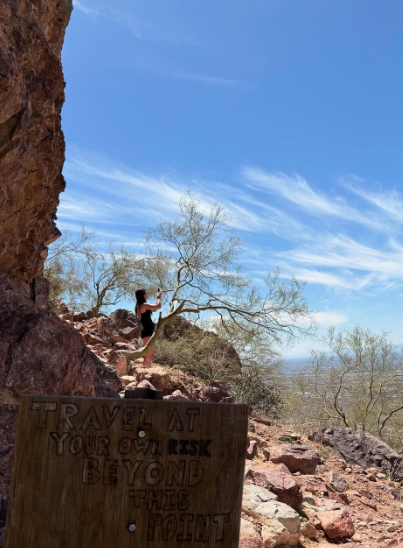
Hiking locally or a road trip to Sedona

Paddling the Salt River with the wild horses

Cold pool drinks by the pools

Planning another trip here before you leave.

Photo tour – Listing editor – Airbnb

IMG_20220524_083049_1

Credit card points game – #winning!

I’ve been back and forth to Hawaii several times over the last few years, mostly by stacking credit card points and being flexible with travel dates.

At one point, I even worked remotely there for four months, which was every bit as amazing as it sounds. Same workday… wildly different backdrop.

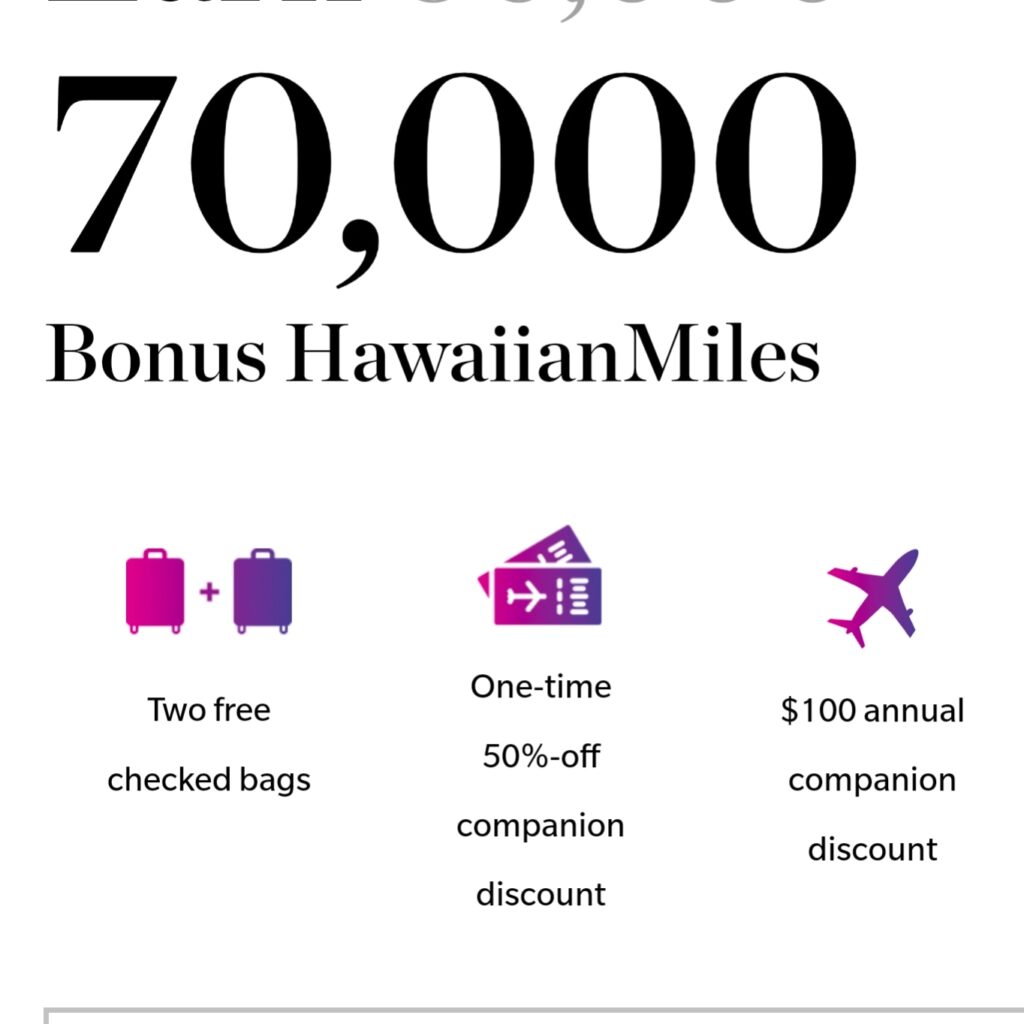
A few of those trips were on Hawaiian Airlines, where I signed up for their credit card bonus on the plane (yes, that’s a thing). The offer was 70,000 points, with a $100 annual fee that was waived the first year. Between that bonus and flying back and forth—and hopping around the islands—I ended up with 100,000+ points without much effort.

That’s really the theme here:
nothing extreme, nothing fancy—just pay attention to opportunities, stay flexible, and let the math work in your favor.

Hawaii doesn’t have to be a once-in-a-lifetime trip. With points, timing, and remote work, it can just be… life for a while. 🌴✈️

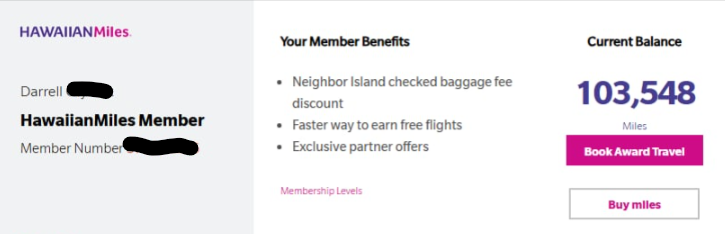
I’ve already burned some of the points over the last couple of years, but I still had 103,000 points sitting there—just waiting to be used.

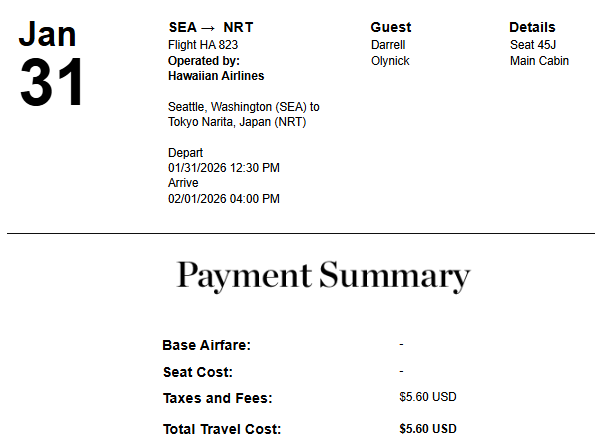
So I put them to work and booked my February 2026 trip to Japan and South Korea.

And let me tell you… This booking is an absolute GEM.

This is exactly why I’m obsessive about points and flexibility. Credit card bonuses, strategic flights, and a little patience turned into a massive trip that would’ve cost a small fortune out of pocket.

Sunshine in Hawaii ➡️ , neon nights in Tokyo ➡️ , street food in Seoul
All powered by points.

That’s the game.

You read that correctly…

30,000 points.
Five bucks.
Plus tax.

That’s not a typo. That’s a credit-card-points mic drop. ✈️🔥

#NorthAmericanDarrell

This is where points nerd magic really paid off.

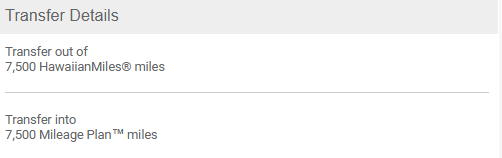
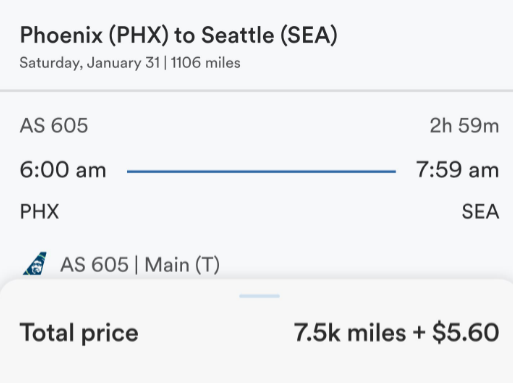
I was also able to transfer the remaining 7,500 miles from Hawaiian Airlines to Alaska Airlines to cover my flight from **Phoenix

So if you’re keeping score at home…

👉 Phoenix → Tokyo, Japan:
$11.20 total.

That’s not a typo.
That’s points, patience, and playing the long game.

This is why I preach flexibility, credit-card strategy, and thinking a few trips ahead. You don’t need luxury spending or manufactured nonsense—just consistency and timing.

Sometimes the best travel wins aren’t about where you’re going…
They’re about how little it costs to get there.

AirfareAirlineGIF

Norse Airlines – Inexpensive, but worth it!

Pro Tip: Check Multiple Airports:

When you’re searching for flights, don’t just check your local airport:

Search multiple departure airports that Norse services:

(LAX, NYC, etc.)

Search multiple arrival airports that Norse services:

(London, Paris, Rome)

Search arrival for flexibility

Try flying into one city and out of another

I’ve saved hundreds doing arrive-one-place, depart-another trips — like flying into London and flying home from Rome.

It might cost $50 to get to another airport for departure, but you might also save hundreds.


Travel math doesn’t have to be mysterious.
It just requires flexibility, curiosity, and a willingness to look past the first search result.
That’s how deals become stories… and how aisle seats become lifestyles. ✈️📍

Make sure you go to their website and sign up for their Tuesday takeoff mailer!  This one starts with $129 to London to grab your attention.

They are always sending out teasers that may not fit your schedule, but you never know! I booked my return flight from Los Angeles to London for only $402 return! 👍🏻

 Flying into one airport and departing from another airport would be more adventurous and possibly cheaper, too.  Fly into Athens and leave from Paris, using Los Angeles as an example.  I have blogged/bragged about the deals I have taken advantage of in the past using Norse Airlines:

These are the two one-way flights that I have already taken, which included a carry-on bag and a personal item:

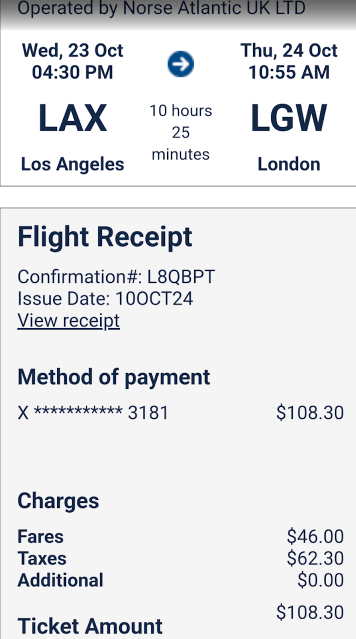
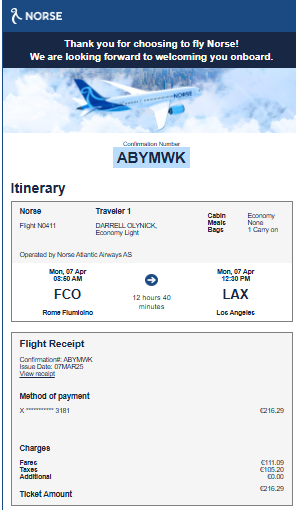
LAX-LGW $109 

(Los Angeles to London Gatwick)     

FCO-LAX 216 Euro/USD 

(Rome to Los Angeles)

If you’re interested, sign up for their weekly email. They send out a rundown of their best deals every week—you can do that by clicking HERE.

I love watching those prices drop!

YT3

My YouTube @NorthAmericanDarrell

I’ve technically had a YouTube account since 2011, but for most of that time I was just a viewer—no content, no audience, no plan.

When I started this blog in January 2025, my YouTube channel had one subscriber and one lonely video with zero views. That’s it. Nothing glamorous.

Once I started blogging, I decided to finally upload all the videos I’d been hoarding on old phones, hard drives, and cloud folders over the years—along with new clips from my travels. No strategy, no algorithm obsession… just hitting publish.

Slowly—but consistently—it started to grow.

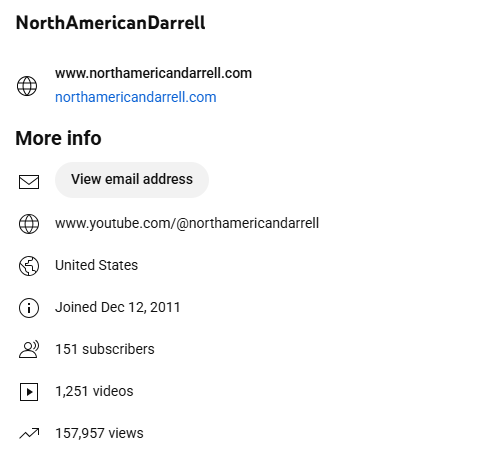
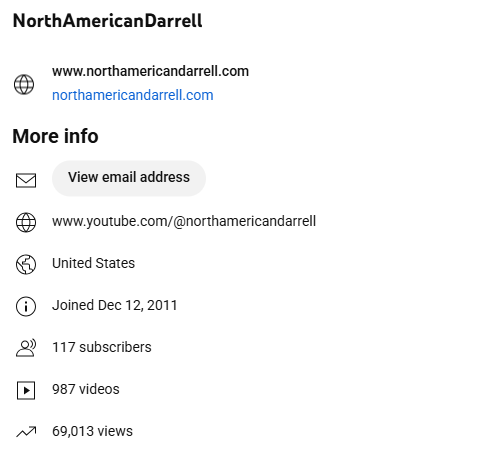
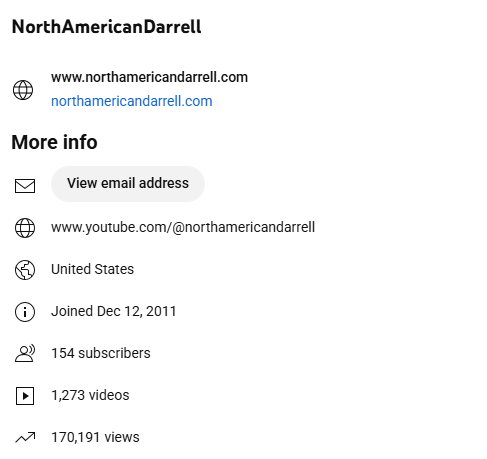
As of 12/24/25:

1,675+ videos

~208 subscribers

150+ blog posts (and growing daily)

~242,000 total views, which honestly blows my mind

Building the YouTube channel has been just as fun as working on the blog. I embed videos directly into posts so readers can see places the way I experienced them, not just read about them. I’ve also organized the videos by country, so they’re easy to browse if you’re planning a trip or just wandering.

If you feel like it, I’d love the support—give me a follow or a thumbs up here:

Darrell – YouTube

No pressure. No expectations. Just sharing the journey.

Here is a cheat sheet to get a glimpse of my YouTube channel:

Click to subscribe to @NorthAmericanDarrell’s YouTube channel

Click to view a list of all the 850+ videos on the channel

Click to view a list of all the short videos on the channel

Click to view the fast-growing posts on the channel.

Click to view the playlist of all the videos broken down by Country.

Click to view the featured videos on @NorthAmericanDarrell YouTube channel

Please take the time to become a subscriber and ring that bell to see if I can grow my channel even more.

Darrell – YouTube    <— clickity click

https://www.youtube.com/@northamericandarrell <— clickity click

goog1

Finding flight deals! It’s too damn easy!!✈️

I’m always hunting for a deal—and honestly, finding a cheap flight gives me an irrational amount of joy.

I’m always hunting for flight deals—and honestly, I still get a rush every time I find a good one. It never gets old.

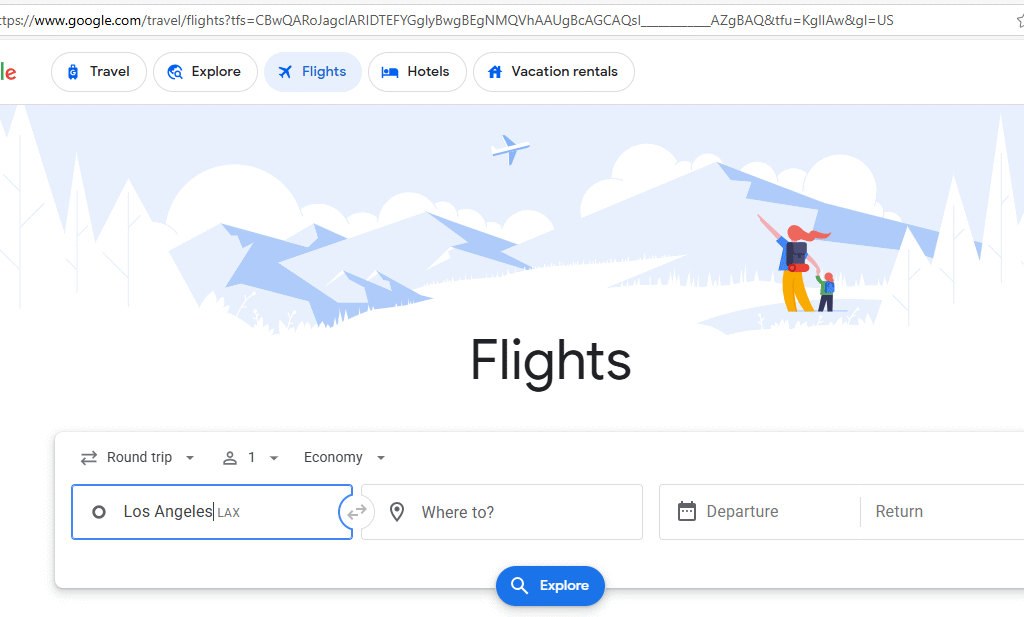
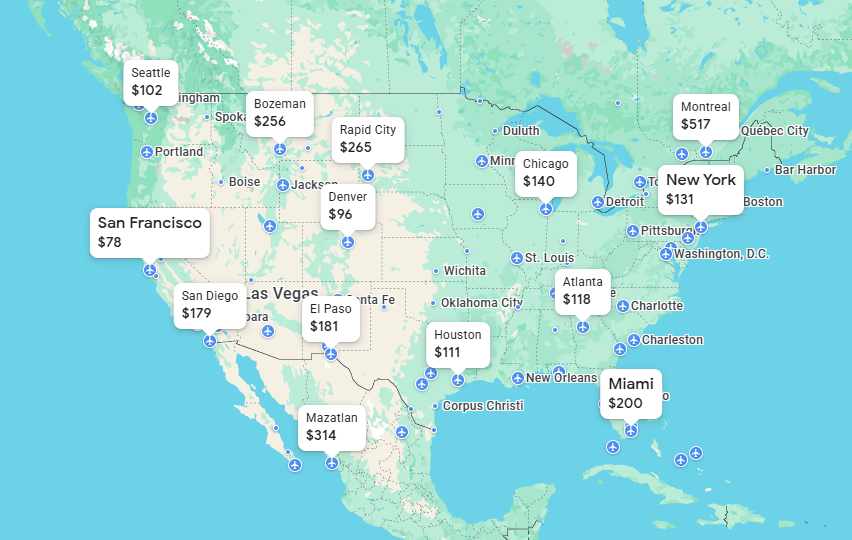
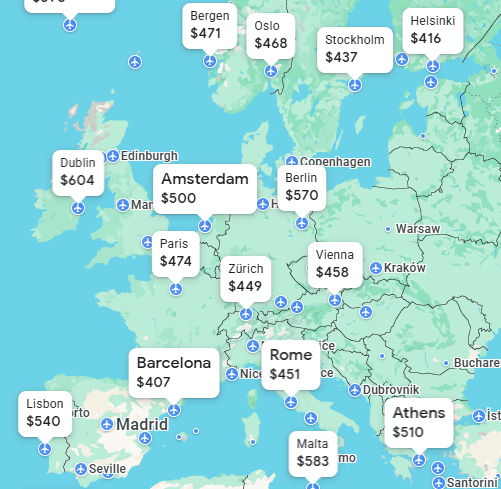
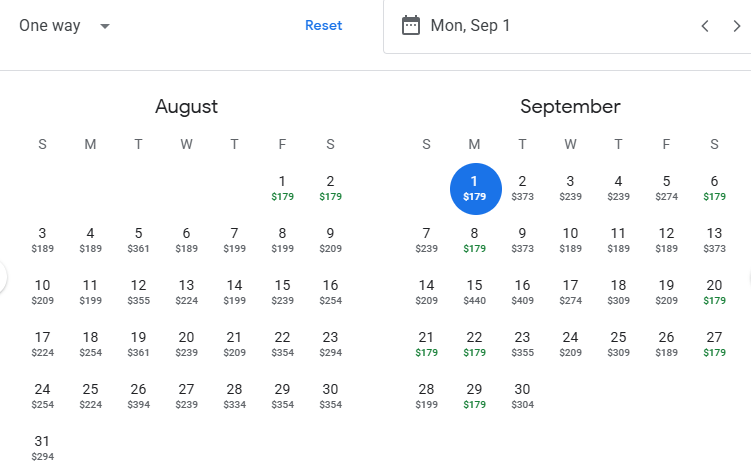
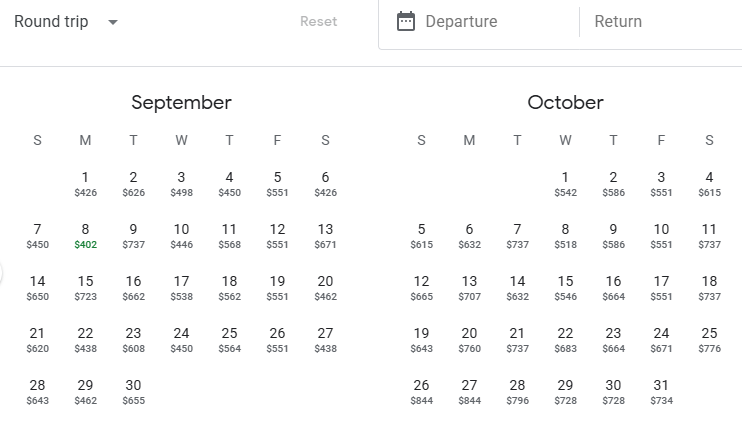
The first place I always start is Google Flights. It’s the fastest way to see which airlines are running sales and which routes are suddenly cheap. It also gives you a big-picture view instead of locking you into one airline too early.

The first thing you’ll want to do is set your home airport and country. That part matters more than most people realize. I’ll often switch countries or check prices from different locations because many sites use cookies and regional pricing. Sometimes the same flight is noticeably cheaper just by changing where you’re “searching from.”

You can enter exact departure and return dates, but I usually leave them blank at first. I want to see what’s cheap before I decide when or where to go. Let the prices guide the plan, not the other way around.

Right now, I’m scanning flights for Europe and Southeast Asia, and starting with an open search gives me a much better sense of where the real deals are hiding before I narrow anything down.

That flexibility is where the magic—and the savings—usually happen.

My go-to search method

I usually leave the dates blank at first.

This gives me a high-level snapshot of the best prices available right now, which helps set expectations before I commit to anything. It’s especially useful when you’re flexible or just fishing for ideas.

When I was looking at Europe and Southeast Asia, this approach instantly showed me:

The cheapest round-trip prices

\Which cities were on sale

Which airlines were driving those deals

If a price catches my eye, I click into the city, and Google Flights shows:

The exact dates

The airline

How long is that price likely to last

From there, I either:

Book immediately, or

Take note of the price and keep checking until it drops closer to my ideal dates.

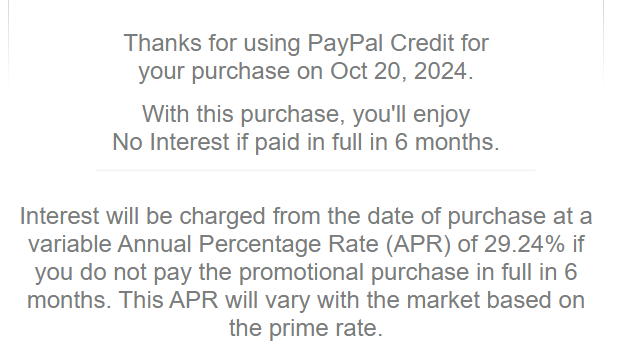
I will typically charge the flight to my PayPal credit card.  That way, I can pay it off at the end of the month or make minimum payments and place it in the budget down the road.  

If you’ve made it this far and are actually paying attention, you’ll notice a pattern: Asia prices were lower last year. That’s exactly why I keep checking and tracking them. Deals come and go—but trends matter.

Flights from Los Angeles to London are almost always a steal. It’s one of the most consistently cheap long-haul routes out there. One-ways are often under $200, and round-trips regularly hover around $500 on Norse Atlantic Airways.
I even spotted a $402 round-trip deal today, which is absolutely worth watching.

The tradeoff with cheap one-way tickets is simple:
You’re gambling on the return price.

Sometimes it works beautifully.
Sometimes it doesn’t.

That’s the cost of flexibility—but it’s also the upside. A one-way ticket gives you the option to:

Stay longer

Change countries

Or fly home from an entirely different city

That’s how one trip quietly turns into a bigger adventure.

In the end, it always comes down to:

Timing

Patience

And knowing when “good enough” is actually a great deal

I also have a bit of an ace-in-the-hole—a friend who can get me home on a buddy pass if things go sideways. Not mad about it.

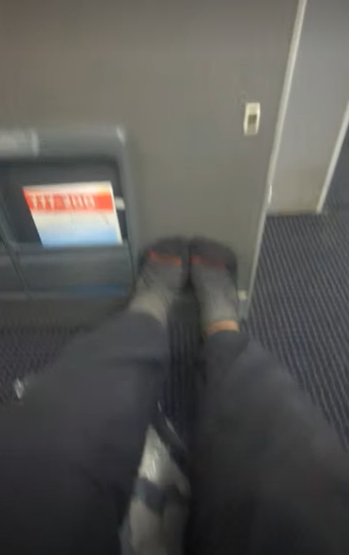
Last time, she even snagged me an emergency exit bulkhead seat with extra legroom and free drinks. Honestly, that felt like winning the airline lottery without losing half in a divorce.

Moral of the story:
Always have a Plan B.
And if Plan B includes legroom and booze… even better. 🍻✈️

A legend in my mind is the best way to describe it. 

I think differently from most people!

I was born in Edmonton, Alberta, Canada, and raised in the early eighties when life was simple. We rode our bikes, played outside, and didn’t have the internet and cell phones like kids today.

Canada was the only thing I knew until my first vacation to Southern California, Las Vegas, and Mexico in my early teens. My first memory of travel was falling asleep under the Christmas tree with the paper airline ticket after reading it 100s of times. 

Yes, they used to have paper carbon copies of your actual legs of an airplane return trip, wild! 

Just like now, I would tell anyone who cared about my travels (most didn’t and still don’t) that I was going to California, Acapulco, and Mexico (some things never change, LOL)!  We drove all around Southern California into Las Vegas and then flew to Acapulco with those initial memories engraved in my mind forever. 

Unimaginable at the time, I would later live in Southern California, Las Vegas, and now spend part of my time in Rocky Point, Mexico, and Mesa, Arizona, when I am not traveling.  Looking back, I had a plan, and no matter what happened along the way, I would selfishly follow it, even if I didn’t know it at the time of my decisions. 

The makings of a solo traveler!

After graduating from high school in Edmonton and trying a few things, my first break happened. I wanted to work with satellites for some unknown reason, so I enrolled in Telecommunications at the Northern Alberta Institute of Technology (NAIT) in Edmonton. It would take me three years to complete my two-year Telecommunications associate’s diploma. I was not the most dedicated student, to say the least, plus my favorite bar was just across the field, Ezzies.

The week before graduating from NAIT in December 1995, I would interview with Canada’s largest Company, Northern Telecom. Looking back, it was a miracle as I was in the bottom half of my class. I aced the interview, and it was the biggest break in my life! I was going to make $13.80 an hour from the part-time $5.50 I was making in 1995; life was good!!

I needed to relocate to Calgary, AB, and started on January 4th, 1996. Within a couple of years, I was traveling back and forth to our Richardson, TX head office, which is a suburb in Northern Dallas. It seemed that I was going there every month, making contacts while falling in love with the American dream. I would board a plane in freezing Calgary, and three hours later, I was wearing shorts! How awesome was that!!

After traveling back and forth, I met someone who was a flight attendant, which again was another sign of things to come.

Eventually, I was offered a job in Richardson, TX, given a work visa, and was traveling full-time. 

I bring this up as looking back, she was a major part of my decision to move to the United States. Work would have me crisscrossing the United States and eventually internationally. My girlfriend would follow me and also fly me anywhere I wanted, whenever I wanted. 

Holy shit, my dreams were happening! After a few crazy years, it never worked out, but I still thank her to this day when I ask for free flights, LOL. Thankfully, she has a great life raising twin boys along the way!

Little did I know, but these events would severely warp my crazy traveling mind into what it is today. A travel junky who cannot stay put and is always looking for a deal. I was turning into North American Darrell!

My next break was getting a job at PayPal after 18 years at my first job out of college. The job fell in line with my strong beliefs in managing money, so I could eventually travel. It was a great company, a shitty call center job, but it showed some additional money management skills learning through others.

I would get yelled at via email, chat, or on the phone by people being broke-ass douchebag, not being able to manage their money. I could have also easily moved up and might still be employed, but I just didn’t have the piss and vinegar needed. I had health insurance and investments in place, and I was burning time for the Freedom50 traveling dream.

Fast forward, and I was laid off for the second time by a greedy corporation. 

Northern Telecom after 18 years in 2014, and now PayPal, 7 years in 2024, 25+ years of service gone after both started cleaning house.  Here I was in 2024, unemployed, 52, single AF.  I was somewhat financially stable and able to travel whenever and wherever I wanted, again. I started looking back on previous decisions in life.

Almost everyone had a kid, and grandkids, worked 9-5, took their one-week all-inclusive vacation, and spent the summers at the lake. They were living the life we were taught to live by generations. You’re supposed to get married, have 2.5 kids, live in a house with a white picket fence, pay a mortgage, be in debt, retire, and then die.  That is just how it works out for the majority of people, and there is nothing wrong with it, but again, I am just different.

Statistically, if you’re a man, you die when you’re 73, if I am lucky to make it that far. 

That gives some people 5-10 years of retirement, depending on their health, after working their whole life. I watched it happen over and over in my Telecom career while losing so many family members at a young age as well.

Should I have kept my houses in Edmonton, Atlanta, and Charlotte, where I had some stability? 

My first 2,400-square-foot Edmonton house that I designed and built did not have a mortgage. I was able to pay cash from my work travels. I would have been set with no mortgage, surrounded by my friends and family, living like a normal person. I didn’t even use one of the three bathrooms before I sold it, FFS! 

Who in their right mind would move on from that situation? 🙋🏻‍♂️

I could have also settled in other amazing cities that I worked in long-term (Calgary, Dallas, Southern California …)

What about all the other shorter stops along the way (Las Vegas, Austin, San Antonio, Mexico City, Acapulco, and even Brazil)? I had corporate condos for months at a time, met some women and friends, and had a good job opportunity to possibly settle down.  There were also so many amazing situations in their way, and I still think about all of them from time to time. I am slowly convincing myself that as we get older, life is a mirage, and we see it the way we want.

Instead, I settled into my small, turnkey, mortgage-free condo that I Airbnb in AZ in 2015 for the long run.

I have always wanted to blog about my travel years of work and personal travel. This is the second attempt, so here we go, again!  I hope to share my idea of inexpensive travel through slow travel and geoarbitrage blogs.

Slow travel is a deliberate, unhurried approach to exploring destinations, emphasizing meaningful experiences and cultural immersion. Think of it as living like a local on vacation, where your dollar goes a lot further, geoarbitrage.

Welcome to NorthAmericanDarrell.com LFG!
hock2

Rocky Point, Mexico 🌮Taco Tuesday🌮

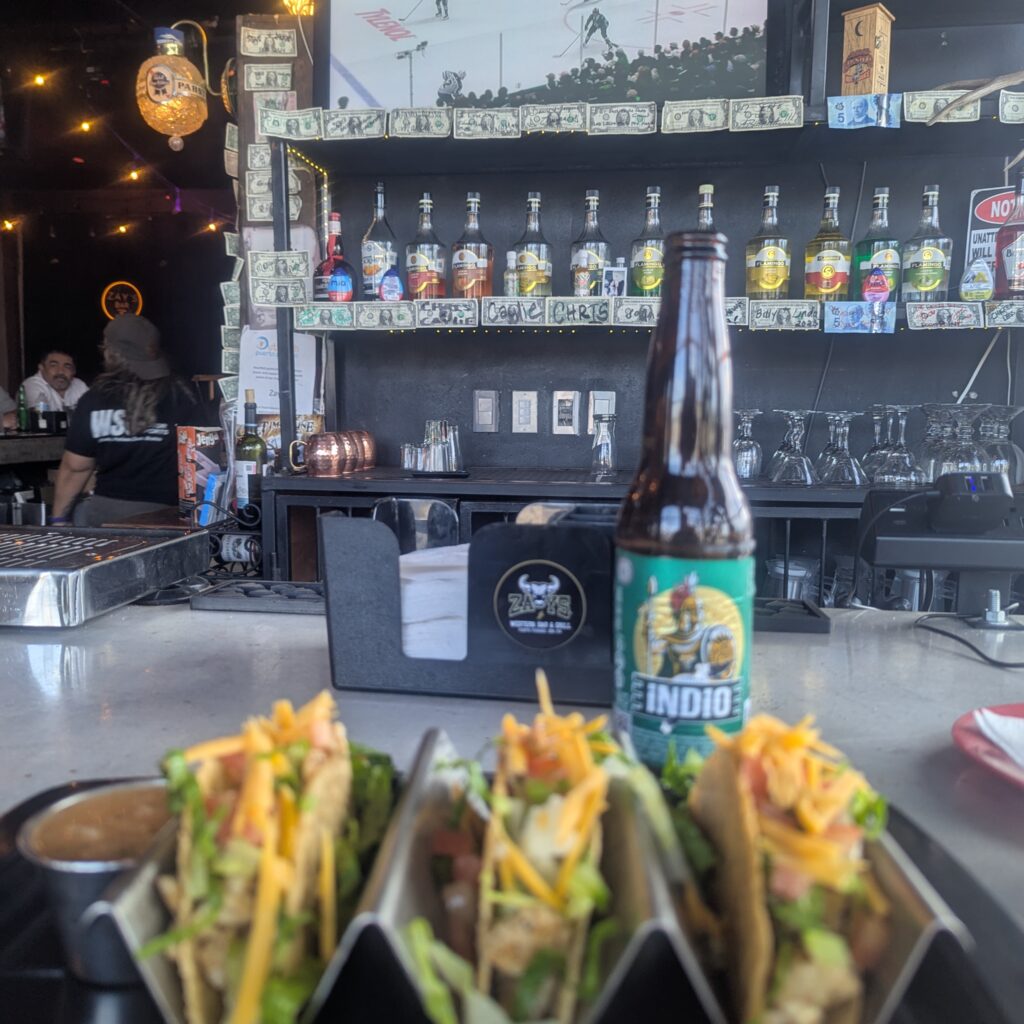
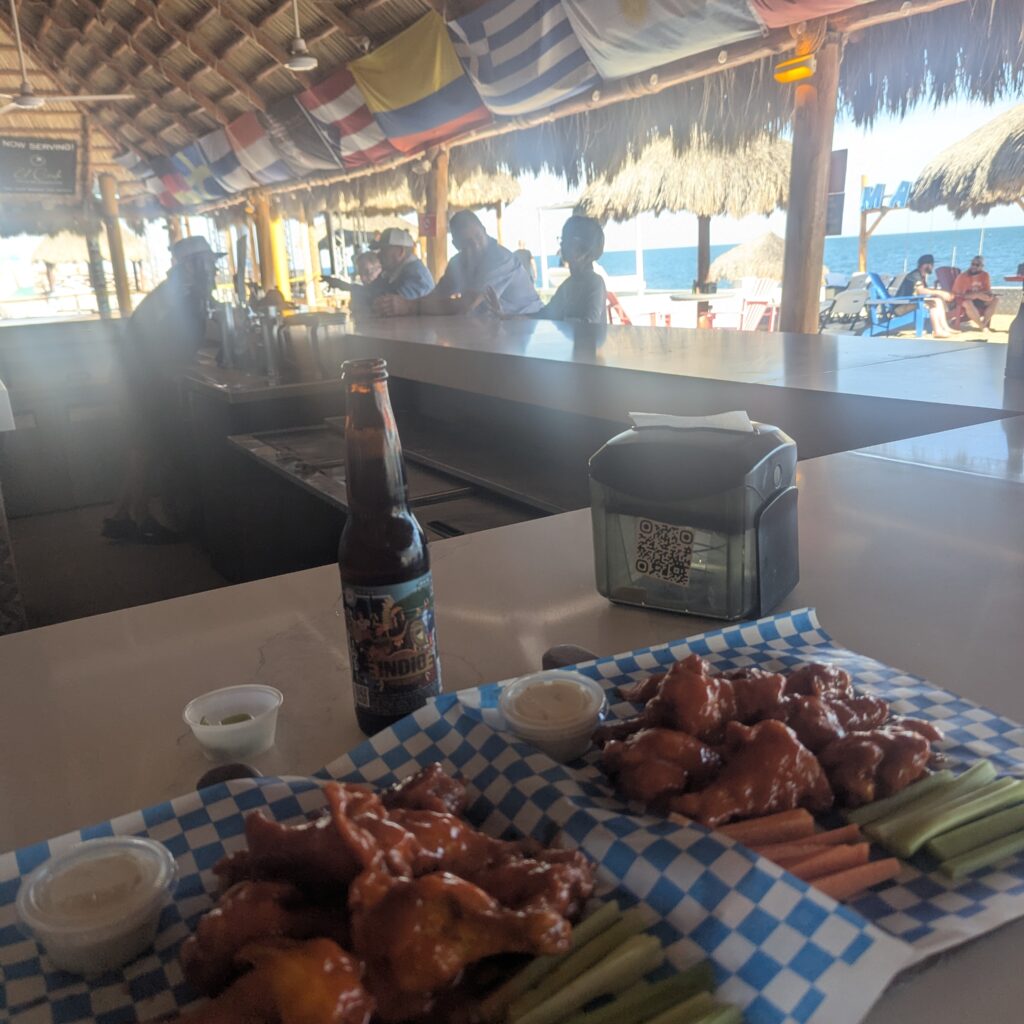
Celebrated Taco Tuesday the only responsible way—fish tacos to start, hard-shell chicken tacos to finish, and absolutely zero regard for sequencing, nutrition, or personal dignity.

If this is wrong, I don’t want to be right.

Taco Tuesday went off the rails with beers, the Oilers are winning, and I’m dangerously close to texting people I shouldn’t.

Pray for me. 🙏

Suddenly, I’m pacing, yelling at the TV, talking to tacos like they understand hockey

LFG tacos and burritos.

LFG, whatever this version of adulthood is..

Wing Wednesday hits are different when you are at the beach on that glorious Humpday!
The Edmonton Oilers knock out Vegas and are headed to the Western Conference final!

A City that never sleeps? 

Goodnight Vegas!!

plane2

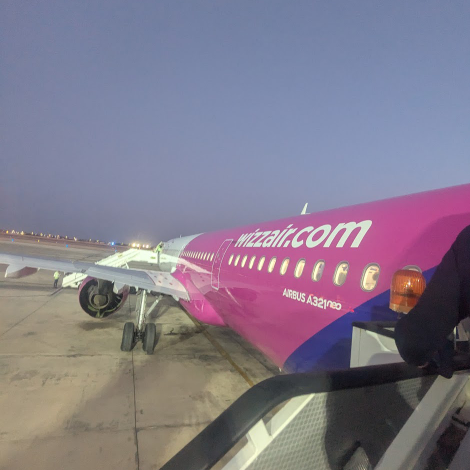
Wizz Airlines – all you can fly update …

In September 2024, I bought a one-year all-you-can-fly pass with Wizz Air for about $499 USD/EUR (they were basically at par at the time).

It was absolutely a leap of faith, considering you have to actually get to Europe before the pass is worth anything. But I made it work—three separate trips to Europe in twelve months, all on Norse Airlines, paying anywhere from $109 to $250 one-way out of Los Angeles.

That alone made the pass viable.

I ended up booking 24 flights on the Wizz pass—roughly $23 per flight—and cancelled four of them as plans changed, which is kind of the whole point of traveling this way.

I didn’t renew the pass for 2026. I’m taking a year off. Not because it wasn’t worth it—but because I squeezed the hell out of it.

High risk? Maybe.
Great value? Absolutely.
Would I do it again? Ask me after I get bored.

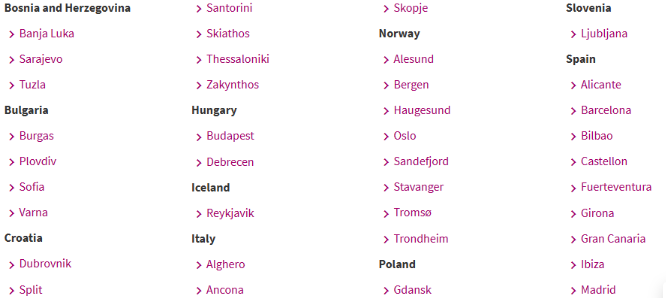
The part I enjoy most about the pass is the pure spontaneity. I log in, look at availability, and suddenly I’ve got 52 countries staring back at me like, “Pick one.”

There’s a three-day booking window, which means I could be leaving the same day or within the next few days. No overthinking. No long-term planning paralysis. Just momentum.

I paired the pass with a Eurail train pass on my third trip, making it even more convenient to decide between flying or taking the train.  

I found myself canceling flights and taking the train as I blogged about HERE.

Here is a list of the Countries available for booking:

mex1

Visiting Mi casita in Rocky Point Mexico!

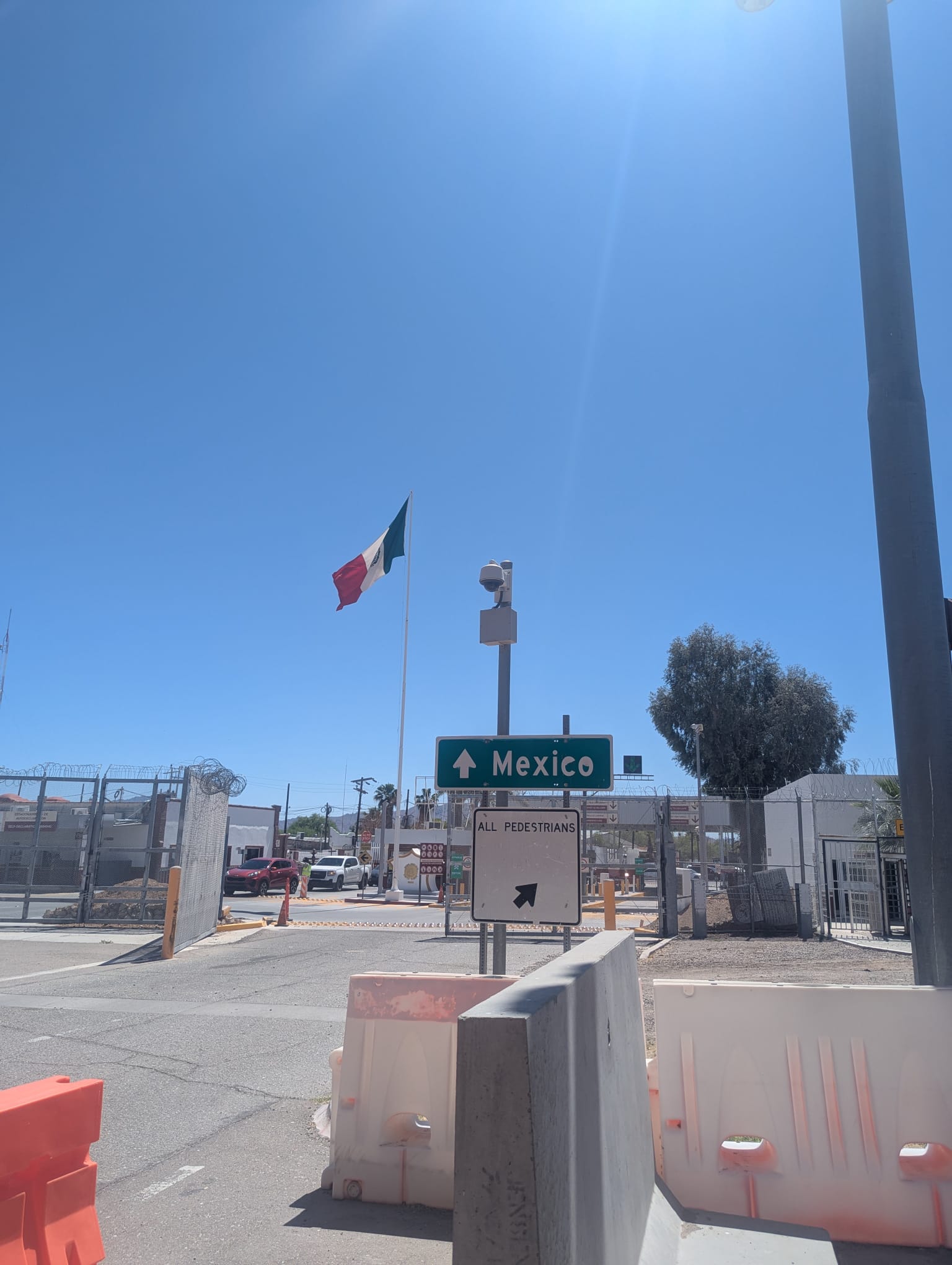
I took the shuttle from Phoenix for $55, and it dropped me off down the street from my casa, which is perfect. It takes me about four hours to drive door-to-door from my condo in Mesa. The shuttle leaves from West Phoenix and takes about the same time.  The USA van takes you to the border, and you walk across, and the Mexican van is waiting. It works out perfectly!

I keep my truck here as it is only $175 a year to insure and inexpensive to maintain. It is a 2003 F-150 I bought off the showroom floor, so I don’t want to let it go. Any major issues will be the end in the United States. My mechanic here is a tenth of the price, so it is a good place to try to keep it on the road. I only drive it around town, which should keep it going for a long time.

When I arrived, my landlord greeted me with a high five. It always feels so good to open that door, as it feels like home. 

I have everything I need here to live a simple life. Comfy bed, beer fridge, grill, office, and a 55″ TV all for $150 a month. 

I have zero issues keeping it empty most of the year. It is here when my AZ Airbnb is rented or when I want to just get away. 

I always have a couple of first stops to see local faces and grab some of my favorites when I come to town.

I had my favorite chicken enchiladas with green sauce (pollo enchiladas verde.

Yes - I demolished it all in one sitting!

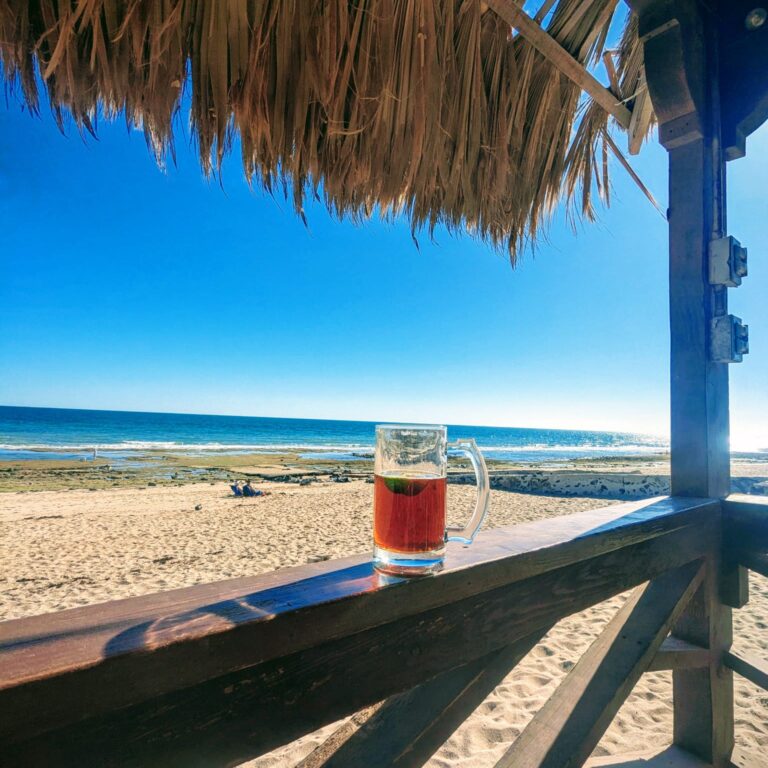
Lower prices, oceanfront beers, playoff hockey, and everyone always has a great time!

2-for-1 wings! 👌

The most famous restaurant in Rocky Point is Pollo Lucas (Lucas Chicken).  It is a short ten-minute walk from my pad, and it is amazing.

You can order 1/4, 1/2, 3/4, or the whole chicken and eat it or take it to go.

Each order comes with onions and lettuce, with the awesome homemade salsa and tortillas.

I get the 1/4 chicken for 65 pesos, which is $2.50 for the best lunch ever! The half chicken is $120 Pesos, which can feed two people easily for $6 USD.  The whole chicken can feed larger families for about $12 with all the fixings!

Friday nights are surf and turn night at my local watering hole down the street.

The price cannot be beat, as that was $15 USD with a draft beer and hockey.

$150 a month rent easily explains why I have been renting here for over 7 years! Awesome setup!!

default

Naples, Italy – Pompeii Museum

Look for the cost, accommodation, and how to get there cheap at the bottom of this blog!

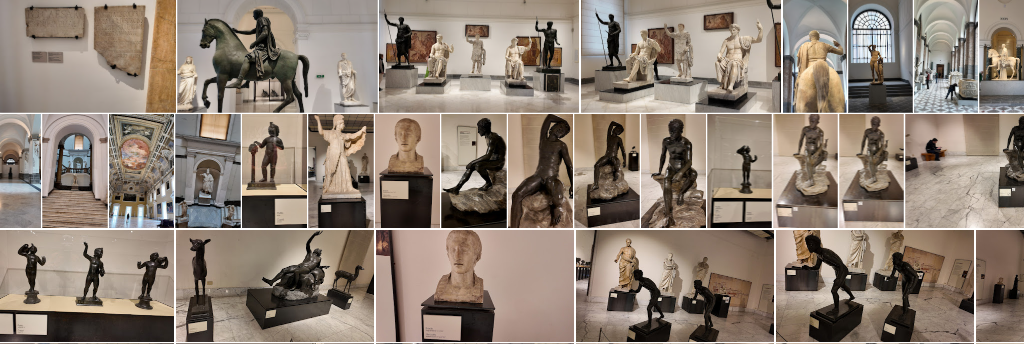
I am the first to admit that I knew very little about the history of Greece and Italy until my visit in the spring of 2025. Due to rain, I did not make it to the actual city, so this post will be dedicated to the Pompeii Museum in Naples, Italy.

From Wikipedia, the free encyclopedia. This article is about the ancient city of Pompeii. For the Classical Roman leader, see Pompey. For the Roman family, see Pompeia gens. For the Pacific Island, see Pohnpei.

Largely preserved under the ash, Pompeii offers a unique snapshot of Roman life, frozen at the moment it was buried, as well as insight into ancient urban planning. It was a wealthy town of 10,000 to 20,000 residents at the time it was destroyed. It hosted many fine public buildings and luxurious private houses with lavish decorations, furnishings, and artworks, which were the main attractions for early excavators; subsequent excavations have found hundreds of private homes and businesses reflecting various architectural styles and social classes, as well as numerous public buildings. Organic remains, including wooden objects and human bodies, were interred in the ash; their eventual decay allowed archaeologists to create molds of figures in their final moments of life. The numerous graffiti carved on outside walls and inside rooms provide a wealth of examples of the largely lost Vulgar Latin spoken colloquially at the time, contrasting with the formal language of classical writers.

Following its destruction, Pompeii remained largely undisturbed until its rediscovery in the late 16th century. Major excavations did not begin until the mid-18th century, which marked the emergence of modern archeology; initial efforts to unearth the city were haphazard or marred by looting, resulting in many items or sites being damaged or destroyed. By 1960, most of Pompeii had been uncovered but left in decay; further major excavations were banned or limited to targeted, prioritized areas. Since 2018, these efforts have led to discoveries in some previously unexplored areas of the city.

Pompeii is a UNESCO World Heritage Site, owing to its status as “the only archaeological site in the world that provides a complete picture of an ancient Roman city. 

It is among the most popular tourist attractions in Italy, with approximately 2.5 million visitors annually.

Pompeii was destroyed by the eruption of Mount Vesuvius on August 24, 79 CE. The volcanic debris covered the city, burying it beneath a blanket of ash and pumice.

Following its destruction, Pompeii remained largely undisturbed until its rediscovery in the late 16th century. Major excavations did not begin until the mid-18th century, which marked the emergence of modern archeology;[5] initial efforts to unearth the city were haphazard or marred by looting, resulting in many items or sites being damaged or destroyed.[6] By 1960, most of Pompeii had been uncovered but left in decay;[7] further major excavations were banned or limited to targeted, prioritized areas. 

Since 2018, these efforts have led to discoveries in some previously unexplored areas of the city.

Less than ten years ago, which is what made this museum so fascinating to me. Here is the entrance:

I must have taken over a hundred pictures and videos, as everywhere you looked was incredible. 

Here are some favorite pictures, a nd you can find all of the pictures here:

One of the most incredible things about Pompeii is that they are still discovering new things as they continue to roll back time, excavating the site.  

The ruins at Pompeii were first discovered late in the 16th century by the architect Domenico Fontana. Herculaneum was discovered in 1709, and systematic excavation began there in 1738. Work did not begin at Pompeii until 1748, and in 176,3 an inscription (“Rei publicae Pompeianorum”) was found that identified the site as Pompeii. The work at these towns in the mid-18th century marked the start of the modern science of archaeology.

Here is a recent article I found that explains they are still discovering ruins:

Archaeologists make a breakthrough as life-size sculptures are discovered in a Pompeii tomb

Archaeologists make a breakthrough as life-size sculptures are discovered in a Pompeii tomb

Visitors to the site of Pompeii, the ancient Roman town buried (and so preserved for thousands of years) by the eruption of Mount Vesuvius in 79 AD, don’t often think to look beyond the city walls. And it’s easy to understand why: there’s plenty on offer within this monumentally well-preserved town, from jewel-like wall paintings of myths and legends like Helen of Troy, to the majestic amphitheatre and sumptuously stuccoed baths.

But step outside the gates for a moment, and you’re in a very different – yet no less important – world.

For the ancient Romans, the roads and paths leading into and out of cities were crucial: not just for getting places, but as a very real kind of “memory lane”. Tombs lined these ancient byways – some simply bearing inscriptions to the memories of loved ones lost, others, more grand, accommodating space for friends and family to feast in remembrance of the dead.

Some of the tombs even address the passerby directly, as if their occupant could speak again, and pass on what they’ve learned. Take one Pompeian example, set up by the freedman Publius Vesonius Phileros, which opens with ineffable politeness: “Stranger, wait a while if it’s no trouble, and learn what not to do.”

Going into Pompeii, and leaving it, was about being reminded of ways of living and ways of dying – as well as an invitation to tip your hat to those who trod the path before you, and to learn from their example.

Click the link to read the entire article.

During my travels, I try to balance the cheap, thrifty and going for it while trying to remain on budget. It normally makes me feel like I missed out when leaving a new City/Country.

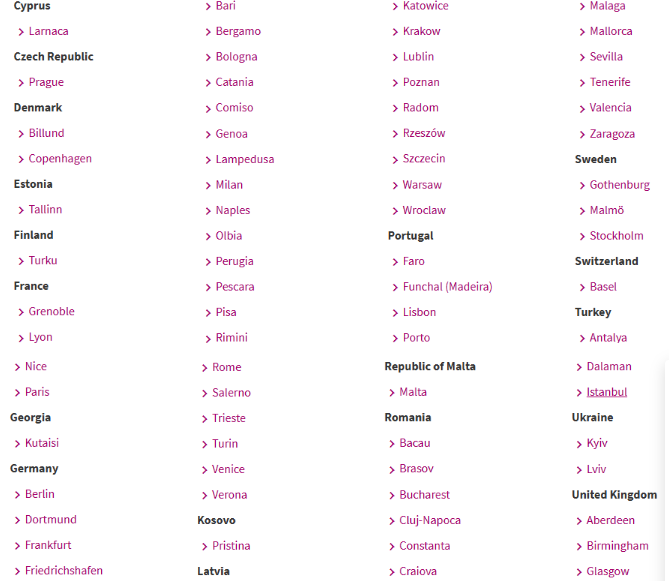
Rain or Shine, I will visit Pompeii as I missed out. I will share some sweet dance moves too! 🕺

How to get to Italy, cheaply: I recommend flying Norse Airlines from Los Angeles to Rome for $220. You can get to Los Angeles cheaply from anywhere in Canada and the United States using Google Travel. Consider staying in LA a day or two, doubling up your vacation, and saving a ton of money.  It is a quick ~$13 train ride from Rome to Naples. Keep in mind that the high-speed train can be very expensive, so check out the milk run to see the countryside.

Where I stayed: Hopestel Secret Garden. It was a great hostel in a historic building in the city center.  I paid $28 euros / USD 30 a night, which is spectacular for Naples City center.  There are also studio rooms that can be rented for about $12,5, which is also a steal in the area.

The best local beer and meal: PIZZA!  It was a no-brainer since Napoli is where pizza was invented. I tried several different variations and washed it down with a local Ichnusa unfiltered brewski, which hit the spot every time.

Would I return? 100% YES! I missed the most important historical area due to rain, Pompeii.

plane3

Three months looking out windows!

I left Arizona on January 12th and didn’t return until April 7th, 2025, heading first to Vietnam and then bouncing across the globe. In order, I visited:

Vietnam → Cambodia → Thailand → London (twice) → Singapore → Greece → Turkey → Egypt → Italy → Spain

Eight of those ten countries were brand-new pins on my map, which made the whole thing feel even more unreal. 📍🌍

I spent the first three months slowly moving through Vietnam, Cambodia, and Thailand. After that, I flipped the switch and went full chaos mode with my all-you-can-fly pass—whizzing (Wizz Air style) through London, Singapore, Greece, Turkey, Egypt, Italy, and Spain.

Here’s the actual chain of planes, trains, ferries, and buses that somehow all worked:

✈️ Phoenix → Los Angeles
✈️ Los Angeles → Singapore
✈️ Singapore → Saigon (HCMC)

🚆 Saigon → Nha Trang
🚆 Nha Trang → Huế
🚆 Huế → Da Nang
🚆 Da Nang → Hoi An
🚆 Da Nang → Saigon
🚢 Saigon → Phú Quốc
🚢 Phú Quốc → Saigon

🚌 Saigon → Phnom Penh

🚌 Phnom Penh → Siem Reap

🚌 Siem Reap → Angkor Wat

🚌 Angkor Wat → Bangkok
🚢 Bangkok → Koh Tao
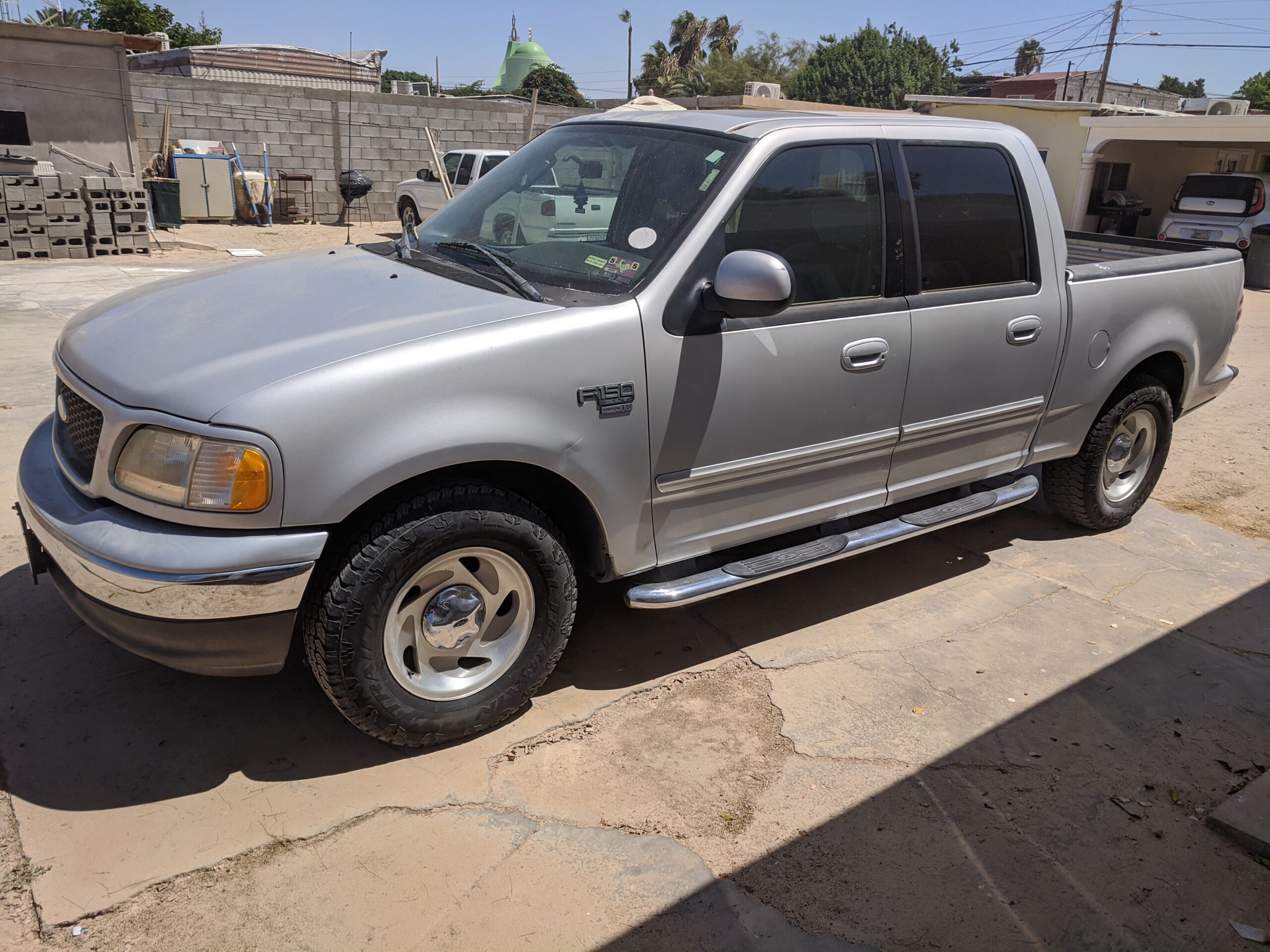
🚢 Koh Tao → Koh Phangan
🚢 Koh Phangan → Koh Samui

🚢🚌 Koh Samui → Bangkok
✈️ Bangkok → Singapore
✈️ Singapore → Athens

✈️ Athens → Istanbul
🚢 Istanbul → Princess Islands (day trip)
✈️ Istanbul → London
✈️ London → Sharm El Sheikh, Egypt
✈️ Sharm El Sheikh → London
✈️ London → Naples
🚆 Naples → Rome

✈️ Rome → Madrid
🚆 Madrid → Barcelona
🚆 Barcelona → Madrid
✈️ Madrid → Rome
✈️ Rome → Los Angeles
✈️ LAX → Phoenix

(That doesn’t even include all the local buses, metros, tuk-tuks, and 25+ ride share ((Grab/Uber/Bolt/InDrive)) rides along the way.)

Three months in Southeast Asia.
Then a rapid-fire lap through Europe, the Middle East, and North Africa.

It sounds insane written out like this—and honestly, it kind of was.

But that’s part of the fun.
And after traveling like this for three straight months…

Sometimes all you can do is drop a blog and watch miserable people be jealous. 😄

This was, by far, the longest—and most expensive—trip of my life.

I blew through my budget. And once that happened, I made the call to keep going anyway, because I was already there. I ended up canceling my Eurail pass and coming home three weeks early to stop the financial bleeding.

At the time, I didn’t think I’d ever use my all-you-can-fly pass again, so I went into “see everything now” mode and stacked as many countries as I could. I still missed a few, which means there’s a pretty good chance I’ll give it one more run someday—especially since I’m not renewing the pass.

And here’s the truth:

I have zero regrets about spending money on travel.
Not at the end of this trip.
Not at the end of any trip.

What I do have is better awareness.

Travel is worth it.
The memories are worth it.
The experiences are worth it.

I just need to be smarter next time in Europe and use train travel—pace it better, plan a little tighter, and learn from the mistakes without losing the magic.

That’s not regret.
That’s learning and sharing.

pope

Rome, Italy – Second visit to Vatican City!

I spent the last day of my recent travels in Rome, a place I’d already explored before. I’d checked off most of the major tourist traps on earlier visits, but it still felt essential to revisit the Colosseum and Vatican City—some places deserve more than one look.

Ironically, I chose a Sunday, which meant the Vatican Museums and the Sistine Chapel were closed. Not ideal—or so I thought at the time.

Unbeknownst to me, I was about to get a much bigger—and completely unexpected—treat that day.

Below is a video I took earlier in the week, showing St. Peter’s Basilica from the outside, walking inside, and soaking in the atmosphere. Even without the museums open, this place never disappoints.

It was simply a good feeling knowing I was there on a day when Pope Francis was well enough to make a public appearance. With Holy Week approaching, it felt like an important moment—likely a quiet test of strength and endurance ahead of what is normally an incredibly demanding time.

Sadly, I later learned that he had to cut his speech short due to shortness of breath—and that this appearance would turn out to be his final public speaking engagement before his passing. Knowing that now adds a weight to the experience that I didn’t fully understand in the moment.

As I walked through Vatican City, the atmosphere felt different—solemn, but meaningful. A massive crowd was lined up to enter St. Peter’s Basilica, far larger than anything I’d seen earlier in the week.

It was one of those rare travel moments where you realize you weren’t just visiting a historic place—you were quietly present for a small but significant piece of history.

How to get to Italy (cheap)

If you’re coming from North America, I highly recommend flying Norse Atlantic Airways from Los Angeles to Rome for around $220 USD.

Getting to Los Angeles is easy and inexpensive from almost anywhere in Canada or the U.S. if you use Google Travel. Even better—consider staying in LA for a day or two. You essentially double your vacation while still saving a ton of money overall.


Where I stayed

I stayed at Freedom Traveler, which offered a single bed for €40 a night. Hotels in Rome can easily run $150+, so this was a no-brainer.

If dorms aren’t your thing, they also have private studio-style rooms for under $100, which is excellent value if you just want a quiet place to sleep. I stayed here twice—once before and once after my trip to Barcelona—and the staff were fantastic, always helping me get the best room available.


Best local meal & drink

Pizza. Obviously. 🍕

Rome is packed with corner spots selling freshly made pizza, and walking past them without stopping should honestly be illegal. While wine dominates in Italy (vino everywhere), I kept laughing because I’d walk into places with 10 taps, and every single one was wine. Beer lovers, adjust expectations accordingly.

My favorite pizza spot was just around the corner from Vatican City. I grabbed three slices (yes, all at once—you can see them stacked in the photo), and it was hands-down the best pizza I had in Italy.


Would I return?

To Rome specifically? Probably not.

Once I spent a full day at Vatican City and the Colosseum, I was ready to move on. I’d originally planned to stay a full week, but instead booked a last-minute trip to Barcelona to break things up.

That said, Italy absolutely deserves more time—just maybe not all in Rome. Cities like Venice, Sicily, Milan, Capri, and the Amalfi Coast are all worth visiting. One important lesson learned the hard way: book train tickets early. Last-minute fares were over $200, sometimes 5× the normal price, which is no different than flights.

If you plan to stay within one country, trains are amazing—but procrastination is expensive.

spain

Real Madrid & Barcelona FC stadiums!

The first week of April 2025 was my last week on this adventure. I left on January 12th, and it was time to return home to Arizona. My Airbnb tenants were checking out, and I had a home to go back to, finally.

The plan was to hang around Italy since my flight left from Rome on April 7th. 

My first day, I toured the Colosseum, and the second day was the Vatican. I did not want to spend five more days in Rome, and the train to Venice was over $200 return.

I checked out my Wizz Pass to see if there was availability to depart and return within a 72-hour window. My choices were Gdansk, Poland, or Madrid, Spain. I honestly did consider Poland before I found the Madrid flight.  

Ultimately, I chose Madrid so I could also visit Barcelona with a quick train ride.

There is no better feeling than booking a last-minute flight for $10 on an all-you-can-fly pass!

One minute, I am in Italy and the next day flying to Spain, watching football locals in a Madrid pub!  It sure beats working for a living!!

I also like to think that I am responsible when traveling, but not this time. Once I arrived in Madrid, I was very hungry, so I went to find food. I thought there was food in the Irish pub, but only beer. 

I was going to find a hostel after the game as I stayed for the whole game, plus, whoopsie! 

GOOOOAAAALLLLLL!!! ⚽🥅

After the game, slight panic started as it was after midnight, dark, rainy, and in a City I had never been to in my life.  How is that for an adrenaline rush!  I reset and looked for food and nailed it!

I have honestly never had Tapa’s before, as it reminds me of the foos-fos that go for Dim Sum or Sushi.  Well, holy shit – I am foo fucking foo for this Tapa’s gig!!  Check this out!

Pushing 2 AM, still no hostel, but new friends!  We pigged out on so many items!

Since it was past midnight and check-in time, I set out on foot, in the rain and half in the bag, looking for a place to sleep.

** I have a string chain around my neck with two charms, a cross and a foot for adventure.  I was rubbing the cross this time, and it always works out!  ***

After knocking on door after door, I came to find out that the entire City center was sold out. 

Well SHIT!!  This is where I do my best thinking, WTF now dumbass?  Why not head to the train station, catch a high-speed train to Barcelona for $40?  Perfect recovery plan!!

I was able to get a couple of hours’ sleep on the train, even though it was going 300K/H.  I woke up in Barcelona (huge bucket list,) and I was able to find a great hostel in the city center for $30 a night.  After touring the city for a couple of days, I was off to find the biggest attraction, the Barcelona FC iconic Stadium, on my last day.

Ironically, the football stadium was closed for renovations.  I visited the amazing team store and do not think I have seen anything else like it in the world. It was massive:

I cannot wait to reference this memory when the new ultra-modern stadium opens. I can say, I sat in this pub pre-gaming months/years earlier, preparing for the grand opening. LOL

I had better luck when I got back to Madrid.  I was able to take the metro with fans to a Real Madrid game and experience gameday.  I was flying back to Rome that night, so I could not go to the game, but this was amazing enough without paying hundreds of dollars for tickets.

It was a match between Barcelona FC and Valencia, and here is a little pre-game action:

After waiting an hour walking around as fans entered the stadium, I needed to leave.  I was one of the few who headed the other direction on the metro as more fans arrived for the game.

It looks like I missed a great game which an exciting ending with the visiting team winning!

ItSMoreAffordableSamusPaulicelliGIF-2

Hawaii ~$99 one-way? $35 a night Airbnb!

I’ve also flown to Hawaii for as little as $5.60—using free points from my Hawaiian Airlines credit card.

There’s no minimum spend to earn the 70,000-mile signup bonus, which immediately puts Hawaii on the table. I’ve seen one-way flights as low as 12,500 points, though 17,500 points is a more realistic expectation. That still works out to four free one-way trips—with taxes being the only thing coming out of pocket.

This is what I mean by leverage: keep fixed costs low, stack points, and let geography stop being a constraint.

Apply here:

If you are not interested in free flights with the card.

Here are some of the latest flights on sale that I was emailed on 01/07/24:


This is the $34-a-night, single-occupancy Airbnb I’ve stayed in three separate times in Honolulu, which should tell you everything you need to know. I’ve written about it in more detail on the blog here: Honolulu, as blogged here:   

If you need double occupancy, there are other rooms available in the same house. Just keep in mind this is a shared kitchen and shared bathroom setup—no illusions, no surprises.

DCIM101GOPROGOPR1216.JPG

Can you really live on $500 USD a month? ☑️

My travel budget runs about $2,000–$2,500 USD a month, and I have all the time in the world. That combination turns out to be a cheat code at 53.

On that budget, I can slow travel through most parts of the world quite comfortably. I can’t help you with time—but I can help you with the money part. If you’re willing to embrace the slow-travel, nomadic lifestyle (full-time or even part-time). 

It’s a great way to escape the snow, prepare for retirement… or better yet, escape your nagging EX.🙌

Slow travel lets you actually live somewhere instead of just visiting it. You immerse yourself in a new culture, eat local food, make questionable transportation choices, and become a legend—at least in your own mind like me. 😆

I’ll be the first to admit it’s not for everyone, but then again, neither is the constant bullshit in North America.  

I was introduced to slow travel through YouTube and eventually stumbled onto Dan’s website and YouTube channel. I was immediately hooked. How could someone travel so inexpensively and visit so many incredible places? It sounded impossible. 

Turns out—it’s not even close to impossible!

The video below shows Dan interviewing someone who’s living on under $500 USD a month and genuinely loving life. That level of minimalism isn’t for me—and it might not be for you either—but it’s still impressive as hell.

If this lifestyle intrigues you, Dan has 900+ videos covering everything from retiring abroad to cutting costs and choosing destinations wisely.

I actually chatted with Dan, and he gave me permission to share information from his site. You’ll see it pop up in other posts too—so you might as well go straight to the source. Go get the milk from the cow and bookmark him.

Below is Dan’s website and YouTube channel with TIPS on dozens of countries. If you would like to see more interviews of people living on the cheap, he also has a lot of interviews on his website.

cap10

FB travel memories mashup!

Facebook memories will often share mash-ups of my travel memories!

This is a great mashed-up memory that covers so many amazing posts around the world.

Puerto Vallarta, Lake Paddle/Hawes hiking trail, amazing sunsets, camping with my rooftop tent, Kona/Honolulu, Rocky Point and Lima sunsets, Philippines ferry ride, Vienna, Austria walk, and the last one is the spectacular Dubai harbor.

Seeing them all together makes me realize how fun it is to share my amazing travels!

I am a pretty lucky schmuck! 

cruise

All-inclusive vacations – I do not get it?

I’ve never been a fan of all-inclusive vacations—and it’s not just because of the eye-watering cost.

Here’s the standard script:

You head to the airport, grab a few drinks in the lounge, and convince yourself the vacation has already started.
You land in Puerto Vallarta, get funneled into a van, and delivered straight to a stunning resort.
You mostly mingle with people from your own country, overeat at the buffet, and optimize drink size so you can tip less.
If you’re lucky, you score one reservation for steak or lobster.
Anything outside the gates costs hundreds of dollars.
Seven days later, you’re back in the van, back at the airport, back home.

And the only thing you really learn about Mexico comes from the resort staff.

Now—to be clear—the resorts are amazing. If your goal is pure relaxation, zero decisions, and floating between pool, bar, and buffet all week, I get it. There’s nothing wrong with that.

But here’s the question I keep coming back to:

What if you did it a little differently?

What if instead of being delivered somewhere, you arrived somewhere?
What if you stayed long enough to learn a neighborhood, find a favorite coffee spot, recognize faces, and build a routine?
What if your days weren’t scheduled—but unfolded?

That’s the difference between vacationing at a place and actually being in it.?

A Different Way to do it!

You still start the same way—airport lounge, a couple of drinks, the usual pre-flight ritual.

Then things change.

You land and grab local transport or an Uber to your Airbnb. No vans. No wristbands. No schedule was handed to you at check-in.

For about $0.50, you take the bus—or spend around $10 on an Uber—downtown. You unpack in one of hundreds of Airbnbs for $50–$75 a night, or well under $1,000 a month if you stay longer.

You eat where locals eat: $2 tacos from street carts, $2 drinks from the OXXO on the corner. Nothing fancy. Nothing curated. Just good, normal food.

Most mornings, you wake up and hop on a bus to explore different areas—letting curiosity, not an itinerary, decide the day.

And if you want the resort experience? Take it in small doses. Buy a $50 day-pass, float in the pool, eat the buffet, enjoy it—then leave. No long-term commitment required.

It’s not anti-resort.
It’s a “pro-choice”.

Screenshot 2024-12-01 091612

Travel bank fees, I hate them!🏧💸

Imagine this for a second: banks charge you fees to access your own money… while they earn interest on it.

ATM fees 💸

Monthly “maintenance” fees unless you park $10K earning garbage interest 💸

Wire transfer fees 💸

Foreign transaction fees 💸

According to a Bankrate.com survey, more than 25% of Americans with checking accounts pay an average of $24 a month in banking fees. And I can promise you—I pay a lot more than that while traveling. It feels like a rigged game.

Here’s how it usually plays out on the road:

Wells Fargo charges me $5 for using a non-Wells Fargo ATM

Except… Wells Fargo ATMs don’t exist outside the U.S.

The ATM owner then slaps on $3–$10

Then the bank adds a foreign exchange fee to “hedge” my money

That’s $15–$22 gone before I even see my cash.

You always get f#cked in the ATM drive-thru. 😂

Sure, there are ways to reduce the damage—pull out more cash at once and eat fewer fees—but that means carrying more money and increasing the risk of getting robbed. I hate carrying cash. I travel with backup cards for a reason.

Recently, I found a partial solution: banking with Charles Schwab in the U.S.

They never charge ATM fees

They reimburse any ATM fees you incur worldwide

It’s not perfect. The downside is that moving money into Schwab can take up to two business days, which can hurt in an emergency.

So yeah—win some, lose some.

But for fuck’s sake…
It’s my money.

Screenshot_20210821-083121_Facebook

Keeping up with the Joneses! 💳

There was a time in my life when I was one of the Joneses.

I had a truck, a Jeep, and a Cadillac
An amazing boat.
A side-by-side UTV
A house in Georgia.
Three acres in North Carolina.
A condo in Mesa, Arizona.
Trailer for my mom in Yuma, AZ

All at the same fucking time.

From the outside, it may have looked like success. On the inside, it felt like maintenance—constant, expensive, and exhausting. The more I bought, the more I worried. The more I owned, the more I was owned by it.

It took me longer than I’d like to admit, but eventually it clicked:

None of that stuff was buying me freedom.
It was giving me stress.

Letting go wasn’t a loss—it was a release.

A Cadillac CTS, a Ford F-150, a Jeep Rubicon, a Sea Ray 220 boat, utility trailers, and a Polaris side-by-side UTV—all lined up like some personal dealership. Add in three properties, and it turned into a private parking lot paired with a full-time insurance nightmare.

At the time, it felt like progress. Like proof, I was “doing well.”In reality, it was just layers of obligation—payments, maintenance, insurance, storage, stress—stacked on top of each other.

Nothing about it felt light.
Nothing about it felt free.

The pictures below aren’t nostalgia for me anymore—it’s a reminder of how easy it is to confuse accumulation with success, and how heavy life gets when everything you own starts owning you back.

Three car garage full of junk!

I’m grateful I figured it out earlier than most: I didn’t actually want stuff—I wanted freedom, and travel was the clearest path to it.

I watch so many people stuck in the same cycle I was in before. Month to month. Payment to payment. Always chasing the next thing, yet somehow there’s never enough. More income just leads to more obligations, and the finish line keeps moving.

That pattern isn’t unique to one place. You see it everywhere—especially in Canada and the United States, but plenty of other places too.

Once I stepped off that treadmill, things got lighter. Less ownership, fewer anchors, more flexibility. I stopped measuring progress by what I accumulated and started measuring it by how freely I could move.

For me, choosing travel over stuff wasn’t about sacrifice.
It was about choosing the life I actually wanted.


I have downsized substantially, keeping only my Jeep in AZ, my truck in Mexico, an eBike, and a scooter.

It’s a hell of a lot less stressful having time-freedom flex instead of just more stuff.

Stuff demands attention.
Time gives it back.

One ties you down.
The other lets you move.

I’ll take time—every single time.

inflation

100+ Airbnb stays and growing fast!

I have spent 90% of my stays at Airbnb properties and about 10% at hostels. I’ve been having great luck renting studio rooms within hostels, so that’s one of the first things I check when visiting a new city. 

Below are some of the Airbnb properties that I have stayed at over the years:

Running your own Airbnb is basically like running a business.  

You need to ensure your guests are happy, and if there is an issue, it needs to be addressed ASAP.  I had an issue with maid service once. I refunded the cleaning fee and bought them a gift certificate for lunch. 

I ended up getting a good review, which is always my goal.

Here is blog my Airbnb if you would like to take a closer look!

My Airbnb in Mesa, AZ – NorthAmericanDarrell

travel planner

45 Countries pinned so far! 📍🌏

Born to roam! 🍻

I’ve got a world map on the wall of my condo in Arizona, covered in pins marking everywhere I’ve been. It’s equal parts decoration, motivation, and a gentle reminder that the map still has plenty of space for adventures.

Choosing my next adventure usually breaks down like this:
75% cost
25% the satisfaction of dropping a new pin and sharing the story

If these blogs do anything at all, I hope they inspire a few of you to stop overthinking it, pick a spot, and take the leap.

If you’re waiting for “someday,” you’re waiting on a date that never shows up.

Pick a day.
Make a plan.
Drop the pin.

Someday isn’t a destination—
It’s an excuse.

I believe I have visited 38 of 195 countries in the world. I do my best to reach as many cities as possible, too:

North American (Darrell Lived in all three)

Canada, the United States, and Mexico.

Central America: 

Dominican Republic, Guatemala, Costa Rica, St. Croix USVI, Jamaica, and Bermuda. 

South America

Peru, Chile, Argentina, Uruguay, and Brazil.

Europe: 

France, Hungary, Austria, Greece, Bulgaria, Italy, Turkey, Portugal, Poland, Germany, Switzerland, Iceland, the Czech Republic, and Spain.

Ireland/UK/Australia

Asia: 

Thailand, Philippines, Taiwan, Vietnam, Cambodia 

Middle East: 

United Emirates

Africa and Antarctica: 

Nada

Upcoming trips:

Japan, South Korea, and the Philippines.

(I will continue to add to this list as my adventures continue)

Filling that empty space on my map. 📍🌍😎

TravelGIF

Saving money booking one-way tickets! 🤑

I recently found a flight from home in Phoenix, AZ, to Saskatoon, Saskatchewan, using this method.

See examples below if you want to save money! 

Have you even considered flying home from a different airport to save money? I use this strategy to check if booking two one-way trips is cheaper than a round trip every time I book a flight. It works!!

Example: You’re flying from Phoenix to Dallas.

(Remember, Dallas has two airports to save even more money.).

Check the one-way flights each way instead of a round trip. Maybe you want to visit Austin and San Antonio. Fly to Austin and home from San Antonio, as they are a short distance apart. Use the money saved to rent a car!

This theory also allows you to take advantage of using different airlines each way, too, as round-trip travel booking normally uses the same airline.  Keep in mind, some airlines have better baggage rules, too, which may also change the overall cost.

I wrote a blog on how to book inexpensive flights here.  

My favorite search tool is Google/travel https://www.google.com/travel/flights/

Make sure you change it to one-way and leave “where to?” blank and click explore to see the maps.  Add your dates if they are specific, or leave them blank to display the best dates to travel for the lowest price.

I recently found a flight from home in Phoenix, AZ, to Saskatoon, Saskatchewan, using this method:

The direct flight from Phoenix to Saskatoon was $53 USD

I booked my return ticket from Edmonton back home to Phoenix for $109 USD!

That is about $165 USD return, and I get to visit two cities!

If I had booked a round trip to either city, it would have cost a lot more money.

volaris

Volaris all you can fly (AYCF) pass!✈️

Why the Volaris Pass Is My Favorite AYCF Pass

The Volaris Annual Pass is my favorite all-you-can-fly option—and honestly, it’s not even close. I mean… it’s Mexico. And who doesn’t love Mexico?

This was the second AYCF pass I purchased (after Frontier Airlines, and alongside Wizz Air), and it’s the only one I’ve kept. At $200 per year, it can easily pay for itself with just one or two flights.  

I did renew my Frontier AYCF, as it dropped down to $299.

You can read that blog by clicking 

➡️HERE⬅️

I’m currently on my third year using the pass—and it’s the only AYCF pass of the three that I’ve renewed. The value, the geography, and the flexibility just work for how I travel.


Volaris Annual Pass — The Basics

Includes all domestic and international routes (subject to seat availability)

Domestic flights: book up to 24 hours before departure

International flights: book up to 3 days before departure

The earlier you search, the better your chances of finding seats

Flexibility with routes and dates greatly improves availability

Valid to book flights on any day of the year

Flights include one personal item only (no carry-on or checked bag)

One-way, nonstop flights only (no connections)

Flights must be booked via: www.annualpass.volaris.com

Seats are always subject to availability

You pay taxes and fees on every booking

It’s not a luxury product—it’s a flexibility product. If you understand that going in, it’s incredibly powerful.


Where the Volaris Pass Has Taken Me

Using the Volaris pass, I’ve flown to:

Puerto Vallarta (3×)

Lima (2×)

San José (2×)

Guatemala (2×)

Cancún (2×)

Mexico City

Guadalajara

Tijuana

Querétaro

That’s real use—not theoretical value.

frontier

GoWild! Frontier all you can fly!✈️

This was the first all-you-can-fly (AYCF) pass I bought back in 2023 and 2024, and I paid $499 USD for it. Solid value—but when the price went up, I decided not to renew for a third year. I just wasn’t using it enough to justify the increase.

Then… plot twist.

UPDATE: The pass went on sale for $299 for 2027.

At that price?
No spreadsheets.
No internal debate.

Renewed. 🙌🏻

Sometimes the best travel decisions are the easiest ones—especially when the math suddenly starts working very hard in your favor.

A full summary of everything covered here can be found at the link below.

GoWild! All You Can Fly Pass™ | Frontier Airlines

Below are the destinations that I visited with the pass:

Los Angeles 5X

San Diego 2X

Las Vegas 3X

Baltimore

Denver

Dominican Republic

St. Croix, BVI

Cancun, Mexico

adicting

Top 15 travel spots! 11 done!!✅📍🌍

When I first thought about creating a website, I had a few simple goals in mind:

Document past travels ✅

Share current travel experiences ✅

Highlight cost-effective ways to travel ✅

Inspire people to get out and go ✅

Visit as many places as humanly possible 🌍

So far, it’s working.

Bucket List

Countries I have visited from the list (11 of 15 completed)!

1-Thailand, 2- Greece, 3-Indonesia, 4-Portugal, 7-Peru, 8 Italy, 10-UAE, 11-France, 12-UK, and, 15 Spain. 

Remaining 4 on bucket list (I have zero interest in going to India)!

5-Sri Lanka, 6-South Africa,13 Bora Bora, and 9-India.

PXL_20250124_054946734

Vietnam – Pho, coffee, tea and me!🍜

One of the best parts of traveling—anywhere—is street food and trying the local beer.

I don’t care if you’re in your hometown, a different province or state, checking out a new food truck, or traveling internationally and ordering food from a cart that looks like it might be pulled by a donkey. It all counts. And it’s all worth trying at least once.

Street food tells you more about a place than most restaurants ever will. It’s fast, cheap, local, and honest. You’re eating what people who live there actually eat—not a polished version made for tourists.

For me, it all started with Mexico and street tacos. That was the gateway. I still try new taco stands every chance I get, and I’ve got favorites in cities all over the map. The same goes for street noodles, skewers, soups, and whatever else is sizzling on a cart when I walk by.

Pair it with a local beer, stand on the street, watch life go by—that’s the good stuff.

Some people collect souvenirs.
I collect meals.

EDIT: I loved it so much that I’m heading back at the end of 2025 to explore Northern Vietnam in more depth. When a place pulls you back that fast, you listen.

I definitely found my favorites, but I still make it a point to try at least one new spot every day. That’s easy to do when most street food meals cost a few dollars—or less. The risk is low, and the reward is usually high.

On my very first morning, I stumbled into a small neighborhood coffee shop in Hanoi. I’ve gone back every single day since, and today is day five. The owner knows exactly what I like—iced coffee and tea—and keeps refilling them as needed for the same price: 87 cents.

Yesterday, I sat there for three hours, listening to a hockey game and surfing the internet. My total bill?
Under a dollar.

That’s not just cheap—that’s a lifestyle

The cold tea was so addictive!  This was my favorite, lemongrass! It was $1-$2 at a nice cafe, but a lot cheaper at the street vendors.  I enjoyed both!

Below is an outdoor food court with hundreds of choices—rows of stalls cooking everything imaginable, all in one place. You can walk for ten minutes and change your mind 20X on lunch.

This is where indecision becomes part of the experience… and where pointing at what looks good is often the best strategy.

This place does not mess around—and you can tell immediately from the video and the photos. The scale, the energy, the nonstop cooking… It’s organized chaos in the best possible way.

If there was ever a place where “just one more bite” turns into a full-blown food crawl, this is it.


solana

My Airbnb in Mesa, AZ! 🌄🌵🌞😎

The heated pool, hot tub, and neighborhood are perfect for snowbirds or those looking to escape the cold! 

The link to my amazing condo:

➡️➡️ Airbnb ⬅️⬅️

Make sure you check out the weekly 10% and monthly 20% discounts.

Gated community living at its finest with two pools (main pool heated), a hot tub, and a business center with a common area for printing or playing pool.

Check out the website for the exact location and more information on the property: 

Click here➡️ : Solana Luxury Condominium Rentals | Apartments in Gilbert, AZ

Perfect for working from home!

Ergonomic sit/stand desk
Ergonomic desk chair.
High-speed internet.
Black and white laser printer, shredder, and water cooler in the office area.

Guest access:

One covered parking spot.
Additional uncovered parking for guests.
Keyless entry to the complex and the condo.

Other things to note:

(Below links are from 85206 zip code)

Walking:
Safeway/Fry’s/Sprouts 10 minutes
Walmart 20 minutes
Restaurants near me – Search
A canal trail system for walking/biking is 5 minutes away – Search

Driving:
Sky Harbor airport: 30 minutes 

Mesa Gateway Airport: 15 minutes

ASU main campus: 30 minutes

Cardinals football: 1 hour+

Suns/Mercury basketball: 30 minutes

Valley light rail station: 15 minutes

Downtown Scottsdale: 30 minutes

Mountain hiking/biking: Hawes’s trail, 20 minutes.

I have stayed in over, click below to read my blog:

➡️100 Airbnb’s around the world⬅️

I try to use my experiences to pay it forward with my guests. 

There is no better feeling than ensuring my guests have a great stay!

I pride myself on a five-star rating!  

Here are some recent guest comments:

A happy guest is a potential repeat guest! 

One Of The Best Places For Retirees In 2025 Is A City In Arizona With Unparalleled Hiking And Outdoor Activities

Scottsdale is generally 20-30% higher than Mesa, AZ, for accommodations, so why pay the extra money?

Data provider Niche released its 2025 rankings of top places to retire, with Scottsdale, Arizona, topping the list. Scottsdale earned an A grade for its public schools, benefits to families, and its nightlife. Also, when you consider that Arizona had one of the best economies in 2024, it’s no wonder that the city has a median income that exceeds national rates. Scottsdale boasts a median income of $107,372, whereas, according to data from the Federal Reserve Bank of St. Louis, the national median income was $80,610 as of 2023.

Aside from the economic potential in the city, Niche also points out the bars, restaurants, and outdoor benefits of living in Scottsdale. The city not only provides a good blend of urban and rural offerings, but it also offers beautiful desert views that can add scenery to golfing, hiking, and arts and cultural experiences. As a bonus, per the U.S. Census Bureau, a retired person living in Scottsdale would have a hard time being lonely, considering 26.2% of the population is age 65 and above. With that in mind, there can be some financial considerations to keep in mind.

The cost of living can ultimately be a deterrent for some retirees hoping to move to Scottsdale. Per a Mortgage Bankers Association release, the national median mortgage payment for new buyers in the U.S. was $2,173 per month as of March 2025. And, according to the Federal Reserve Bank of St. Louis, the median sale price for homes in the first quarter of 2025 was $416,900. Meanwhile, the median asking rent in the 50 largest metros in the U.S., per March 2025 data from Realtor.com, was $1,694 per month. In Scottsdale, the median sale price of a home is closer to $941,000, well above the national median for the sale price of a home in the U.S. Meanwhile, according to Zillow, the average rental rate in Scottsdale was a whopping $3,090 — or between $1,800 to $2,500 for a one-bedroom.

According to Arizona-based Berkshire Hathaway realtor Michelle Miller, home values rose 14.4% in 2024. Similarly, she estimates that the average monthly expense for a single person in Scottsdale was around $3,639 in late 2024. Utilities, including internet, cost between $300 to $450 per month, while transportation costs were roughly $200 to $250 with insurance per month. Not to mention, a month of groceries costs between $300 to $400. However, you will avoid the cost of crime that comes with living in some of America’s most dangerous cities, since both violent and property crime in Scottsdale fall below national average rates.

While you will pay more for the benefits of living in Scottsdale, there are many benefits to enjoy. For one thing, it’s sunny almost every day of the year, with temperatures averaging around 69 degrees Fahrenheit in January, with highs of 105 degrees Fahrenheit in warmer months like August. The city also offers many free to attend events, like the Scottsdale location of the Arizona Community Farmers’ Market. 

Meanwhile, you can also take advantage of day trips to nearby Old Creek Canyon, the Grand Canyon, or even the San Francisco Peaks. You can also consider renting a cabin at Kartchner Caverns State Park, with guided tours of nearby caves. The Sonoita/Elgin area is considered Arizona’s wine country, where wineries like Sonoita Vineyards offer regular tours and tastings. These natural amenities make Arizona one of the best budget vacation destinations in the U.S.