E29 island peace

Island peace or Cebu healthcare!>

Please feel free to read the below blog but, I added the podcast version for audio.

All of my podcast link can be found on the homepage!

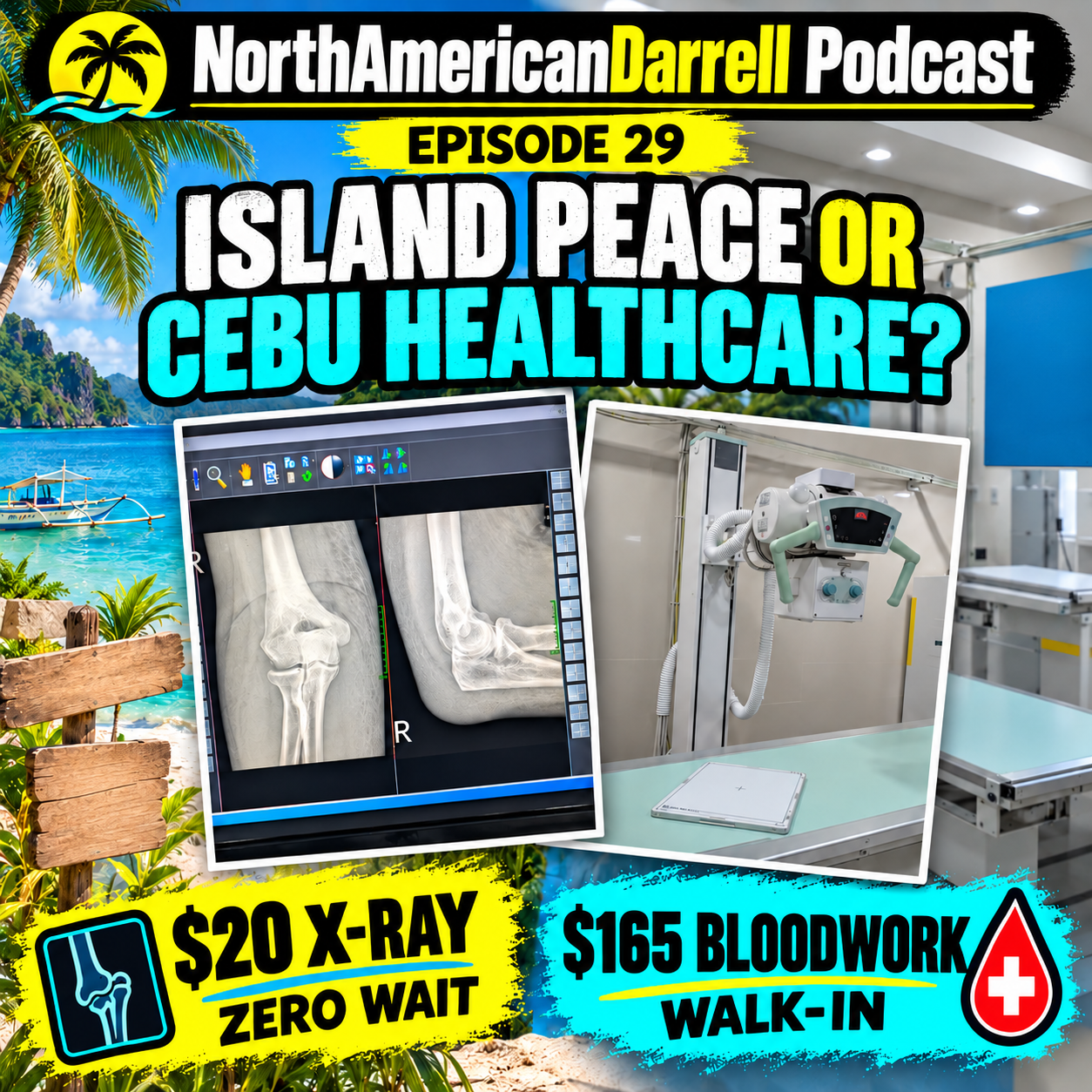
Here is E29: Island peace or Cebu healthcare?

I have already explained why I carry travel medical insurance in my “Don’t Leave Home Without It” episode. 

This is about the cost, speed and quality of healthcare in Cebu compared with life on a smaller Philippine island. 

My problems started after a few too many rums sent me ass over tea kettle. I injured my elbow and expected it to improve on its own. It did not. 

While visiting Bantayan Island, 

I also had a toothache and a sore throat. 

That gave my imagination three separate problems to combine into one medical disaster. 

I wondered whether my tooth was infected and causing my sore throat. Then I convinced myself the infection might have spread to my injured elbow. From there, my mind jumped directly to septic shock. 

Doctor Google really sucks sometimes. Instead of spending my final day relaxing on Bantayan, I returned to Cebu one day early to get real answers. That decision showed me the biggest difference between small-island life and living in a major city. 

Bantayan gave me peace and beaches. 

Cebu gave me immediate access to modern medical services. 

I walked into a medical center without an appointment and received X-rays almost immediately. 

No insurance approval. No waiting list. 

The X-rays cost approximately twenty U.S. dollars. 

Twenty dollars—with zero wait. 

I gave up a day in paradise for a twenty-dollar answer. 

Considering Doctor Google already had me preparing for septic shock, it was money well spent. 

The doctor also ordered a ten-panel blood test. Because it required fasting, I returned the following morning. The panel checked my cholesterol, thyroid, uric acid, blood cells, organ function, testosterone and possible signs of infection. It cost approximately one hundred sixty-five dollars. 

I also visited a dentist to investigate the toothache that started my septic-shock conspiracy theory. The dentist examined my tooth, took a dental X-ray and cleaned my teeth. There were no serious problems, and the entire visit cost less than fifty dollars. 

The blood work, X-rays and dental examination gave me the answers I needed. There were no signs supporting the infection nightmare Doctor Google had helped me create. 

The doctor prescribed medication for my sore throat and the inflammation in my elbow. 

Within about a day, the worry was lifting, treatment had started and I was back on the road to recovery. 

If you are listening from Canada and thinking, “My healthcare is free,” I understand. 

If you are in the United States thinking, “My insurance pays for that,” 

I understand that too. 

But consider the waiting time. 

How long would it take to receive blood work, dental care and X-rays? 

What would they cost if you wanted answers immediately and paid out of pocket? 

Free healthcare can still involve waiting. 

Insured healthcare can still involve deductibles, referrals, provider networks and approvals. 

In Cebu, I could pay an affordable cash price and receive these services on a walk-in basis. 

In my personal experience, Cebu’s private healthcare has been as good as—and sometimes better than—care 

I have received in Canada and the United States. 

The facilities have been modern, the services up to date and the medical professionals thorough. Most importantly, I did not have to wait while my worry continued growing. 

Not every Philippine clinic is equal, but Cebu offers private hospitals, laboratories, specialists, dentists and diagnostic imaging. A smaller island may offer basic care without the same equipment or immediate options. 

That creates a real lifestyle decision. 

Island life offers beautiful beaches and a slower pace. 

Cebu offers traffic and noise—but also affordable walk-in healthcare. For routine appointments, blood work, X-rays, prescriptions and dental care, I can pay cash. For a serious emergency, I have travel medical insurance and possible evacuation benefits, subject to my policy. 

Pay cash when care is affordable. 

Use insurance when the emergency is much larger. 

I still recommend travel medical insurance for every international trip. But insurance does not replace access. 

The best policy cannot provide services that are unavailable where I am staying. 

Perhaps the answer is balance. 

Enjoy island life when I am healthy. 

Return to Cebu when I need testing, specialists or quick peace of mind. And always know what medical services are available before I need them. 

Live life to the fullest!
Paradise Has Traffic_ Choosing Cebu (1)

Paradise has traffic – Cebu City!

Please feel free to read the below blog but, I added the podcast version for audio.

All of my podcast link can be found on the homepage!

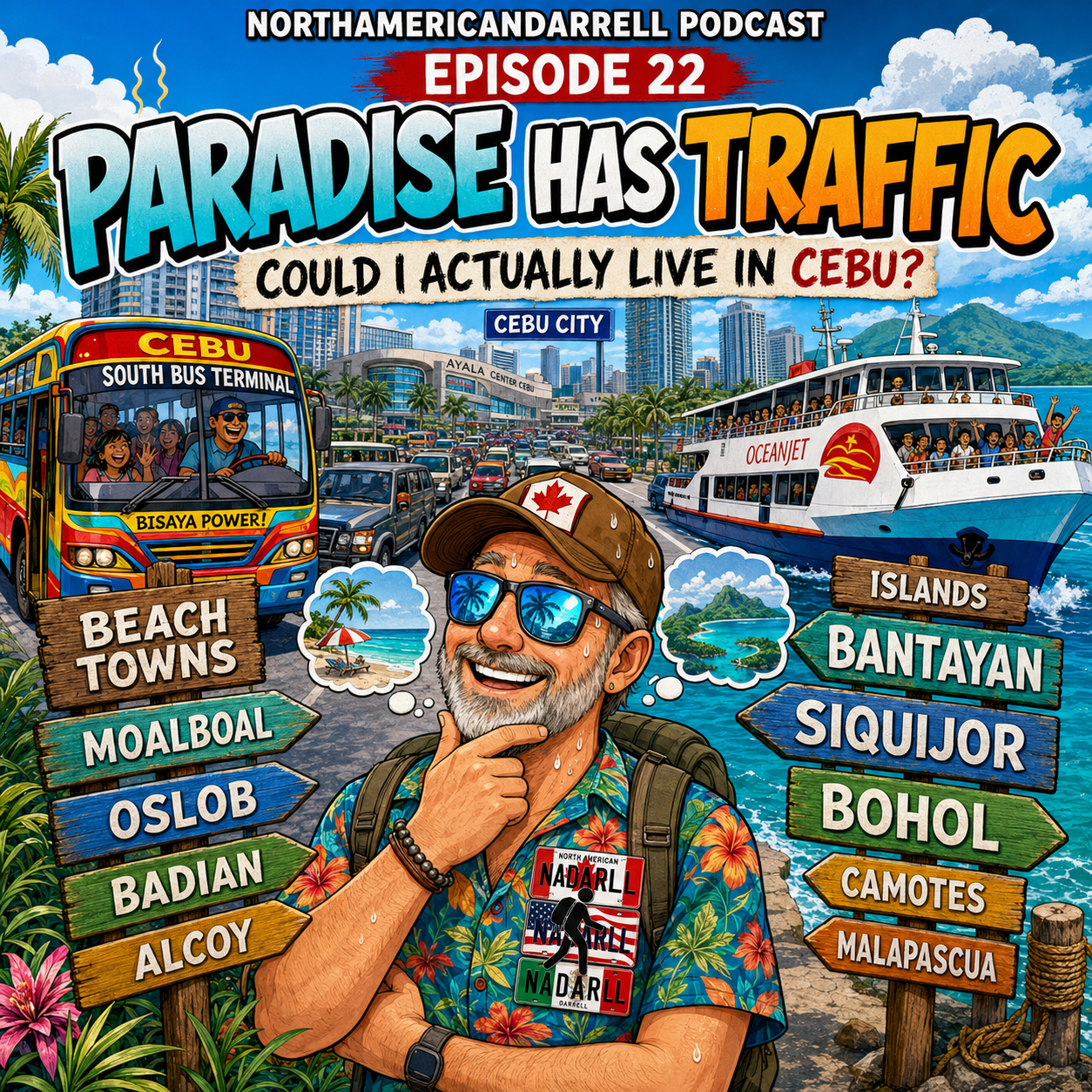
Here is E22: Paradise has traffic – Cebu City!

Paradise Has Traffic—Could I Actually Live in the City of Cebu?

It looks like paradise in my island videos. What the videos don’t show is me sitting in city traffic, sweating through my shirt, wondering why the beach is two hours away.

Metro Cebu is the Philippines’ second-largest metropolitan area behind Manila, with about 2.9 million people—and more than five million across the province and surrounding islands.

I’ll save island hopping for another episode. That completes the experience for me: big-city life with tons of islands waiting.

Settling into my condo in Cebu Business Park has been fantastic.

The building has a beautiful pool and an incredible gym.

My $450 USD studio feels like home and keeps me comfortably within budget.

More importantly, Ayala Center Cebu is about a three-minute walk away.

Slow travel isn’t a vacation for me—it’s living life somewhere different.

The mall gives me groceries, movies, a huge food court, international brands, and affordable local alternatives.

I have endless Filipino choices—or a taste of home at TGI Fridays, Chili’s, Texas Roadhouse, and nearly every fast-food restaurant imaginable.

Nothing says cultural immersion like flying across the Pacific for Texas ribs and a cold beer while “Achy Breaky Heart” plays in the background.

Cebu gives me city life for a fraction of the North American cost. I can live here for $2,000 USD a month, including a couple of island trips.

The weather is warm, everything is nearby, and both terminals are about ten minutes away—when traffic cooperates. 

“When traffic cooperates” is doing a lot of work in that sentence. I’ve learned to leave super early for scheduled trips.

From the ferry terminal, countless islands are within reach.

From the bus terminal, I can travel to beach towns in every direction.

That combination makes Cebu work for me: a comfortable city routine—and an island escape whenever boredom takes over.

Before my three-month trip ended in mid-April 2026, I had booked two more visits: this summer month and four months to begin 2027.

I’m not declaring Cebu my permanent home.

I’m testing whether it could become one for several months each year.

Visiting and living here are different, and I’m still working through that.

City life means traffic, humidity, healthcare, banking, transportation—and immigration.

Island life means the beach seven days a week. It sounds amazing, but even that can get boring for me. 

Immigration here also taught me an expensive lesson.

I’ve always supported countries enforcing their immigration laws.

It’s easier to have strong opinions from a distance than to navigate another country’s system yourself.

For eligible visa-free travelers, the usual starting point is 30 days of authorized stay.

To remain longer, I must apply for an extension before it expires.

The first visa waiver adds 29 days—not 30.

There is no rounding up, birthday exemption, or lap-dance workaround.

After that, extensions can continue in one- or two-month periods.

Longer stays may involve an ACR I-Card and other requirements.

Many extensions are available through immigration offices or the official online portal.

Fees vary, so I check the Bureau of Immigration rather than trusting an old blog—including mine.

Immigration officers rarely accept, “But some guy on the internet said…”

On my earlier trip, I visited Hong Kong and re-entered the Philippines, receiving a new period of authorized stay.

I later purchased the 29-day waiver but planned my April 15 flight as though I had received 30 days.

My passport and extension dates left me one day short.

One day. I could risk arriving at the airport without valid status—or purchase another extension.

I paid roughly $175 USD and stayed legal for the extra day.

Shitty math on my part!

That extension covered far more time than I needed, but immigration does not sell single days like cellphone data.

My lesson was simple: Count the authorized dates in my passport.

Apply before they expire. Plan international trips and flights around those dates.

And never assume 29 means 30 because the calendar looks close enough.

I won’t make that mistake twice.

Cebu isn’t perfect. Paradise has traffic. It has humidity, paperwork, costs, and frustrations.

But it also gives me a comfortable condo, walkable city life, warm weather, affordable choices, friendly people, and islands beyond the ferry terminal.

Could I live here permanently?

I don’t know yet.

Could I happily spend three to four months here every year?

Only God knows, but how I answer Episode Twenty-One’s question—“Who’s your daddy?”—will be a big part of the equation.

Keep travelling, keep adapting, follow the immigration rules—and live life to the fullest!

DIE

Die with zero

Please feel free to read the below blog but, I added the podcast version for audio.

All of my podcast link can be found on the homepage!

Here is E20: Die with zero

I recently travelled from Arizona to Cebu, Philippines.

More than forty hours. At one point, I wished I had flown first class. Clearly, I was hallucinating.

My estimated and actual travel times were almost identical—just over forty hours.

Every flight and connection went exactly as planned. I downloaded a Netflix series about an over-the-hill president and his vice president.

Joe, get out of the coconut tree!

Honestly, after forty hours in economy, I wasn’t sure whether Biden was confused—or I was.

Apparently, I travelled halfway around the world to escape American politics—then downloaded American politics.

I also downloaded the audiobook Die With Zero by Bill Perkins, and that really hit home.

I’m tired of American politics, and I was laid off at fifty-two.

Now I’m taking a run at early retirement on a slow-travel, geoarbitrage road trip.

One story reminded me what I’m escaping: politics.

The other challenged me to decide what I’m working toward: retirement.

The idea behind Die With Zero is simple: Money is a tool. It isn’t the final score.

If I spend my healthiest years accumulating money I never use, I may have traded irreplaceable time for a larger number on a statement.

That doesn’t mean emptying my accounts and hoping my final check bounces.

It means asking a harder question: When do I have enough?

I spent decades saving, investing, and preparing for retirement.

Preparation gave me options. But endlessly moving the finish line would turn preparation into procrastination.

There is always another dollar I could save. There isn’t always another healthy year when I can carry a backpack, walk ten thousand steps, or spend months exploring Asia.

That’s what the book calls timing experiences. Life comes in seasons.

The trip I can enjoy at fifty-five may feel very different at seventy-five.

Money can wait.

My gout may have another schedule.

It has already started submitting formal complaints.

Another idea that stayed with me is the memory dividend.

I pay for an experience once, but the memory can keep paying me back for years.

I remember ordinary mornings in Hanoi and island days in the Philippines.

Those memories don’t sit in a garage, require insurance, or call me at midnight because the water heater failed. 

Experiences have never charged me an HOA fee either.

My earlier episodes explain the machinery behind my plan.

The bucket system helps protect me from selling long-term investments at the wrong time.

My travel budget keeps freedom from becoming financial chaos.

Geoarbitrage helps me create more life from each dollar.

And stepping away from the Joneses stopped me from confusing accumulation with success.

The repair bills already have their own episodes.

The point is that all four ideas now work together.

The buckets protect tomorrow.

The budget controls today.

Geoarbitrage stretches my choices.

Ignoring the Joneses keeps me from spending tomorrow’s freedom on something shiny today.

Die With Zero supplies the reason behind all of it: Use money deliberately to create the best life I can while I’m still able to live it.

The book also made me think differently about risk. Taking a risk earlier gives me time to recover, adjust, and try again.

Waiting for certainty may feel responsible, but the opportunity may leave first.

My retirement experiment is a controlled test, not a permanent vacation.

I can travel slowly, monitor my spending, and change direction when life changes.

That isn’t abandoning financial discipline. It’s finally using it.

I don’t have children waiting for an inheritance, so my plan is personal.

I want enough for healthcare, housing, and surprises.

I want to help people while I’m alive and can see the difference it makes.

And I want to spend the rest creating memories instead of protecting a number simply because bigger feels safer.

I’m not trying to become the richest man in the cemetery.

The neighborhood amenities are terrible.

Maybe I won’t die with exactly zero. Getting that number perfect would require suspiciously good timing.

But zero is a direction, not a prediction.

It reminds me not to sacrifice every good year for a future version of myself who may have more money but less energy.

My real goal is balance.

Enough security that I can sleep at night.

Enough discipline that I don’t blow the plan.

And enough courage to spend time and money before both lose their value to me.

That’s what Die With Zero means in my life.

Not dying broke.

Not spending recklessly.

And not waiting so long to live that living is no longer an option.

Keep travelling, keep adapting, and live life to the fullest!

episdoe28

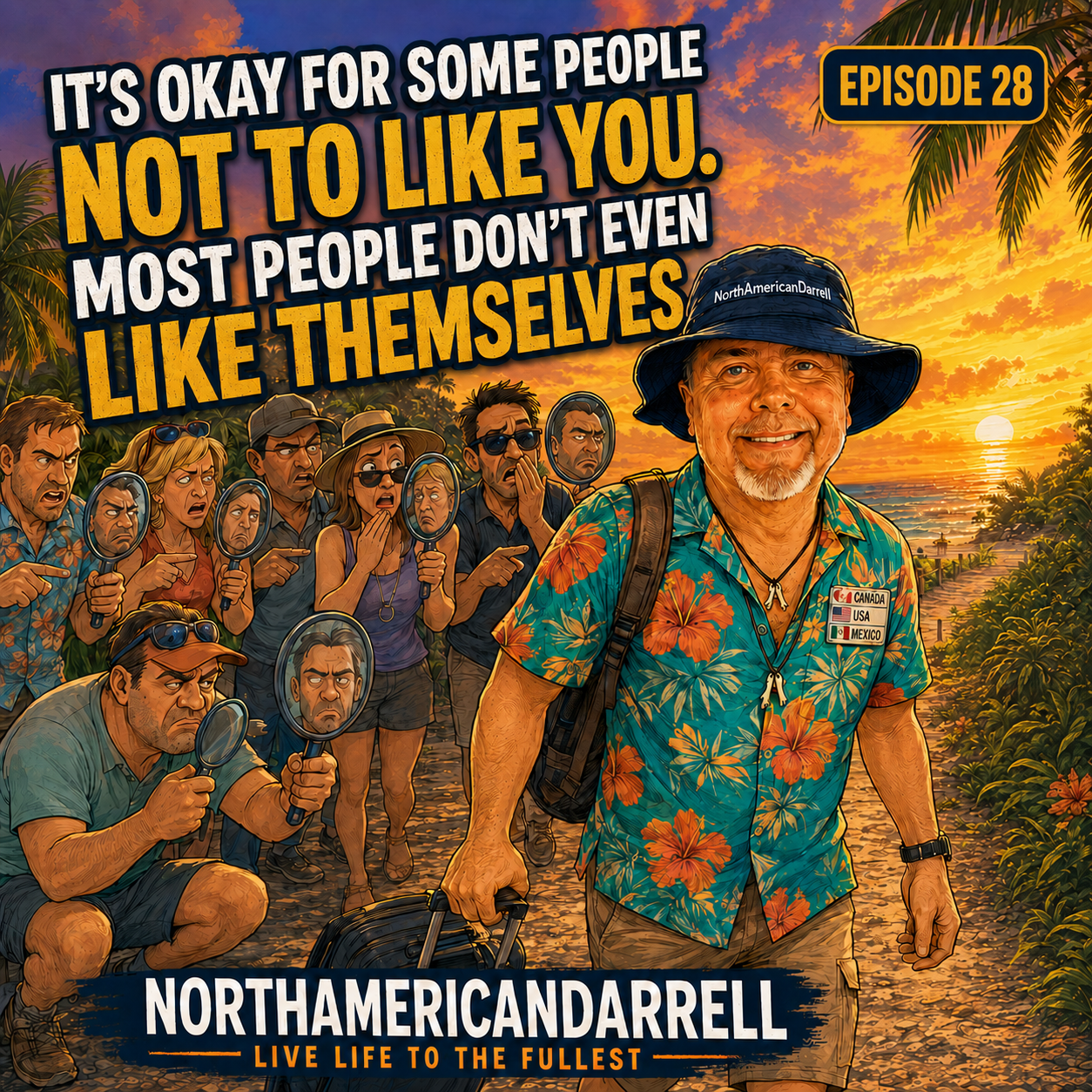
It’s okay for some people not to like you!

Please feel free to read the below blog but, I added the podcast version for audio.

All of my podcast link can be found on the homepage!

Here is E28: It’s ok for people not to like you!

ChatGPT Image Aug 11, 2026, 01_53_45 PM (2)

The bucket savings system.

lease feel free to read the below blog but, I added the podcast version for audio.

All of my podcast link can be found on the homepage!

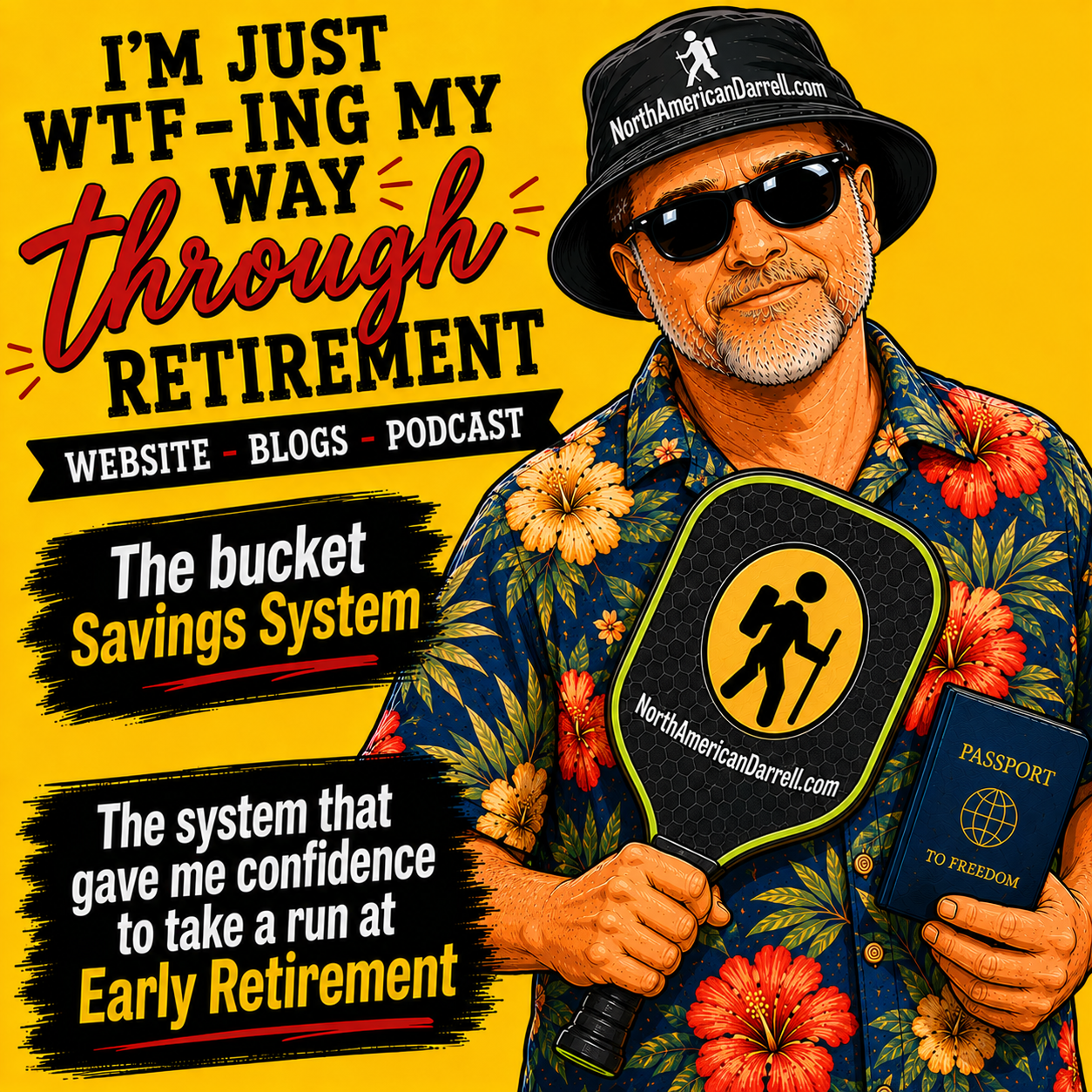
Here is E8: WTF’ing my way through retirement.

This Isn’t a Victory Lap. I’ve Blown Plenty of Tires. I share a lot of my life online. 

My travels.

My retirement experiment.

My budgets.

My mistakes.

My homes.

Even some dating adventures—which may eventually require their own legal disclaimer.

I understand how that can look from the outside.

When I talk about months in Southeast Asia, renting my condo, or trying early retirement after a layoff, some people may hear bragging.

That isn’t why I do it.

I don’t share because I believe my life is more important than anyone else’s. I share because my life didn’t follow the traditional route, and someone may need to see that another route exists.

I never married. I don’t have children. At fifty-two, I was laid off, and the career I expected to continue suddenly ended.

That could have felt like a failure. Instead, it forced me to ask a different question:

What could I build with the life I still had?

Apparently, my answer involved a passport, cheap apartments, too many airports, and enough questionable decisions to support a podcast.

My retirement plan isn’t a magic formula. I saved for years, kept a small mortgage-free home base, reduced many of my fixed expenses, and learned that my condo could earn income while I travelled.

I also discovered geoarbitrage—living well in places where my money stretches further.

None of that makes me smarter than everyone else.

It means certain choices and fortunate breaks eventually created options.

I’m grateful for that.

I also know many people work just as hard without receiving the same timing, opportunities, or safety net.

That is why I share principles instead of account balances.

Keep fixed costs manageable. Create income where possible.

Save something for emergencies.

Protect your health.

Understand your entire budget—not merely the inexpensive apartment you found overseas.

And stay flexible because every brilliant plan eventually meets real life.

Mine certainly has.

I’ve blown travel budgets, forgotten home expenses, miscounted immigration days, questioned where I belong, and learned that paradise can have traffic, humidity, loneliness, and paperwork.

Those stories matter just as much as the beaches. Maybe more.

Social media usually shows the sunset—not the missed ferry, bad math, delayed flight, or sweaty idiot dragging a suitcase through Cebu traffic.

I want NorthAmericanDarrell to show both.

I’m not selling a fantasy about permanent vacation.

Slow travel still involves groceries, laundry, healthcare, banking, boredom, and dinner.

It is simply normal life somewhere unfamiliar—with better stories when things go wrong.

I also share because I’m still learning. Every traveller teaches me something about freedom, fear, money, relationships, or how little I need.

Writing and speaking make me examine those lessons instead of losing them among thousands of forgotten pictures.

This shitshow has become a record of who I was, what I tried, where I screwed up, and how my thinking changed.

Maybe someone listens and realizes they can travel longer by moving slower.

Maybe someone nearing retirement asks a better question about housing, spending, or what they want their remaining healthy years to look like.

Maybe someone who loses a job understands that an ending can also create an opening.

And maybe nobody listens. My audience is still small.

Some weeks I spend more time producing an episode than my audience spends hearing it.

Apparently, I found a business model even worse than early retirement.

But numbers aren’t the only measure of whether something matters.

If one person hears a story and sees another possibility, then it was worth sharing.

If nobody does, I’ve still created an honest record of this strange chapter of my life.

This also works as therapy for me. Turning chaos into a story helps my mental health, so even if nobody listens, creating it still matters.

I know talking about travel and financial freedom can sound fortunate—because it is.

I don’t want to hide that good fortune, and I don’t want to parade it around like a trophy.

The honest place is somewhere in the middle: Grateful for what worked. Honest about what didn’t. Aware that my choices won’t work for everyone.

And willing to share what I learn without pretending I have life figured out.

I don’t.

I’m still just WTF-ing my way through retirement with a spreadsheet, a passport, and a beer in my hand.

That’s why I share my life.

Not to say, “Look at me.”

But to say,

“Here is what I tried.

Here is what happened.

Maybe something in it can help you.”

Keep travelling, keep adapting—and live life to the fullest!

ChatGPT Image Aug 12, 2026, 10_38_34 AM

Top 20 Countries to visit – 14 done!

Please feel free to read the below blog but, I added the podcast version for audio.

All of my podcast link can be found on the homepage!

Here is E15: Top 20 Countries to visit – 14 completed!

I’ve been fortunate enough to travel to a lot of countries over the years, and people sometimes ask me…

What’s the best country I’ve ever visited?

[amused] That’s almost impossible for me to answer, because my answer keeps changing.

Today? Probably the Philippines.
Last year? Vietnam.
The year before? Thailand.

Apparently my favorite country is whichever Southeast Asian country I’m thinking about moving to next.

That’s what I love about travel. Every country gives me something different.

So I took Google’s list of twenty countries worth visiting and compared it with my own travels.

I’ve visited fourteen. Six are still waiting for me.

Let’s go.

Number one — Japan.

I visited Tokyo in 2026 and it felt like another planet. The trains, food, cleanliness and organization amazed me. Even getting around became part of the experience.

Number two — Vietnam.

I’ve spent months here, from Ho Chi Minh City to Hanoi and places in between. Two-dollar pho, banh mi under a dollar, and apartments I’ve rented for under $300 a month.

And the scooters?

[laughs] Crossing the street can feel like a real-life game of Frogger.

Number three — Italy.

Rome. Naples. The Vatican. History. Pizza.

[amused] Do I really need to keep selling this one?

Number four — Thailand.

I’ve visited several times. Bangkok, Koh Samui, Koh Tao and Koh Phangan gave me different experiences. Great food, islands and inexpensive living keep pulling me back.

Number five — Argentina.

Buenos Aires was fantastic. I loved the energy around La Boca and the football culture.

And the steak?

[excited] I ate it almost every day for under ten dollars.

Number six — Portugal.

I’ve been there, and the Algarve is one of my favorite areas in Europe.

Just don’t expect me to join the locals for sardines.

Number seven — Indonesia.

Bali gets plenty of attention, and I understand why. But I enjoyed getting beyond the obvious tourist areas too. Transportation made exploring surprisingly affordable.

Number eight — South Africa.

I haven’t made it to Africa yet. Cape Town, the Garden Route and a safari put this very high on my list.

Number nine — Turkey.

Istanbul fascinated me. It’s one of those places where I could actually feel Europe and Asia coming together.

Number ten — Colombia.

Still on my list. Medellín, Cartagena and coffee country all sound like my kind of adventure.

Number eleven — Spain.

I’ve been there. Great food, great cities and a completely different lifestyle.

Number twelve — Greece.

Athens alone gave me enough history to keep my head spinning.

Number thirteen — Peru.

I’ve spent time in Lima and found it to be a great example of geoarbitrage. Good food, affordable living and plenty to explore.

Number fourteen — Mexico.

Definitely been there.

Mexico has been part of my life for years, so for me it feels like much more than a vacation destination.

Number fifteen — New Zealand.

I haven’t been yet. Cost has probably been the biggest reason, but a South Island road trip is absolutely on my bucket list.

Number sixteen — Brazil.

I’ve been there, and it’s enormous. It deserves much more than a quick visit.

Number seventeen — Malaysia.

Kuala Lumpur was easy for me to navigate, relatively inexpensive, and a great jumping-off point for Southeast Asia.

Number eighteen — Croatia.

Still waiting for me. The Adriatic coastline and islands look incredible.

Number nineteen — Morocco.

Another one I haven’t reached. Marrakech, the Atlas Mountains and the Sahara would be completely different from most of my recent travels.

And number twenty — Georgia.

The country… not the state.

I haven’t been yet, but Tbilisi, inexpensive living, the food and the Caucasus Mountains have my attention.

So that’s Google’s twenty.

I’ve experienced fourteen, which leaves six on my list:

South Africa. Colombia. New Zealand. Croatia. Morocco. And Georgia.

Sounds like I’ve got some work to do.

But travel keeps teaching me there really isn’t one “best” country.

A place I love might not work for you. Maybe you want beaches, history, nightlife or mountains.

That’s why I share my experiences rather than tell anyone where they should go.

So here’s my question for you…

If you could choose one country and leave tomorrow, where would you go?

And what’s stopping you?

The funny thing about my bucket list is that the more places I cross off…

the longer the list seems to get.

Hopefully I never finish it.

ChatGPT Image Aug 6, 2026, 06_03_12 PM

Would You Travel 41 Hours to Save $1,000? Here’s Why I Did.

This ChatGPT beauty deserves a zoomed picture! 

Relax and enjoy the four flights

Thousand bucks saved  ..

5 airports – 4 flights – 3 stops!

Your forgot Lovey!

A three-hour tour…

A three-hour tour…

Only this one lasts 41½ hours! 

GILLIGAN!

Take the time to read the blog below

or listen on the

NorthAmericanDarrell podcast.

E14: 41½ Hours of Travel to Save Over $1,000!

Departing 11:30 AM  August 16th, 2026

Arriving 6:10 PM August 18th, 2026

Along the way, I’ll cross **15 time zones** and lose an entire day and gain it back on the way home.

About 24 hours spent in the air.

~10,976 miles

See more travel stats in the blog below!

Most people think I’m absolutely crazy when they see the way I book flights.

The rest of them…

Know that I am.

They’re probably right.

The difference is…

I have more time than money these days, so..

here I go again on my own… 

Just like Whitesnake reminded us back in the ’80s. 

This adventure starts in Phoenix, Arizona and ends in Cebu, Philippines for another month-long stay from mid-August to mid-September 2026.

Home in time for hockey season!

Go Oilers!! 

I returned home about from Cebu four months ago.

Apparently…

Three months of island life wasn’t long enough.

Now, it’s time to experience the Philippines rainy season Incase I ever want to stay year round.

ChatGPT says, it’ll take about **41½ hours** from the time I lock my condo door in Arizona until I unlock my condo door in Cebu.

Along the way, I’ll cross **15 time zones** and lose an entire day and gain it back on the way home.

About **24 hours** of that is spent in the air.

As the old saying goes…

“This trip circles my elbow twice just to get to my a-hole.”

For comparison…

If there were a direct flight from Phoenix to Cebu, it would take about 18 hours.

Unfortunately, there isn’t one.

Even with a normal connection through Los Angeles, the trip would still take close to 30 hours.

The other **17½ hours?**

Exploring Los Angeles…

People watching in Singapore…

And wandering around Manila Airport waiting for my last flight.

Honestly…

I wish I had more than ninety minutes in Singapore.

I’ve been there several times, and it’s still my favorite airport in the world.

There’s an incredible indoor atrium with a waterfall…

A free movie theatre…

Amazing shopping…

International food courts serving just about everything imaginable…

And a duty-free store so big you could probably get lost in it.

My first layover…

That’s where **The Amazing Race**  NorthAmericanDarrell begins!

I have twelve hours in Los Angeles, so instead of sitting at the airport, I’m heading to Venice and Santa Monica beaches.

The best part?

My flight from Phoenix to LAX cost me **five bucks** using airline points.

Not a bad way to start another island-hopping adventure.

Here’s my itinerary.

Phoenix to Los Angeles…

A quick ninety-minute flight.

Then twelve hours at the beach, including the local bus ride.

Los Angeles to Singapore…

About seventeen hours.

That’s the heavy lifting.

Thankfully…

It’s on my favorite airline.

Singapore Airlines.

Free food.

Free drinks.

Free movies.

And enough time to question every life decision I’ve made since kindergarten.

Then it’s another four-hour flight  from Singapore to Manila.

A four-hour layover gives me enough time to switch terminals before my final flight to Cebu.

I land around six o’clock in the evening in Cebu with a thirty minute taxi to my condo.

Perfect arrival time!

Unpack.

Grab a massage.

Get a good night’s sleep.

Would I recommend this itinerary to everyone?

Absolutely not.

But here’s why I do it.

By staying flexible…

Using airline points…

And accepting a few layovers…

I saved **well over one thousand U.S. dollars**.

If I were flying business class like the Joneses…

The savings could easily be two or three thousand dollars.

That thousand dollars pays for my apartment for the entire month.

My groceries…

And still leaves enough money for an quick island-hop.

When you look at it that way…

Those extra twelve hours hanging out on the beach in Los Angeles don’t seem so painful.

Well…

Maybe after a massage in Cebu.

People ask me all the time…

*”Isn’t your time worth something?”*

Of course it is.

But taking a run at early retirement has taught me something.

Right now…

Time is the one thing I have plenty of.

Money?

I’d rather stretch that as far as I can while I’m still young enough to enjoy the adventure.

Planning the trip is part of the adventure.

I enjoy putting these ridiculous itineraries together almost as much as taking them.

Maybe I’m just weird…

And a cheapo.

Actually…

I know I’m weird and a cheapo.

And I’m perfectly okay with both because…

I don’t have to go back to work on Monday like the cool kids. [Laughs]

So let me ask you…

Would you spend **41½ hours** traveling to save over a thousand dollars?

Or would you pay extra to get there sooner?

Neither answer is wrong.

Most people choose the shorter trip because they have more money than time.

I’m taking a run at early retirement.

So for now…

**I’ll gladly trade one extra twelve hours getting there…**

**For a free month of adventure once I arrive.**

Because…

**That’s what taking a run at retirement looks like to me…

Until next time…

Live life to the fullest.

Cheers!! 

Great White North Podcast Episode 12 (1)

Canada – it’s still my roots, still my team!

Please feel free to read the below blog but, I added the podcast version for audio.

All of my podcast link can be found on the homepage!

Here is E12: Edmonton, AB Canada … My roots

I left Edmonton for what would be the last time as my home at the beginning of 1996.

I had just graduated from college and accepted a job with Northern Telecom in Calgary.

Like so many young people, I figured I was simply moving to another city.

I had no idea that one decision would eventually lead me to living in the United States…

Mexico…

And traveling to dozens of countries around the world.

For years, Edmonton was always the place I came back to visit.

But it never quite felt like home anymore.

That changed a little bit during the summer of 2026.

I had a great time catching up with everyone!

After four years away, I flew into Edmonton, and my brother-in-law picked me up from the airport…

Just like he has so many times over the years.

The forty-five-minute drive to my sister’s house always seems to fly by.

Not because of the scenery…

But because we spend the entire drive solving the world’s financial problems.

Well…

At least our own.

Our conversations usually turn into a friendly competition over who’s cheaper…

And more importantly…

Who’s right about being cheaper.

Canada versus the United States.

Who got the better deal?

Who found the cheaper flights?

Who paid less for groceries, gas, or hotels?

I keep telling him…

He still has a lot to learn about finding cheap flights.

Neither of us wants to lose.

I think if there were an Olympic event for being frugal…

We’d both be standing on the podium arguing over who deserved the gold medal.

Eventually, we pulled into my sister’s driveway.

I grabbed my bag…

Walked downstairs…

And there it was.

The couch.

The same couch that has faithfully welcomed me home for years.

Some people check into five-star hotels.

I check into my sister’s basement.

The price is right…

The coffee is always on…

And unlike a hotel, I know my sister won’t charge me a resort fee.

Although I’m still keeping an eye on my brother-in-law.

After a couple of days exploring Edmonton, including watching my beloved Edmonton Eskimos…

Yes, I know…

They’re the Elks now.

We headed to my other sister’s lake in Saskatchewan.

Another amazing homecoming.

There was homemade baking…

McBaba’s legendary breakfast sandwiches…

Hamburgers…

Steaks…

And fresh-caught fish that I actually reeled in myself.

Best of all, I got to spend time with my nephews, nieces, and now their kids.

You can only be the crazy uncle on Instagram for so long…

Eventually they get to experience you in person.

After a few days of fishing, laughing, eating, and making memories…

It was time to head back to Edmonton.

A couple days later, I was riding transit to the airport for my flight back to Arizona.

Something surprised me.

For the first time in as long as I can remember…

I wasn’t extremely excited to leave.

Usually, by the end of a visit, I’m ready to hit the road.

This time…

It was different.

For the first time in thirty years…

Edmonton felt like home again.

Not because the city had changed…

But because I had spent time with the people who made it feel like home in the first place.

Catching up with my family was amazing!

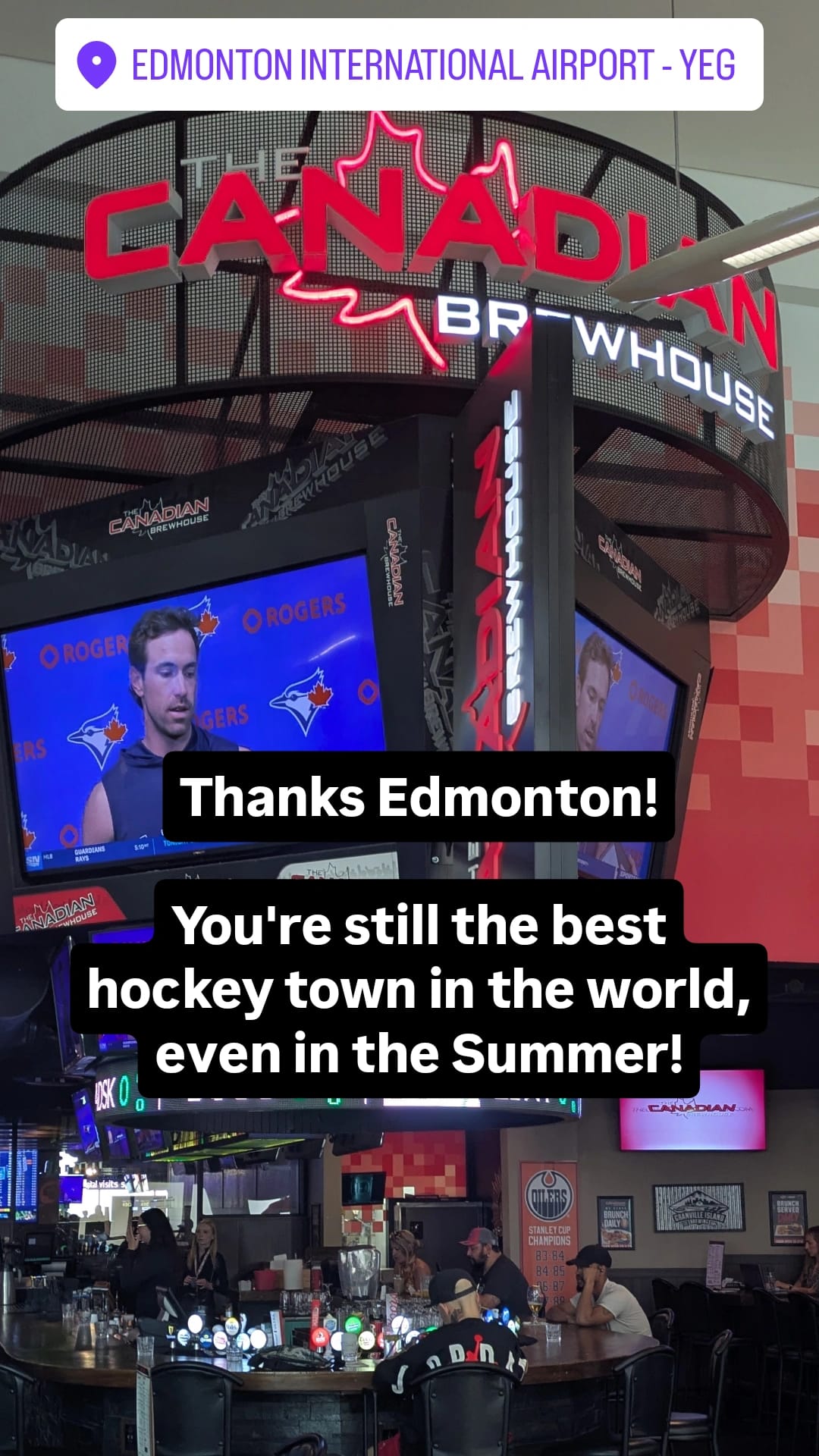
As I drank my airport beer, I made myself a promise.

No more waiting years between visits.

From now on…

I’ll come home at least once every six months.

Because no matter how many countries I visit…

Or how many places I call home…

Edmonton will always be where my story began.

Thanks for listening to the NorthAmericanDarrell Podcast.

Until next time…

Live life to the fullest.