
Please take the time to read the entire blog but, his is the audio version blog.
I have discussed some of these ideas on my podcast, but this is a different story. The complete written blog below includes additional details and helpful links.
I also learned a great deal by watching my mom.
She worked incredibly hard and endured more loss than anyone should have to carry. But when it came to retirement, she absolutely nailed it.
She spent nearly twenty years as a snowbird before passing away at eighty-four.
She showed me that retirement was not only about accumulating money. It was about building a life you could enjoy while you were still healthy enough to live it.

I have discussed some of these ideas on my podcast, but this is a different story. The complete written blog below includes additional details and helpful links.
[reflective] I have planned for retirement for as long as I can remember.
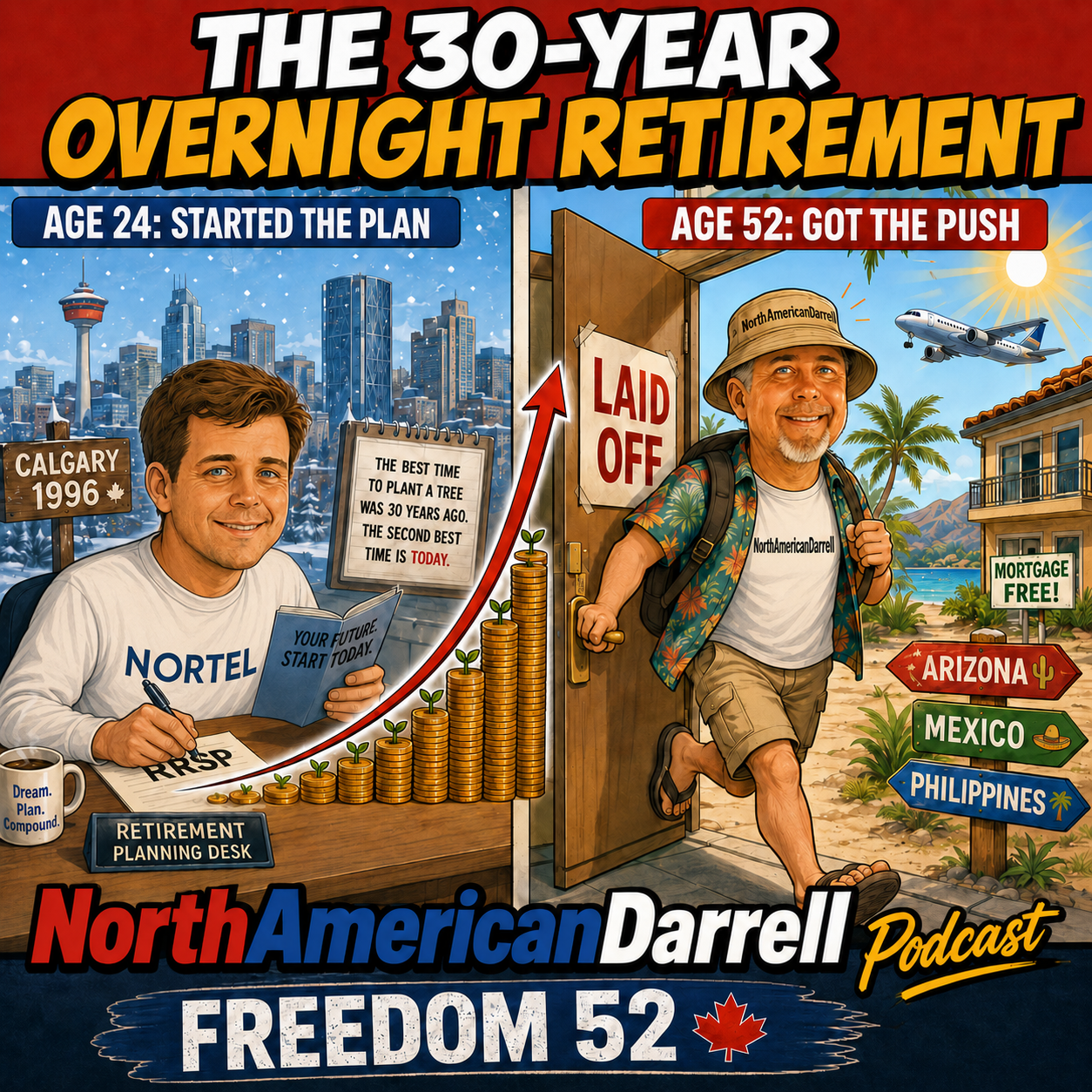
In 1996, during the same week I started my telecommunications career, I walked into a Royal Bank in Calgary and met with a retirement planner.
I was twenty-four years old and opened my first R.R.S.P.—a Registered Retirement Savings Plan, somewhat similar to an American four-oh-one-kay.
That was the first time anyone explained tax-sheltered retirement savings to me.
I remember asking, “You mean I have to wait until sixty-two to retire?”
[amused] The planner laughed and told me retirement age would probably be much older by the time I got there.
He was right. My full Social Security retirement age in the United States is now sixty-seven.
So I asked a better question:
“What do I need to do if I want to retire early?”
His answer was simple.
[explanatory] Diversify.
Do not put every egg in one basket. Build several financial supports so one bad year, one lost job or one struggling investment does not destroy the entire plan.
That advice stayed with me for the next three decades.
I contributed between ten and eighteen percent of my paycheck to tax-advantaged retirement accounts whenever I could.
I always tried to contribute enough to receive the full company match.
[amused] If a company offers free money, I am willing to suffer the inconvenience of accepting it.
I bought and sold rental properties to build additional wealth before retirement. I paid off my home, kept my lifestyle fairly modest and worked toward a retirement that would not require an enormous monthly budget.
Compound growth did much of the heavy lifting, but it needed time.
That is why starting young mattered more than starting rich.
[conversational] My own plan was never perfect, and some parts of it were simply personal circumstances.
I never married and never had children.
[amused] Marriage is, after all, the number-one cause of divorce.
Joking aside, that meant I never had to manage college expenses, child support or alimony. Plenty of people build successful retirements while raising families, but my path gave me fewer financial obligations and greater flexibility.
I also made choices that suited the life I wanted: a mortgage-free condo in Arizona, a small place in Mexico, rental income when available and a slower travel lifestyle in countries where my money stretches further.
[serious] Then, in 2024, PayPal eliminated my job.
I was fifty-two.
The layoff was not how I expected my career to end, but because I had spent decades saving, investing, diversifying and lowering my expenses, it did not become a financial emergency.
It became my exit.
[pause]
The retirement planner in Calgary could not have predicted PayPal, Airbnb, geoarbitrage or the strange collection of countries I would eventually call home.
But his basic advice still worked.
Diversify.
Save consistently.
Take the company match.
Avoid unnecessary debt.
Let compound growth work for as many years as possible.
And build a retirement around the life you actually want—not the lifestyle other people expect you to finance.
[reflective] Retirement is still an experiment for me.
I continue to adjust my spending, travel plans and investments. I am learning what this lifestyle truly costs and how much security I need to sleep comfortably at night.
But I did not suddenly retire at fifty-two because I got lucky after losing my job.
I was able to retire because a twenty-four-year-old kid walked into a bank in Calgary and asked the right question.
“What do I need to do to retire early?”
[upbeat] More than thirty years later, I finally know the answer.
Start early.
Diversify.
Keep your expenses under control.
And never ignore free money from a company match!
Be sure to read the complete earlier blog below for the full story, helpful links and additional details. You can also listen to my podcast for more of my retirement experiences and lessons.
Live life to the fullest—but give compound growth enough time to help pay for it!