

Please take the time to read the blog below. If you would rather listen, I have also provided an audio version below. Thanks for visiting NorthAmericanDarrell.com
The right time to take government retirement benefits is different for everyone. It also varies by country, with some systems more generous than others.
I have a small Canada Pension Plan benefit waiting for me in Canada. I contributed for more than ten years at lower wages, so I need to understand both my Canadian and American options before making an educated decision.
This blog focuses mainly on my United States Social Security choices:
Age 62: early benefits at a reduced amount.
Age 67: my full retirement age.
Age 70: my largest monthly benefit.
The decision depends on health, finances, family history, retirement plans and whether someone still enjoys working.
Some people need the income immediately. Others can wait to increase their monthly benefit.
There is no one-size-fits-all answer.
Like most retirement decisions, it comes down to my situation and what helps me sleep at night.
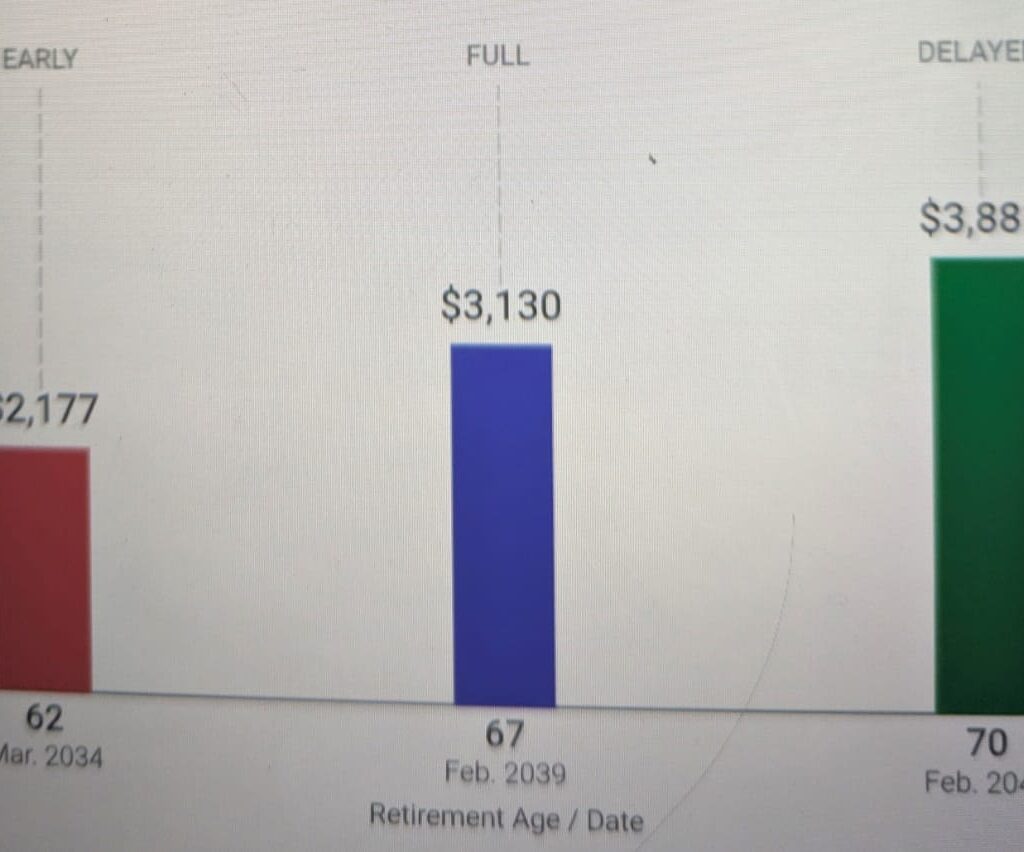
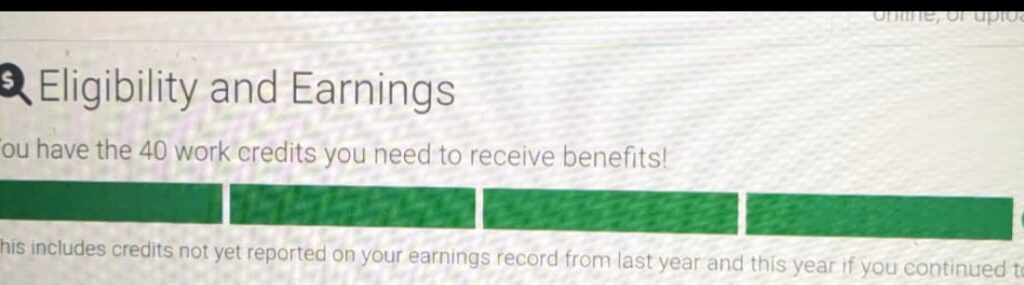
I am always transparent on NorthAmericanDarrell.com, so I do not mind sharing my Social Security estimates.
The Social Security website would not allow a screenshot, so I took a fancy picture instead.
Very high-tech retirement planning!
The first step is confirming that I have worked long enough and earned enough credits to qualify.
I did not enter the United States workforce until 2000, when I was about twenty-eight. As a Canadian who moved to the United States later in life, earning the required credits was an important milestone.
Before deciding whether to collect at 62, 67 or 70, I needed to confirm that I qualified.
Understanding my work history, estimated benefit and claiming options is an important part of my retirement plan.
The difference between those ages is significant in my case.
According to my current estimates, waiting from 62 to 67 would increase my benefit by approximately $1,000 per month.
Waiting from 67 to 70 would add approximately another $700 per month.
That makes the difference between 62 and 70 roughly $1,700 per month—about a 75% increase for waiting eight years.
These are estimates for illustration purposes. They can change, and everyone’s numbers will be different.
My current plan is to start Social Security at 67—if I make it that long—or sooner if another retirement bucket dries up.
That “if I make it that long” part is what makes retirement math so cheerful.
Waiting produces a larger monthly payment, but it can leave money on the table if I do not live long enough to benefit.
Health, life expectancy and available savings matter. So does receiving smaller payments for more years instead of larger payments for fewer years.
Medicare is a separate decision and generally begins at 65. Starting Social Security at 62 does not mean health insurance starts at the same time.
That gap matters for anyone hoping to retire before Medicare eligibility.
I also have to consider my Canada Pension Plan benefit. CPP can begin at 60, has a standard starting age of 65 and can be delayed until 70 for a larger payment.
My contributions were made for a shorter period and at lower wages, so my CPP benefit will be small—but small does not mean useless.
It becomes another bucket.
Diversification and multiple buckets of money were the keys to making early retirement possible for me.
My plan includes investments, cash reserves, Airbnb income, Social Security, CPP and the option of selling my Arizona condo if needed.
Each bucket becomes available at a different time. That keeps me from depending on one account or government benefit to fund everything.
I explain my bucket system and early retirement journey in the links included with this blog.
Geoarbitrage is another important part of the plan.
The definition is simple:
Taking advantage of cost differences between two geographic areas while maintaining the same—or an even better—quality of life.
In my case, I take a strong U.S. dollar to the Philippines and other parts of Asia, where my purchasing power and retirement budget go much further.
That does not mean everyone should move overseas or retire early. It means retirement may require less money when I am flexible about where and how I live.
None of this guarantees success.
Benefit estimates can change.
Markets can fall.
Living costs can rise.
Health can change the entire plan overnight.
That is why I keep checking my estimates, reviewing my spending and adjusting my retirement buckets.
I do not need one perfect answer today.
I need enough information and flexibility to make the best decision when the time comes.
For now, age 67 remains my target.
But retirement has taught me that plans can change—and sometimes they should.
Keep planning.
Keep checking your numbers.
And most importantly…
Live life to the fullest!